Energy Sectors / Industries / Projects

Deals with IPPs: Rousch Power approves early termination of govt agreements

  • Company to pursue negotiated settlement
BR Web Desk
November 13, 2024

Rousch (Pakistan) Power Limited (RPPL), an Independent Power Producer (IPP), has approved the early termination of its long-term agreements with the government and has authorised its management to execute a negotiated settlement agreement.

The development was shared by Altern Energy Limited, the parent company of RPPL, in a notice to the Pakistan Stock Exchange (PSX) on Wednesday.

“In pursuance to the material information submitted to the PSX via letter no AEL/BOD/25/24 dated October 21, 2024, it is hereby informed that the shareholders of the subsidiary of the company, RPPL, in their extraordinary general meeting held on November 11, 2024, have approved the proposal for early termination of the Power Purchase Agreement (PPA) entered into with the Central Power Purchasing Agency (Guarantee) Limited (CPPA), Implementation Agreement (IA) entered into with the President of Islamic Republic of Pakistan on behalf of the Government of Pakistan, and the guarantee issued by the Government of Pakistan, and have authorised the management to execute a negotiated settlement agreement in this respect.,” read the notice.
 
“The global photovoltaic industry is developing in full swing. China-Pakistan cooperation in related industries can make due contributions to the global response to climate change,” Ali Majid, Pakistan General Manager of LONGi, emphasized, “By providing high-quality solar panels and promoting sustainable energy solutions, we are aiding the country in achieving its renewable energy goals.”

A solar energy revolution is taking place across Pakistan.

Since July, Sindh Province has announced that it will promote 200,000 PV home systems across the province, and plans to build several large-scale photovoltaic projects, each with a capacity of 305 MW.

Balochistan’s PV conversion plan is proceeding in an orderly manner, which will help agricultural water wells switch from fossil fuel-driven to PV power generation, thereby reducing fuel costs and improving energy efficiency.

Since August, Punjab Province has also introduced a policy of free supply of PV modules. For citizens with electricity consumption of no more than 200 units, the policy allows them to obtain photovoltaic modules for free from August 14, while citizens with electricity consumption of more than 200 but no more than 500 units will have to pay 10% of the cost, and the remaining 90% of the cost will be borne by the government.

Under this policy, it is expected that the electricity cost burden of low-income households will be reduced by about 40%.
 

Pakistan’s power generation increases in November as cost inches up


BR Web Desk
December 18, 2024

Power generation in Pakistan clocked in at 8,032 GWh (11,156 MW) in November 2024, an increase of over 6% YoY compared to the same period of the previous year, suggesting an uptick in economic activity.

Back in November 2023, power generation stood at 7,547 GWh.

On a monthly basis, power generation declined by 21.7% as compared to 10,262 GWh (13,793 MW) in October.

In the first five months of FY25 (July-November), power generation fell by 3.9% YoY to 58,840 GWh compared to 61,256 GWh in the SPLY.

Analysts have voiced concerns over Pakistan’s decline in electricity consumption, which is accompanied by sluggish economic activity and high energy costs.

Adding to the challenge is a growing shift towards alternative energy sources, especially solar, which has become increasingly popular among residential and commercial sectors.

This rising trend has left decision-makers grappling with its implications for the national grid and energy sector, especially after provincial governments announced plans to distribute panels to low-income consumers free of cost or at a very low price.

Meanwhile, power generation surpassed the reference level for the second consecutive month, noted Arif Habib Limited.

On the other hand, the total cost of generating electricity in Pakistan increased by 2%, clocking in at Rs7.29 KWh in November 2024 compared to Rs7.17 KWh registered in the same period of the previous year.

The increase in cost is attributed to the rise in power generation cost from nuclear, which increased to Rs1.73 KWh, a gain of 43%, compared to Rs1.21 KWh in SPLY.

“After adjusting for transmission losses and PYA, the effective fuel cost stands at Rs7.23/KWh compared to the reference rate of Rs7.86/KWh, resulting in a negative FCA of Re0.63/KWh for the month,” said AHL.

In November, hydel emerged as the leading source of power generation, accounting for 35.6% of the generation mix, to become the largest source of electricity generation.

This was followed by nuclear, which accounted for 20.6% of the overall generation, ahead of coal (local), which accounted for 12.7% of the power generation share.

Among renewables, wind, solar and bagasse generation amounted to 1.2%, 0.9% and 0.6%, respectively, of the generation mix.
 

Jam may face tough questions during Seoul visit

Published December 28, 2024
Updated about 5 hours ago
1735404914430.jpeg
ISLAMABAD: Commerce Minister Jam Kamal is likely to face tough questions from South Korean authorities regarding the treatment of Korean companies in Pakistan’s power sector during his upcoming visit to Seoul.

Well-informed sources told Business Recorder that the Korean Ambassador to Pakistan has been trying to meet with Minister for Power, Sardar Awais Khan Leghari, for the past few months, but the meeting has yet to be scheduled.

Korean companies involved in hydropower projects in Khyber Pakhtunkhwa have also approached Senator Mohsin Aziz, Chairman of the Senate Standing Committee on Power. They appeared before the Committee to present their case, and seek support.

According to the Ministry of Commerce, Federal Minister Jam Kamal Khan is set to embark on an official visit to Korea to sign the Pakistan-Korea Economic Partnership Agreement (EPA), which marks a significant step toward enhancing bilateral economic cooperation. During his visit, the Minister will engage with key stakeholders, including the Pakistani business community in Korea, prominent Korean investors, the Korean Trade Minister, and other high-ranking officials.

In preparation for this critical visit, Jam Kamal Khan received a comprehensive briefing on Friday from relevant government departments, outlining the objectives, challenges, and opportunities associated with the trip.

Korea, which currently has a Free Trade Agreement (FTA) with India, presents a competitive landscape for Pakistan. However, the EPA is expected to not only double trade volume between the two nations but also create opportunities for Korean manufacturing operations to shift to Pakistan, taking advantage of the country’s strategic location and lower production costs.

The Ministry of Commerce views the visit as an opportunity to engage with the International Economic Institute, where the Minister will discuss strategies to attract Korean industries to offshore their operations to Pakistan. Currently, Korea favors countries like India and Vietnam for such ventures, but this visit aims to present Pakistan as a viable alternative.

A meeting with representatives from K-EXIM Bank will address the underutilization of the $1.1 billion earmarked for the 2022–2026 period, which could potentially be increased to $1.7 billion for future projects. The Minister is also scheduled to meet with the Korea Trade Association (KWEMA) leadership and major investors, including the LOTTE Group and a leading steel company. A

The visit will also include a trip to Korea’s new capital, located two hours from Seoul, where the Minister will meet with the president of the International Economic Institute’s think tank.

The Ministry further stated that arrangements are being made for a gathering with Pakistani workers in Korea, recognizing their contributions to the economy and fostering stronger community ties. The schedule also includes a two-hour shopping break.

Korea’s high production costs have prompted its industries to seek offshore manufacturing hubs in countries like India and Vietnam. Jam Kamal Khan’s visit aims to position Pakistan as a competitive destination for these industries, with the EPA acting as a catalyst for increased investment and industrial relocation.

The Minister’s engagements with key trade and financial institutions, including K-EXIM Bank and major Korean investors, are expected to strengthen economic ties, encourage project financing, and address issues such as dollar repatriation by Korean companies operating in Pakistan.

This high-stakes visit reflects Pakistan’s commitment to deepening its economic ties with Korea, fostering trade, and attracting investment to strengthen its industrial base.

Copyright Business Recorder, 2024
 

Talks with Chinese IPPs initiated, says Leghari

December 28, 2024
Updated about 4 hours ago

To view this content we will need your consent to set third party cookies.
For more detailed information, see our cookies page.


Federal Minister for Power Sardar Awais Ahmed Khan Leghari said the government has initiated talks with the Chinese Independent Power Producers (IPPs) to renegotiate agreements.

“We have already initiated talks with Chinese IPPs,” said Leghari, adding that this effort alone has resulted in a reduction of Rs1.25 per unit in electricity rates.

“All benefits from the renewal of contracts with the IPPs will be passed on to the consumers,” he said.

Capacity tariff of Chinese IPPs: China appears unwilling to renegotiate?

Addressing media persons on Saturday, Leghari, while giving an overview of the energy sector performance during the last nine months, said the process of energy sector reforms is progressing rapidly.

He shared that the government remains committed to resolving the energy sector crisis within the next four years.

Highlighting savings, Leghari informed that the government terminated contracts with five IPPs. “This resulted in the saving of Rs411 billion,” he said.

Moreover, Rs238 billion was saved through agreements with eight bagasse plants owned by sugar mills.

“The government worked as a whole and made savings of about Rs650 billion. In addition, negotiations with 16 more IPPs, to be announced in the coming days, are expected to save another Rs421 billion.”

IPPs talks and power sector: Minister to brief IMF team today

Leghari maintained that the Ministry of Energy is providing facilities to the industry on a priority basis.

Talking about electricity distribution companies (Discos), Leghari informed that Discos incurred significantly lower losses in the first five months of the current fiscal year as compared to the same period last year.

“We anticipate a 50% reduction in losses by the end of this fiscal as compared to last year.”

The energy minister shared that in collaboration with the Ministry of Finance, it has initiated the debt restructuring process of the energy sector.

“This is a crucial step that, if implemented successfully, will alleviate the burden on electricity consumers,” Leghari said.

The minister shared that the new Indicative Generation Capacity Expansion Plan (IGCEP) is in the final stages.

17 IPPs of 1994, 2002 policies: Deal reached on hybrid ‘take and pay’ model

He informed a company has been established for the sale and purchase of electricity.

Leghari said an EV policy is expected to be approved in the coming weeks.

The minister admitted a dearth of EV charging infrastructure in the country. “At present, these charging stations are selling electricity at Rs71 per unit, which shall be brought down.”

Responding to a query, Leghari expressed concern over the decline in overall electricity demand. “We have serious concerns about it and this reduction is contributing to an increase in electricity rates.”

“The decline in electricity rates will lead to demand improvement,” he expressed.
 

Affordable electricity top priority: Power minister assures

Awais Leghari revealed that government preparing to introduce special tariffs for EVs as part of an upcoming EV policy
December 28, 2024

1735405362784.jpeg

Minister for Power Sardar Awais Ahmad Khan Leghari reaffirmed the government's commitment to providing affordable electricity to the public while presenting key achievements in the power sector.

Addressing a press conference in Islamabad, Leghari highlighted the significant reductions in electricity prices, which reflect the government's ongoing efforts to make power more accessible for consumers.

According to Leghari, the average price of electricity has dropped to 44.04 rupees per unit, down from 48.70 rupees per unit in June 2024, marking a reduction of 4.66 rupees per unit. Industrial electricity prices also saw a major decrease, falling to 47.17 rupees per unit from 58.50 rupees per unit during the same period, a reduction of 11.33 rupees.

One of the most notable reforms discussed by the minister was the elimination of 150 billion rupees in cross-subsidies from the industrial sector. This move, he explained, has helped stimulate industrial growth by lowering costs for businesses.

The government is also focusing on upgrading the transmission sector, which includes the trifurcation of the National Transmission and Despatch Company (NTDC) into three separate entities, aimed at improving efficiency and reducing losses.

In response to the growing concern of circular debt, Leghari announced that efforts were underway to shift the burden from electricity bills to the national debt, easing pressure on consumers.

In addition, the minister revealed that the government was preparing to introduce special tariffs for electric vehicles (EVs) as part of an upcoming EV policy, which he expects will further drive the country's push towards sustainable energy solutions.

These moves demonstrate the government’s comprehensive approach to modernising the power sector and enhancing the affordability of electricity for both consumers and businesses in Pakistan.
 
Last edited:

Affordable electricity top priority: Power minister assures​

Awais Leghari revealed that government preparing to introduce special tariffs for EVs as part of an upcoming EV policy

News Desk
December 28, 2024

affordable electricity top priority power minister assures


Affordable electricity top priority: Power minister assures

Minister for Power Sardar Awais Ahmad Khan Leghari reaffirmed the government's commitment to providing affordable electricity to the public while presenting key achievements in the power sector.

Addressing a press conference in Islamabad, Leghari highlighted the significant reductions in electricity prices, which reflect the government's ongoing efforts to make power more accessible for consumers.

According to Leghari, the average price of electricity has dropped to 44.04 rupees per unit, down from 48.70 rupees per unit in June 2024, marking a reduction of 4.66 rupees per unit. Industrial electricity prices also saw a major decrease, falling to 47.17 rupees per unit from 58.50 rupees per unit during the same period, a reduction of 11.33 rupees.

One of the most notable reforms discussed by the minister was the elimination of 150 billion rupees in cross-subsidies from the industrial sector. This move, he explained, has helped stimulate industrial growth by lowering costs for businesses.

The government is also focusing on upgrading the transmission sector, which includes the trifurcation of the National Transmission and Despatch Company (NTDC) into three separate entities, aimed at improving efficiency and reducing losses.

In response to the growing concern of circular debt, Leghari announced that efforts were underway to shift the burden from electricity bills to the national debt, easing pressure on consumers.
 

PM orders strict action against electricity theft and overbilling officials

December 28, 202
Prime Minister Shehbaz Sharif expresses concern over the slow pace of CEO appointments in power distribution companies

Prime Minister Shehbaz Sharif chaired a review meeting on the performance of electricity distribution companies, including Lahore Electric Supply Company (LESCO), Peshawar Electric Supply Company (PESCO), and Faisalabad Electric Supply Company (FESCO).

The meeting focused on addressing key issues related to overbilling, power theft, and ensuring transparency in billing practices, Express News reported.

The Prime Minister directed that the installation of smart meters be expedited to ensure accuracy and transparency in the billing system.

He emphasised that overbilling would not be tolerated and that strict action would be taken against officials involved in such practices.

In addition, the Prime Minister called for comprehensive measures to curb electricity theft and ensure efficient distribution.

He expressed concern over the slow pace of the appointment process for Chief Executive Officers (CEOs) of the power distribution companies and instructed that the process be completed promptly through a transparent and merit-based approach.

Prime Minister Shehbaz Sharif also stressed the importance of merit in the recruitment process for staff within the electricity distribution companies, stating that no leniency would be allowed in ensuring transparency. He also urged the use of all available resources to meet targets set by the National Electric Power Regulatory Authority (NEPRA).

The meeting included a detailed briefing on the performance of LESCO, PESCO, and FESCO. As of November 2024, LESCO's recovery rate stood at 96.82%, PESCO's at 87.98%, and FESCO's at 97.57%.

Federal Minister for Economic Affairs Ahsan Khan Cheema, Federal Minister for Power Division Sardar Owais Ahmad Khan Leghari, State Minister for IT & Telecom Shaza Fatima, State Minister for Finance & Revenue Ali Pervez Malik, Prime Minister's Coordinator Rana Ehsaas Afzal, and senior government officials participated in the meeting.
 

Talks with IPPs help govt save Rs 1trn?


Mushtaq Ghumman
Published 16 minutes ago

ISLAMABAD: The Minister for Power, Sardar Awais Khan Leghari, on Saturday, claimed that a savings of Rs1 trillion had been achieved following the government’s “whole-of-government” approach in negotiations with Independent Power Producers (IPPs), with the support of Army Chief General Asim Munir.

Addressing a press conference on the nine-month performance of the power sector, the minister announced that revised agreements with 16 IPPs would be finalised in the coming days.

He explained that the government had terminated agreements with five IPPs, which would save Rs411 billion (Rs7 billion annually). Total savings from the settlement of agreements with 8 bagasse-based IPPs amounted to Rs238.224 billion (Rs8.826 billion per year).

Talks with Chinese IPPs initiated, says Leghari

Furthermore, the minister stated that the settlement of contracts with 16 additional IPPs would result in a national savings of Rs481 billion. He also mentioned that discussions with Chinese IPPs, excluding those related to nuclear power plants, had begun. Re-profiling the debt of one nuclear power plant resulted in a savings of Rs1.5 per unit in tariffs.

In response to a question, the minister clarified that the buyback rate for solar net metering would be reduced, ensuring consumers’ investments are paid back within four years. “The net metering buyback rates will be reduced soon, as a financial burden of Rs150 billion is currently being carried by other paying consumers,” he added, noting that the decline in demand was a major concern for the government.

When asked about privatisation plans, the minister revealed that three Distribution Companies (Discos) — IESCO, GEPCO, and FESCO— would be privatised by the end of 2025.

Addressing another query, the minister stated that recent amendments approved by the Nepra with a majority vote would be scrapped. Key reforms would be introduced in Nepra, as the Authority itself seeks them, with key decisions now being made by it. Nepra has exempted projects from the Nepra Act, particularly those executed on a government-to-government basis and those qualifying under the IGCEP 2021.

“We have begun analysing Nepra’s past decisions to uncover the facts. We are reviewing the regulatory framework of the power sector,” he continued.

The minister further stated that the government had submitted its review of KE’s tariff to Nepra, hoping that the Authority would consider the review, as Rs10 per unit increase would have far-reaching negative effects on consumers. “We have filed a review motion with Nepra on KE’s tariff determination for the next seven years. KE’s requested tariff was unfair. If the regulator had been just, Karachi’s consumers would have saved billions,” he said.

Sharing the results of reforms in the power sector, the minister revealed that the average price of electricity today stands at Rs44.04 per unit, compared to Rs48.70 in June 2023 (a reduction of Rs4.66 per unit). Industrial electricity prices have also dropped from Rs58.5 per unit in June 2023 to Rs47.17 per unit (a reduction of Rs11.33 per unit).

Regarding industrial growth incentives, the minister noted the elimination of Rs150 billion cross-subsidies for the industry, which would promote industrial growth, create job opportunities, and contribute to Pakistan’s economic stability.

Reforms in the transmission system are progressing, with NTDC being divided into three institutions; (i) National Grid Company of Pakistan (NGCP) to ensure efficient and reliable electricity transmission services; (ii) Energy Infrastructure Development and Management Company (EIDMC) to oversee development activities and project management through public-private partnerships; and (iii) Independent System and Market Operator (ISMO) to develop a competitive, transparent electricity market.

Additionally, the South-North transmission corridor is being developed through PPP, with a Battery Energy Storage System (BESS) of 1000MWh planned for installation in the South for frequency regulation. Further upgrades include the installation of reactive power compensation devices at NTDC substations.

The minister also revealed that Discos reforms are moving towards privatisation or concession models. Independent Boards of Directors have been appointed for Discos. He stated that debt restructuring is in progress to shift circular debt costs from electricity bills to national debt, which would help reduce electricity prices for consumers.

He mentioned that the Power Division will spend less than the allocated amount in the 2024-25 budget due to better performance by Discos compared to the previous year.

On market liberalisation, the minister announced the formation of the Independent System and Market Operator (ISMO), which would allow consumers to purchase electricity from multiple suppliers. He also revealed that the IGCEP 2024-34 would be finalised soon, and emphasised that out of the 17,000MW to be added in the next 10 years, only 87MW was based on the least-cost principle. A review of the IGCEP will ensure that energy is added to the system on a least-cost basis.

Regarding the solarisation of tube wells in Balochistan, the minister shared that 27,000 agricultural tube wells would be converted to solar power at a cost of Rs55 billion, with the federal government covering 70 per cent of the cost and the Balochistan government contributing the remaining 30 per cent.

He also discussed the Bijli Sahulat Package, which provides a special tariff of Rs 26.07 per unit to support households and industries across the country. Domestic savings would amount to Rs 26 per unit, commercial savings to Rs 22.71 per unit, and industrial savings to Rs 15.05 per unit.

Further, he mentioned that the government is working on the disposal of redundant generation assets (Gencos) through open auctions with live media coverage.

The minister emphasised that poor recovery rates in Discos contribute to Rs 250 billion in losses, and the circular debt burden of Rs 2.2 trillion raises electricity costs. Additionally, he stated that dollar-denominated debt increases with the depreciation of the rupee.

He also highlighted the transition to special tariffs for Electric Vehicles (EVs) to reduce petrol imports and promote environmental sustainability.

He also praised the Prime Minister Shehbaz Sharif as team leader, former Prime Minister Nawaz Sharif as head of the party for extending guidance to deal with the worst performing power. Discos Board performance was also appreciated.

He praised the Army Chief for his support to deal with the IPPs. “I have no hesitation to acknowledge, Army Chief, General Asim Munir, Lt General Muhammad Zafar Iqbal, National Coordinator, extended full support to renegotiate deals with the IPPs,” he continued.

Copyright Business Recorder, 2024
 
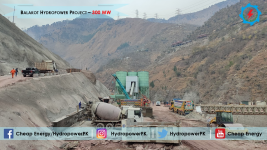
Construction Glimpses from the 300MW Balakot Hydropower Project!

Exciting progress continues on this landmark project aimed at transforming the energy sector in Pakistan. With an estimated cost of Rs. 85 billion and financial assistance from the Asian Development Bank, this 300MW powerhouse is set to be completed in six years.

As the biggest-ever hydropower project under the KP government, Balakot HPP represents a significant step toward sustainable and affordable energy for the region.

1735424734931.png
 

Power sector: (Woeful) State of Industry Report

BR

The power sector regulator, Nepra has issued the much-awaited State of Industry Report 2024, which expectedly reads more like a sequel to the horror tale from a year or five ago. Just when one thought the state of affairs in the power sector – across verticals from generation to transmission and from planning to distribution – could not get any worse than 2023, FY24 made a new low. The gains over the course of 12 months are petty, the problems not so.


2_1.jpg


None of the problems have surfaced overnight – the report just quantifies the magnitude. The overinvestment in meeting peak demand capacity continues to haunt the sector’s economy. Against a maximum demand of 30,150 MW, the national grid could only serve a maximum load of 25,516 MW, that too, for a limited duration. The regulator has rightly flagged the excess generation capacity as a key contributor to high electricity costs and financial burden on the sector, as the imbalance between generation capacity and actual demand, and inadequate transmission and distribution capacity, keeps growing.


2_2.jpg


The mother of all ills remains the harrowing neglect of all discos and KE when it comes to handling the Aggregate Technical & Commercial (AT&C) losses. The AT&C losses worsened 100 basis points from a year ago in FY24 to 23.4 percent, staying close to the highest recorded losses in a decade. Inadequate billing collection mechanisms and widespread theft owing to governance failures often lead to excessive and indiscriminate load shedding. This has led to negative sales growth in times when excess capacity already inflates cost as it limits the utilization of surplus generation capacity.


2_3.jpg


The unreliability of the grid has also prompted a sizeable migration towards off-grid solutions, further impacting sales growth. The financial impact of AT&C’s losses runs close to a massive Rs1 trillion. Both, the T&D losses and recovery ratio have turned for the worse in FY24, despite countless donor-funded programs over the years to arrest the slide.
 
2_4.jpg


Skyrocketing consumer end tariffs at a time when solar power solutions are getting cheaper by the clock have also meant the use case for grid power has not been built positively. At 47 billion units consumed in FY24, domestic sector consumption is still lower than the Covid-hit FY20. Industrial grid power consumption at 22.5 billion units is lower than in FY18, whereas agriculture sector consumption 14 years ago was higher than in FY24. There is an element of organic decline in demand as a consequence of economic slowdown and inflated tariffs. This is also clearly a reflection of increased solarization, particularly in the last 12 to 18 months – metered or otherwise.
 
.


2_6.jpg


Electricity consumption per connection in the domestic sector at 1,479 units a year is the lowest since at least FY07. That for the industrial sector at 59,380 units a year is also the lowest (excluding FY20) since at least FY07. Plenty of factors could be at play here, but as average consumption per connection goes down, particularly in the domestic segment, there is an added burden on subsidy – as more consumers enter the lower consumption slabs.


2_7.jpg

Supplementary charges, not part of electricity cost, continue to be a big drag on the final consumer end bill and the regulator has touched upon the topic in some detail for the first time. As the growth of electricity sales is linked directly to the cost, not addressing supplementary charges which range from surcharges and duties to income tax and further tax – will never lead to optimal utilization of grid generation capacity.

Problems are aplenty with the power sector. Price adjustment alone never has and never will fix it. The authorities must come up with a plan to increase electricity consumption – more so at the industrial and commercial levels. The menace of AT&C losses needs to be tackled at war footing. Privatization cannot happen sooner.
 

Pakistan signs $200 million loan agreement with ADB for power distribution project​

Profit
Jan 1, 2025

Pakistan and the Asian Development Bank (ADB) signed a $200 million loan agreement to strengthen the country’s power distribution infrastructure.

The agreement was signed by the Secretary Economic Affairs Division (EAD), Dr. Kazim Niaz, and ADB Deputy Country Director, Asad Aleem, according to a press release issued by the EAD.

The project will provide support to three distribution companies—Lahore Electric Supply Company (LESCO), Multan Electric Power Company (MEPCO), and Sukkur Electric Power Company (SEPCO)—through the installation of advanced metering infrastructure, data management systems, and an asset performance management system (APMS).

Dr. Kazim Niaz emphasized the importance of timely and efficient utilization of the loan and urged the involved stakeholders, especially the distribution companies, to complete the project within the stipulated timeframe.

He appreciated ADB’s role as a reliable development partner and its consistent support for Pakistan’s power sector, noting that the project aims to modernize the power distribution system and reduce significant energy losses during transmission.

On the occasion, ADB Deputy Country Director Asad Aleem expressed gratitude for the government’s proactive engagement and commitment to the project. He assured that ADB would continue to work closely with the Ministry of Economic Affairs and other stakeholders to align its efforts with Pakistan’s development priorities.
 
Chairman WAPDA visits Mangla Dam
Mangla Dam plays pivotal role in socio-economic development of the country
January 22, 2025: Chairman WAPDA Eng Lt Gen Sajjad Ghani (Retd) visited Mangla Dam Organization and its various components including main dam, Jari dam site and Powerhouse.
During the visit, WAPDA Chairman was briefed about the matters relating to Mangla Dam and Mangla Raised Project and powerhouse.
Member Power WAPDA Jamil Akhtar, GM MDO, GM MRP, Consultants and Contractors were present on the occasion.
WAPDA is implementing Mangla Refurbishment Project with an approved PC-I cost of Rs. 52.224 billion. The Project is being carried out in various phase, wherein eight generating units are to be refurbished. Refurbishment of the first two units has been completed in 2022, while refurbishment of remaining six generating units is likely to be accomplished by year 2027-28 in a phased manner.
Mangla Refurbishment Project, on its completion, will enhance generation capacity of the existing Mangla Hydel Power Station from 1000 MW to 1310 MW, means registering an increase of 310 MW. Resultantly, the average annual generation of Mangla Hydel Power Station will also increase from 5 billion units to 6.6 billion units.
USAID is providing US$150 million as grant and AFD France is providing Euro 90 million as loan for Mangla Refurbishment Project, while rest of the amount is being arranged by WAPDA through loans and from its own resources.
Mangla Dam has been playing a pivotal role towards socio-economic development of the country, during the last five decades by releasing the stored water for irrigation, mitigation of flood and adding low cost electricity to National Grid. Mangla Dam one of the largest earth & rock filled dam of the world, provided 262.67 billion units of low cost electricity to the National Grid, since its commissioning. Manlga Dam was constructed in 1967 with the live storage capacity of 5.88 MAF, which reduced to 4.6 MAF till 2004 gradually, due to natural phenomenon of sedimentation. Subsequently, Mangla Dam Raising Project was initiated in 2004 with a view to optimize the water potential of River Jhelum. With substantially completion of the project in 2009, the water storage capacity of Mangla Reservoir was increased.
The consultants of Mangla Dam in their design of the project way back in 1960, had envisaged the life of the Mangla reservoir from 100 to 115 years. However effective watershed techniques adopted by WADPA .

1737667585544.png
 

Users who are viewing this thread

Pakistan Defence Latest

Back
Top