Thunderbird F-16 Crash: A Vane Nobody Could Inspect
by
Max Grünwald | Sep 23, 2026 |
The pilot described it as the jet just stopping in mid-air.
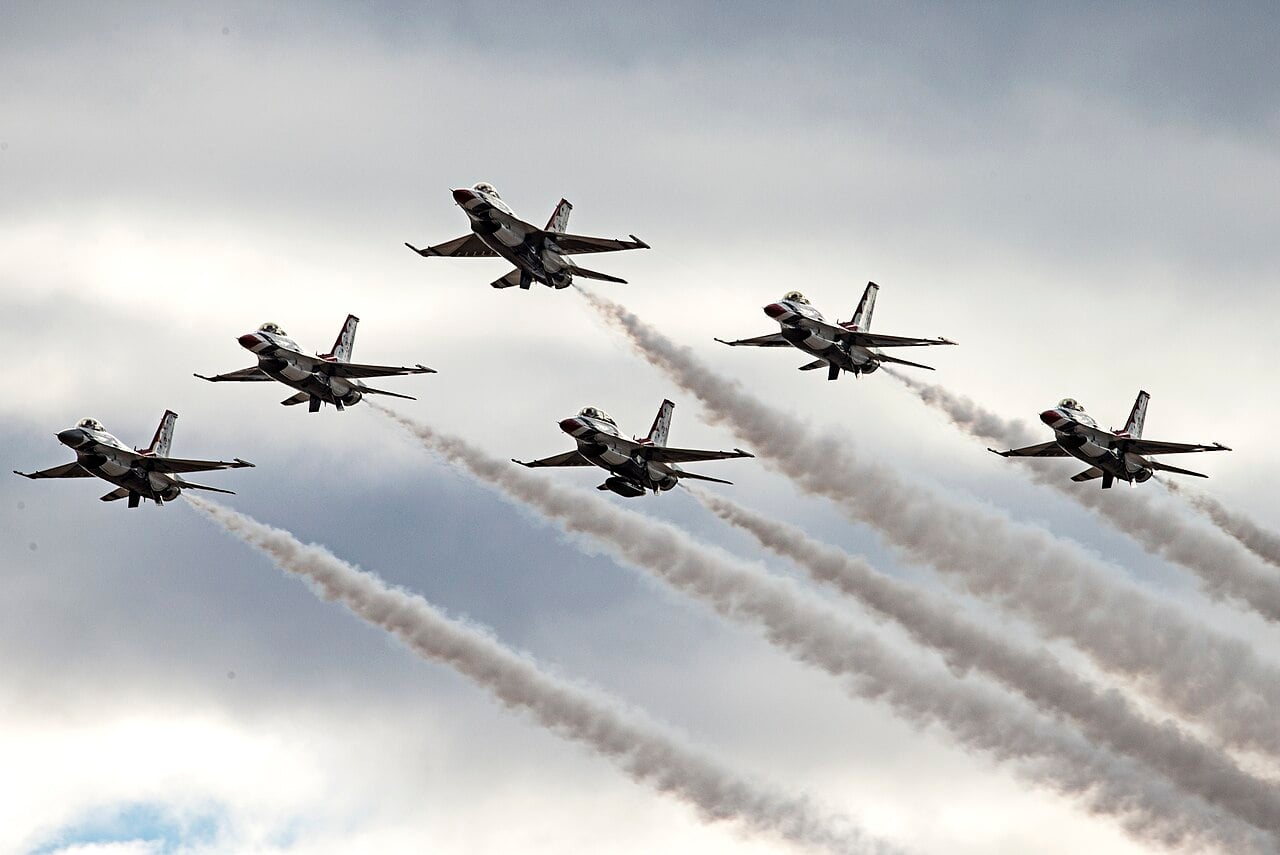
On 3 December 2025 a Thunderbirds F-16 was flying loops and rolls over the California desert. The pilot, an instructor with nearly 1,400 hours, had peeled off from the delta formation during the loops to spare a stiff neck and was waiting to rejoin for the rolls when the engine stalled.
Four minutes later the aircraft was a crater near Trona and the pilot was in a parachute. The report explaining why came out on Monday, and the answer is a single component that nobody could have seen without taking the engine apart.
Quick Facts
| The crash | 3 December 2025, near Trona, California, in the desert north-east of Death Valley |
| Aircraft | F-16 of the USAF Air Demonstration Squadron, the Thunderbirds |
| Report released | 21 September 2026 |
| Cause | One or more turned variable vanes in the high-pressure compressor of the Pratt & Whitney F100-PW-220 |
| Pilot | Instructor pilot with nearly 1,400 flight hours; ejected, minor injuries, discharged the same day |
| Time from stall to ejection | More than four minutes |
| Loss value | $33.5 million |
| Precedent | Same failure destroyed an F-16 near Holloman AFB on 30 April 2024 |
A vane turned the wrong way
Inside the high-pressure compressor of a Pratt & Whitney F100-PW-220 sit rows of variable stator vanes. They pivot to set the angle at which air arrives at the next row of rotor blades, keeping the compressor stable as the throttle moves. It is one of the more elegant pieces of engineering in a jet engine and it works by being precisely where it is supposed to be.
Investigators found that one or more of those vanes had turned out of alignment. The board describes the consequences as abnormal aerodynamic forces and irregular wake patterns — which is engineering language for the air arriving at the blades behind it in a shape they were never designed to absorb. The blades take the stress, vanes break or crack, and the engine, in the report’s word, fails catastrophically.
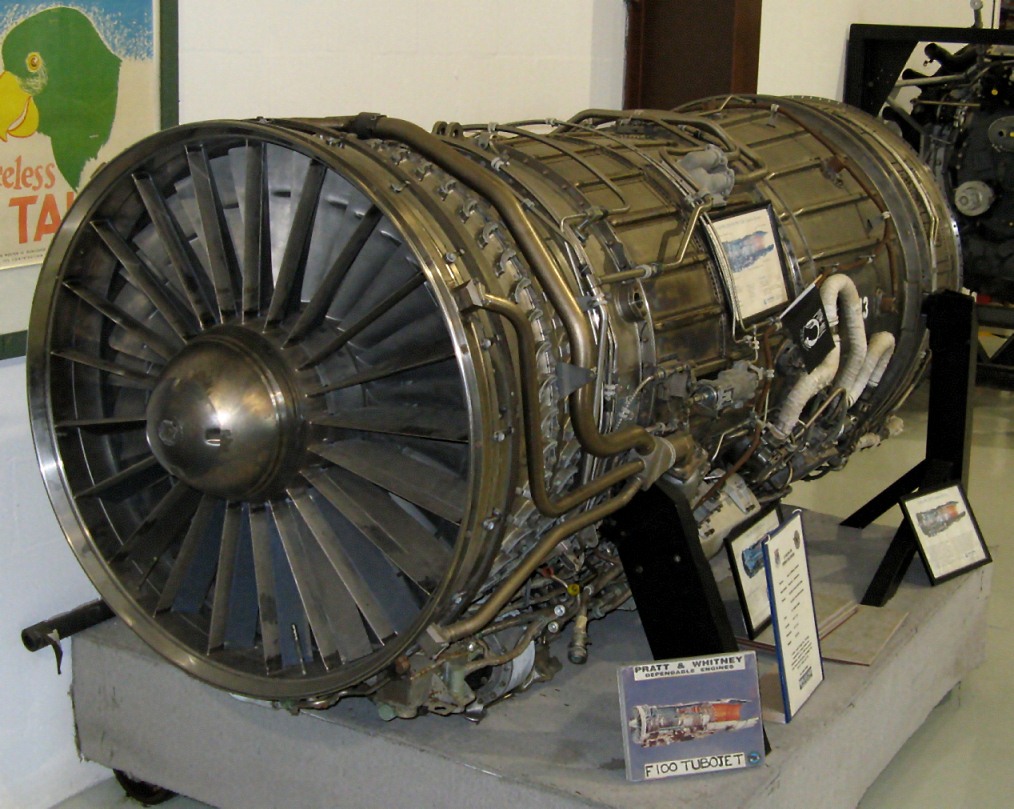
A Pratt & Whitney F100. The fan at the front is the part maintainers can see. The stage that failed sits deep in the core behind it, where a borescope cannot reach. Photo: Wikimedia Commons
The stage nobody can look at
This is where the story stops being about one jet.
Some stages of the F100-PW-220 can be inspected with a borescope. The fifth stage of the core cannot be seen at all without completely disassembling the engine. And Air Force technical orders do not require that disassembly after a foreign object damage event, provided the stages that can be inspected come back clean.
Both engines in this story had FOD events years earlier — the Thunderbird jet in October 2021, the Holloman aircraft in August 2022. In both cases maintainers found damage in the early inlet fan stages and nothing wrong in the fourth, seventh and eighth. So nothing further happened, because nothing further was required.
“The post-FOD event guidance contains an inherent inability to inspect these specific sections of the engine core. Additionally, the core of the engine is only inspected during scheduled maintenance when a core component reaches its overhaul threshold, leaving time for potential damage to progress undetected.”
Accident Investigation Board — Report on the 3 December 2025 Thunderbird F-16 crash, released 21 September 2026
The board stopped short of blaming the FOD events outright. It was, in its words, impossible to conclusively determine what turned the vanes. But it was willing to say that the inability to inspect the fifth and sixth stages afterwards substantially contributed to the mishap.
Twenty months earlier, the same failure
An F-16 went down near Holloman Air Force Base, New Mexico, on 30 April 2024. The report on that crash was released in February 2025 and reached the same conclusion: turned variable vanes, catastrophic compressor failure, total loss, pilot ejected.
Pratt & Whitney’s analysis for that board judged the earlier FOD event the probable cause of the vane turning. Other experts disagreed about whether damage could reach a later stage with nothing visible in the stages before it. The board recorded the cause as inconclusive and moved on.
“The F-16 program office is looking at this issue and is working closely with the Air Force Life Cycle Management Center’s Propulsion Directorate, the engineering authority for the engine, to correct any deficiencies.”
Air Force Life Cycle Management Center — Spokesperson, February 2025, after the Holloman report
That was nineteen months before this report. The Thunderbird investigation cites three known instances of compressor blades fracturing because of turned vanes, and does not identify the third. No other publicly released accident board report from the last decade mentions fractured compressor blades in the F100-PW-220.
CBS coverage from the day of the crash, before anyone knew what had failed.
Four minutes
What the pilot did with those four minutes is the part of the report worth reading in full. Speed was traded for altitude, buying height to work with. The secondary engine control was tried and did not help. An engine restart was attempted; it sounded, the pilot said, like things were grinding.
Only then came the ejection. The board’s assessment is unambiguous: ejecting was ultimately the only option which provided a favourable outcome.
Even that was not perfect. The ACES II seat carries hot gas from the ejection initiators to the sequence valves through two hoses, both meant to release automatically. One of them did not, and was torn free instead. It did not change the outcome — the pilot walked out of hospital the same day, reached first by a local civilian who had watched the aircraft come down, with Navy search and rescue arriving within minutes.
The aircraft was written off at $33.5 million. The engine stage that killed it is, as of this week, still one that field maintainers cannot inspect.
The Thunderbird F-16 crash of December 2025 was caused by a turned compressor vane in an engine stage that field maintainers cannot inspect.

migflug.com