FATAH-III: An Engineering Assessment of the Publicly Available Evidence

avx._4884

Registered Member
Joined
Jun 26, 2026
Messages
7
Reaction score
25
Reputation
146.7
Country of Origin
Country of Residence

A Fundamentally Different Analytical Challenge​


The FATAH-III is powered by a solid-fuel ramjet during its cruise phase. A ramjet does not carry oxidizer. It breathes atmospheric air, which provides the oxygen for combustion. This completely changes both the propulsion physics and the engineering framework used to estimate range.

Specifically: the Tsiolkovsky Rocket Equation does not apply to the cruise phase of the FATAH-III. Applying it here would produce badly wrong answers because the equation's fundamental assumption — a closed system expelling mass to generate thrust — is violated by an air-breathing engine. The correct analytical tool for a ramjet cruise missile's sustained flight is the Breguet Range Equation, the same framework used for jet-powered aircraft. This analysis uses both equations where each is actually appropriate: Tsiolkovsky for the solid-rocket booster phase; Breguet for the ramjet cruise phase. The terminal sea-skimming descent is treated as a third, qualitatively distinct phase.

One more caveat that has no equivalent in the previous two analyses: as of the date of this writing, no publicly observed test launch of the FATAH-III has been confirmed. No Notice to Airmen (NOTAM) has been identified. No launch event has appeared in commercially available satellite imagery. The May 2026 ISPR reveal comprised a brief video and still photograph of the missile on its launcher, and at least one credible defence publication (Quwa, May 2026) has noted that ISPR has previously used stock or repurposed footage in promotional content. The analysis proceeds on the assumption that the FATAH-III represents a real system, but the absence of a confirmed test is itself a significant data point that affects confidence in every performance figure discussed below.


What Is Actually Confirmed​


Given the system's very recent public disclosure (May 7–8, 2026), the confirmed data baseline is narrower than for the FATAH-I or FATAH-II.

ParameterStatusValueSource
Public unveilingConfirmedMay 7–8, 2026ISPR press briefing / video
Propulsion systemConfirmedSolid-fuel ramjet with solid-rocket boosterISPR / Quwa / Defence publications
Air intake configurationContested between sourcesLateral air intakes; Quwa describes four, EDR Magazine's technical examination of the HD-1C states two — ISPR imagery does not conclusively resolve thisQuwa (four); EDR Magazine (two, HD-1C reference)
LauncherConfirmed (imagery)Road-mobile twin-canister TEL, 8×8 chassisISPR imagery
SpeedISPR-statedMach 3–4ISPR
Flight profileDescribedHigh-altitude cruise (~15 km), terminal sea-skimming (5–10 m)Multiple analysts, consistent with HD-1
Dual mission roleDescribedLand-attack and anti-shipISPR / multiple publications
Derivation from HD-1Analyst consensusDerived from Guangdong Hongda HD-1 (Chinese manufacturer)Quwa, Clash Report, Defence Security Asia, Janes
NESCOM involvementDescribedNESCOM identified as primary development organisationQuwa
RangeNot officially stated by PakistanAnalyst estimates: 290–450 kmMultiple sources
WarheadAnalyst estimate240–400 kgCross-referencing HD-1 baseline
Confirmed test fireNot confirmedNo NOTAM, no satellite confirmation identifiedQuwa (May 2026)
Operational inductionUnclearMay signal strategic intent rather than current operational readinessQuwa

Three parameters that would be needed for a precise engineering analysis — total launch mass, solid-fuel grain mass, and confirmed cruise speed — are not directly published by ISPR. The HD-1 parent system provides documented reference values for all three.

A note on sources: Quwa Defence News is cited multiple times in this analysis because it provides the most technically detailed open-source coverage of the FATAH-III. However, where Quwa is the sole or primary source for a claim (NESCOM involvement, AESA seeker, intake count), that dependence is flagged explicitly. Corroborating sources — EDR Magazine, Army Recognition, Defence Security Asia, Janes, and ISPR directly — are used wherever they provide independent confirmation.

The HD-1 Baseline: Why It Matters and How It's Used Here​

Analysts across multiple independent publications have identified the FATAH-III as a derivative of the HD-1 family (specifically the HD-1C ground-launch variant) developed by Guangdong Hongda Blasting Co., Ltd. The evidence includes matching airframe geometry, consistent lateral-intake configuration, consistent booster-plus-ramjet architecture, and comparable size and performance claims. (The exact number of air intakes is subject to a source discrepancy discussed in the confirmed specifications table above.)

The HD-1C is more technically documented than the FATAH-III because Guangdong Hongda actively marketed the HD-1 at international defence exhibitions from 2018 onward, providing specifications to export customers and defence publications. This gives us a documented anchor for the analysis.

HD-1C confirmed specifications (from EDR Magazine, Army Recognition DSA 2024, Grokipedia, Janes):

ParameterHD-1C Value
Total length (with booster)8.3 m
Body diameter (cruise vehicle)375 mm
Booster diameter650 mm
Booster length2.9 m
Booster description"Weighs more than the missile itself" (EDR Magazine)
Total launch mass (with booster)2,200 kg
Cruise vehicle mass~1,200 kg (estimated by subtraction)
Warhead240 kg penetration-blast (HD-1C); up to 400 kg in some configurations
PropulsionIntegral solid-fuel ramjet + detachable solid-rocket booster
SpeedMach 2.5–3.5 (HD-1 base); some sources indicate up to Mach 4
Range290 km (official MTCR-referenced export figure)
Cruise altitude15 km (high altitude cruise)
Terminal approach altitude5–10 m (sea-skimming)
CEP (INS/GNSS)~20 m
CEP (with radar seeker)Single-shot 75% kill probability vs. moving naval target (manufacturer claim)

The key uncertainty in applying HD-1 data to the FATAH-III is the degree of Pakistani modification. Quwa notes that NESCOM may be drawing on China's commercial defence supply chain to source newer subsystems — potentially including AESA seekers — making the FATAH-III an indigenous derivative rather than a direct import. The engineering parameters used in this analysis are therefore anchored to the HD-1C baseline while acknowledging that Pakistani modifications may shift some values, particularly in guidance and seeker performance.

Understanding the Two-Phase Propulsion Architecture​

Before reaching the range calculation, the propulsion architecture needs to be explained in some detail because the FATAH-III is the first missile in the Fatah family where propulsion physics changes during flight.

Phase 1: The Solid Rocket Booster​


The FATAH-III launches using a conventional solid-fuel rocket booster — the same class of propulsion used by the FATAH-I and FATAH-II throughout their entire flight. The booster provides the initial thrust to lift the 2,200 kg system off its launcher and accelerate it to approximately Mach 2.0–2.2, the minimum airspeed at which the ramjet can generate meaningful thrust.

During this time, the Tsiolkovsky Rocket Equation describes the velocity gain. Once the design speed is reached, the booster separates and falls away, and the ramjet ignites. The missile is now considerably lighter (approximately 1,200–1,300 kg) and flying at supersonic speed.

The booster's direct range contribution is a secondary consideration — it is an enabler for the ramjet, not a significant range contributor in its own right. Its primary engineering function is threshold-crossing: getting the airspeed high enough for the ramjet to take over. The actual range contribution of the booster phase is not calculable here without the motor's thrust curve, burn time, and drag data — none of which are publicly available.

Phase 2: The Solid-Fuel Ramjet Cruise​


This is where the physics becomes genuinely different from any prior missile in the Fatah family, and where the Breguet Range Equation applies.
A ramjet works by:

  1. Capturing incoming air through the lateral intakes
  2. Slowing the air to subsonic speed inside the intake duct (compressing it — this is the "ram" in ramjet)
  3. Injecting solid fuel (in this design, pyrolyzed gases from a burning solid grain) into the compressed airflow
  4. Combusting fuel and air in the combustion chamber
  5. Ejecting the hot exhaust through a nozzle to generate thrust
Because the oxidizer comes from the atmosphere rather than from an onboard tank, the missile does not need to carry nearly as much propellant mass as a rocket achieving the same cruise performance. This is why a small solid-fuel grain can sustain Mach 3 cruise for hundreds of kilometres.

The tradeoff is operational: a ramjet needs a forward velocity to generate thrust. Below approximately Mach 1.5–2.0, it produces insufficient thrust to fly. Below Mach 1.0, it produces no thrust at all. This is why the booster is non-negotiable.

The solid-fuel ramjet (SFRJ) variant used in the HD-1 family burns a solid grain (likely HTPB-based with boron loading based on Chinese propellant research patterns) whose pyrolysis gases mix with ram air in the combustion chamber. The lateral intakes — whose count is contested between sources, with EDR Magazine's hands-on HD-1C description specifying two — provide airflow into a central combustion chamber running the length of the cruise vehicle.

Phase 3: Terminal Sea-Skimming Descent​


During terminal approach against naval targets, the FATAH-III descends from 15 km cruise altitude to 5–10 metres above the sea surface. This phase is tactically important — at 5–10 m, the missile falls below the radar horizon of most ship-based systems until it is very close — but it is propulsively very expensive.

At sea level, atmospheric air density is approximately three times higher than at 15 km altitude. A missile at the same Mach number near sea level would experience approximately three times the dynamic pressure compared to cruise altitude, substantially increasing aerodynamic drag. In practice the drag increase is not a simple 3× multiplier — it also depends on Mach-number-dependent drag coefficients, Reynolds number effects, and angle of attack — but the directional effect is significant: maintaining Mach 3 near sea level requires considerably more thrust than maintaining Mach 3 at 15 km. This phase burns through solid fuel significantly faster per unit distance covered, reducing the total effective range compared to a purely high-altitude mission profile.

The land-attack mode — terrain-following at moderate altitude rather than sea-skimming — avoids this penalty and is likely the reason land-attack range estimates (up to 450 km) run higher than the anti-ship sea-skimming profile would allow.


Step 1 — Mass Budget (After Booster Separation)​


Since the ramjet cruise phase governs range, the relevant mass budget is the cruise vehicle (missile minus the separated booster), not the total launch mass.

Using the HD-1C as the baseline and noting that FATAH-III Pakistani modifications likely affect guidance subsystems more than structural mass:

ComponentEstimated Mass
Warhead (land-attack variant)240–400 kg
Guidance electronics (INS/GNSS, radar seeker, potential AESA mods)45–65 kg
Airframe structure, control surfaces, intake hardware250–320 kg
Solid ramjet hardware (combustion chamber, nozzle, fuel casing)150–200 kg
Solid fuel grain (HTPB/boron-based)200–320 kg — assumed; this is the single largest unverifiable input in this analysis
Total cruise vehicle at booster separation~1,100–1,300 kg
Final cruise vehicle mass (fuel spent)~850–1,000 kg

Mass ratio (cruise vehicle) = ~1.25–1.40

The fuel grain mass (200–320 kg) is not publicly documented and should not be interpreted as an observed specification. It is inferred by subtracting all other estimated component masses from the HD-1C cruise vehicle mass of ~1,200 kg. Because every component mass above is itself an estimate, the fuel grain figure inherits all of their uncertainty in a compounding way. This is the number that most strongly drives the Breguet range calculation; a reader who disagrees with it should substitute their own value and recalculate accordingly.

This mass ratio is much lower than the FATAH-I or FATAH-II, but that is expected and correct. The ramjet does not need a high propellant mass fraction because it draws oxidizer from the atmosphere. What matters is not the ratio but how the Breguet equation converts that fuel into range.

Step 2 — Specific Impulse: Why Ramjet Values Look Impossibly High​

Before doing the range calculation, one number needs careful explanation because it will seem surprisingly large compared to solid-rocket Isp values.

The solid-fuel ramjet effective specific impulse (Isp, referenced to the solid fuel grain only, not the air that passes through the engine) at Mach 3 cruise conditions is approximately:

Isp,fuel≈600–900 seconds

This is dramatically higher than the 250 seconds of a conventional solid-rocket motor. The reason is that the fuel produces thrust by reacting with atmospheric air, which is not counted in the propellant mass. If you calculate Isp by including the air mass flowing through the engine, the values fall to a much lower effective figure — but in the Breguet equation, only the onboard fuel mass is consumed, so the fuel-referenced Isp is the correct value to use.

For a boron-loaded HTPB solid grain (consistent with Chinese SFRJ development patterns documented in open literature) at Mach 3 at 15 km altitude, published academic ranges suggest Isp_fuel values of 600–850 seconds. A central working estimate of 700 seconds is used below.

Effective exhaust velocity (fuel-referenced): Ve,fuel=Isp×g0=700×9.81=6,867 m/s

This figure is used solely in the Breguet equation context. It does not enter a Tsiolkovsky calculation. Applying it to a rocket equation would be a fundamental error.

Step 3 — Cruise Speed and Aerodynamic Efficiency​

Cruise speed: The International Standard Atmosphere gives the speed of sound at 15 km altitude as approximately 295 m/s. At Mach 3:

Vcruise=3.0×295=885 m/s≈3,186 km/h

At Mach 3.5 (upper ISPR-stated range):

Vcruise=3.5×295=1,033 m/s≈3,717 km/h

These are the cruise velocities that appear in the Breguet equation.

Lift-to-drag ratio (L/D): At supersonic speeds, slender missile bodies maintain positive L/D primarily through body lift (at small angles of attack) and fin-generated lift. Engineering studies of slender supersonic missile configurations commonly report L/D values in approximately this range:
  • Finned cylinder (minimal body lift): L/D ≈ 2.5–3.5
  • Cruciform fin arrangement (as on HD-1/FATAH-III): L/D ≈ 3.5–5.0
At Mach 3, parasitic drag is dominated by wave drag (compressibility effects). The HD-1/FATAH-III's slender proportions (375 mm diameter, ~5.4 m cruise vehicle length) give it a fineness ratio of approximately 14:1, which is well-suited for supersonic cruise. An L/D of approximately 4.0 is used as the central estimate, with bounds of 3.0–5.0.

Aerodynamic heating note: At Mach 3 at 15 km, stagnation temperatures reach approximately:

Tstagnation=Tambient×(1+0.2×M2)=216.7×(1+0.2×9)=607 K≈334°C

At Mach 4, this rises to approximately 637°C at cruise altitude. During terminal sea-skimming at Mach 3 at sea level, stagnation temperature reaches approximately 533°C. These temperatures are compatible with structures employing titanium alloys, stainless steels, nickel-based alloys, thermal barrier coatings, or high-temperature composites — all of which are used in modern supersonic missiles. They do not impose a hard physical ceiling at these Mach numbers for a missile this size.


Step 4 — Breguet Range Equation: Cruise Phase​


The Breguet Range Equation for a cruise missile is:

Rcruise=Vcruise×Isp,fuel×L/D×ln(Mi/Mf)

Where:
  • Vcruise = cruise velocity (m/s)
  • Isp,fuel = fuel-only specific impulse (s), producing units of metres when multiplied by velocity
  • L/D = lift-to-drag ratio at cruise
  • Mi/Mf = initial to final mass ratio of the cruise vehicle (after booster separation)
A note on formulation and dimensional consistency: Propulsion engineers more commonly express this in terms of thrust-specific fuel consumption (TSFC), where R=(V/TSFC)×(L/D)×ln(Mi/Mf) and TSFC=1/Isp,fuel. The fuel-referenced Isp form used here is mathematically equivalent — both are versions of the Breguet cruise range equation applied to an air-breathing engine where only the onboard fuel mass enters the logarithm. Dimensionally: with V in m/s and Isp,fuel in seconds, the product V×Isp,fule yields metres, making the equation dimensionally self-consistent without requiring an explicit g0 factor. (The g0 factor does appear if Isp is instead expressed as Isp×g0=Ve in m/s, which is the form used in the rocket equation context elsewhere in this analysis — those are different quantities and the notation distinction matters.) The numerical result is identical across formulations; the fuel-referenced Isp notation is used here because SFRJ Isp values are more readily available in open academic literature than TSFC figures for this class of propulsion system.

Important reminder: This equation estimates only the cruise-phase range. It does not account for the booster phase (whose range contribution cannot be calculated without the motor thrust curve) or drag penalties during terminal descent. Range estimates from this equation represent the contribution of the ramjet cruise phase, not total flight distance.

One representative engineering case (using assumed central values: Isp = 700 s, L/D = 4.0, fuel mass = 240 kg, cruise vehicle mass = 1,200 kg at ignition and 960 kg at burnout):

Rcruise=885×700×4.0×ln(200/960)

=885×700×4.0×ln(1.25)

=885×700×4.0×0.223

=885×625≈553 km (cruise phase only, under these assumed parameters)

This is an illustrative output of the chosen assumptions rather than a prediction of demonstrated missile performance. It is not a derived performance figure — it is what the Breguet equation produces under one internally consistent set of unverified assumptions. A reader who adjusts Isp, L/D, or fuel mass to different but equally plausible values will obtain a materially different number. The sensitivity table below shows how much the output moves across the assumption space.

This figure is higher than the analyst-estimated operational range of 290–450 km. The gap is explained by three factors that the Breguet equation does not capture:

1. Terminal sea-skimming drag penalty. At sea level, air density is approximately three times higher than at cruise altitude. A missile maintaining Mach 3 near the surface faces substantially higher drag than during high-altitude cruise, consuming fuel considerably faster per unit distance covered. This reduces effective range by a margin that depends heavily on how long the terminal approach lasts — a mission planning variable, not a calculable constant from available data.

2. Trajectory manoeuvres and guidance corrections. Active guidance throughout flight requires control surface deflection that adds induced drag continuously. This is captured neither in the Breguet equation nor in the HD-1's stated L/D.

3. Mission profile vs. straight-line cruise. Real missions involve course corrections, altitude changes, and in some cases waypoints to reduce radar exposure. All of these increase effective path length relative to straight-line range.

Under the assumed central case, and applying representative losses from the terminal sea-skimming penalty and guidance corrections, the effective total range output falls broadly within the 290–450 km analyst-estimated band — with the higher end of that range corresponding to land-attack profiles that avoid the sea-skimming drag penalty, and the lower end to constrained export configurations or longer terminal sea-skimming runs. It would be misleading to narrow this further; the cascade of assumed inputs (fuel mass → Isp → L/D → penalty losses) means the two-step derivation to a final figure carries too much inherited uncertainty to present as distinct scenario-specific numbers.

The 290 km lower bound in analyst estimates is best explained by MTCR export threshold management rather than any performance floor, as discussed in the MTCR section below.

Sensitivity analysis (all values assumed — none measured):

ScenarioIsp (s)L/DFuel mass (kg)Cruise phase range
Conservative6003.0200~360 km
Representative central7004.0240~553 km
Optimistic8505.0320~900 km

The spread (~360–900 km for the cruise phase alone) is large enough to make a single precise answer meaningless without access to actual motor data. This is not a weakness of the analysis — it is the honest consequence of the limited public information available. The 290–450 km analyst-estimated operational range occupies the lower portion of this distribution, consistent with a mission profile that includes the high-drag terminal sea-skimming approach.


Step 5 — The Sea-Skimming Phase: What It Costs and Why It's Worth It​


The descent from 15 km to 5–10 m above the sea is where the FATAH-III makes its most tactically significant exchange: it trades range for survivability.

At 5–10 m altitude, most shipborne search radars using X-band (approximately 9–10 GHz) face a severe geometric constraint. The radar horizon at this height is approximately 7–12 km for a ship with a 20-metre antenna height. At Mach 3 at sea level (~1,030 m/s), a missile appearing at 7 km range has approximately 7 seconds before impact; at 12 km, approximately 12 seconds. Against a CIWS system with a reaction-to-fire timeline of 5–10 seconds, this leaves almost no margin for an unprepared crew. Even against medium-range SAMs requiring radar lock and missile fly-out time, the engagement window is severely compressed.

The F-III's combination of Mach 3 speed and 5-metre terminal altitude is specifically designed to stress layered naval air defence at its most vulnerable transition zone — the boundary between long-range SAMs (which need detection time), medium-range SAMs (which need lock), and CIWS (which has little reaction time but limited kill probability at closing speeds above Mach 2).

Propulsively, the sea-skimming descent costs approximately:
  • Increased drag (3× baseline at sea level)
  • Additional fuel to maintain speed in denser air
  • The aerodynamic heating penalty (~533°C stagnation temperature at Mach 3 at sea level vs. ~334°C at 15 km)
Depending on the length of the low-altitude terminal approach — which is a tactical choice, not a fixed specification — this phase could reduce effective range by several tens of kilometres compared to an equivalent distance at cruise altitude. The exact penalty depends on terminal profile duration, maintained speed, and drag coefficient at low altitude, none of which are publicly known. The analyst-reported range ceiling of ~450 km likely assumes a relatively short terminal approach. Longer approaches for stealth purposes would reduce maximum range further.

e78fbfb43c7325ce49572af776d4a47d.jpg

MTCR Analysis — The 290 km Number Explained​


One of the most analytically useful numbers in the public record is 290 km — the range at which the HD-1 baseline is marketed for export.
The MTCR draws its strictest Category I line at 300 km range with 500 kg payload. Both conditions must be met for automatic Category I classification. The HD-1's warhead is 240 kg (well below the 500 kg payload threshold), and the range is officially 290 km (10 km below the 300 km range threshold). The proximity of these figures to the MTCR threshold strongly suggests deliberate export-oriented specification management. Guangdong Hongda engineered the HD-1's export specifications to sit precisely below both MTCR Category I triggers, making it exportable without triggering the regime's most restrictive tier.

For the FATAH-III, the relevant comparison has shifted:
  • Pakistan's domestically retained warhead is reportedly 240–400 kg. Even at 400 kg, this stays below the 500 kg MTCR payload threshold.
  • The domestic range is estimated at 290–450 km. The 450 km end clearly exceeds the 300 km MTCR range trigger.
  • Pakistan is not an MTCR signatory. However, it is sensitive to proliferation-related restrictions on dual-use technology it receives from partners.
The practical implication is that Pakistan can operate a 400–450 km FATAH-III domestically without formal MTCR obligations, since it is not a signatory. However, any attempt to export the system would face Category I scrutiny above 300 km range, and Pakistan's export product would almost certainly be marketed with a 290 km range cap — exactly mirroring the original HD-1 MTCR positioning strategy.

This makes the 290 km lower bound on the analyst range estimate not a performance floor but an MTCR export ceiling deliberately inherited from the parent system. The available open-source evidence suggests that a domestic Pakistani configuration could exceed the 290 km export figure, but this remains unverified until confirmed flight testing establishes actual performance.


Comparison With Analogous Systems​


SystemOriginSpeedRangePropulsionWarheadStatus
BrahMos (Block I)India/RussiaMach 2.8290–300 kmLiquid-fuel ramjet + solid booster200–300 kg20+ years operational; tri-service
BrahMos (ER)India/RussiaMach 2.8450–500 kmLiquid-fuel ramjet + solid booster200–300 kgOperational (2022+)
CM-302 / YJ-12EChinaMach 3400 kmLiquid-fuel ramjet + solid booster250 kgChina Navy operational; on FATAH-III's Tughril-class ships
HD-1CChinaMach 2.5–3.5290 kmSolid-fuel ramjet + solid booster240 kgExport; tested 2018
FATAH-IIIPakistanMach 3–4 (ISPR)290–450 km (analyst est.)Solid-fuel ramjet + solid booster (widely assessed by open-source analysts as HD-1 derived; not officially confirmed)240–400 kgRevealed; no confirmed test fire

The BrahMos comparison is unavoidable in any regional discussion of this system, so it deserves honest treatment rather than dismissal or cheerleading.

Where the FATAH-III appears competitive on paper: Speed (ISPR states Mach 3–4, vs. BrahMos Block I at Mach 2.8), comparable warhead mass, similar flight profile. On paper speed the FATAH-III appears competitive. The additional 0.2–1.2 Mach numbers above BrahMos compress adversary reaction time meaningfully.

Where BrahMos retains a structural advantage: BrahMos has been operationally integrated across the Indian Army, Navy, and Air Force for nearly two decades with documented combat reliability. The FATAH-III as of May 2026 has no confirmed test fire. No system is operationally comparable to one that has not been tested. That gap — between "revealed" and "operational" — is not a small one in missile development. Even if the FATAH-III performs exactly to specification when tested, induction, operator training, multi-domain integration, and logistical support chains all take years to develop.

The solid vs. liquid ramjet distinction: BrahMos uses a liquid-fuel ramjet (kerosene-based), while the FATAH-III uses a solid-fuel ramjet. Solid-fuel ramjets offer faster launch readiness (no fuelling procedure), simpler field logistics, and reduced handling hazard. Liquid-fuel ramjets typically offer more precise thrust modulation across varying flight conditions and can be throttled during flight in ways that solid grains cannot easily match. For a ground-based strike weapon prioritising rapid deployment, the solid-fuel approach is arguably better suited to Pakistan's operational requirements. For performance ceiling flexibility, the liquid system has theoretical advantages that may not matter in the FATAH-III's intended mission profiles.


Technology Provenance and Localization: A Critical Uncertainty​


The degree to which the FATAH-III is a Pakistani indigenous derivative versus an HD-1C in Pakistani livery matters enormously for assessing actual performance.

Three scenarios exist on a spectrum:

Scenario A — Direct technology transfer / licensed production. NESCOM manufactures the system under license using Guangdong Hongda's technical package with minimal modification. Performance is essentially HD-1C performance. This scenario implies Pakistan's claimed Mach 3–4 is credible since the HD-1 baseline achieves Mach 2.5–3.5.

Scenario B — Modified derivative. NESCOM has modified key subsystems — Quwa specifically suggests AESA seeker capability, though this is not corroborated by ISPR or other independent sources — potentially including guidance algorithms and navigation suite, while retaining the Chinese propulsion core. Performance is broadly similar to HD-1C but with meaningfully improved terminal accuracy and possibly reduced radar cross-section. This is the scenario most consistent with Pakistan's stated goal of "indigenous" development within the Fatah family.

Scenario C — Significant propulsion or structural divergence. NESCOM has made sufficient changes to the airframe or propulsion system that HD-1C specifications are unreliable guides to FATAH-III performance. This scenario cannot be ruled out but is not well-supported by current open-source evidence, which consistently describes the systems as physically and architecturally near-identical.

The analysis in the steps above uses the HD-1C baseline (Scenario A/B), which is the most evidence-consistent approach. If Scenario C is correct, the range and speed estimates derived here should be treated with lower confidence. Seeker modifications (Scenario B) would not significantly affect the propulsion and range analysis but would improve the CEP below the HD-1's ~20 m figure.


Key Uncertainties in This Analysis​


No confirmed test fire — the master uncertainty. Every number in this analysis is anchored to the HD-1 parent system's documented specifications and open-source engineering principles. The FATAH-III has not, as of May 2026, produced a confirmed test from which actual flight performance can be inferred. Until it does, the analysis is an assessment of what the system should be capable of based on its described architecture — not a record of what it has actually achieved in flight.

Solid fuel grain mass and composition. The fuel grain mass is the largest single source of uncertainty in the Breguet range calculation. A difference of 80 kg in fuel grain mass (within the plausible range of 200–320 kg estimated here) shifts the Breguet cruise range by approximately 80–120 km.

Effective Isp at operational Mach. The Isp of 700 s used here is a plausible central estimate for a boron-HTPB solid grain at Mach 3 at 15 km. Published academic data show SFRJ performance varying significantly with fuel composition, combustion efficiency, and altitude. If the HD-1 uses a different grain formulation, the actual Isp could be 20–30% different in either direction.

Terminal approach length. The analyst range band of 290–450 km depends critically on how long the terminal sea-skimming phase lasts. This is a mission-planning variable, not a fixed specification — and it can shift effective range by 60–100 km depending on the tactical requirement.
ISPR Mach 3–4 claim. The upper end of this range (Mach 4) is physically plausible for a ramjet-powered missile, although sustaining that speed efficiently throughout cruise is considerably more demanding than operating at Mach 3 — ramjet inlet efficiency degrades above approximately Mach 3.5–4 as intake pressure recovery falls and combustion stability becomes harder to maintain. The HD-1 baseline is rated at Mach 2.5–3.5; ISPR's claimed Mach 4 ceiling may reflect a terminal dive acceleration or an edge performance figure under specific conditions rather than a sustained cruise capability.

Degree of localization. As described above, the extent of Pakistani engineering changes relative to the HD-1C baseline cannot be confirmed from open-source information.


One Number Worth Watching​


When the FATAH-III eventually undergoes a confirmed test fire — which it will need to do before operational deployment — the range declared in Pakistan's NOTAM (if published) and any official post-test range statement will be the first piece of independently verifiable flight data on this system. At that point, this analysis can be re-evaluated against actual flight data rather than parent-system analogues.

Until then, the most honest summary of the range question is: the HD-1 parent system achieves 290 km at Mach 2.5–3.5. Pakistan's domestic variant appears designed for a longer-range land-attack profile (analysts estimate up to 450 km), which is physically plausible given the HD-1's MTCR-capped export configuration. The 290 km figure in analyst reporting represents an inherited MTCR floor for the export case, not a performance ceiling for the domestic system.

Conclusion​


The FATAH-III presents a genuinely different engineering analysis from any previous member of the Fatah family. The propulsion physics change mid-flight — from a Tsiolkovsky-governed solid-rocket booster phase to a Breguet-governed air-breathing ramjet cruise phase, followed by a drag-intensive terminal approach. Applying a single rocket-equation framework to this system would be the wrong tool for the job.

What the Breguet analysis establishes is that a solid-fuel ramjet cruise vehicle of the type widely assessed by open-source analysts as derived from the HD-1, with fuel mass in the assumed range of 200–320 kg and plausible L/D at Mach 3, can achieve cruise-phase ranges of approximately 360–900 km across the full uncertainty band of assumptions. The 290–450 km analyst-estimated operational range is broadly consistent with this band under the assumptions described, once the terminal sea-skimming drag penalty and guidance overhead are applied.

The official HD-1 baseline figure of 290 km, which is replicated in many range estimates for the FATAH-III, should be read as a deliberate MTCR export ceiling, not the physical range limit of the domestic system.

On the BrahMos comparison that dominates regional commentary: the FATAH-III is credibly competitive on the parameters visible on paper — speed, estimated warhead, range. The gap that cannot be papered over is operational maturity. BrahMos has two decades of testing, integration, and deployment across three services. The FATAH-III has been in public view since May 2026, has not had a publicly confirmed test fire, and is not yet demonstrably integrated into Pakistan's Army, Navy, or Air Force in a multi-domain sense. Both of those things can change — they typically do, given sufficient time and resources. At present, they represent an important distinction between a capability that exists on paper and one that has been proven in flight.

This analysis is an open-source engineering exercise using publicly available information, established propulsion equations (Tsiolkovsky for the booster phase; Breguet for the cruise phase in its fuel-referenced Isp form, equivalent to the TSFC formulation), and documented HD-1 parent system specifications as assessed by open-source analysts. No classified information was used or implied. The derivation from the HD-1C baseline is treated as analyst consensus, not a confirmed statement by either NESCOM or Guangdong Hongda. Corrections, alternative cruise-phase calculations, or additional open-source data on fuel grain composition, confirmed test results, or propulsion parameters are welcome.


Isp values for the solid-fuel ramjet cruise phase reference onboard solid fuel mass only, consistent with Breguet equation convention for air-breathing propulsion. These are not comparable to solid-rocket Isp values without this clarification. All mass estimates are anchored to documented HD-1C specifications and adjusted for Pakistani warhead range claims; they are engineering estimates, not manufacturer figures. The absence of a confirmed test fire is noted as a fundamental caveat on all performance estimates.

References​

Primary Sources​

  • ISPR (Inter-Services Public Relations, Pakistan). Fatah-3 Supersonic Cruise Missile Unveiling Press Briefing and Video. May 7–8, 2026.
  • ISPR. Army Rocket Force Command operational statements. Various 2023–2026.

Technical and Defence Publications​


  • EDR Magazine (European Defence Review). HD-1C Ground-Launched Supersonic Cruise Missile: Technical Examination. DSA 2024 coverage. (Source for two lateral air intakes, booster dimensional data, and "weighs more than the missile itself" booster mass description.)
  • Army Recognition. HD-1 / HD-1C specifications and DSA 2024 display. 2024.
  • Janes Defence. HD-1 family: propulsion, performance, and export specifications. Various.
  • Quwa Defence News. Pakistan's Fatah-3 Supersonic Cruise Missile: Analysis and HD-1 Derivation Assessment. May 2026. (Primary open-source coverage of the FATAH-III reveal; sole source for some claims including NESCOM involvement and intake count — flagged in text.)
  • Clash Report. FATAH-III system identification and HD-1 comparison. May 2026.
  • Defence Security Asia. Pakistan unveils Fatah-3; mass and performance assessment. May 2026.

Propulsion and Aerodynamic References​

  • Breguet, L. Calcul du Poids et du Prix de Revient des Avions de Grande Vitesse (original derivation of the range equation). 1923. Modern application to cruise missiles follows the same formulation with fuel-referenced Isp for air-breathing engines.
  • US Standard Atmosphere, 1976 (NOAA/NASA/USAF). Speed of sound and air density by altitude — used for cruise speed and dynamic pressure calculations in this analysis.
  • Stull, D.R. et al. JANAF Thermochemical Tables. NIST. (Standard reference for propellant thermochemistry; HTPB/boron Isp estimation range consistent with published SFRJ academic data.)
  • AIAA Aerospace Sciences Meeting proceedings on solid-fuel ramjet performance: multiple authors, 2000–2020. (Basis for the 600–900 s fuel-referenced Isp range cited in Step 2.)
  • Anderson, J.D. Introduction to Flight, 8th ed. McGraw-Hill. (Stagnation temperature formula used in Step 3 aerodynamic heating section.)

Notes on Source Limitations​


Several parameters central to this analysis — total launch mass, solid fuel grain mass, and the exact number of air intakes — are not definitively confirmed by any single authoritative public source. Where sources disagree (notably on intake count: EDR Magazine versus Quwa), the disagreement is noted in the text rather than resolved by preference. All engineering calculations should be understood as illustrative estimates bounded by the sensitivity analysis in Step 4, not as derived performance specifications.

 

Attachments

  • HD-1-Missile-Launcher-1024x576.jpg
    HD-1-Missile-Launcher-1024x576.jpg
    23.2 KB · Views: 0
  • 51543139611_238ccbab31_3k.jpg
    51543139611_238ccbab31_3k.jpg
    1.1 MB · Views: 0
  • e78fbfb43c7325ce49572af776d4a47d.jpg
    e78fbfb43c7325ce49572af776d4a47d.jpg
    60.9 KB · Views: 0

A Fundamentally Different Analytical Challenge​


The FATAH-III is powered by a solid-fuel ramjet during its cruise phase. A ramjet does not carry oxidizer. It breathes atmospheric air, which provides the oxygen for combustion. This completely changes both the propulsion physics and the engineering framework used to estimate range.

Specifically: the Tsiolkovsky Rocket Equation does not apply to the cruise phase of the FATAH-III. Applying it here would produce badly wrong answers because the equation's fundamental assumption — a closed system expelling mass to generate thrust — is violated by an air-breathing engine. The correct analytical tool for a ramjet cruise missile's sustained flight is the Breguet Range Equation, the same framework used for jet-powered aircraft. This analysis uses both equations where each is actually appropriate: Tsiolkovsky for the solid-rocket booster phase; Breguet for the ramjet cruise phase. The terminal sea-skimming descent is treated as a third, qualitatively distinct phase.

One more caveat that has no equivalent in the previous two analyses: as of the date of this writing, no publicly observed test launch of the FATAH-III has been confirmed. No Notice to Airmen (NOTAM) has been identified. No launch event has appeared in commercially available satellite imagery. The May 2026 ISPR reveal comprised a brief video and still photograph of the missile on its launcher, and at least one credible defence publication (Quwa, May 2026) has noted that ISPR has previously used stock or repurposed footage in promotional content. The analysis proceeds on the assumption that the FATAH-III represents a real system, but the absence of a confirmed test is itself a significant data point that affects confidence in every performance figure discussed below.


What Is Actually Confirmed​


Given the system's very recent public disclosure (May 7–8, 2026), the confirmed data baseline is narrower than for the FATAH-I or FATAH-II.

ParameterStatusValueSource
Public unveilingConfirmedMay 7–8, 2026ISPR press briefing / video
Propulsion systemConfirmedSolid-fuel ramjet with solid-rocket boosterISPR / Quwa / Defence publications
Air intake configurationContested between sourcesLateral air intakes; Quwa describes four, EDR Magazine's technical examination of the HD-1C states two — ISPR imagery does not conclusively resolve thisQuwa (four); EDR Magazine (two, HD-1C reference)
LauncherConfirmed (imagery)Road-mobile twin-canister TEL, 8×8 chassisISPR imagery
SpeedISPR-statedMach 3–4ISPR
Flight profileDescribedHigh-altitude cruise (~15 km), terminal sea-skimming (5–10 m)Multiple analysts, consistent with HD-1
Dual mission roleDescribedLand-attack and anti-shipISPR / multiple publications
Derivation from HD-1Analyst consensusDerived from Guangdong Hongda HD-1 (Chinese manufacturer)Quwa, Clash Report, Defence Security Asia, Janes
NESCOM involvementDescribedNESCOM identified as primary development organisationQuwa
RangeNot officially stated by PakistanAnalyst estimates: 290–450 kmMultiple sources
WarheadAnalyst estimate240–400 kgCross-referencing HD-1 baseline
Confirmed test fireNot confirmedNo NOTAM, no satellite confirmation identifiedQuwa (May 2026)
Operational inductionUnclearMay signal strategic intent rather than current operational readinessQuwa

Three parameters that would be needed for a precise engineering analysis — total launch mass, solid-fuel grain mass, and confirmed cruise speed — are not directly published by ISPR. The HD-1 parent system provides documented reference values for all three.

A note on sources: Quwa Defence News is cited multiple times in this analysis because it provides the most technically detailed open-source coverage of the FATAH-III. However, where Quwa is the sole or primary source for a claim (NESCOM involvement, AESA seeker, intake count), that dependence is flagged explicitly. Corroborating sources — EDR Magazine, Army Recognition, Defence Security Asia, Janes, and ISPR directly — are used wherever they provide independent confirmation.

The HD-1 Baseline: Why It Matters and How It's Used Here​

Analysts across multiple independent publications have identified the FATAH-III as a derivative of the HD-1 family (specifically the HD-1C ground-launch variant) developed by Guangdong Hongda Blasting Co., Ltd. The evidence includes matching airframe geometry, consistent lateral-intake configuration, consistent booster-plus-ramjet architecture, and comparable size and performance claims. (The exact number of air intakes is subject to a source discrepancy discussed in the confirmed specifications table above.)

The HD-1C is more technically documented than the FATAH-III because Guangdong Hongda actively marketed the HD-1 at international defence exhibitions from 2018 onward, providing specifications to export customers and defence publications. This gives us a documented anchor for the analysis.

HD-1C confirmed specifications (from EDR Magazine, Army Recognition DSA 2024, Grokipedia, Janes):

ParameterHD-1C Value
Total length (with booster)8.3 m
Body diameter (cruise vehicle)375 mm
Booster diameter650 mm
Booster length2.9 m
Booster description"Weighs more than the missile itself" (EDR Magazine)
Total launch mass (with booster)2,200 kg
Cruise vehicle mass~1,200 kg (estimated by subtraction)
Warhead240 kg penetration-blast (HD-1C); up to 400 kg in some configurations
PropulsionIntegral solid-fuel ramjet + detachable solid-rocket booster
SpeedMach 2.5–3.5 (HD-1 base); some sources indicate up to Mach 4
Range290 km (official MTCR-referenced export figure)
Cruise altitude15 km (high altitude cruise)
Terminal approach altitude5–10 m (sea-skimming)
CEP (INS/GNSS)~20 m
CEP (with radar seeker)Single-shot 75% kill probability vs. moving naval target (manufacturer claim)

The key uncertainty in applying HD-1 data to the FATAH-III is the degree of Pakistani modification. Quwa notes that NESCOM may be drawing on China's commercial defence supply chain to source newer subsystems — potentially including AESA seekers — making the FATAH-III an indigenous derivative rather than a direct import. The engineering parameters used in this analysis are therefore anchored to the HD-1C baseline while acknowledging that Pakistani modifications may shift some values, particularly in guidance and seeker performance.

Understanding the Two-Phase Propulsion Architecture​

Before reaching the range calculation, the propulsion architecture needs to be explained in some detail because the FATAH-III is the first missile in the Fatah family where propulsion physics changes during flight.

Phase 1: The Solid Rocket Booster​


The FATAH-III launches using a conventional solid-fuel rocket booster — the same class of propulsion used by the FATAH-I and FATAH-II throughout their entire flight. The booster provides the initial thrust to lift the 2,200 kg system off its launcher and accelerate it to approximately Mach 2.0–2.2, the minimum airspeed at which the ramjet can generate meaningful thrust.

During this time, the Tsiolkovsky Rocket Equation describes the velocity gain. Once the design speed is reached, the booster separates and falls away, and the ramjet ignites. The missile is now considerably lighter (approximately 1,200–1,300 kg) and flying at supersonic speed.

The booster's direct range contribution is a secondary consideration — it is an enabler for the ramjet, not a significant range contributor in its own right. Its primary engineering function is threshold-crossing: getting the airspeed high enough for the ramjet to take over. The actual range contribution of the booster phase is not calculable here without the motor's thrust curve, burn time, and drag data — none of which are publicly available.

Phase 2: The Solid-Fuel Ramjet Cruise​


This is where the physics becomes genuinely different from any prior missile in the Fatah family, and where the Breguet Range Equation applies.
A ramjet works by:

  1. Capturing incoming air through the lateral intakes
  2. Slowing the air to subsonic speed inside the intake duct (compressing it — this is the "ram" in ramjet)
  3. Injecting solid fuel (in this design, pyrolyzed gases from a burning solid grain) into the compressed airflow
  4. Combusting fuel and air in the combustion chamber
  5. Ejecting the hot exhaust through a nozzle to generate thrust
Because the oxidizer comes from the atmosphere rather than from an onboard tank, the missile does not need to carry nearly as much propellant mass as a rocket achieving the same cruise performance. This is why a small solid-fuel grain can sustain Mach 3 cruise for hundreds of kilometres.

The tradeoff is operational: a ramjet needs a forward velocity to generate thrust. Below approximately Mach 1.5–2.0, it produces insufficient thrust to fly. Below Mach 1.0, it produces no thrust at all. This is why the booster is non-negotiable.

The solid-fuel ramjet (SFRJ) variant used in the HD-1 family burns a solid grain (likely HTPB-based with boron loading based on Chinese propellant research patterns) whose pyrolysis gases mix with ram air in the combustion chamber. The lateral intakes — whose count is contested between sources, with EDR Magazine's hands-on HD-1C description specifying two — provide airflow into a central combustion chamber running the length of the cruise vehicle.

Phase 3: Terminal Sea-Skimming Descent​


During terminal approach against naval targets, the FATAH-III descends from 15 km cruise altitude to 5–10 metres above the sea surface. This phase is tactically important — at 5–10 m, the missile falls below the radar horizon of most ship-based systems until it is very close — but it is propulsively very expensive.

At sea level, atmospheric air density is approximately three times higher than at 15 km altitude. A missile at the same Mach number near sea level would experience approximately three times the dynamic pressure compared to cruise altitude, substantially increasing aerodynamic drag. In practice the drag increase is not a simple 3× multiplier — it also depends on Mach-number-dependent drag coefficients, Reynolds number effects, and angle of attack — but the directional effect is significant: maintaining Mach 3 near sea level requires considerably more thrust than maintaining Mach 3 at 15 km. This phase burns through solid fuel significantly faster per unit distance covered, reducing the total effective range compared to a purely high-altitude mission profile.

The land-attack mode — terrain-following at moderate altitude rather than sea-skimming — avoids this penalty and is likely the reason land-attack range estimates (up to 450 km) run higher than the anti-ship sea-skimming profile would allow.


Step 1 — Mass Budget (After Booster Separation)​


Since the ramjet cruise phase governs range, the relevant mass budget is the cruise vehicle (missile minus the separated booster), not the total launch mass.

Using the HD-1C as the baseline and noting that FATAH-III Pakistani modifications likely affect guidance subsystems more than structural mass:

ComponentEstimated Mass
Warhead (land-attack variant)240–400 kg
Guidance electronics (INS/GNSS, radar seeker, potential AESA mods)45–65 kg
Airframe structure, control surfaces, intake hardware250–320 kg
Solid ramjet hardware (combustion chamber, nozzle, fuel casing)150–200 kg
Solid fuel grain (HTPB/boron-based)200–320 kg — assumed; this is the single largest unverifiable input in this analysis
Total cruise vehicle at booster separation~1,100–1,300 kg
Final cruise vehicle mass (fuel spent)~850–1,000 kg

Mass ratio (cruise vehicle) = ~1.25–1.40

The fuel grain mass (200–320 kg) is not publicly documented and should not be interpreted as an observed specification. It is inferred by subtracting all other estimated component masses from the HD-1C cruise vehicle mass of ~1,200 kg. Because every component mass above is itself an estimate, the fuel grain figure inherits all of their uncertainty in a compounding way. This is the number that most strongly drives the Breguet range calculation; a reader who disagrees with it should substitute their own value and recalculate accordingly.

This mass ratio is much lower than the FATAH-I or FATAH-II, but that is expected and correct. The ramjet does not need a high propellant mass fraction because it draws oxidizer from the atmosphere. What matters is not the ratio but how the Breguet equation converts that fuel into range.

Step 2 — Specific Impulse: Why Ramjet Values Look Impossibly High​

Before doing the range calculation, one number needs careful explanation because it will seem surprisingly large compared to solid-rocket Isp values.

The solid-fuel ramjet effective specific impulse (Isp, referenced to the solid fuel grain only, not the air that passes through the engine) at Mach 3 cruise conditions is approximately:

Isp,fuel≈600–900 seconds

This is dramatically higher than the 250 seconds of a conventional solid-rocket motor. The reason is that the fuel produces thrust by reacting with atmospheric air, which is not counted in the propellant mass. If you calculate Isp by including the air mass flowing through the engine, the values fall to a much lower effective figure — but in the Breguet equation, only the onboard fuel mass is consumed, so the fuel-referenced Isp is the correct value to use.

For a boron-loaded HTPB solid grain (consistent with Chinese SFRJ development patterns documented in open literature) at Mach 3 at 15 km altitude, published academic ranges suggest Isp_fuel values of 600–850 seconds. A central working estimate of 700 seconds is used below.

Effective exhaust velocity (fuel-referenced): Ve,fuel=Isp×g0=700×9.81=6,867 m/s

This figure is used solely in the Breguet equation context. It does not enter a Tsiolkovsky calculation. Applying it to a rocket equation would be a fundamental error.

Step 3 — Cruise Speed and Aerodynamic Efficiency​

Cruise speed: The International Standard Atmosphere gives the speed of sound at 15 km altitude as approximately 295 m/s. At Mach 3:

Vcruise=3.0×295=885 m/s≈3,186 km/h

At Mach 3.5 (upper ISPR-stated range):

Vcruise=3.5×295=1,033 m/s≈3,717 km/h

These are the cruise velocities that appear in the Breguet equation.

Lift-to-drag ratio (L/D): At supersonic speeds, slender missile bodies maintain positive L/D primarily through body lift (at small angles of attack) and fin-generated lift. Engineering studies of slender supersonic missile configurations commonly report L/D values in approximately this range:
  • Finned cylinder (minimal body lift): L/D ≈ 2.5–3.5
  • Cruciform fin arrangement (as on HD-1/FATAH-III): L/D ≈ 3.5–5.0
At Mach 3, parasitic drag is dominated by wave drag (compressibility effects). The HD-1/FATAH-III's slender proportions (375 mm diameter, ~5.4 m cruise vehicle length) give it a fineness ratio of approximately 14:1, which is well-suited for supersonic cruise. An L/D of approximately 4.0 is used as the central estimate, with bounds of 3.0–5.0.

Aerodynamic heating note: At Mach 3 at 15 km, stagnation temperatures reach approximately:

Tstagnation=Tambient×(1+0.2×M2)=216.7×(1+0.2×9)=607 K≈334°C

At Mach 4, this rises to approximately 637°C at cruise altitude. During terminal sea-skimming at Mach 3 at sea level, stagnation temperature reaches approximately 533°C. These temperatures are compatible with structures employing titanium alloys, stainless steels, nickel-based alloys, thermal barrier coatings, or high-temperature composites — all of which are used in modern supersonic missiles. They do not impose a hard physical ceiling at these Mach numbers for a missile this size.


Step 4 — Breguet Range Equation: Cruise Phase​


The Breguet Range Equation for a cruise missile is:

Rcruise=Vcruise×Isp,fuel×L/D×ln(Mi/Mf)

Where:
  • Vcruise = cruise velocity (m/s)
  • Isp,fuel = fuel-only specific impulse (s), producing units of metres when multiplied by velocity
  • L/D = lift-to-drag ratio at cruise
  • Mi/Mf = initial to final mass ratio of the cruise vehicle (after booster separation)
A note on formulation and dimensional consistency: Propulsion engineers more commonly express this in terms of thrust-specific fuel consumption (TSFC), where R=(V/TSFC)×(L/D)×ln(Mi/Mf) and TSFC=1/Isp,fuel. The fuel-referenced Isp form used here is mathematically equivalent — both are versions of the Breguet cruise range equation applied to an air-breathing engine where only the onboard fuel mass enters the logarithm. Dimensionally: with V in m/s and Isp,fuel in seconds, the product V×Isp,fule yields metres, making the equation dimensionally self-consistent without requiring an explicit g0 factor. (The g0 factor does appear if Isp is instead expressed as Isp×g0=Ve in m/s, which is the form used in the rocket equation context elsewhere in this analysis — those are different quantities and the notation distinction matters.) The numerical result is identical across formulations; the fuel-referenced Isp notation is used here because SFRJ Isp values are more readily available in open academic literature than TSFC figures for this class of propulsion system.

Important reminder: This equation estimates only the cruise-phase range. It does not account for the booster phase (whose range contribution cannot be calculated without the motor thrust curve) or drag penalties during terminal descent. Range estimates from this equation represent the contribution of the ramjet cruise phase, not total flight distance.

One representative engineering case (using assumed central values: Isp = 700 s, L/D = 4.0, fuel mass = 240 kg, cruise vehicle mass = 1,200 kg at ignition and 960 kg at burnout):

Rcruise=885×700×4.0×ln(200/960)

=885×700×4.0×ln(1.25)

=885×700×4.0×0.223

=885×625≈553 km (cruise phase only, under these assumed parameters)

This is an illustrative output of the chosen assumptions rather than a prediction of demonstrated missile performance. It is not a derived performance figure — it is what the Breguet equation produces under one internally consistent set of unverified assumptions. A reader who adjusts Isp, L/D, or fuel mass to different but equally plausible values will obtain a materially different number. The sensitivity table below shows how much the output moves across the assumption space.

This figure is higher than the analyst-estimated operational range of 290–450 km. The gap is explained by three factors that the Breguet equation does not capture:

1. Terminal sea-skimming drag penalty. At sea level, air density is approximately three times higher than at cruise altitude. A missile maintaining Mach 3 near the surface faces substantially higher drag than during high-altitude cruise, consuming fuel considerably faster per unit distance covered. This reduces effective range by a margin that depends heavily on how long the terminal approach lasts — a mission planning variable, not a calculable constant from available data.

2. Trajectory manoeuvres and guidance corrections. Active guidance throughout flight requires control surface deflection that adds induced drag continuously. This is captured neither in the Breguet equation nor in the HD-1's stated L/D.

3. Mission profile vs. straight-line cruise. Real missions involve course corrections, altitude changes, and in some cases waypoints to reduce radar exposure. All of these increase effective path length relative to straight-line range.

Under the assumed central case, and applying representative losses from the terminal sea-skimming penalty and guidance corrections, the effective total range output falls broadly within the 290–450 km analyst-estimated band — with the higher end of that range corresponding to land-attack profiles that avoid the sea-skimming drag penalty, and the lower end to constrained export configurations or longer terminal sea-skimming runs. It would be misleading to narrow this further; the cascade of assumed inputs (fuel mass → Isp → L/D → penalty losses) means the two-step derivation to a final figure carries too much inherited uncertainty to present as distinct scenario-specific numbers.

The 290 km lower bound in analyst estimates is best explained by MTCR export threshold management rather than any performance floor, as discussed in the MTCR section below.

Sensitivity analysis (all values assumed — none measured):

ScenarioIsp (s)L/DFuel mass (kg)Cruise phase range
Conservative6003.0200~360 km
Representative central7004.0240~553 km
Optimistic8505.0320~900 km

The spread (~360–900 km for the cruise phase alone) is large enough to make a single precise answer meaningless without access to actual motor data. This is not a weakness of the analysis — it is the honest consequence of the limited public information available. The 290–450 km analyst-estimated operational range occupies the lower portion of this distribution, consistent with a mission profile that includes the high-drag terminal sea-skimming approach.


Step 5 — The Sea-Skimming Phase: What It Costs and Why It's Worth It​


The descent from 15 km to 5–10 m above the sea is where the FATAH-III makes its most tactically significant exchange: it trades range for survivability.

At 5–10 m altitude, most shipborne search radars using X-band (approximately 9–10 GHz) face a severe geometric constraint. The radar horizon at this height is approximately 7–12 km for a ship with a 20-metre antenna height. At Mach 3 at sea level (~1,030 m/s), a missile appearing at 7 km range has approximately 7 seconds before impact; at 12 km, approximately 12 seconds. Against a CIWS system with a reaction-to-fire timeline of 5–10 seconds, this leaves almost no margin for an unprepared crew. Even against medium-range SAMs requiring radar lock and missile fly-out time, the engagement window is severely compressed.

The F-III's combination of Mach 3 speed and 5-metre terminal altitude is specifically designed to stress layered naval air defence at its most vulnerable transition zone — the boundary between long-range SAMs (which need detection time), medium-range SAMs (which need lock), and CIWS (which has little reaction time but limited kill probability at closing speeds above Mach 2).

Propulsively, the sea-skimming descent costs approximately:
  • Increased drag (3× baseline at sea level)
  • Additional fuel to maintain speed in denser air
  • The aerodynamic heating penalty (~533°C stagnation temperature at Mach 3 at sea level vs. ~334°C at 15 km)
Depending on the length of the low-altitude terminal approach — which is a tactical choice, not a fixed specification — this phase could reduce effective range by several tens of kilometres compared to an equivalent distance at cruise altitude. The exact penalty depends on terminal profile duration, maintained speed, and drag coefficient at low altitude, none of which are publicly known. The analyst-reported range ceiling of ~450 km likely assumes a relatively short terminal approach. Longer approaches for stealth purposes would reduce maximum range further.

View attachment 204553

MTCR Analysis — The 290 km Number Explained​


One of the most analytically useful numbers in the public record is 290 km — the range at which the HD-1 baseline is marketed for export.
The MTCR draws its strictest Category I line at 300 km range with 500 kg payload. Both conditions must be met for automatic Category I classification. The HD-1's warhead is 240 kg (well below the 500 kg payload threshold), and the range is officially 290 km (10 km below the 300 km range threshold). The proximity of these figures to the MTCR threshold strongly suggests deliberate export-oriented specification management. Guangdong Hongda engineered the HD-1's export specifications to sit precisely below both MTCR Category I triggers, making it exportable without triggering the regime's most restrictive tier.

For the FATAH-III, the relevant comparison has shifted:
  • Pakistan's domestically retained warhead is reportedly 240–400 kg. Even at 400 kg, this stays below the 500 kg MTCR payload threshold.
  • The domestic range is estimated at 290–450 km. The 450 km end clearly exceeds the 300 km MTCR range trigger.
  • Pakistan is not an MTCR signatory. However, it is sensitive to proliferation-related restrictions on dual-use technology it receives from partners.
The practical implication is that Pakistan can operate a 400–450 km FATAH-III domestically without formal MTCR obligations, since it is not a signatory. However, any attempt to export the system would face Category I scrutiny above 300 km range, and Pakistan's export product would almost certainly be marketed with a 290 km range cap — exactly mirroring the original HD-1 MTCR positioning strategy.

This makes the 290 km lower bound on the analyst range estimate not a performance floor but an MTCR export ceiling deliberately inherited from the parent system. The available open-source evidence suggests that a domestic Pakistani configuration could exceed the 290 km export figure, but this remains unverified until confirmed flight testing establishes actual performance.


Comparison With Analogous Systems​


SystemOriginSpeedRangePropulsionWarheadStatus
BrahMos (Block I)India/RussiaMach 2.8290–300 kmLiquid-fuel ramjet + solid booster200–300 kg20+ years operational; tri-service
BrahMos (ER)India/RussiaMach 2.8450–500 kmLiquid-fuel ramjet + solid booster200–300 kgOperational (2022+)
CM-302 / YJ-12EChinaMach 3400 kmLiquid-fuel ramjet + solid booster250 kgChina Navy operational; on FATAH-III's Tughril-class ships
HD-1CChinaMach 2.5–3.5290 kmSolid-fuel ramjet + solid booster240 kgExport; tested 2018
FATAH-IIIPakistanMach 3–4 (ISPR)290–450 km (analyst est.)Solid-fuel ramjet + solid booster (widely assessed by open-source analysts as HD-1 derived; not officially confirmed)240–400 kgRevealed; no confirmed test fire

The BrahMos comparison is unavoidable in any regional discussion of this system, so it deserves honest treatment rather than dismissal or cheerleading.

Where the FATAH-III appears competitive on paper: Speed (ISPR states Mach 3–4, vs. BrahMos Block I at Mach 2.8), comparable warhead mass, similar flight profile. On paper speed the FATAH-III appears competitive. The additional 0.2–1.2 Mach numbers above BrahMos compress adversary reaction time meaningfully.

Where BrahMos retains a structural advantage: BrahMos has been operationally integrated across the Indian Army, Navy, and Air Force for nearly two decades with documented combat reliability. The FATAH-III as of May 2026 has no confirmed test fire. No system is operationally comparable to one that has not been tested. That gap — between "revealed" and "operational" — is not a small one in missile development. Even if the FATAH-III performs exactly to specification when tested, induction, operator training, multi-domain integration, and logistical support chains all take years to develop.

The solid vs. liquid ramjet distinction: BrahMos uses a liquid-fuel ramjet (kerosene-based), while the FATAH-III uses a solid-fuel ramjet. Solid-fuel ramjets offer faster launch readiness (no fuelling procedure), simpler field logistics, and reduced handling hazard. Liquid-fuel ramjets typically offer more precise thrust modulation across varying flight conditions and can be throttled during flight in ways that solid grains cannot easily match. For a ground-based strike weapon prioritising rapid deployment, the solid-fuel approach is arguably better suited to Pakistan's operational requirements. For performance ceiling flexibility, the liquid system has theoretical advantages that may not matter in the FATAH-III's intended mission profiles.


Technology Provenance and Localization: A Critical Uncertainty​


The degree to which the FATAH-III is a Pakistani indigenous derivative versus an HD-1C in Pakistani livery matters enormously for assessing actual performance.

Three scenarios exist on a spectrum:

Scenario A — Direct technology transfer / licensed production. NESCOM manufactures the system under license using Guangdong Hongda's technical package with minimal modification. Performance is essentially HD-1C performance. This scenario implies Pakistan's claimed Mach 3–4 is credible since the HD-1 baseline achieves Mach 2.5–3.5.

Scenario B — Modified derivative. NESCOM has modified key subsystems — Quwa specifically suggests AESA seeker capability, though this is not corroborated by ISPR or other independent sources — potentially including guidance algorithms and navigation suite, while retaining the Chinese propulsion core. Performance is broadly similar to HD-1C but with meaningfully improved terminal accuracy and possibly reduced radar cross-section. This is the scenario most consistent with Pakistan's stated goal of "indigenous" development within the Fatah family.

Scenario C — Significant propulsion or structural divergence. NESCOM has made sufficient changes to the airframe or propulsion system that HD-1C specifications are unreliable guides to FATAH-III performance. This scenario cannot be ruled out but is not well-supported by current open-source evidence, which consistently describes the systems as physically and architecturally near-identical.

The analysis in the steps above uses the HD-1C baseline (Scenario A/B), which is the most evidence-consistent approach. If Scenario C is correct, the range and speed estimates derived here should be treated with lower confidence. Seeker modifications (Scenario B) would not significantly affect the propulsion and range analysis but would improve the CEP below the HD-1's ~20 m figure.


Key Uncertainties in This Analysis​


No confirmed test fire — the master uncertainty. Every number in this analysis is anchored to the HD-1 parent system's documented specifications and open-source engineering principles. The FATAH-III has not, as of May 2026, produced a confirmed test from which actual flight performance can be inferred. Until it does, the analysis is an assessment of what the system should be capable of based on its described architecture — not a record of what it has actually achieved in flight.

Solid fuel grain mass and composition. The fuel grain mass is the largest single source of uncertainty in the Breguet range calculation. A difference of 80 kg in fuel grain mass (within the plausible range of 200–320 kg estimated here) shifts the Breguet cruise range by approximately 80–120 km.

Effective Isp at operational Mach. The Isp of 700 s used here is a plausible central estimate for a boron-HTPB solid grain at Mach 3 at 15 km. Published academic data show SFRJ performance varying significantly with fuel composition, combustion efficiency, and altitude. If the HD-1 uses a different grain formulation, the actual Isp could be 20–30% different in either direction.

Terminal approach length. The analyst range band of 290–450 km depends critically on how long the terminal sea-skimming phase lasts. This is a mission-planning variable, not a fixed specification — and it can shift effective range by 60–100 km depending on the tactical requirement.
ISPR Mach 3–4 claim. The upper end of this range (Mach 4) is physically plausible for a ramjet-powered missile, although sustaining that speed efficiently throughout cruise is considerably more demanding than operating at Mach 3 — ramjet inlet efficiency degrades above approximately Mach 3.5–4 as intake pressure recovery falls and combustion stability becomes harder to maintain. The HD-1 baseline is rated at Mach 2.5–3.5; ISPR's claimed Mach 4 ceiling may reflect a terminal dive acceleration or an edge performance figure under specific conditions rather than a sustained cruise capability.

Degree of localization. As described above, the extent of Pakistani engineering changes relative to the HD-1C baseline cannot be confirmed from open-source information.


One Number Worth Watching​


When the FATAH-III eventually undergoes a confirmed test fire — which it will need to do before operational deployment — the range declared in Pakistan's NOTAM (if published) and any official post-test range statement will be the first piece of independently verifiable flight data on this system. At that point, this analysis can be re-evaluated against actual flight data rather than parent-system analogues.

Until then, the most honest summary of the range question is: the HD-1 parent system achieves 290 km at Mach 2.5–3.5. Pakistan's domestic variant appears designed for a longer-range land-attack profile (analysts estimate up to 450 km), which is physically plausible given the HD-1's MTCR-capped export configuration. The 290 km figure in analyst reporting represents an inherited MTCR floor for the export case, not a performance ceiling for the domestic system.

Conclusion​


The FATAH-III presents a genuinely different engineering analysis from any previous member of the Fatah family. The propulsion physics change mid-flight — from a Tsiolkovsky-governed solid-rocket booster phase to a Breguet-governed air-breathing ramjet cruise phase, followed by a drag-intensive terminal approach. Applying a single rocket-equation framework to this system would be the wrong tool for the job.

What the Breguet analysis establishes is that a solid-fuel ramjet cruise vehicle of the type widely assessed by open-source analysts as derived from the HD-1, with fuel mass in the assumed range of 200–320 kg and plausible L/D at Mach 3, can achieve cruise-phase ranges of approximately 360–900 km across the full uncertainty band of assumptions. The 290–450 km analyst-estimated operational range is broadly consistent with this band under the assumptions described, once the terminal sea-skimming drag penalty and guidance overhead are applied.

The official HD-1 baseline figure of 290 km, which is replicated in many range estimates for the FATAH-III, should be read as a deliberate MTCR export ceiling, not the physical range limit of the domestic system.

On the BrahMos comparison that dominates regional commentary: the FATAH-III is credibly competitive on the parameters visible on paper — speed, estimated warhead, range. The gap that cannot be papered over is operational maturity. BrahMos has two decades of testing, integration, and deployment across three services. The FATAH-III has been in public view since May 2026, has not had a publicly confirmed test fire, and is not yet demonstrably integrated into Pakistan's Army, Navy, or Air Force in a multi-domain sense. Both of those things can change — they typically do, given sufficient time and resources. At present, they represent an important distinction between a capability that exists on paper and one that has been proven in flight.

This analysis is an open-source engineering exercise using publicly available information, established propulsion equations (Tsiolkovsky for the booster phase; Breguet for the cruise phase in its fuel-referenced Isp form, equivalent to the TSFC formulation), and documented HD-1 parent system specifications as assessed by open-source analysts. No classified information was used or implied. The derivation from the HD-1C baseline is treated as analyst consensus, not a confirmed statement by either NESCOM or Guangdong Hongda. Corrections, alternative cruise-phase calculations, or additional open-source data on fuel grain composition, confirmed test results, or propulsion parameters are welcome.


Isp values for the solid-fuel ramjet cruise phase reference onboard solid fuel mass only, consistent with Breguet equation convention for air-breathing propulsion. These are not comparable to solid-rocket Isp values without this clarification. All mass estimates are anchored to documented HD-1C specifications and adjusted for Pakistani warhead range claims; they are engineering estimates, not manufacturer figures. The absence of a confirmed test fire is noted as a fundamental caveat on all performance estimates.

References​

Primary Sources​

  • ISPR (Inter-Services Public Relations, Pakistan). Fatah-3 Supersonic Cruise Missile Unveiling Press Briefing and Video. May 7–8, 2026.
  • ISPR. Army Rocket Force Command operational statements. Various 2023–2026.

Technical and Defence Publications​


  • EDR Magazine (European Defence Review). HD-1C Ground-Launched Supersonic Cruise Missile: Technical Examination. DSA 2024 coverage. (Source for two lateral air intakes, booster dimensional data, and "weighs more than the missile itself" booster mass description.)
  • Army Recognition. HD-1 / HD-1C specifications and DSA 2024 display. 2024.
  • Janes Defence. HD-1 family: propulsion, performance, and export specifications. Various.
  • Quwa Defence News. Pakistan's Fatah-3 Supersonic Cruise Missile: Analysis and HD-1 Derivation Assessment. May 2026. (Primary open-source coverage of the FATAH-III reveal; sole source for some claims including NESCOM involvement and intake count — flagged in text.)
  • Clash Report. FATAH-III system identification and HD-1 comparison. May 2026.
  • Defence Security Asia. Pakistan unveils Fatah-3; mass and performance assessment. May 2026.

Propulsion and Aerodynamic References​

  • Breguet, L. Calcul du Poids et du Prix de Revient des Avions de Grande Vitesse (original derivation of the range equation). 1923. Modern application to cruise missiles follows the same formulation with fuel-referenced Isp for air-breathing engines.
  • US Standard Atmosphere, 1976 (NOAA/NASA/USAF). Speed of sound and air density by altitude — used for cruise speed and dynamic pressure calculations in this analysis.
  • Stull, D.R. et al. JANAF Thermochemical Tables. NIST. (Standard reference for propellant thermochemistry; HTPB/boron Isp estimation range consistent with published SFRJ academic data.)
  • AIAA Aerospace Sciences Meeting proceedings on solid-fuel ramjet performance: multiple authors, 2000–2020. (Basis for the 600–900 s fuel-referenced Isp range cited in Step 2.)
  • Anderson, J.D. Introduction to Flight, 8th ed. McGraw-Hill. (Stagnation temperature formula used in Step 3 aerodynamic heating section.)

Notes on Source Limitations​


Several parameters central to this analysis — total launch mass, solid fuel grain mass, and the exact number of air intakes — are not definitively confirmed by any single authoritative public source. Where sources disagree (notably on intake count: EDR Magazine versus Quwa), the disagreement is noted in the text rather than resolved by preference. All engineering calculations should be understood as illustrative estimates bounded by the sensitivity analysis in Step 4, not as derived performance specifications.
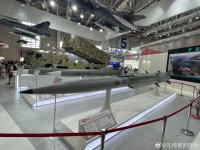
Bro wrote this long ass thread for a system that hasn't even entered service and wouldn't even enter for a few more years, I guess u don't remember the 250km range F2 that never materialized.
 
Bro wrote this long ass thread for a system that hasn't even entered service and wouldn't even enter for a few more years, I guess u don't remember the 250km range F2 that never materialized.
Bro read the title and clocked out 😭 it explicitly says it's not operational yet, it's an engineering assessment of ramjet architecture
 
All Fatah system which are announced publicly not only inducted but also operationalized.

Obviously, all Fatah series are already operationalized, when you buy some thing off the shelf, you test the missile once or twice and then induct it into your armed forces.

There after there are just training launches from time to time to with the missile stock that is about to expire.

There are no years of developmental trials involved in off the shelf purchases.
 
Obviously, all Fatah series are already operationalized, when you buy some thing off the shelf, you test the missile once or twice and then induct it into your armed forces.

There after there are just training launches from time to time to with the missile stock that is about to expire.

There are no years of developmental trials involved in off the shelf purchases.
We buy or made or invent doesn't matter, Did you feel Pain? where sun never shines.

Remember operation suhaag raat?
 
All Fatah system which are announced publicly not only inducted but also operationalized.
no they arent
what are u smoking
Obviously, all Fatah series are already operationalized, when you buy some thing off the shelf, you test the missile once or twice and then induct it into your armed forces.

There after there are just training launches from time to time to with the missile stock that is about to expire.

There are no years of developmental trials involved in off the shelf purchases.
no matter how much u cope it wont change the fact that all fatah series missiles are indigenous

and we dont know what f3s are gonna be , hd1 ?? indiginous sscm ?? so yes i am not including f3s
 
no they arent
what are u smoking

no matter how much u cope it wont change the fact that all fatah series missiles are indigenous

and we dont know what f3s are gonna be , hd1 ?? indiginous sscm ?? so yes i am not including f3s
Sure man..what ever floats your boat.
 

Users who are viewing this thread

Back
Top