Five reasons India's stock market is sinking even when its economy is growing

highest gold imports, per country, in each year for the last 30 years


In Chine, gov. owns land. unlike Pak, and India.

so, Pak. and India, now have to perform twice as good as China.

Gold imports would show if thats the case, as its ownership would show, how exposed the economy is to 1. inflation 2. per capital income and other measures for instance debt to GDP etc etc


to be clear, without any drag of land ownershio, Chinese economy can still outperform all the rest!


as land valuation is not a factor in inflation and other economic measures!
China doesn't simply own all its land through the central government. Urban land is state owned, while rural land is generally collectively owned. And Chinese households and businesses hold transferable land use rights, which have market valuations. China has property markets, mortgages, land speculation and real estate debt just like other economies. Your argument that China somehow is immune to land valuation in itself is illogical, they are going through a property crisis just now.

Your gold based argument is still not making sense especially you're not even sure what you're trying to say with the gold import argument. You're combining unrelated economic indicators and assuming a causal relationship.
 
Last edited:
I never claimed the IMF was deceived. The common Indian citizen who resides below the notorious skew-inducing ultra rich threshold may well be. IMF is simply another institution with an agenda. Indeed, some Indians have made similar observations in this regard. It's not necessarily or blatantly "pro-India" to be fair.

IMF cannot help but carry some sort of an agenda due to its own funding nature. USA, naturally, provides the largest source, with other G7 economies also contributing large shares.

Anyway, am straying a bit, so will leave it at that for consideration by our dear forum readers.
India is growing at a modest 7% rate. Poverty rates are on a decline, different UN organisation track that. If your contention is that India's economic growth is unevenly distributed, that's a perfectly legitimate argument. But if you're questioning the credibility of India's GDP figures, then demonstrate where the calculations are wrong. Invoking the IMF's funding structure without establishing how it supposedly distorts India's GDP statistics is not evidence. And if the IMF is institutionally biased why should that bias necessarily favour India's reported growth figures? Like bruh!?
 
China doesn't simply own all its land through the central government. Urban land is state owned, while rural land is generally collectively owned. And Chinese households and businesses hold transferable land use rights, which have market valuations. China has property markets, mortgages, land speculation and real estate debt just like other economies. Your argument that China somehow is immune to land valuation in itself is illogical, they are going through a property crisis just now.

Your good base argument is still not making sense especially you're not even sure what you're trying to say with the gold import argument. You're combining unrelated economic indicators and assuming a causal relationship.

instead of telling me why my argument does not make sense, why dont you refute it with a bigger brainy argument?


what is gold to you? investment or commodity?


my argument is too dull, okay, but how? just bec, you say so?!!

please shutup or I will start ad hominem attacks as well. I can also write, your posts dont make any sense, what such a post will weigh, when I cant identify whats wrong with the post in the first place!


further, property crisis, dont show in the number of the Chinese economy, bec, land is not owned by the masses, even if there are plenty of ghost cities, there is no body who owns these buildings!


you approach based on 'the big short' movie to understand, property crisis, wont apply in this scenario!


if any thing, had I not mentioned it, you would have kept yapping on the same shitty argument of yours!

now please put up or shutup!
 
instead of telling me why my argument does not make sense, why dont you refute it with a bigger brainy argument?


what is gold to you? investment or commodity?


my argument is too dull, okay, but how? just bec, you say so?!!
Why not oil if you're so much interested in India's commodity imports. Oil makes a larger share lol! Your argument is not relevant to the larger GDP calculation. Gold import figures will not give you anything important apart from info on how much we consume. You have a fundamental misunderstanding of almost everything you wrote.
please shutup or I will start ad hominem attacks as well. I can also write, your posts dont make any sense, what such a post will weigh, when I cant identify whats wrong with the post in the first place!
Well... Be my gues and take this following one for example.
further, property crisis, dont show in the number of the Chinese economy, bec, land is not owned by the masses, even if there are plenty of ghost cities, there is no body who owns these buildings!
You are seriously suggesting that nobody owns the buildings in China's ghost cities simply because the state owns the underlying land.
Because you're confusing land ownership with property ownership. Chinese citizens can privately own apartments and buildings, hold transferable land use rights, sell their properties and mortgage them. The state owning the underlying land doesn't somehow make the buildings ownerless.
you approach based on 'the big short' movie to understand, property crisis, wont apply in this scenario!
Nah it's based off IMF saying Chinese property issue has a direct impact on it's growth. Big short is again an irrelevant point here but sure.
if any thing, had I not mentioned it, you would have kept yapping on the same shitty argument of yours!

now please put up or shutup!
Meh....
 
Why not oil if you're so much interested in India's commodity imports. Oil makes a larger share lol! Your argument is not relevant to the larger GDP calculation. Gold import figures will not give you anything important apart from info on how much we consume. You have a fundamental misunderstanding of almost everything you wrote.

Well... Be my gues and take this following one for example.

You are seriously suggesting that nobody owns the buildings in China's ghost cities simply because the state owns the underlying land.
Because you're confusing land ownership with property ownership. Chinese citizens can privately own apartments and buildings, hold transferable land use rights, sell their properties and mortgage them. The state owning the underlying land doesn't somehow make the buildings ownerless.

Nah it's based off IMF saying Chinese property issue has a direct impact on it's growth. Big short is again an irrelevant point here but sure.

Meh....


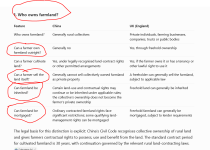
I argued for farmland, China is a communist state unlike the rest of the world!

please read again, before you even start to argue!

1791915072782.png
 
But if you're questioning the credibility of India's GDP figures, then demonstrate where the calculations are wrong. Invoking the IMF's funding structure without establishing how it supposedly distorts India's GDP statistics is not evidence.
I already posted articles by your countrymen regarding the miscalculation of Indian GDP data.

At no point have I claimed the IMF funding structure itself distorts India's GDP statistics. I have only ever stated that IMF lets the miscalculations pass for non-economic reasoning and i have already speculated on the motivations for this.

Again this bizarre game of falsely claiming I said X, y, z?

Beyond that, i know you folks can't stand doing division but GDP per capita is not that impressive and is also skewed misleadingly by ultra rich oligarchs. Russia suffers from the same statistical anomaly.


"This level of wealth concentration means that GDP per capita becomes a misleading metric. India’s GDP per capita stands at roughly $2880 (2025 data i presume), but this is a mean average. If you remove the top 1% of earners from the calculation, the number drops dramatically.

"For instance, if India’s GDP is about $3.9 trillion, and the top 1% controls 40% of that (i.e., $1.56 trillion), that leaves $2.34 trillion for the remaining 99% — nearly 1.4 billion people. This results in a per capita GDP of around $1,670, a far cry from the official average. If you remove the top 5%, which controls about 62% of national wealth, the average per capita drops to just about $1100. That is less than 1 lakh rupees for an entire year and that’s where the majority lives. It is for this reason the government has to give out free rations to 80 crore Indians."

For reference, Russia is even more skewed with top 1% controlling >45% wealth and before you ask, Pakistan isn't great at wealth distribution either, with the top 1% controlling around 30% of GDP.
 
I already posted articles by your countrymen regarding the miscalculation of Indian GDP data.

At no point have I claimed the IMF funding structure itself distorts India's GDP statistics. I have only ever stated that IMF lets the miscalculations pass for non-economic reasoning and i have already speculated on the motivations for this.

Again this bizarre game of falsely claiming I said X, y, z?

Beyond that, i know you folks can't stand doing division but GDP per capita is not that impressive and is also skewed misleadingly by ultra rich oligarchs. Russia suffers from the same statistical anomaly.


"This level of wealth concentration means that GDP per capita becomes a misleading metric. India’s GDP per capita stands at roughly $2880 (2025 data i presume), but this is a mean average. If you remove the top 1% of earners from the calculation, the number drops dramatically.

"For instance, if India’s GDP is about $3.9 trillion, and the top 1% controls 40% of that (i.e., $1.56 trillion), that leaves $2.34 trillion for the remaining 99% — nearly 1.4 billion people. This results in a per capita GDP of around $1,670, a far cry from the official average. If you remove the top 5%, which controls about 62% of national wealth, the average per capita drops to just about $1100. That is less than 1 lakh rupees for an entire year and that’s where the majority lives. It is for this reason the government has to give out free rations to 80 crore Indians."

For reference, Russia is even more skewed with top 1% controlling >45% wealth and before you ask, Pakistan isn't great at wealth distribution either, with the top 1% controlling around 30% of GDP.
Everyone knows that India is a poor country with large income inequality. Nothing about their official GDP numbers suggests otherwise. Their per capita GDP is lower than even a LDC - designated country like Bangladesh.

So, when some people on this forum say that India's reported GDP is distorted, they really mean it is distorted relative to Pakistan.

Since GDP estimation models the economic behavior of hundreds of millions or even billions with a small number of variables, it is inherently subject to large estimation errors. Even in a country like the USA, with a very capable body of independent professionals, GDP figures see large revisions for several years after they are first reported. It is only natural to question whether in some countries with less Independent professionals, the errors are not just estimation noise , but have deliberate biases.

To test that hypothesis, we can use other proxies that are less prone to estimation errors . For example, foreign trade figures are almost impossible to fudge because they are indepndently reported by both the exporting and importing country. If exports to the US reported by India dont match imports from India reported by the US, that is easy to catch. Foreign exchange reserves are also difficult to fudge, because the reserves as banknotes in some vault, but digital entries with a few international institutions like BIS, Federal Reserve, IMF etc. Similarly, consumption of goods which are sold by a handful of foreign companies and have to be reported up to their parent companies are difficult to fudge. One example is annual car sales.

These are just three examples. For each of them , the ratio of the number for India to that for Pakistan is substantially larger than the ratio of the reported GDPs of the two countries. Based on these examples, there is no support for the hypothesis that India's GDP is overreported relative to Pakistan. In fact, based on these data points, the reverse is more likely.

Other examples might show a different picture, of course, but if you want to make the case that India is overreporting its GDP, it will look much stronger is substantiated by such data and analysis. Simply claiming that India is poor and has high income inequality does not prove anything. Everyone already knows that.
 
I already posted articles by your countrymen regarding the miscalculation of Indian GDP data.
Statistical issue. Fixed through rebasement.
At no point have I claimed the IMF funding structure itself distorts India's GDP statistics. I have only ever stated that IMF lets the miscalculations pass for non-economic reasoning and i have already speculated on the motivations for this.
Miscalculation is again a statistical problem of using an old base year. Rebasement fixed most of it.
Again this bizarre game of falsely claiming I said X, y, z?

Beyond that, i know you folks can't stand doing division but GDP per capita is not that impressive and is also skewed misleadingly by ultra rich oligarchs. Russia suffers from the same statistical anomaly.

Never claimed India's GDP per capita was impressive. Having billionaires doesn't automatically make a country an oligarchy. And wealth concentration isn't some statistical anomaly in GDP per capita. You're confusing entirely different economic concepts. As such you neither understands what an oligarchy is nor how it connects to GDP calculation, it doesn't.
"This level of wealth concentration means that GDP per capita becomes a misleading metric. India’s GDP per capita stands at roughly $2880 (2025 data i presume), but this is a mean average. If you remove the top 1% of earners from the calculation, the number drops dramatically.
Written by someone with a two digit IQ. GDP is not the sum of individual net worth or earnings.

Here's how GDP is calculated in expenditure method.
Consumption + Investment + Government spending+ Exports - Imports.
To validate we use Production GVA method GVA+ Product taxes - Subsidies.

In none of these methods "wealth" is a factor. So removing Ambani will not make a hit on the GDP directly.
"For instance, if India’s GDP is about $3.9 trillion, and the top 1% controls 40% of that (i.e., $1.56 trillion), that leaves $2.34 trillion for the remaining 99% — nearly 1.4 billion people. This results in a per capita GDP of around $1,670, a far cry from the official average. If you remove the top 5%, which controls about 62% of national wealth, the average per capita drops to just about $1100. That is less than 1 lakh rupees for an entire year and that’s where the majority lives. It is for this reason the government has to give out free rations to 80 crore Indians."

For reference, Russia is even more skewed with top 1% controlling >45% wealth and before you ask, Pakistan isn't great at wealth distribution either, with the top 1% controlling around 30% of GDP.
You're reproducing the same two digit IQ economists argument. Always remember

1. Wealth is a stock. The accumulated value of assets such as land, buildings, shares, deposits and businesses, minus liabilities, measured at a particular date.

2. GDP is a flow. The value of goods and services produced over a year.
 

Users who are viewing this thread

Back
Top