GAO Critical of US Navy Saying Submarines Are Idle Due to Shipyard Logjam

Beijingwalker

VIP Member
Joined
Nov 4, 2011
Messages
93,530
Reaction score
113,841
Reputation
1,978.6
Country of Origin
Country of Residence

GAO Critical of US Navy Saying Submarines Are Idle Due to Shipyard Logjam​


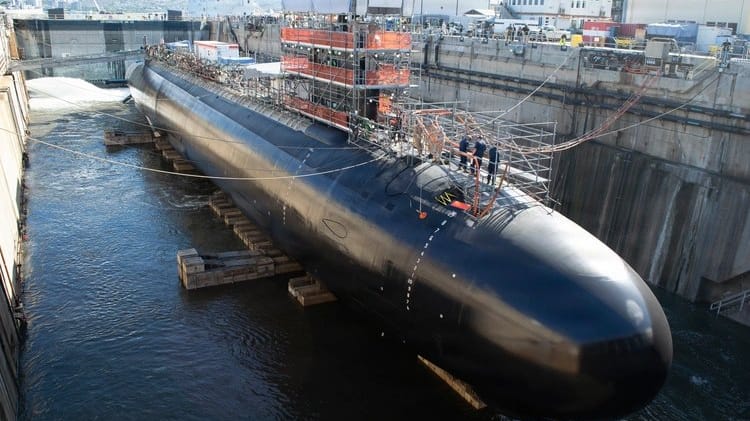
US submarine undergoing repairs


GAO says backlog means submarines are idle too long or cannot be decommissioned (USN)


PUBLISHED SEP 4, 2026 7:26 PM BY THE MARITIME EXECUTIVE

Too many of the U.S. Navy's attack submarines are sitting idle across shipyards awaiting maintenance and decommissioning, according to a new report by the Government Accountability Office (GAO). The report highlights the challenges, saying it is impacting operational readiness and costing billions of dollars in lost productivity.

GAO is once again putting the U.S. Navy in the spotlight with its latest audit report focusing on attack submarines. It asserts that over the past decade, idle time has become the “buzzword” owing to submarines' inability to secure yard space for maintenance. For boats that have reached end of life and are awaiting decommissioning, it similarly asserts that shipyards are unable to start the process due to lack of capacity.

In the report, GAO is highlighting that the Navy has lost more than 15,000 operational days due to maintenance delays and idle time on active submarines over the last 10 years. The delays have resulted in an estimated $3.4 billion in costs to sustain crews and submarines that provided no operational capability. Another $3.1 billion is being swallowed due to decommissioning delays.

The U.S. Navy operates a fleet of 44 attack submarines. The 20 Los Angeles class and 24 Virginia class boats typically enter an extensive depot maintenance period, often lasting 24 to 36 months at a certain period during their life cycle.

Currently, the four public naval shipyards, Portsmouth, Norfolk, Puget Sound, and Pearl Harbor, as well as two private yards, General Dynamics and Huntington Ingalls Industries, are responsible not only for building new submarines but also for providing depot maintenance and decommissioning work for the 44 boats.

The shipyards are operating under extreme pressure, a reality that has seen the Navy’s submarine maintenance backlog persist since 2008, the outcome of which is 15,000 operational days being lost and $3.4 billion wasted, say the GAO, due to the shipyards' inability to undertake the maintenance. The situation has gotten worse over the past decade, with the Navy only managing to complete about 11 percent of depot maintenance on time at public yards.

The Navy’s predicament is being exacerbated by submarines awaiting decommissioning that must sit idle because shipyards cannot commence the process, which includes availing dry docking capacity to defuel the boats' nuclear reactors. On this, the U.S is performing spectacularly poorly, with the situation only bound to worsen, says the GAO. Over the past five years, the Navy incurred 2,216 days of idle time on seven submarines awaiting decommissioning, with costs amounting to more than $480 million.

GAO is highlighting that without mitigation, 15 submarines are expected to enter inactive idle time over the next four years. Over the period, the Navy is set to incur more than 14,000 days of inactive idle time and $3.1 billion in costs.

The Los Angeles-class submarine USS Pasadena (SSN-752) is currently a poster child of the quagmire facing the Navy in terms of decommissioning. The boat entered inactive idle status in January last year and is not expected to be moved into Norfolk Naval for decommissioning until November 2028, whopping 1,414 days, due to shipyard capacity constraints. Though idle, the sub remains fully crewed. For the four years it will remain in inactive idle status, Pasadena is expected to incur $300 million in costs.

“The U.S. Navy has not fully evaluated alternative options to more efficiently decommission attack submarines and develop and implement an inactivation plan that could allow them to reduce inactive idle time for crews and save billions,” stated GAO.

The report, which is prepared for Congress, seeks to explore the extent to which the U.S. Navy has effectively maintained its attack submarine fleet and what it is doing to mitigate challenges. Apart from maintenance and decommissioning, the report also shows the Navy is grappling with delays in the building of new boats, the effect of which is fewer boats for deployment.

Construction of the new Virginia-class submarines is a case in point. As of June 2025, only one boat is being built per year against a target of two. Though the Navy received delivery of two boats of the class last year, both were over three years late.
 

U.S. Navy Attack Submarine Fleet Faces Readiness Crisis Due to Shipyard Backlogs​

September 5, 2026 at 8:00 AM GMT+8

The U.S. Navy's attack submarine fleet is facing significant readiness challenges due to prolonged idle time at shipyards, according to a new report from the Government Accountability Office (GAO). The report, published on September 4, 2026, by The Maritime Executive, highlights that over the past decade, submarines have lost more than 15,000 operational days because of maintenance delays and idle periods, costing an estimated $3.4 billion in sustaining crews and submarines that provided no operational capability. Additionally, decommissioning delays have absorbed another $3.1 billion.

The Navy operates 44 attack submarines, comprising 20 Los Angeles-class and 24 Virginia-class boats, which typically undergo extensive depot maintenance lasting 24 to 36 months at certain points in their life cycles. The four public naval shipyards—Portsmouth, Norfolk, Puget Sound, and Pearl Harbor—along with two private yards, General Dynamics and Huntington Ingalls Industries, are responsible for building new submarines and providing maintenance and decommissioning services. However, these facilities are under extreme pressure, leading to a maintenance backlog that has persisted since 2008. The GAO notes that the Navy has completed only about 11 percent of depot maintenance on time at public yards.

The situation is worsened by submarines awaiting decommissioning that must sit idle because shipyards lack capacity to begin the process, which includes dry docking to defuel nuclear reactors. Over the past five years, the Navy incurred 2,216 days of idle time on seven submarines awaiting decommissioning, costing more than $480 million. Without mitigation, 15 submarines are expected to enter inactive idle time over the next four years, resulting in over 14,000 days of idle time and $3.1 billion in costs.

A notable example is the Los Angeles-class submarine USS Pasadena (SSN-752), which entered inactive idle status in January 2025 and is not expected to be moved to Norfolk Naval for decommissioning until November 2028, a period of 1,414 days, due to shipyard capacity constraints. The submarine remains fully crewed during this time, and the four-year idle period is expected to cost $300 million.

The GAO stated that the Navy has not fully evaluated alternative options to more efficiently decommission attack submarines or developed an inactivation plan that could reduce inactive idle time and save billions. The report, prepared for Congress, also highlights delays in building new submarines, with only one Virginia-class boat being built per year as of June 2025 against a target of two. Although the Navy received two boats of that class last year, both were over three years late.

 
US military is badly over stretching itself on all fronts.
 

Why the US Navy Can't Build Its Own Warships Anymore​

Sep 4, 2026


On a riverbank in Marinette, Wisconsin, sits a half-finished frigate the Navy no longer wants — and it's being completed anyway, just to keep the shipyard's workforce from walking away. The USS Constellation was supposed to prove America could build warships fast again. Instead, the program was cut from twenty ships to two, and the Navy walked away after more than $3 billion in contracts. She isn't the exception. She's the pattern.

In this video, we trace the forty-year chain reaction behind the collapse of American shipbuilding: destroyers running up to 58 months late, submarines averaging four years behind schedule, a shipbuilding budget that nearly doubled while the fleet didn't grow by a single ship — and the one decision in 1981 that quietly dismantled the industrial ecosystem the Navy depended on. Then we hold it all up against the other side of the Pacific, where China now commands 232 times America's shipbuilding capacity.

Here's the contradiction at the center of it all: the United States Navy is spending more money on warships than at any point in decades — and getting fewer ships, delivered later, than ever before. Money was never the bottleneck. The problem is something no budget line can buy back: shipyards that no longer exist, and welders who take fifteen years to train.

Sources: GAO (GAO-26-109068), Congressional Budget Office testimony (April 2026), Naval News, Defense News, CSIS, Maritime Executive, Office of Naval Intelligence assessments.

The next war at sea may not be decided by admirals — it may already have been decided in empty slipways.
 

Users who are viewing this thread

Back
Top