General Economic Updates

To view this content we will need your consent to set third party cookies.
For more detailed information, see our cookies page.
 
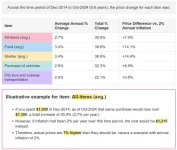
What a silly comparison. Do people still want to pay 2010 prices in 2026?

Pakistan is not some hardcore communist Soviet Union.

Ask these simple questions:
  • Do people still want 2010 wages in 2026?
  • Do businessmen still want to sell goods at 2010 prices in 2026?
  • Do people still want to have the 2010 savings in 2026?
  • Do people want the 2010 remittances in 2026?
 
What a silly comparison. Do people still want to pay 2010 prices in 2026?

Pakistan is not some hardcore communist Soviet Union.

Ask these simple questions:
  • Do people still want 2010 wages in 2026?
  • Do businessmen still want to sell goods at 2010 prices in 2026?
  • Do people still want to have the 2010 savings in 2026?
  • Do people want the 2010 remittances in 2026?
🤬🤬🤬🤬🤬🤬🤬😤

What a bizarre uneducated logic …. But then again look who is talking .


IMG_4685.webp
 
Pakistan rising :


Poverty rate rises to 27 percent …. Next year projection is 32 percent ….. with this speed before Patwaris win another election we will cross 50 percent ….


You’re reading news updates. We’re standing in the middle of this crisis, watching it unfold with our own eyes.

Pakistan’s economic collapse isn’t a headline; it’s a daily heartbreak. Prices rise every week, jobs disappear overnight, and the poor are being pushed into choices no human being should ever have to make. You can feel the exhaustion in people’s voices. You can see the fear in their eyes.

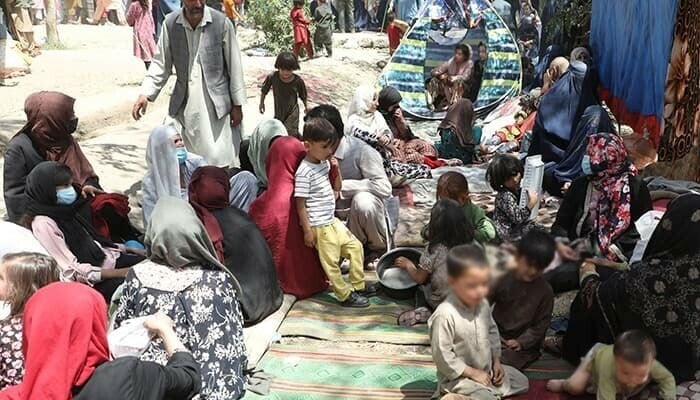
Just a few days ago in Karachi, a couple pulled their two young daughters out of school. Not because they didn’t believe in education..... but because they simply couldn’t afford it anymore. Those little girls are now working as domestic helpers. Their childhood ended because the economy failed their parents.

Another family, crushed under poverty, sold their child to a begging mafia. Not out of cruelty, out of hunger, out of hopelessness, out of the kind of desperation that breaks a person from the inside. These stories are no longer rare. They’re becoming normal, and that is the most frightening part.

And while all this is happening, the government is completely incompetent. They can’t even collect taxes properly. The entire system is broken from the inside. FBR has become a bottleneck... slow, corrupt, outdated, and impossible for businesses to deal with. It should be dismantled and replaced with a modern, transparent, technology‑driven structure.

Because the truth is simple, Pakistan doesn’t have a revenue problem. Pakistan has a system problem.

What a real solution looks like.... and why the old system must go

People on the ground understand this better than policymakers sitting in air‑conditioned rooms. The current tax structure is a maze of withholding agents, manual audits, provincial splits, and endless paperwork. It’s designed for corruption, not compliance.

A modern system would flip the entire model:
  • Zero human interface: no inspectors, no physical audits, no harassment.Every zone’s revenue monitored through a blockchain ledger, making corruption impossible and giving businesses complete privacy.
  • Automated point‑of‑transaction tax split: instead of forcing companies to act as withholding agents, the banking system automatically splits taxes at the moment of payment. This alone cuts 70% of corporate accounting overhead.
  • Unified zone‑level consumption tax: instead of four provinces fighting over sales tax, each economic zone has a single, unified tax managed by an autonomous board. No blocked refunds. No liquidity crises. No rent‑seeking.
  • The 72‑hour digital portal: one single window for all federal, zone, and municipal compliance. Compliance hours drop from 577 hours a year to less than 24, pushing massive formalization.
And most importantly, The whole tax collection process becomes easier, transparent, and business‑friendly. Businesses won’t fear paying taxes. they’ll finally be able to pay them without harassment, confusion, or corruption.

This is what a functioning country looks like. This is what a modern economy requires. This is what Pakistan has refused to build for decades.

Meanwhile, the poor are paying the price for this incompetence:
  • Food inflation has turned basic groceries into luxuries
  • Electricity bills are higher than people’s salaries
  • Industries are shutting down, leaving thousands jobless
  • The rupee keeps falling, dragging people’s dignity with it
  • Even the middle class, the backbone of any nation, is now collapsing
People aren’t living anymore. They’re surviving. One day at a time. One impossible decision at a time.

You can’t understand this from a headline. You have to stand here and watch a mother choose between milk and medicine. You have to see a father counting coins with shaking hands. You have to hear the silence in homes where dinner used to be a normal thing.

This is the real Pakistan, not the one in official statements, but the one in front of us.
 
To view this content we will need your consent to set third party cookies.
For more detailed information, see our cookies page.


Another great video about Pakistani economy.
 
To view this content we will need your consent to set third party cookies.
For more detailed information, see our cookies page.


34-Zone Hybrid Economic Governance Model​

The current administrative layout is bleeding the state dry. Territorial governance based on administrative lines drawn up a century ago creates massive leakage, duplication, and political paralysis.

To secure the next 200 years of economic survival, Pakistan must phase out the traditional provincial structure and shift to a network of 34 Autonomous Economic Zones. Under this model, the federal layer shrinks to a tight, ten-ministry regulatory core, while these specialized zones handle localized trade, law and order, and infrastructure development.

The Architecture: 34-Zone Master Classification​

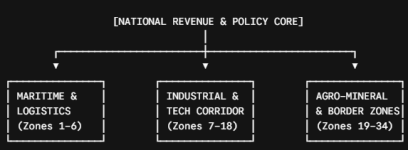
The territory is divided into six macro-clusters, each anchored by a primary industrial, financial, or maritime hub.

1781273997798.png

1. Southern Maritime & Blue Economy Cluster (Anchor: Karachi)​

  • Zone 1: Karachi Financial & Tech Core (KFTC) – Sovereign wealth management, fintech, and corporate headquarters.
  • Zone 2: Port Qasim Industrial Marine Belt – Heavy manufacturing, automotive assembly, and chemical processing.
  • Zone 3: Thatta-Badin Coastal Energy Zone – Wind, solar, and blue carbon sequestration projects.
  • Zone 4: Hub Industrial Extension – Industrial overflow handling metallurgy and heavy engineering.
  • Zone 5: Lasbela Maritime Corridor – Fisheries, specialized food preservation, and coastal logistics.
  • Zone 6: Gwadar Deepsea Free Port Zone – Transshipment, global warehousing, and oil refining.

2. Central Industrial & Agricultural Spine (Anchor: Faisalabad & Lahore)​

  • Zone 7: Lahore Innovation & Service Zone – Software export, artificial intelligence labs, and higher education clusters.
  • Zone 8: Faisalabad Advanced Textile Hub – High-value garment production, specialized synthetic fibers, and textile research.
  • Zone 9: Gujranwala-Sialkot Engineering Triangle – Surgical instruments, sports goods manufacture, and light precision engineering.
  • Zone 10: Sheikhupura-Kasur Manufacturing Belt – Chemicals, polymers, leather processing, and consumer goods production.
  • Zone 11: Sargodha Citrus & Agri-Processing Zone – High-yield food preservation, concentrate exports, and seed development.
  • Zone 12: Multan Cotton & Fertilizer Nexus – Textile inputs, agrochemical manufacturing, and large-scale storage.

3. Northern Trade & Logistics Gateway (Anchor: Peshawar)​

  • Zone 13: Peshawar Transit Trade Hub – Central Asian logistics, regional clearing-houses, and value-added assembly.
  • Zone 14: Nowshera Industrial Zone – Construction material processing, mining tech, and consumer electronics assembly.
  • Zone 15: Swat Eco-Tourism & Hydel Basin – Sustainable high-yield hospitality infrastructure and run-of-the-river power plants.
  • Zone 16: Hazara Mineral & Marble Corridor – Precision stone cutting, gemstone processing, and industrial mining exports.
  • Zone 17: CPEC Northern Junction (Gilgit) – High-altitude logistics, micro-hydro storage, and dry-port facilities.
  • Zone 18: Khyber Logistics Gate – Border security warehousing, customs automation yards, and transit trade infrastructure.

4. Western Mineral & Energy Frontier (Anchor: Quetta)​

  • Zone 19: Quetta Trade & Administrative Nexus – Western logistics oversight, horticulture exports, and border clearance.
  • Zone 20: Chagai Mineral Extraction Zone – Copper, gold, and iron-ore processing plants for domestic use and export.
  • Zone 21: Loralai Livestock & Agro-Spine – High-density cold chain storage, meat processing, and dairy logistics.
  • Zone 22: Makran Solar & Desalination Belt – Bulk renewable power generation and industrial water treatment.
  • Zone 23: Zhob Chromium & Mining Cluster – Metallurgical ores, extraction infrastructure, and raw material logistics.
  • Zone 24: Khuzdar Logistics Junction – Transit link connecting Gwadar to North-Western trade channels.

5. Indus Riparian & Food Security Corridor​

  • Zone 25: Sukkur Agro-Industrial Zone – Mega-milling operations, date processing, and riverine trade infrastructure.
  • Zone 26: Larkana Rice & Grain Basin – Mechanized grain storage, export milling, and seed research centers.
  • Zone 27: Bahawalpur Renewable Park – Utility-scale solar installations and desert reclamation agriculture.
  • Zone 28: Rahim Yar Khan Industrial Spine – Sugar refining, edible oil processing, and paper manufacturing.
  • Zone 29: Jhang-Toba Mixed Farming Zone – Dairy processing, poultry supply chains, and livestock feed operations.
  • Zone 30: Dera Ghazi Khan Cement & Mineral Zone – Heavy building materials, lime processing, and transport logistics.

6. Strategic Frontier & Specialized Basins​

  • Zone 31: Potohar Petro-Chemical & Tech Zone – Oil refining, aerospace R&D, and precision tool manufacturing.
  • Zone 32: Mirpur Light Manufacturing Cluster – Automotive components, electronics assembly, and diaspora investment projects.
  • Zone 33: Dera Ismail Khan Transit Hub – Intersection logistics linking Punjab, KP, and Balochistan trade networks.
  • Zone 34: Thar Coal & Gasification Grid – Industrial power generation, chemical conversion, and synthetic fuel plants.

[Phase 1: Legal/Fiscal Anchor] ──► [Phase 2: Administrative Shift] ──► [Phase 3: Digital Integration]

  1. Abolish Provincial Cabinets: Wind down provincial legislative assemblies, transferring local administration to corporate-run Zone Authorities.
  2. Shrink the Center: Cut federal ministries down to 10 core regulators focused purely on monetary policy, national defense, and foreign affairs.
  3. Pass the Corporate Zone Act: Establish the National Zone Regulatory Authority (NZRA) with independent judicial powers to enforce corporate contracts within zone lines.
  4. Enforce Private Management Contracts: Replace permanent bureaucratic positions with performance-linked, private sector contracts.
  5. Implement 100% Biometric Operations: Shift all identity, business registries, and tax systems to automated digital ledgers, completely removing manual paperwork.
  6. Deploy Micro-Grid Infrastructure: Connect industrial zones directly to localized solar, wind, or hydel power networks, bypassing the broken national grid.
  7. Introduce Localized Revenue Retention: Allow each zone to keep 45% of its collected revenue to fund regional infrastructure upgrades and security.
  8. Establish Specialized Courts: Set up fast-track commercial courts inside the zones to resolve contract issues within 72 hours.
  9. Automate Border Logistics: Install automated smart-gates at border zones to eliminate cargo smuggling and collection leakages.
  10. Build Long-Term Resource Mapping: Tie zoning permits directly to 50-year water availability and climate risk models to prevent unmanaged urban sprawl.

Risk Mitigation Strategy​

  • Political Resistance over Provincial Rights: Frame the transition as true economic decentralization. Power moves away from bloated provincial capitals directly to the local production hubs where the revenue is actually generated.
  • Bureaucratic Obstruction: Transition competent civil servants into high-paying corporate roles within the Zone Authorities, while offering early retirement options to non-performing personnel.
  • Initial Infrastructure Funding Gaps: Fund the first phase by ring-fencing revenue from high-yield zones like Karachi (Zone 1) and Faisalabad (Zone 8), rather than waiting on international loans.
 

Users who are viewing this thread

Pakistan Defence Latest

Back
Top