Looks like with the deals with KSA and impending ones with KUW and US, the liquidity crisis is now firmly behind
@hydrabadi_arab @Owaiz
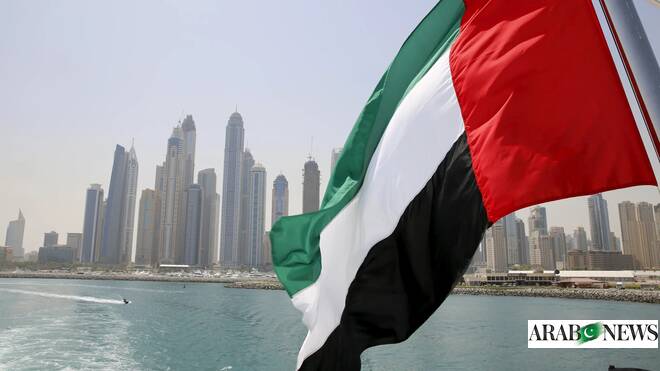
Saudi Arabia rolls over $5b debt

tribune.com.pk
Pakistan's external sector pressure has subsided after Saudi Arabia rolled over a $5 billion debt for three years, coupled with $9 billion in foreign currency purchases from the local market in the last fiscal year, State Bank of Pakistan (SBP) Governor Jameel Ahmad said on Wednesday.
The three- to five-year rollovers of short-term debts, which Pakistan had taken years ago for one year, are part of the government's new strategy to delay repayments and gain breathing space before kick-starting the economy.
Due to the rollover of $5 billion cash deposits by Saudi Arabia till December 2028 Pakistan's gross external financing requirements have come down to $21.5 billion for this fiscal year, the governor told The Express Tribune in Parliament House.
Pakistan has taken a total of $8 billion in cash deposits from Saudi Arabia, including $3 billion obtained in April this year. Out of this, the $5 billion deposits were rolled over every year before the Kingdom granted a three-year extension.
In April, Finance Minister Muhammad Aurangzeb said the Kingdom had extended a $5 billion deposit for a longer period but did not share further details about its next maturity.
In addition, Saudi Arabia had given $3 billion for three months, which matured this month but were further rolled over. The governor did not comment on whether the remaining $3 billion had been rolled over for three months or for a longer period.
Ahmad said interest costs on foreign debts had also reduced by nearly half a billion dollars, contributing to lowering overall gross financing requirements.
The gross external financing requirements are the sums needed to meet external obligations. Pakistan has remained heavily dependent on foreign creditors for meeting its external financing needs for debt repayments and funding the current account deficit. Exports and foreign direct investment could not improve despite multi-front efforts, and in a latest push, the federal government approved Rs98 billion in subsidies for exporters for this fiscal year alone.
For the next fiscal year, the International Monetary Fund (IMF) has projected $30 billion in external financing requirements. The governor said these projections were on the higher side, as the government was making efforts that would bring down requirements even below this year's level of $21.5 billion.
The government has reportedly reached out to Saudi Arabia and the United States for additional financing on longer terms to lessen immediate heavy repayment requirements. The governor said that out of the $21.5 billion, cash deposits were $7.3 billion and another $3.5 billion were foreign commercial loans maturing this year. He said Pakistan also owed $250 million to Kuwait on account of cash deposits that have been rolled over for a long time.
Ahmad did not respond to a question about Pakistan's recent request to the United States for a $10 billion credit financing line, saying the federal government should respond to it.
The governor said Pakistan repaid a $1.3 billion Chinese commercial loan this month, which pulled down foreign exchange reserves to $17.3 billion as of July 17. He said China was again expected to refinance the $1.3 billion and could disburse the money next month.
He said out of $21.5 billion total financing requirements for the current fiscal year, net debt repayments were $7.5 billion. Of this, $2.2 billion have already been repaid in July, lessening the pressure for the remainder of the fiscal year.
To a question, the governor said the central bank also bought around $9 billion from the open market to cushion foreign exchange reserves. He said total purchases during the past three years have reached $28 billion.
The Monetary Policy Statement this week said workers' remittances are likely to grow compared to last year and continue financing a large part of the higher projected trade deficit. With the realisation of planned official inflows and some likely improvement in private flows, SBP's foreign exchange reserves are targeted to increase to $20.20 billion by end-December 2026.
During a meeting of the Senate Standing Committee on Finance, Ahmad said the federal government did not allocate any subsidy for foreign remittances. However, commercial banks would now bear the cost of transfer of foreign remittances and remitters would not be charged any extra fees.
The committee further reviewed banking service charges, including SMS alert charges and card transaction issues. Ahmad informed the committee that SMS alerts were optional and subject to customers' consent, while banks were introducing app- and email-based alerts as alternatives. He also informed the committee that Visa card transactions conducted within Pakistan would not be charged in US dollars.
Regards