By
Ali Khizar
https://www.google.com/preferences/source?q=brecorder.com
International crude oil and refined-product prices have climbed above their 2022 levels in recent months, unsettling economies worldwide.
The reassuring news for Pakistan is that the latest price shock has not placed either the external or fiscal accounts under anything resembling the strain witnessed four years ago. The shock is real; Pakistan’s exposure to it has changed.
Pakistan’s oil and gas import volumes are lower, while crude oil now accounts for a larger share of the import mix relative to refined products.
Total energy imports fell by almost a third, from more than 350 million barrels of oil equivalent in FY22 to around 250 million in FY25, while imported energy per dollar of GDP declined by nearly 40 percent. Elevated consumer prices explain part of the contraction, but the rapid spread of solar power and other renewable-energy technologies is also reducing Pakistan’s dependence on imported fuel.
The comparison between March-July 2022 and the same five months of 2026 is particularly instructive because international prices were broadly comparable across the two periods and, for some products, higher in 2026.
Imports of crude oil, refined products and LNG amounted to $8.1 billion during March-July 2026, according to PBS (Pakistan Bureau of Statistics) trade data, which was 31 per cent below the corresponding period of 2022.
Combined domestic petrol and diesel sales, meanwhile, declined by 18 per cent, meaning that the import bill fell substantially faster than consumption. Even after excluding LNG, the petroleum import bill was 22 percent lower.
Part of that divergence reflects the shift from imported refined products towards crude oil processed domestically. Pakistan’s refineries operated close to full capacity during the period, something they had rarely managed in recent years. Their ageing technology produces a large share of furnace oil, often at unfavourable margins, and under normal market conditions the earnings on petrol and diesel are insufficient to justify maximum throughput.
Importing finished products therefore frequently makes more commercial sense.
War-driven crack margins have temporarily changed that calculation by allowing the gains on higher-value products to more than offset furnace-oil losses. Consequently, crude oil imports during March-July 2026 were 10 per cent higher than in the same months of 2022, while petrol and diesel imports fell by 39 percent and 88 percent, respectively. Diesel offered the most attractive refining margins, which helps explain why the displacement of imports was most pronounced there.
This change in import composition should not be mistaken for an entirely structural transformation. If crack margins normalise as the war premium fades, domestic refineries may once again find it more economical to operate below capacity while the country imports a larger quantity of finished products. That would reverse part of this year’s movement from refined products towards crude oil, although it would not necessarily reverse the underlying decline in total fuel demand.
That decline still reflects substantial demand destruction caused by higher retail prices. Petrol and diesel have generally sold for between Rs300 and Rs500 per litre during the latest shock, compared with roughly Rs150-250 during the corresponding months of 2022.
Diesel consumption has fallen by 25 percent, partly because users have responded to higher prices and partly because solarisation is displacing diesel-powered agricultural tubewells and backup generators. Petrol consumption has declined by a more modest 11 percent, although the growing adoption of electric two-wheelers is beginning to make itself felt.
Taxation has magnified this adjustment. The petroleum levy has moved from negative territory in 2022 to more than Rs100 per litre today, widening the difference between formally sold fuel and cheaper supplies available elsewhere in the region. That differential encourages cross-border smuggling, particularly of diesel, which may soften the second-round inflationary effect of higher official prices but does so by shifting demand outside the tax net and depriving the exchequer of expected revenue.
This exposes the same design flaw that will complicate the eventual taxation of electric vehicles. Petroleum products provide the state with an unusually convenient tax handle because fuel consumption is concentrated within a formal and easily monitored supply chain. Every kilometre transferred from taxed petrol or diesel to electricity, particularly electricity generated through rooftop solar, removes some revenue from that system.
Attempting to compensate by extracting more from every remaining litre becomes progressively more distortionary and regressive as the underlying tax base contracts.
Not all of the reduction in this year’s import bill is structural, either. Around $1.5 billion of the saving on RLNG resulted from a supplier’s force majeure rather than from policy reform or durable demand management. If contracted cargoes resume, a substantial part of that headline saving will disappear.
The decline produced by solarisation and price-induced demand adjustment is likely to endure; the LNG windfall cannot be summoned whenever the external account comes under pressure.
Even with those qualifications, Pakistan’s vulnerability to an international oil-price shock is diminishing. Passing higher costs through to consumers has restrained demand and helped the current account remain in surplus throughout March-July despite the war-driven increase in prices.
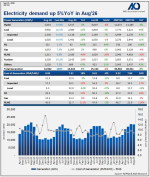
Fiscal performance has also held up partly because the government is collecting substantially more tax from every litre sold, even as the number of litres declines. Electricity has followed a similar pattern: high tariffs have compressed demand, accelerated solar adoption and reduced the need for imported RLNG.
As petroleum prices rise while electric-vehicle prices fall, dependence on imported transport fuels should continue to decline. Electric two-wheelers are already gaining ground, while incentives expected under the forthcoming automobile policy could bring a wave of electric cars into the Rs4-6 million segment. From the perspective of the external account, that transition should be welcomed.
From the perspective of the existing tax system, however, every new electric vehicle progressively erodes one of the federal government’s most dependable sources of revenue.
The answer is not to neutralise the benefits of solar power and electric mobility through punitive taxes. Pakistan instead needs a medium-term revenue-transition plan that quantifies how petroleum-levy and electricity-based collections will change under credible adoption scenarios.
Transport-related revenues will gradually have to move towards instruments tied to vehicle ownership and road use rather than litres of fuel consumed, while the general revenue burden must shift towards broader and more effectively enforced taxes on income, consumption and property.
The lesson of 2022 was that an external oil shock could bring Pakistan’s economy to its knees. That vulnerability is receding, although it has not disappeared, and Pakistan is beginning to exchange a balance-of-payments vulnerability for a fiscal one. Energy security is not yesterday’s problem, but it is no longer the only problem.
Unless the tax system catches up with the economy now replacing petroleum, the government will eventually respond to the resulting revenue hole with arbitrary EV taxes, punitive electricity charges or yet another round of indirect taxation—and squander part of the resilience it has finally begun to acquire.
Copyright Business Recorder, 2026







 Spiderman: Brand New Day earns $875M global opening weekend, the second largest all time (1 Viewer)

