General Economic Updates

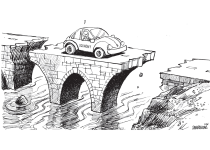
Pakistan Poorer Than Afghanistan? IMF Seeks Massive Government Job Cuts I GNN


34 EZ model can save multiple billion dollars per years by eliminating 80% Federal and Provincial Jobs.
 
Some posted about Airport Friction and treatment from Airline staff, FIA and customs.

Root Causes of Airport Friction

1. Discretionary Enforcement & Analog Verification: Heavy reliance on manual passport stamping, subjective baggage assessments, and paper-based declarations creates massive windows for rent-seeking and bureaucratic delay.

2. Siloed Federal Agencies: Customs (FBR) and FIA operate on separate, non-integrated legacy databases, forcing travelers and cargo handlers to clear redundant, repetitive compliance hurdles.

3. Misaligned Institutional Incentives: Performance metrics for border agencies prioritize punitive measures and physical cargo-tearing over frictionless clearance velocity, treating every passenger and investor as a potential violator.

4. Zero Accountability to Regional Stakeholders: Because airports report solely to Islamabad-centric bureaucracies, local economic hubs (such as Karachi, Lahore, and Islamabad) bear the reputational and economic cost of airport delays without any local administrative recourse.

34-Zone Structural Fix

To eliminate this friction permanently, the 34-Zone Model replaces legacy federal oversight at international gateways with a streamlined Autonomous Zone Trade & Travel Corridor Protocol.

7-Point Action Plan for Gateway Modernization

1. Establish the Unified Digital Border Authority (UDBA): Merge FIA and Customs immigration/baggage lanes into a single biometric and digital clearance window at all 34 economic zone airports.

2. Implement Mandatory SLA Clearance Caps: Enforce a legally binding 15-20 minute maximum threshold from aircraft touchdown to terminal exit for standard passengers, backed by automated performance tracking.

3. Deploy AI-Driven Risk Profiling: Eliminate blanket physical baggage checks by adopting advanced automated X-ray and manifest-matching algorithms, restricting manual searches strictly to high-risk algorithmic flags.

4. Decouple Gateway Governance to Zone Authorities: Transition airport operational management from Islamabad ministries to the respective Autonomous Zone Port Authorities (AZPAs) to align gateway efficiency with regional economic competitiveness.

5. Abolish Redundant Currency & Asset Declarations: Digitize and automate financial threshold declarations via mobile apps before boarding, removing physical form-filling desks entirely from arrival halls.

6. Enforce Zero-Tolerance Anti-Harassment Protocols: Install high-definition auditing cameras and anonymous digital feedback terminals linked directly to the Zone Chief Ombudsman, with immediate suspension for arbitrary enforcement.

7. Institutionalize Fast-Track Investor Corridors: Issue biometric Global Executive Passes for verified foreign investors, trade delegates, and zone enterprises, granting them priority digital clearance channels.
 
Those who live in their palace and think that Pakistan is a rich country, economy is great and people are happy. This video is for them.


For the first time since 1953, Pakistan nominated to chair World Bank, IMF Boards of Governors in 2027​

Economic Affairs Minister Ahad Khan Cheema named incoming chair as Pakistan prepares to assume the position for the first time since 1953


Pakistan has been nominated to chair the Boards of Governors of the World Bank Group (WBG) and the International Monetary Fund (IMF) in 2027, marking its return to the position for the first time since 1953.

Federal Minister for Economic Affairs Ahad Khan Cheema, who represents Pakistan as governor at the World Bank Group, has been formally named the incoming chair, the Ministry of Economic Affairs announced on Friday.

The nomination was announced during the plenary session of the 2026 WBG-IMF Annual Meetings in Bangkok.

The Boards of Governors are the highest decision-making bodies of the two international financial institutions, comprising representatives of member countries and responsible for determining their broad policy direction.

According to the ministry, Pakistan's upcoming chairmanship will provide an opportunity to participate in global economic and development discussions and facilitate coordination among member countries.

Following the announcement, Cheema received a briefing from the World Bank Group's Corporate Secretariat on the responsibilities associated with the position.


He also held talks with WBG Vice President and Corporate Secretary Aradhana Kumar-Capoor regarding institutional arrangements and coordination for Pakistan's tenure.

Separately, the minister met Carlos Carvallo Spalding, Governor of the Central Bank of Paraguay and the outgoing chair, to discuss the responsibilities of the office and priorities for 2027.

Cheema acknowledged the outgoing chair's tenure and exchanged views on the management of the position.

During the meetings, the minister outlined Pakistan's priorities, including greater representation of developing economies, more predictable development financing and improved coordination among multilateral financial institutions.


He also emphasised mobilising private investment to support sustainable and inclusive economic growth.

The ministry said Pakistan would work with the World Bank Group, IMF and other member countries during its chairmanship to strengthen cooperation and contribute to discussions on the international development and financial system.
 

Users who are viewing this thread

Back
Top