General Mountaineering Thread

Purja served in the British military for 16 years, 10 of which were spent in the special forces, and he was awarded an MBE by the late Queen in 2018 for his achievement in extreme high-altitude mountaineering.

Purja, who lived with his wife and three-year-old daughter in Hampshire in southern England, said he was also the first Gurkha to climb Everest while serving in the British military.

In his last post on X, published on Monday, he said he had not intended to climb Broad Peak.

"Initially, the plan was to climb just G2," Purja wrote, referring to Gasherbrum II, another peak in the Karakoram mountain range.

But right before he set off for Pakistan, he realised that if he also managed to climb Broad Peak while he was there, he would have only one more mountain to conquer before becoming the "first person in history to climb all 14 eight-thousanders twice. Without oxygen."

An eight-thousander is a mountain that rises more than 8,000m above sea level.

"This wasn't planned," Purja wrote. "But opportunities don't scream: they whisper to those already working in silence."
 
Broad Peak is regarded as one of the more challenging mountains for climbers. The first successful ascent was in 1957, when an Austrian expedition reached the summit.

Since then, many more have climbed the mountain, but dozens have lost their lives.

One of Broad Peak's deadliest years was 2013, when at least six fatalities were recorded.
 
The search operation continues for members of the international mountaineering team following an avalanche on Broad Peak in Pakistan's Karakoram mountain range.

During the rescue and search operation, the bodies of 4 out of the 10 missing mountaineers have been recovered.

To view this content we will need your consent to set third party cookies.
For more detailed information, see our cookies page.
 
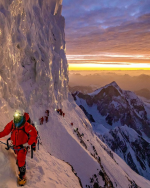
Golden Hour at Mount K2's bottleneck. Pakistan.


1785682308596.png


1785682358960.png
 

Bodies of Nirmal Purja, 4 other climbers airlifted to Skardu after Broad Peak avalanche


Jamil Nagri
August 6, 2026


1786021940954.png

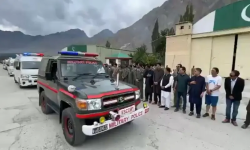
Bodies of five climbers who died in Broad Peak avalanche are being brought to Skardu on August 6, 2026. —Screengrab via X/PTVNewsOfficial

Bodies of five more international climbers, including world-renowned British-Nepali Nirmal Purja, have been airlifted to Skardu after they were killed in an avalanche on Broad Peak, the Alpine Club of Pakistan (ACP) said on Thursday.

The avalanche struck on July 30, cutting off contact with the 10-member international expedition led by 43-year-old Purja on Broad Peak, one of the world’s highest mountains. His company confirmed there were no survivors.

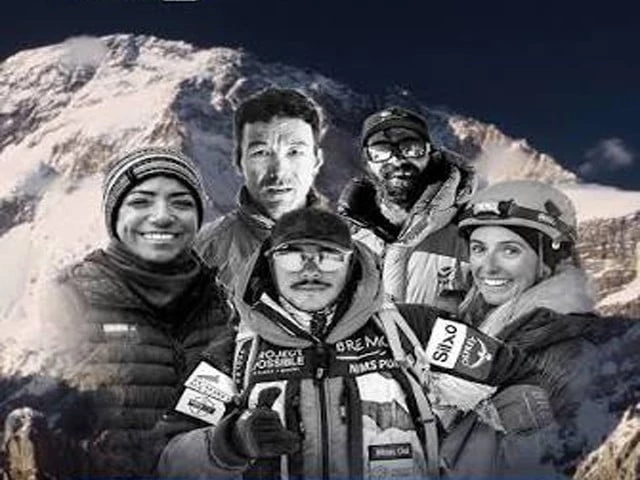
“Following one of the most technically demanding recovery operations on Broad Peak, the Alpine Club of Pakistan confirms that the bodies of Nirmal Purja, Wang Zhong, Nima Sherpa, Gyalu Sherpa, and Killi Pemba “Kilu” Sherpa have been transported to Skardu CMH Hospital by helicopter,” ACP said in its statement on Thursday.

“Following necessary procedures and documentation, they will be transferred to Islamabad,” it said, adding that they have been prepared for repatriation to their respective home countries under special arrangements.
 
Eight days after the avalanche on Broad Peak, the bodies of five more international mountaineers were transported to Skardu via a Pakistan Army helicopter as part of the ongoing search and rescue operation.

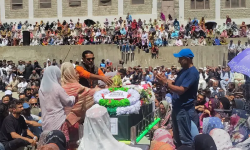
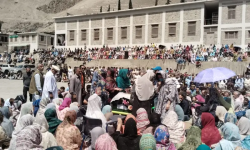
Officials from Civil Aviation Skardu, city elders, representatives of relevant institutions, and a large number of mountaineers received the bodies.

All the bodies were transferred to CMH Skardu.

Among the bodies transported to Skardu was the globally renowned Nepalese mountaineer Nirmal Purja.

According to rescue officials, out of the 10 mountaineers missing in the Broad Peak incident, the bodies of 8 have been recovered so far, while the search for the remaining two mountaineers continues despite challenging weather conditions.

The missing individuals also include Pakistani mountaineer Suhail Sakhi.

The search and rescue operation involves the Pakistan Army, local rescue teams, and relevant institutions.

To view this content we will need your consent to set third party cookies.
For more detailed information, see our cookies page.
 

Users who are viewing this thread

Pakistan Defence Latest

Latest Posts

Back
Top