General Mountaineering Thread

.
1728508527643.png

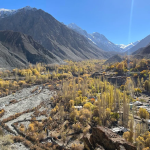
Sadpara village. Photo: Saqlain Muhammad

So far, Murtaza’s cousin, Sajid, has respected his mother’s wishes to avoid climbing high mountains in winter. But he has been busy nonetheless, climbing Gasherbrum I and II, Manaslu, Broad Peak, Annapurna, Everest, and Nanga Parbat a second time, all without supplemental oxygen. In his case, forgoing oxygen is by choice rather than necessity. As the son of Pakistan’s most famous alpinist, he wants to climb in good style.

Sajid dreams of qualifying as an internationally certified guide, a goal that demands extensive and costly training both in Nepal and overseas. However, because he is financially responsible for his entire family, he has to prioritize working in the mountains rather than chasing his personal aspirations.

While the recent development of the Sadpara Mountaineering and Climbing Institute may not directly impact Sajid, it has the potential to alter the trajectory of younger climbers like him.

The brainchild of Mohammad Ghulam, it was unveiled on World Mountain Day in December 2023. Funded in part by the Pakistan army, the institute aims to teach climbing skills to youth from Sadpara and nearby Baltistan, offering hope for local climbers at no cost to them.

The first eight-week session, taught by experienced Sadpara climbers and language instructors from the University of Baltistan, started on February 4, 2024. By equipping young climbers with necessary expertise and fostering confidence to make informed decisions in challenging high-mountain terrain, they could edge closer to achieving what Nepali climbers have done. They have an unprecedented platform on which to build their future, thanks to Nisar, Ali Raza, Mohammad Hussein, Ali Sadpara and so many others. Now it’s up to them.


Bernadette McDonald is an award-winning author based in Banff, Canada. Her latest book, Alpine Rising, chronicles the lives of Sherpa and Balti climbers in the Greater Ranges.
 
Last edited:
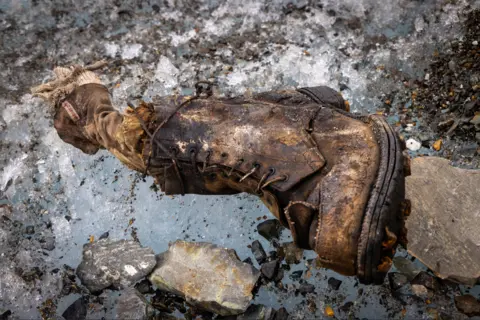
Family tells of 'relief' after 1924 climber’s foot found on Everest​

Tessa Wong and Flora Drury - BBC News


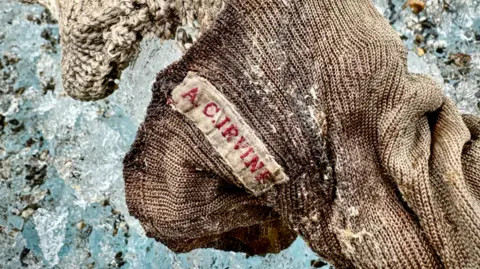
Jimmy Chin A sock embroidered with A.C. Irvine, along with a boot, has been discovered on the Central Rongbuk Glacier below the North Face of Mount Everest by a team led by Jimmy Chin.
Jimmy Chin

It was the call the family of a young British climber who went missing on Everest 100 years ago had given up hope of ever getting.

Last month, a team of climbers filming a National Geographic documentary stumbled on a preserved boot, revealed by melting ice on a glacier.

This boot was believed to belong to Andrew Comyn "Sandy" Irvine, who disappeared while attempting to climb Everest in June 1924 with his partner George Mallory.

What's more, it could potentially help solve one of mountaineering's biggest mysteries: whether or not the pair succeeded in becoming the first people to summit Everest, 29 years before Edmund Hillary and Tenzing Norgay reached the top.

Well-known adventurer Jimmy Chin, who led the team for National Geographic, hailed the discovery of the boot - with a foot inside it - as a "monumental and emotional moment".

But for Irvine's great-niece Julie Summers it was simply "extraordinary".

"I just froze.... We had all given up any hope any trace of him would be found," she told the BBC.

A number of people have searched for Irvine's body over the years, partly because the 22-year-old is said to have been carrying a camera with an undeveloped film inside, potentially with a photograph of the pair at the summit.

Could the discovery of the boot be the first step to finding his body - and the camera?

The family have now given a DNA sample to help confirm the foot is indeed Irvine - but the filmmaking team is fairly confident it belongs to the mountaineer. The sock found inside the boot being has a name tag stitched into it with the words "A.C. Irvine".

"I mean, dude... there's a label on it," Chin, who is known for making Oscar-winning climbing documentary Free Solo alongside his wife, was quoted as saying in a National Geographic report.


Jimmy Chin A sock embroidered with A.C. Irvine, along with a boot, has been discovered on the Central Rongbuk Glacier below the North Face of Mount Everest by a team led by Jimmy Chin.


Jimmy Chin

The team made the discovery as they descended the Central Rongbuk Glacier by the north face of Everest in September.

Along the way, they found an oxygen bottle marked with the date 1933. An Everest expedition that year had found an item belonging to Irvine.

Energised by this possible sign that Irvine's body could be nearby, the team searched the glacier for several days, before one of them saw the boot emerging from melting ice.

It was a fortuitous find - they estimated the ice had only melted a week before their discovery.

The foot has since been removed from the mountain because of concerns that ravens were disturbing it, according to reports, and passed to the Chinese mountaineering authorities who govern the north face of Everest.

For Irvine's descendants, the discovery has been emotional - especially in this, the centenary year of his disappearance.

Summers had grown up hearing stories of her grandmother's adventurous, Oxford-educated younger brother, who they knew as "Uncle Sandy".

"My grandmother had a photo of him by her bed until the day she died," she recalled. "She said he was a better man than anyone would ever be."


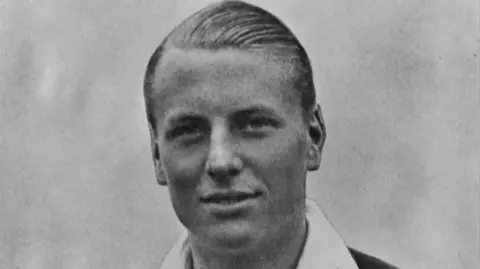
Getty Images Andrew Comyn Sandy Irvine (1902-1924).
Getty Images
Sandy Irvine, as he was popularly known, was 22 when he went missing

Birkenhead-born Irvine was just 22 when he disappeared, the youngest member of an expedition that has intrigued the mountaineering world for a century.

He and Mallory were last seen alive on 8 June 1924 as they set off for the peak.

Mallory's body would not be found until 1999 by an American climber. In recent decades, the search for the climbers' remains has been mired in controversy amid suspicions that the bodies were moved.

Summers has always dismissed those stories and suspicions, revealing her feeling of "relief" following the Chin's call that "he was still there on the mountain".

But what if it could now be proved that Irvine and Mallory reached the summit, becoming the first to do so - an idea which, Summers acknowledged, would "turn mountaineering history onto its head"?

"It would be nice - we would all feel very proud," she said. "But the family has always maintained the mystery, and the story of how far they got and how brave they were, was really what it was about."

And anyway, she said, "the only way we will ever know is if we find a picture in the camera he was believed to be carrying".
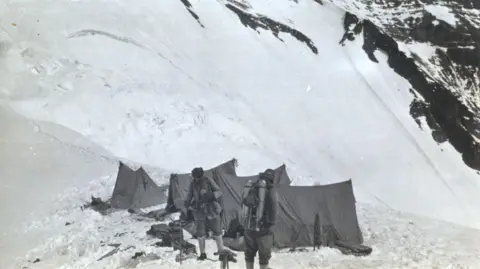
Getty Images Mallory and Irvine leaving North Col for the last climb. Famously the last image taken of George Mallory (left) and Sandy Irvine leaving for the North Col of Everest
Getty Images
The last picture of Mallory (left) and Irvine (right) before they left for their climb in 1924

The search, she suspects, will now continue for that camera. "I think it will be irresistible," she said.

Whether it will be found remains to be seen.

Chin, meanwhile, is hoping that the boot's discovery - "a monumental and emotional moment for us and our entire team on the ground" - will "finally bring peace of mind to his relatives and the climbing world at large".

For Summers, it is a chance to remind the world about a young man "who took life and lived it", embracing every opportunity - and above all, was "having fun".

But perhaps surprisingly, she and her cousins are grateful the older generation were not here for this discovery.

"For them, Everest is his grave," she explained.
 
With five of the above 8000 meters peaks in the world, Pakistan has been the focus of some of the most outstanding achievements in the world of mountaineering. For many decades the dauntless icy and rocky mountains have posed as challenge to those who dare. There are more than 100 peaks in Pakistan open for mountaineering today

Each year 40-50 mountaineering expeditions get permits to climb this greatest concentration of lofty peaks on earth. Here, five gigantic mountains, K2, Gasherbrum I, Gasherbrum II, Broad Peak and Nanga Parbat, tower above 8000 meters, with 108 peaks higher than 7000 meters.

Through the ages these majestic and awesome mountains have lured nature lovers and adventurous mountaineers. There are still peaks above 6000 meters, many of which have remained unnamed and unclimbed. If you too can rise to the challenge then the treks in the sublime sanctuary of the nature await you.

Nanga Parbat

Come into the frozen world of the world’s highest peaks, land of the gigantic 8000ers. This is the paradise that is whispered around the world with a sense of the wonder and awe, for its offers the world of those giants that cross eight thousand meters.

Nowhere else in the world can you gaze upon these giants in the sky, except in Karakorams, the Himalaya and Hindukush. Happily, there is always a peak for every kind of climber, from the amateur to the top professional. These snow covered mountains lure people from all over the world to try their hand at climbing in this land of mists and glaciers.

So listen to the call from the mountain gods and contact Concordia Expeditions Pakistan for your expedition plans now!

Climbing permits to scale a mountain are issued in all seasons by the Ministry of Culture and Tourism Pakistan in Islamabad. Certain official documents are required to seek permission for climbing peaks. Below 6000 meters peaks do not require liaison officer for expedition. Fees or royalties depend upon the altitude of the peak.
 

Antarctica’s Ultima Base Camp hosts first-ever ultra-endurance race in -25°C cold​


Paul Johnston and Roberto Sembiante crossed the line and smashed the world record

REUTERS
November 08, 2024

paul johnson and rob sembiante cross the finish line of the antarctic ice ultra marathon race in antarctica on november 8 photo reuters via facebook


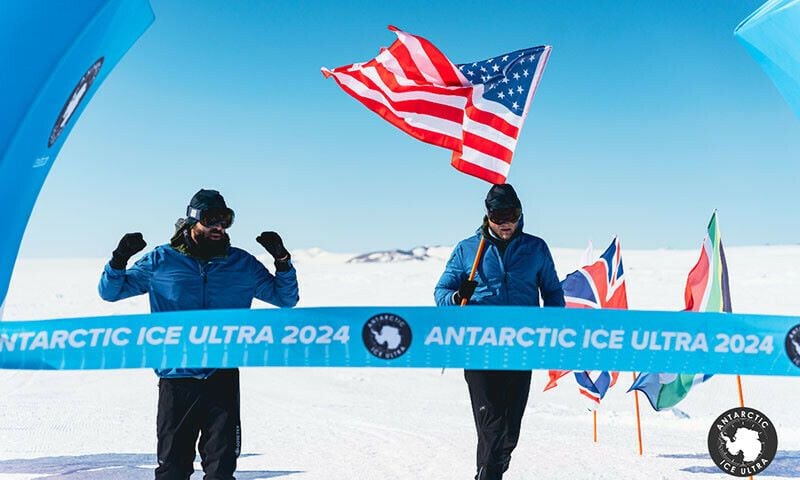
Paul Johnson and Rob Sembiante cross the finish line of the Antarctic Ice Ultra marathon race in Antarctica on November 8.
PHOTO: REUTERS VIA FACEBOOK


Fifteen competitors braved Antarctica’s freezing cold to compete in a first-of-its-kind ultra-endurance race that began on Thursday around Ultima Base Camp, where temperatures plunged as low as -25°C.

The gruelling Antarctic Ice Ultra race is designed to test resilience and fortitude in the bone-chilling winds of the icy continent but in the interest of safety, competitors raced on a 4.2 kilometre loop around the camp.

Participants also had the option to rest and refuel at a mess tent during the race, which was designed to push runners to their limits over three distances — 100 miles, 100 km and 50 miles.

“After 23 hours, 22 minutes and 57 seconds, Paul Johnston and Roberto Sembiante, both from America, crossed the line and smashed the world record by more than an hour for the 100 miles in Antarctica,” organizers said in a statement.

China’s Yusheng Ni, who had competed in the New York City Marathon over the weekend, flew down to Antarctica and won the 100 km Ultra class, clocking 10 hours, 40 minutes and 15 seconds.

The event will be organised again in November next year.
 
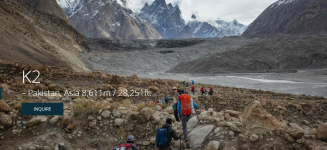
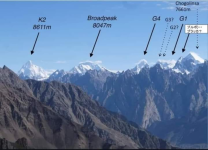
K2 view point Macholo laa trek 2025.


1731242592769.png


Join us at Trans Karakoram Treks, Tours, and Expeditions for an unforgettable journey on the Macholo Laa trek, a hidden gem in the Karakoram mountains of Gilgit-Baltistan. This trek is a unique opportunity to witness awe-inspiring views of K2, Broad Peak, and other legendary peaks without the long trek typical of more famous routes. Perfect for seasoned trekkers and passionate adventurers alike, this trek promises a profound experience surrounded by some of the highest mountains in the world.

Why Choose the Macholo Laa Trek?

Starting from the beautiful village of Machulo in Ghanche District, this trek takes you through diverse landscapes, from lush green valleys to high-altitude alpine meadows. You’ll experience the stunning raw beauty of glaciers, rivers, and high-altitude pastures, eventually arriving at the breathtaking K2 viewpoint, where the sight of the Karakoram peaks bathed in golden sunlight is truly magical.
 

Sajid Manan Gurezii

#Gurezii

Today we are going to talk about the Himalayan mountains series:

The Himalaya mountain range is located in the Asian continent,
The Himalayan Mountains separate the plains of the Indian subcontinent from the Tibetan Plateau.
It has many of the highest peaks on earth
The highest peak in these mountains is Mount Everest (8,848 m).
The Himalayan mountain range includes more than 50 mountains each exceeding 7,200 meters high, and has 10 peaks of 14 peaks exceeding 8,000 meters
The Himalayan Mountain Range from the northwest is bordered by the Karakaram Mountains and the Hindukush Mountains Range, to the north is the Tibetan Plateau, to the south is the Indian Ganges Plain
The Himalaya Mountain Range can be distinguished from others from the mountain ranges surrounding it, but sometimes the term Himalaya may also include the Karakaram Mountain Range and other mountain ranges in Central Asia.
The Himalayan mountain range extends to 6 Asian countries namely: Nepal, India, Bhutan,Jammu & Kashmir, China and Pakistan.
▪️
The top three countries dominate most of the mountain range.
▪️
Some of the major rivers in the world, i.e. the Indus River, the Ganges River and the Tsangbu-Brahmaputra River originate from the Himalayas, and the common aqueduct of these rivers is home to about 600 million people. The Himalayas hold a great place in the cultures of South Asia; many of the Himalayan peaks are sacred in both Hindu and Buddhist religions.
The Himalayan mountain range extends for a distance of more than 2413 km and is between 250 and 300 km wide, and is 8848 m high. The Himalayan Mountain Range consists of three parallel mountain ranges formed by the movement of the plates in ancient geological ages.
▪️
These smaller ranges are known as the Himalayan semi-series (Sewalk Hills in India) and are about 1200 m high. In parallel with this range, the range of low Himalayan mountains stretches between 2000 and 5000 m high.
▪️
The third range, which is called the Himalayan High Mountain Range, is the highest of the three ranges with a height of over 6000 m and lies north of the two previous ranges and contains a huge number of the world's highest peaks such as Everest - the world's tallest peak - K-2 and Kanchenjanga Peak.
▪️
The Himalayan mountain range extends to 6 Asian countries namely: Nepal, India, Bhutan, Jammu & Kashmir, China and Pakistan.


May be an image of map and text


Pakistani high-altitude porters remain invisible compared to well-paid Nepali sherpas

For example, the life insurance for a local high-altitude porter is only $1,500, a tenth of a sherpa’s.

A sport above the clouds

Waqas Bin Najib
November 18, 2024

Pakistan has a unique mountain landscape, where the Himalayas, Karakoram, and Hindu Kush ranges converge and have different characteristics.

It is home to five of the 14 peaks higher than 8,000 metres, collectively called the eight-thousanders, including two of the most beautiful mountains in the world: K2 and Nanga Parbat.

Compared to the sea level, the partial pressure of oxygen in the air, reflecting the oxygen concentration, is around half at 5,000m and only a third above 8,000m, where the oxygen pressure is so low that the human body cannot adjust anymore. Hence, it marks the start of the death zone.

Without pressurised oxygen, cells die, and the organ systems slow down. Cerebral and pulmonary oedema are only a matter of time as the body struggles to find oxygen by increasing blood circulation, which is already thicker with more red blood cells at that altitude.

Last month, Sirbaz Khan became the first Pakistani to summit all 14 eight-thousanders. A few days later, Shehroze Kashif completed his 14 at the young age of 22. These are tremendous personal achievements that deserve a celebration. It takes tremendous physical and mental strength and grit to summit an eight-thousander.

An expedition to climb an eight-thousander is usually many weeks long. There are days-long hikes to reach the base camp at around 5,000m. From there, members make day trips to the higher camps and return to the lower camps, helping the body acclimatise to lower oxygen levels. The high-altitude porters carry the equipment, tents, gear, fuel, and food to the higher camps in these rotations.

Pakistani high-altitude porters remain invisible. Expedition companies mostly hire Nepalese sherpas, even for the mountains in Pakistan.

Climbing expeditions depend on high-altitude porters. Above the base camp, all the way to the death zone, where life is not meant to exist, these porters lead the climbing, make routes, fix anchors and ropes, carry equipment and supplies, pitch tents, cook food, and care for the people paying to climb the mountains. Some hardcore climbers still climb in alpine style without the help of porters or oxygen, but they are few in number. Most climbers today join commercial expeditions.
 
Commercial mountaineering has changed the sport over the past few decades. Mountaineering used to be a sport of elite athletes carrying national flags in a race to be the first to conquer a mountain and its different routes. Commercial mountaineering started with Mount Denali in the US, where enthusiastic amateurs were taken to the summit.

After the dissolution of the Soviet Union, many trained Russian climbers became available as mountain guides, and the industry took off. Today, mountaineering is a commercial industry. Expedition management companies offer a range of options, services and luxuries, including personal high-altitude porters.

For decades, sherpas and high-altitude porters climbed anonymously with poor wages. They were often restricted to the last camp before the summit and not allowed to the summit. The Western expeditions wanted to keep the glory private. The Nepalese climbing community has changed the status of the sherpas and started managing the expeditions themselves, ensuring that sherpas are paid well and recognised for their achievements.

Pakistani high-altitude porters remain invisible, and the industry is still nascent. Expedition companies mostly hire Nepalese sherpas, even for the mountains in Pakistan. The sherpas do the rope-fixing and lead climbing, and Pakistani porters are used to carry the loads. Local companies offer management services only for the base camps.

The sherpas are paid over $10,000 on a mountain in Pakistan, whereas the local high-altitude porter will only be paid $1,000 for a six-week expedition. Local porters are given poorer life and health insurance than the sherpas. For example, the life insurance for a local high-altitude porter is only $1,500, a tenth of a sherpa’s.

The image of Western climbers hopping over the dying Hassan Shigri on the bottleneck at K2 in 2023 was tragic in many ways. It depicted the value rendered to the life of a local porter. Over 70 years ago, in 1952, Amir Mehdi was to be the first Pakistani to climb K2. In a story of treachery, he was forced to bivouac (spend the night without shelter) at 8,100m altitude on K2 in his leather shoes. This year, Ser Muhammad lost his life at the base of K2 as there was no rescue arrangement for him. There are numerous other stories of deaths and apathy among lost memories. Every year adds more stories.

Despite lacking training and opportunities, many Pakistani climbers, like Ali Sadpara, Ashraf Aman, Fazal Ali, Nazir Sabir, and Rajab Shah, achieved great personal success. Many started as porters with international expeditions. Sirbaz Khan also started as a cook and porter, and it was an extraordinary journey for him to climb all the eight-thousanders.
 
Mountaineering is an extreme sport, and commercial companies are responsible for their clients’ safety and success. Mountain guides and porters need technical skills to lead the climb and safely supervise clients. In Skardu, my friend Zahid Rajput, a certified trainer, manages a non-profit organisation, Khurpa Care Pakistan. This organisation advocates for the well-being of porters and provides voluntary technical training to high-altitude porters.

However, private initiatives are inadequate without government support in porters’ training, certification, and skills development. The government’s mountain tourism policy should address aspects related to the environment, sustainability, and safety.

The government should also establish mountaineering schools in Skardu and Hunza for training in technical climbing, gear maintenance, safety, rescue, and essential language skills. Private companies should be allowed to offer mountain helicopter rescue and transport services, a requirement for the sector’s growth.

Death walks with those who tread above the clouds in these majestic natural wonders. It has become easier for amateurs to venture there, but the porters pay the cost, sometimes with their lives.
 

PakistanTravelGuide​

@PakTravelGuide

Historic Day in Pakistani Mountaineering History! 🇵🇰

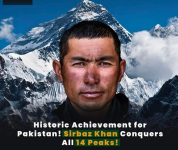
With his recent ascent of Mt. Shishapangma, Sirbaz Khan, a real legend from Hunza, Gilgit-Baltistan, has made history by being the first Pakistani to summit all 14 of the world's 8,000-meter peaks!

Sirbaz began his career as a porter and kitchen boy and worked grueling for 11 years before rising to prominence as one of the nation's most renowned mountaineers. The fact that he reached 11 of these summits without oxygen makes this accomplishment even more amazing!

Only a select few people in the world of professional mountaineering have successfully climbed all 14 of these enormous mountains, and Sirbaz Khan is now happy to be one of them. His bravery, determination, and dedication will motivate future generations of mountaineers.


1732397467039.png
 

PakistanTravelGuide​

@PakTravelGuide

Historic Day in Pakistani Mountaineering History! 🇵🇰

With his recent ascent of Mt. Shishapangma, Sirbaz Khan, a real legend from Hunza, Gilgit-Baltistan, has made history by being the first Pakistani to summit all 14 of the world's 8,000-meter peaks!

Sirbaz began his career as a porter and kitchen boy and worked grueling for 11 years before rising to prominence as one of the nation's most renowned mountaineers. The fact that he reached 11 of these summits without oxygen makes this accomplishment even more amazing!

Only a select few people in the world of professional mountaineering have successfully climbed all 14 of these enormous mountains, and Sirbaz Khan is now happy to be one of them. His bravery, determination, and dedication will motivate future generations of mountaineers.


View attachment 83631

He's reached 12 of those summits without Oxygen. He did Everest without O the second time.
 
1733611960666.png


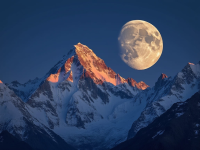
Moon rising over the majestic K2 peak, Pakistan.
 
View attachment 87017


Moon rising over the majestic K2 peak, Pakistan.

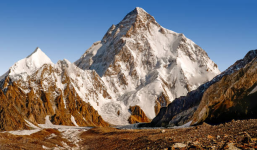
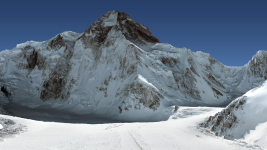
The shape is uncanny but that's not K2. 1) There's no Shoulder on the right side. 2) It's a lot smaller. 3) There's a ridge connecting to it (on the bottom right) where the Godwin Austin Glacier should be. 4) There's a ridge (on the back-left) going west-northwest which does not exist on K2 since it drops down below view. 5) The face towards us is completely different from K2's South Face. 6) The summit is sharp and pointy unlike K2's which flattens right at the end. 7) The overall silhouette is "skinnier" compared to K2 whose south-east and south-west ridges look convex. K2's North Face resembles even less.

South Face:
1733761174711.png

North Face:

1733761507313.png
 
Last edited:

Pakistani climber Asad Ali conquers world’s coldest peak​


The peak, standing at 4,892 metres, is renowned for being the coldest in the world

News Desk
January 18, 2025

tribune


Pakistani mountaineer Asad Ali Memon has successfully scaled Mount Vinson, the highest peak in Antarctica. The peak, standing at 4,892 metres, is renowned for being the coldest in the world.

Memon, who is on a journey to summit the highest mountains across all seven continents, has now conquered six of these peaks. His latest achievement adds to his impressive mountaineering record.

The climber’s next goal is to summit the final peak in his Seven Summits expedition – Puncak Jaya in Papua New Guinea. Reflecting on his success, Memon dedicated his achievement to those who believe in hard work and determination.
 

Users who are viewing this thread

Pakistan Defence Latest

Back
Top