
Beijingwalker
VIP Member

Germany has lost the top ranking it has held for decades, and China's machine tool industry has quietly become the No. 1 across the globe.
The story of the rise of Made in China has been talked about so much in recent years that people are tired of hearing it: China ranks first in the world in electric vehicle output, its photovoltaic modules are spread across half the globe, high-speed railways have been built in Indonesia, and people all over the world are using Chinese home appliances and playing with Chinese toys.
But if you ask, what else in China's manufacturing sector is still catching up?
I believe many people will immediately think of these names: lithography machines, chips, and machine tools.
Machine tools are probably the least noticeable among them — lithography machines frequently hit trending searches, and chips constantly affect international games from time to time, but what about machine tools?
Most of the time, they stay quietly in factories, not even worthy of a trending search.
Yet they are the most fundamental underlying equipment of modern manufacturing. The maximum precision of parts a country can manufacture is largely restricted by the development level of its machine tool industry.
In most people's impression, Chinese machine tools refer to those expensive equipment imported from Germany and Japan, which also have a huge number of tricky restrictions.
International machine tool giant DMG MORI has uniformly installed GPS displacement detection devices on all equipment exported globally. The location where the machine is installed is registered before leaving the factory, if the equipment is moved without authorization, it will be directly locked and deactivated.
Although this is a globally applicable export compliance mechanism (to prevent the equipment from being resold for weapons manufacturing), you spend tens of millions of yuan buying the equipment and placing it in your own factory, but you still have to report to the other party if you want to move it. This kind of grievance is self-explanatory.
Expensive, import-dependent, with very few options and numerous strict restrictions — that is what Chinese machine tools look like in many people's memory.
However, a staggering counterintuitive figure emerged in 2025:
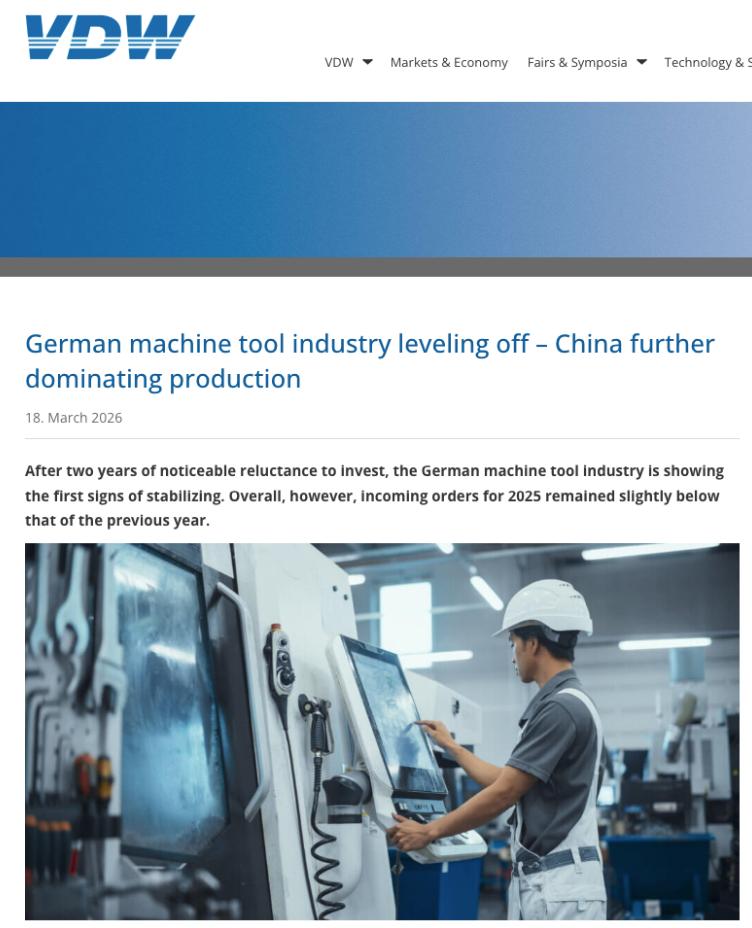
According to the data from the German Machine Tool Builders' Association (VDW), China's machine tool export volume reached 8.6 billion euros, accounting for about 21% of the global market share, surpassing Germany's 7.1 billion euros for the first time. Germany had long occupied the top position before that.
This is the first time China's machine tool industry has reached the top of the global ranking, and it inevitably makes people wonder:
From spending tens of millions of yuan to buy a single machine from others, to exporting 8.6 billion euros worth of machine tools a year and taking the first place globally, what exactly happened in between?
01: Building a good machine tool is far more difficult than you think
The work of machine tools sounds very simple: use processing tools (such as cutters) to cut, grind, and press metal into the shape we need.For a high-end machine tool, the processing precision you need to achieve is at the micron level. One micron is 1/60 of the diameter of a human hair.
It seems that as long as you have hard enough materials to make the cutters, plus advanced sensors and control algorithms available now, it is not difficult to achieve.
But in fact, building a usable machine tool and building a high-quality machine tool are two tasks of completely different difficulty levels.
The core challenge lies in durability and consistency:
You need to cut metal to this precision under huge cutting force, high-speed rotation and impact, and the precision must not drop even after tens of thousands of hours of continuous operation.
There are three inherent physical hard constraints in this process.
The first one is heat: when the machine tool is working, the motor, bearings and cutting parts all generate heat. Metal expands when heated and contracts when cooled. Even a temperature difference of several degrees may cause the part to expand by several microns, which will completely ruin your processing precision. Uneven heat generation in different parts will also gradually deviate the originally aligned axes.
High-end machine tools require a complex thermal compensation system for real-time correction. This cannot be solved by a simple sensor, but requires systematic optimization covering the whole machine structure, material selection and control algorithms. You can imagine a person performing surgery while running a marathon: the body is heating up and shaking, but the knife still has to cut along the micron-level line accurately.
The second one is vibration: during high-speed cutting, the cutter hits the metal with huge reaction force, which will cause self-excited vibration between the cutter and the workpiece, which is called "chatter" in engineering. Once chatter occurs, the processed surface will be full of ripples and burrs, and in severe cases the part will be directly scrapped. Vibration suppression involves structural rigidity, damping design for absorbing vibration energy, cutting parameters and dynamic compensation of the CNC system. Any weak link will cause problems.
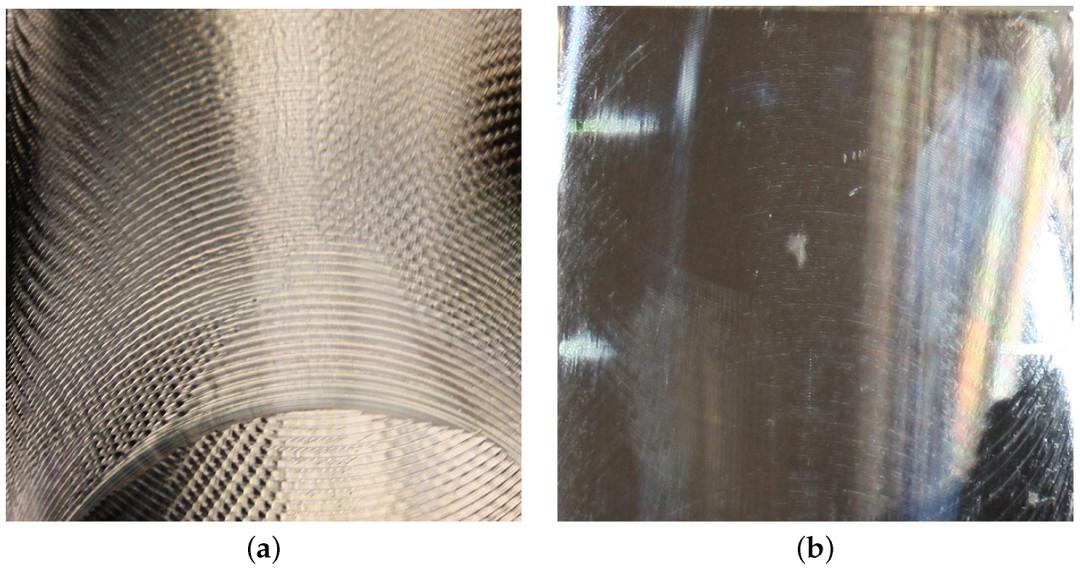
Figure | Obvious chatter marks appear on the left surface, and the right side is the surface of stable cutting
The third one is wear: after the spindle rotates at high speed for hundreds of millions of times, the bearings, guide rails and lead screws will all wear out. The precision is excellent when the machine leaves the factory, but whether it can still be maintained after one or two years of operation is the real test.
Domestic machine tools often have good precision when leaving the factory, but they start to deviate after being used for a period of time. The industry calls this characteristic "precision retention".
To put it simply, every new car works well when you just pick it up. The real test is whether it still performs well after three years of driving.
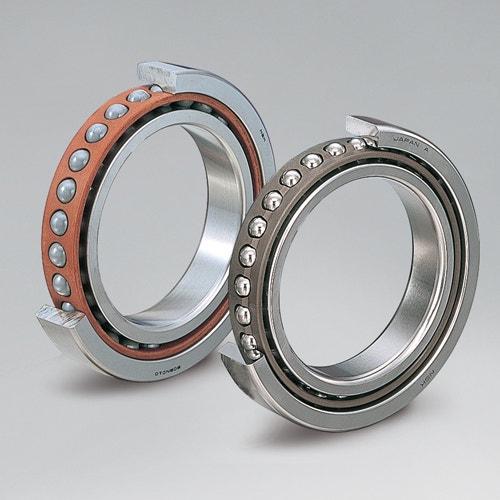
Figure | Angular contact ball bearings for high-speed spindles of machine tools. Long-term wear and thermal conditions will affect the rotation accuracy
And these three enemies do not appear separately, they occur at the same time and superimpose on each other.
These physical problems are ultimately concentrated on several core parts: the spindle is the heart of the machine tool, which determines the cutting power and rotation accuracy; the lead screw and guide rail are the bones and muscles, which determine the accuracy and stability of movement; the CNC system is the brain, which is responsible for coordinating the work of multiple motion axes and completing compensation and calculation.
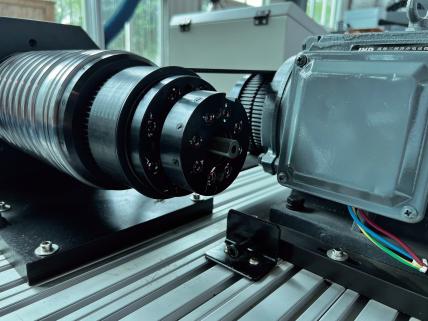
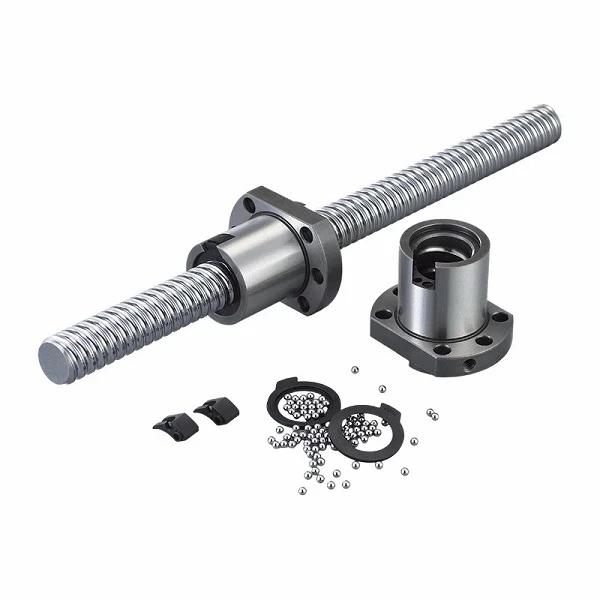
Every part needs to reach the top level to make the whole machine top-notch. What's worse, to manufacture precise lead screws and spindles, you first need a precise grinding machine to process them. This is the most classic chicken-and-egg problem in the machine tool industry: you have to have a good machine tool first, then you can make a good machine tool.
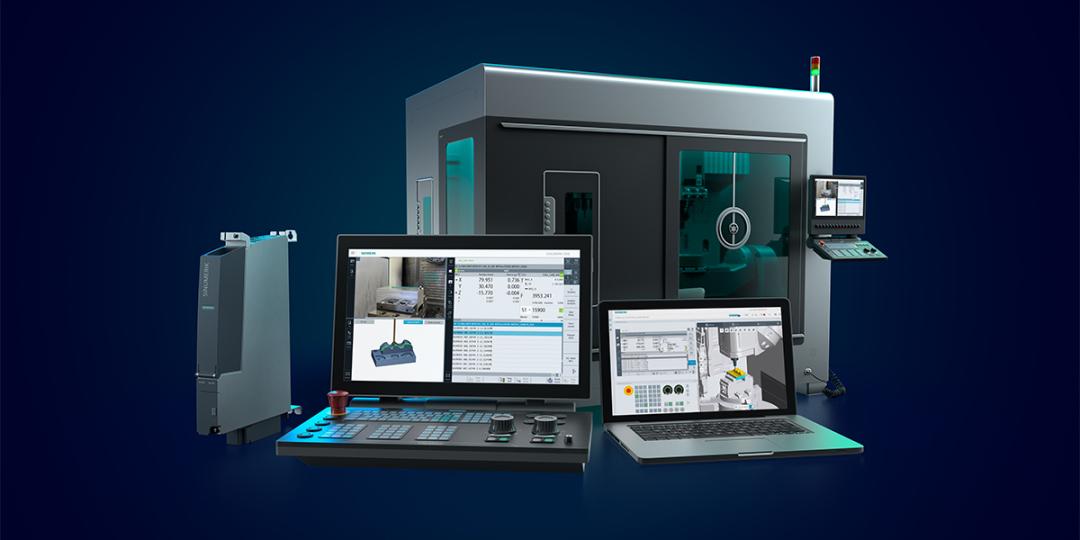
Where is the bottleneck of China's machine tool industry? It is stuck on these core parts. According to the assessment as of 2020, about 90% of high-end CNC systems and servo systems responsible for accurately executing motion instructions rely on imports, and more than 90% of high-end functional components such as spindles, lead screws and guide rails are also purchased from overseas. 90% of the "heart", "brain" and "bones and muscles" are not independently developed by domestic manufacturers.
Another 2025 professional review shows that the mean time between failures (MTBF) of foreign high-end CNC systems exceeds 50,000 hours, while the figure for domestic products is about 30,000 hours. This indicator measures how long the system can run on average between two failures, and there is still room for improvement.
02: From no one dares to use to ranking first in exports
So how did this situation get reversed step by step?First, let's see how low our starting point was:
The largest centralized key research project of the Chinese government in the machine tool field is a national major science and technology project called "High-end CNC Machine Tools and Basic Manufacturing Equipment", which is referred to as the 04 Special Project in the industry.
Before this special project was launched, the market share of domestic high-end CNC systems in domestic machine tools was less than 1%, and the MTBF of the whole high-end CNC machine tool was only about 600 hours. Does 600 hours sound acceptable? Converted according to an automobile production line running 20 hours a day, the average mean time between failures is only about one month.
Who dares to use that kind of equipment?
The 04 Special Project was launched in 2009 and lasted until 2020. Eleven years of efforts have achieved several tangible results:
The localization rate of high-end CNC systems has increased from less than 1% to 31.9%;
The MTBF of the whole high-end CNC machine tool has been raised from 600 hours to more than 2000 hours.


