Goodbye to US GPS – China breaks its dependence after 20 years and its BeiDou system has already conquered 140 countries

Beijingwalker

VIP Member
Joined
Nov 4, 2011
Messages
92,253
Reaction score
113,068
Reputation
2,146.1
Country of Origin
Country of Residence

Goodbye to US GPS – China breaks its dependence after 20 years and its BeiDou system has already conquered 140 countries​

by Laura M.

06/06/2025 06:00

Goodbye to US GPS - China breaks its dependence after 20 years and its BeiDou system has already conquered 140 countries


China has just published the data for its BeiDou satellite navigation system for 2024 and hold on, because what seemed like a simple technological balance sheet is actually a reflection of the geopolitical power of a country that has managed to build a reliable alternative to GPS in just two decades!

BeiDou began as a military project in the 1990s, but has now become the cornerstone of an Asian country’s technological and diplomatic strategy, being recognized by the UN (United Nations) as a global navigation provider.

And wait!! It has not only broken the dependence on the United States for satellite navigation, but it has also convinced 140 countries to join its network!!! This is not only important for engineers, but a clear example of how China has learned to reduce its technological vulnerabilities. Want to know more?

The rise of BeiDou​

Let’s start at the beginning by giving some figures. The magnitude of BeiDou is quite impressive!!

This Chinese satellite navigation sector billed more than $79.9 billion in 2024, a growth of 7.4% compared to 2023, incredible, huh?

This system processes more than one trillion location requests per day and guides four billion kilometres of navigation every day, wow!!!

More than a Chinese GPS​

Even it began as a military project, BeiDou is now a pillar for the Chinese economy and its foreign policy. Moreover, it is estimated that 288 million Chinese mobile phones already have BeiDou integrated and that the system offers coverage on 99% of the country’s urban and rural roads with a lane-level precision that goes far beyond that of conventional GPS.

A network expanding globally​

Okay but wait, BeiDou has not displaced GPS as the global standard (for now) but 140 countries already use it. That said, they have not adopted it as the sole substitute for GPS, but as a complement:

  • In Africa, more than 30 nations have installed reference stations to use precision agriculture, water management, and meteorology services.
  • In Latin America, ports such as Chancay in Peru integrate BeiDou into their smart navigation systems.
  • And in Asia and the Middle East, the Chinese constellation strengthens transportation and logistics services in regions where US coverage is weaker.

A very powerful second option​

Of course GPS is still the dominant in satellite navigation, we have no doubts about it, but BeiDou has offered many countries the chance to reduce their dependence on the United States… Especially in regions where GPS coverage is not as reliable… So, they are gaining ground little by little!

This way, China has turned the need for coverage into an incredible opportunity to offer its own network, with better reach in the southern hemisphere especially.

The key: technological independence​

China’s strategy has not been to defeat GPS, but to create its own option so as not to depend technologically on anyone. But this is not new (not at all), it has already been seen in the development of Huawei, 5G networks or in the renewable energy industry, don’t you think so?

China always goes one step ahead in innovation as you may see, and, therefore, BeiDou is a symbol that China builds its technological future without bowing to Western interests!

It works as a diplomatic weapon?​

It could be… BeiDou has become an instrument of foreign policy. Now, the United States can no longer cut off China’s access to satellite navigation systems, something that used to be a strong card in moments of diplomatic crisis. It’s a good response on China’s part, right?

And the best thing is that China has no intention of stopping here! What else now? BeiDou is only the beginning of a global expansion that includes artificial intelligence, communication networks, and green energy. With each step it takes, China is not only advancing economically, but also in its political and diplomatic influence. What’s next in the future?
 
Destroyer of china best thread strikes again.

They really suffer from severe inferiority complex when it comes to US.
No, I call it self-confidence from the challengers who came after, after all, in many different areas, only China and the United States are competing and challenging each other. And China is definitely qualified to be a qualified opponent.
 
Last edited:
Destroyer of china best thread strikes again.

They really suffer from severe inferiority complex when it comes to US.
Is that why US bans Huawei, stops and threatens others to stop export of chips to China, and puts tariffs on their goods - all because US cannot compete with China in a fair fight.

In a free trade, globalised world - if US would play fair - China would beat the shit out of US in a few years, and the US knows that. Hence all the dirty tricks to contain the rise of China.

How is that for inferiority complex?
 
Is that why US bans Huawei, stops and threatens others to stop export of chips to China, and puts tariffs on their goods - all because US cannot compete with China in a fair fight.

In a free trade, globalised world - if US would play fair - China would beat the shit out of US in a few years, and the US knows that. Hence all the dirty tricks to contain the rise of China.

How is that for inferiority complex?
Perhaps I should call it a sign of hysteria on the part of the other party.
 

Could China’s BeiDou System Be Behind Iran’s Improved Missile Accuracy?​

To view this content we will need your consent to set third party cookies.
For more detailed information, see our cookies page.
 

Could China’s BeiDou System Be Behind Iran’s Improved Missile Accuracy?​

To view this content we will need your consent to set third party cookies.
For more detailed information, see our cookies page.


Iran has fired hundreds of missiles at Israel and we haven't heard of many direct hits on any military/Government buildings.

Sure plenty have landed and blown up anything within 50 meters of the blast area but blown out windows and wrecked parked cars on a random city block doesn't show accuracy.

You can claim Israel simply silences everything but you can't stop everybody with a cellphone camera.
 
Last edited:
Iran has fired hundred of missiles at Israel and we haven't heard of many direct hits on any military/Government buildings.

Sure plenty have landed and blown up anything within 50 meters of the blast area but blown out windows and wrecked parked cars on a random city block doesn't show accuracy.

You can claim Israel simply silences everything but you can't stop everybody with a cellphone camera.
I know GPS is way more precise than Beidou. I mean, when it comes to targeting innocent schoolgirls with missiles, I’ve never seen the US military miss.
 
I know GPS is way more precise than Beidou. I mean, when it comes to targeting innocent schoolgirls with missiles, I’ve never seen the US military miss.

GPS was certainly reliable in Yugoslavia and that was over 25 years ago. 2,000 pound GPS JDAMs. Some targets were directly hit with 5 of them.

jpg


Thanks for reminding us of how with GPS the US military doesn't miss...want to try again?
 
Last edited:
GPS was certainly reliable in Yugoslavia and that was over 25 years ago. 2,000 pound GPS JDAMs. Some targets were directly hit with 5 of them.

jpg


Thanks for reminding us of how with GPS the US military doesn't miss...want to try again?
You must be so proud. The US kills whoever it wants, and the bodies of civilians and children are just medals for the American military. If Hitler were still alive, he’d probably want to become an American citizen himself.
 
In the security assessment report released by the U.S. Department of War in May 2025, it was clearly pointed out that if national security is threatened, the United States has the right to interrupt global civilian GPS signals at any time. The national security of the U.S. is very easily threatened, and the decision rests with the U.S. For example, Chinese garlic, this agricultural product, threatens the U.S.'s national food security.

More than 200 countries and regions worldwide use GPS. Based on the actions taken by the U.S. and Israel, we can fully believe that what the U.S. Department of War says is likely to happen.

The existence of BeiDou is not to challenge anyone. BeiDou can give other countries an additional choice, preventing losses if threatened by the U.S. or if the U.S. shuts down GPS signals. This is beneficial to all countries except the U.S.

For example, if the U.S. and Israel invade Iran, without Russia’s intelligence and other satellite systems, Iran would have to pay a higher price.

From the end of World War II to 2001, 153 regions around the world experienced 248 armed conflicts. Among them, the U.S. initiated 201, accounting for 81%, resulting in 300 million deaths. From 2001 to 2026, wars initiated by the U.S. and Israel accounted for 90%.

"America First" was a foreign policy proposed by the 45th U.S. President, Donald Trump, and became a principle of U.S. foreign policy in January 2017. There are 197 countries and 36 regions in the world; the U.S. and Israel severely undermine this world, and the U.S. fundamentally has no qualification to prioritize itself.
 
China leads in GPS-style, reconnaissance and anti-satellite abilities, US report says

aff92cf9-cc47-4ecd-8bd6-d6ac6c855455_90a98977.jpg

Chao Kongin Beijing
Published: 8:00pm, 28 Jun 2026

China has leapfrogged the United States in a few mighty important sectors of space technologies: GPS-style navigation, spy-in-the-sky reconnaissance and even the ability to knock satellites out of orbit, according to a report from a US think tank.

The report from the Washington-based Information Technology and Innovation Foundation said China had rapidly built a powerful commercial space sector under strong state backing and was narrowing the innovation gap with the US.

“If the United States does not take decisive action soon, China will claim the top spot in the global space economy,” the report, released on June 8, said.

The warning comes as analysts project the global space economy could exceed US$1 trillion within the next decade. According to the report, China has already surpassed Russia as America’s main competitor in space.

China’s space sector has gone from a nascent, slow-moving industry mostly led by state-owned enterprises to a robust, innovative commercial sector that trails only the United States in the global market,” said Ellis Scherer, an ITIF space policy analyst and author of the report.

“Most commercial space capabilities are dual use, with militaries relying most heavily on [positioning, navigation and timing], remote sensing, [low Earth orbit] broadband and anti-satellite weaponry.


China surpasses US in satellite navigation, orbital warfare, strategic military sectors

China is also leading in anti-satellite technologies, including kinetic interceptors, electronic warfare systems and directed-energy weapons.
Jun 28, 2026 10:14 PM EST


image

China leads in satellite navigation despite launch challenges.

According to a new report by the Washington-based Information Technology and Innovation Foundation, China has rapidly expanded its commercial space industry with strong government backing, significantly narrowing the innovation gap with the US.

The report, published on June 8, warned that Beijing’s accelerating progress could reshape the balance of power in the global space sector. It cautioned that without swift and decisive action, the US risks losing its leadership position in the space economy.

The warning comes as industry analysts forecast the global space economy could surpass $1 trillion over the next decade, highlighting the growing strategic and commercial stakes of space competition.

China rises to second place in global space market

Ellis Scherer, a space policy analyst at the Information Technology and Innovation Foundation and author of the report, said China’s space industry has transformed from a slow-moving sector dominated by state-owned enterprises into a highly competitive and increasingly innovative commercial ecosystem.

The report notes that China now ranks second only to the US in the global space market, noting Beijing’s rapid rise as a major force in the commercial and strategic space race. The report noted that many commercial space technologies now serve both civilian and military purposes, with armed forces increasingly relying on capabilities such as positioning, navigation and timing systems, remote sensing, low Earth orbit broadband networks, and anti-satellite weapons.

These technologies play a critical role in modern warfare by enabling surveillance of conflict zones, maintaining communications with troops in remote locations, and tracking the movement of military assets, the South China Morning Post reported.

The report also found that the US retains a strong lead in low Earth orbit (LEO) broadband, one of six major space sectors it assessed. That advantage is largely driven by SpaceX’s Starlink and Amazon’s Project Kuiper, both of which remain ahead of China’s Qianfan and Guowang satellite networks.

BeiDou drives China’s lead in critical navigation services

China’s space ambitions continue to face significant hurdles, with launch bottlenecks and the lack of operationally proven reusable rockets slowing deployment timelines. Despite those constraints, Beijing has established a lead in positioning, navigation and timing services, driven largely by the global expansion of China’s BeiDou Navigation Satellite System, the report added.
Furthermore, the scale of China’s satellite constellation, expanding global coverage and rising international adoption have pushed Beijing ahead of Washington in navigation services. It also ranked China as the leader in remote sensing and satellite imaging, citing government-backed programs such as the Gaofen satellites and commercial constellations like Jilin-1, which have helped build one of the world’s largest satellite imaging ecosystems.

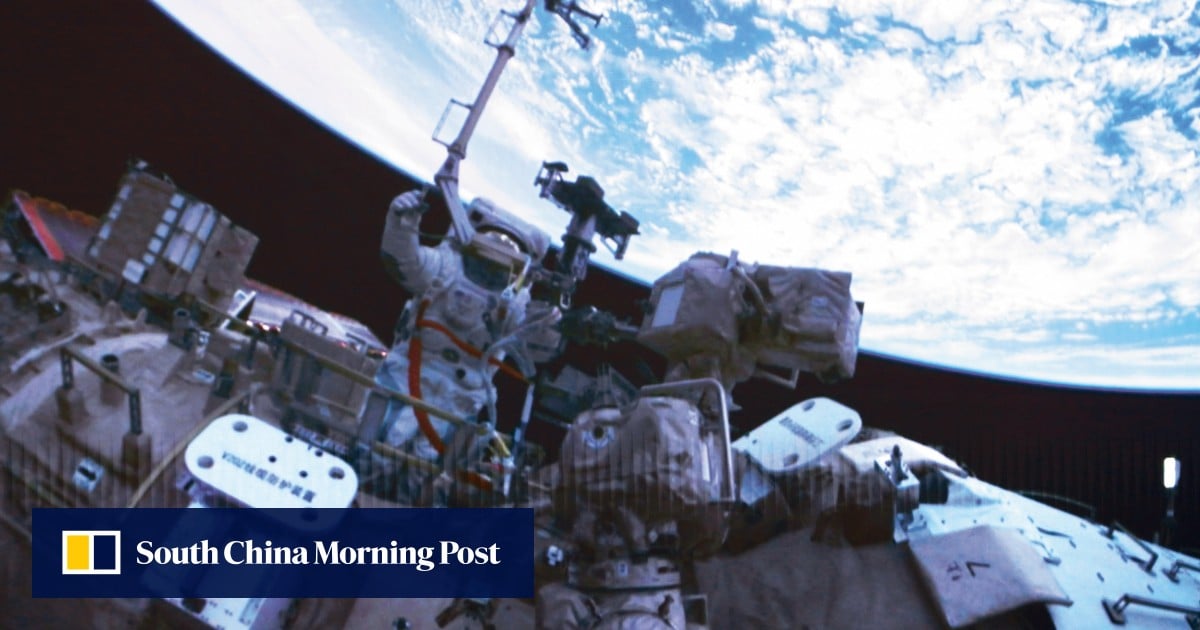
The gap is much narrower in space station capabilities though, and while the US benefits from decades of operational experience with the International Space Station, China has rapidly advanced its Tiangong Space Station, bringing the two nations to broadly comparable levels despite following different development models.

The report also found China leading in counterspace capabilities, citing sustained investment in anti-satellite technologies, including kinetic interceptors, electronic warfare systems and directed-energy weapons designed to disrupt or disable satellites.


Users who are viewing this thread

Country Watch Latest

Back
Top