Navigation
Install the app
How to install the app on iOS
Follow along with the video below to see how to install our site as a web app on your home screen.
Note: This feature may not be available in some browsers.
More options
Style variation
You are using an out of date browser. It may not display this or other websites correctly.
You should upgrade or use an alternative browser.
You should upgrade or use an alternative browser.
History of Pakistan Railways
- Thread starter ghazi52
- Start date
More options
Who Replied?


ghazi52
THINK TANK: CONSULTANT
- Thread starter
- #54
Steam Over The Indus & The Bolan Pass
Broad gauge steam in Pakistan: November 24th – December 5th 2022
Quetta
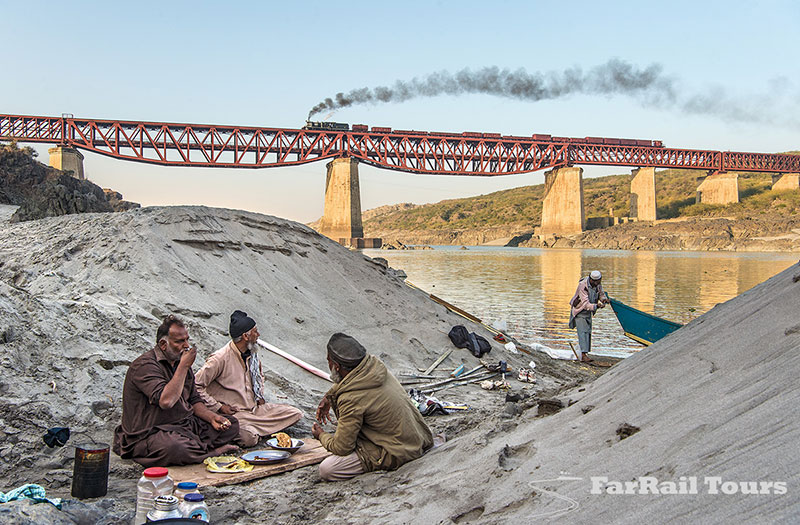
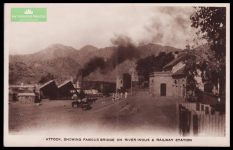
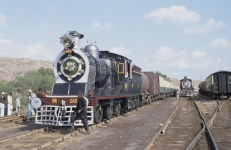
At the end of November and early December we hope to visit Pakistan again. To see amongst other things, the quite amazing lines, bridges and tunnels that surround Attock. All set against the incredible backdrop of an infrastructure that dates back to the golden age of Pakistani steam. (The photos are from the very successful 2021 trip).

The railway facilities in Attock and all the lines leading to Attock are still completely British and allow wonderful photo opportunities with the imposing Indus Bridge, the mountains and tunnels. The railway facilities are very well maintained and kept in working order, thanks to the numerous railway workers still employed on the railways. Pakistan Railways still uses two-axle freight wagons, which are perfect for a photo goods train.
We have had 5 coaches and around 30 freight wagons restored to pre their 1995 condition – perfect for authentic looking trains!
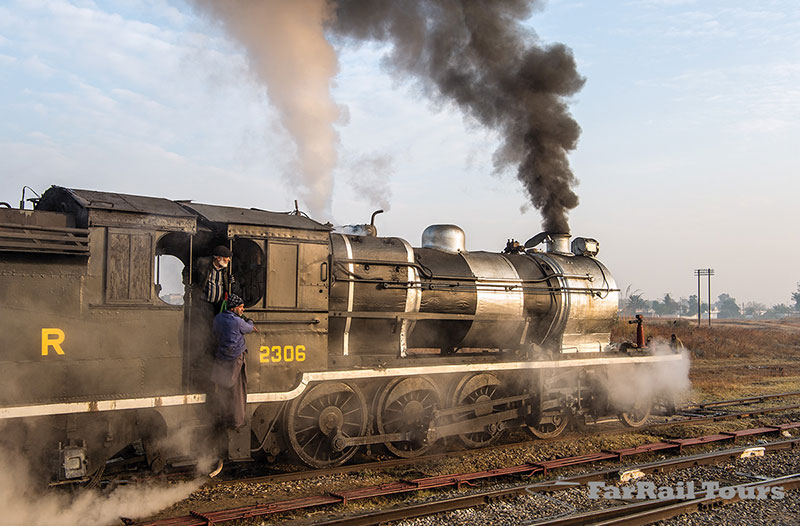
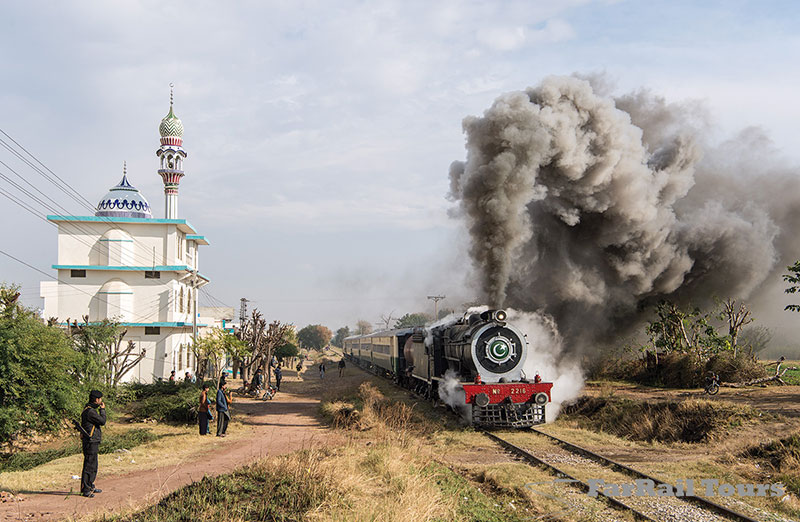
We will be using two HG/S class 2-8-0 locomotives. These locomotives were widely used in Pakistan and could be found in front of both, freight and passenger trains. They spent their last years in shunting service, which is why some of them have survived.
Itinerary
The detailed tour documents with the itinerary will be sent to the registered participants before the trip. The trip will start on 25th of November in Rawalpindi, where participants will be picked up from the Benazir Bhutto International Airport, Islamabad.Those who can arrive by 1 pm can come along for our first contact with Pakistan's railways as we will visit the Rawalpindi depot. There is a parked HG/S, and the operational boiler of an SP/S. Those arriving later will be picked up at the airport and taken to our hotel.
ghazi52
THINK TANK: CONSULTANT
- Thread starter
- #55
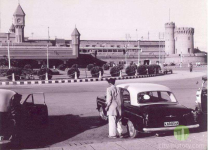
Lahore Railway Station
Qasim KhanLahore Railway Station was literally the first purpose-built British imperial building, its foundation stone haying been laid by John Lawrence in 1859, and it cost half a million rupees to build.
Lahore Railway Station is representative of typical grand British architecture in the Indo-Pak subcontinent during the British Raj. The railway network established by the British was very extensive and is one of their lasting contributions to the culture and infrastructure of this region.
With its great round bastions and tall machicolated towers, Lahore station may look as if it is the product of some short lived collaboration between the Raj and the Disney Corporation, but it was in fact built in deadly earnest.
The twin towers look as innocent as Swiss cuckoo clocks, but they were designed to be bomb- proof, while the loop holes across the facade are not the mock arrow slits they appear to be, but placements for Maxim guns, which were drawn down carefully designed lines of fire.
Even the cavernous train sheds could, in an emergency, be sealed with huge sliding metal doors, turning the whole complex into a colossal fortified bunker. According to its architect, William Brunton, the whole station had a "defensive character" so that "a small garrison could secure it against enemy attack".
The station was built in the immediate aftermath of the Indian Mutiny of 1857. So the building was deliberately designed to function both as a station and as a fort.
At the time one of the major concerns was the safety of railway employees, and accordingly, the building was designed to provide accommodation for "refuge of the Railway staff and others in any time of danger."
Constructed entirely of brick masonry, its quaint square turrets rise above the main structure and carry large clocks which could be visible from great distances, once again underscoring the importance of time that an industrialized society such as England was keen to inculcate in the local public.
The earliest of the Raj structures of Lahore, few railway stations can present a picturesque view such as this. The station provides a grand setting for the important railway junction that Lahore became ever since the first train was run to Amritsar in 1860.
Later, when linkages had been established with Bombay, Calcutta and Peshawar, and in 1889 with Karachi, Lahore contributed significantly to making Karachi the largest exporter of wheat by transporting wheat from Punjab's canal colonies.
During the Second Anglo-Afghan War (1878), Lahore played a key role by facilitating the passage of 75 trains every 24 hours to carry troops and provisions to the war destination.
Its architect, William Brunton was particularly pleased with the masonry, which he called 'the best in the world' and which he felt confident could survive even full-scale howitzer fire. When Lord John Lawrence broke the earth on the future site of Lahore Railway Station in February 1859, the silver shovel he used bore the Latin motto 'tam bello quam pace'- better peace than war.
The motto was appropriate because the railways did play a vital part in creating a peaceful, united India. The irony was that less than a century later, they were also the instrument that made its irreparable division feasible. The biggest migration in human history was only possible because thousands of people could be moved from one end of the country to another by rail.
ghazi52
THINK TANK: CONSULTANT
- Thread starter
- #56
The railway network in Pakistan was extended to the international border with Afghanistan in three phases. The first section of the Khyber railway, as it was called, was from Rawalpindi to Peshawar, which was built in 1883. In the second phase, the line was extended up to Jamrud in 1901.
Due to the Afghan war the third phase was delayed; but finally the Jamrud-Landikotal section was opened in 1925. Landikotal is the last station on the Khyber railway line in Pakistan (see Fig. 2.2), while ‘thirty-four tunnels, and ninety-two bridges and culverts’ (Kerr 2007: 58) were built is this line.This railway line was regarded as a strategic line and a newspaper article reported that ‘we shall now, at practically a

Lansdowne Bridge over the Indus River at Sukkur (Source: Indian Railways Fans Club [https://www.irfca.org/articles/ lansdone-bridge.html]
minute’s notice, be able to pour troops into the Khyber and so in Afghanistan, and this alone can be the purpose of the new line’ (‘The Indian Frontier Railway: A Strategic Line’, 1900, para 2).
Apart from battling with the toughest of the terrains and unpredictability of weather, the British had to contend with the tribal people (especially the Afridis) (Kerr 2007: 59).
The tribal people thought ‘the building of railways as the outward and visible sign of iron grip of the country by a foreign race’ (‘The Indian Frontier Railway: A Strategic Line’, 1900, para 5) in spite of employment opportunities (Sabir 1966). Therefore, the British rulers offered monetary compensation to different tribes in return to their goodwill and assistance (Iqbal 2008).
Another rail line, namely Nushki Extension Railway, linked Quetta with Zahidan in Iran in 1918. Its official report The Story of the N.E. Railway lamented the inhospitable and treacherous terrain and environment in which this railway was built. The report mentioned ‘dreary and dismal-looking surroundings . . . far removed from the blaze of modern civilization with its various amenities . . . [where] a fierce north wind roaring and sweeping over the country five days out of seven at a maximum velocity of 60 miles per hour’ (Martin 1923: 3).
Due to the Afghan war the third phase was delayed; but finally the Jamrud-Landikotal section was opened in 1925. Landikotal is the last station on the Khyber railway line in Pakistan (see Fig. 2.2), while ‘thirty-four tunnels, and ninety-two bridges and culverts’ (Kerr 2007: 58) were built is this line.This railway line was regarded as a strategic line and a newspaper article reported that ‘we shall now, at practically a
Lansdowne Bridge over the Indus River at Sukkur (Source: Indian Railways Fans Club [https://www.irfca.org/articles/ lansdone-bridge.html]
minute’s notice, be able to pour troops into the Khyber and so in Afghanistan, and this alone can be the purpose of the new line’ (‘The Indian Frontier Railway: A Strategic Line’, 1900, para 2).
Apart from battling with the toughest of the terrains and unpredictability of weather, the British had to contend with the tribal people (especially the Afridis) (Kerr 2007: 59).
The tribal people thought ‘the building of railways as the outward and visible sign of iron grip of the country by a foreign race’ (‘The Indian Frontier Railway: A Strategic Line’, 1900, para 5) in spite of employment opportunities (Sabir 1966). Therefore, the British rulers offered monetary compensation to different tribes in return to their goodwill and assistance (Iqbal 2008).
Another rail line, namely Nushki Extension Railway, linked Quetta with Zahidan in Iran in 1918. Its official report The Story of the N.E. Railway lamented the inhospitable and treacherous terrain and environment in which this railway was built. The report mentioned ‘dreary and dismal-looking surroundings . . . far removed from the blaze of modern civilization with its various amenities . . . [where] a fierce north wind roaring and sweeping over the country five days out of seven at a maximum velocity of 60 miles per hour’ (Martin 1923: 3).
ghazi52
THINK TANK: CONSULTANT
- Thread starter
- #57
Consequences of the Railways
The railway system in British India provided the strategic, commercial and economic benefits to the British empire in the colonial context. This meant that railways served the British interests first and foremost, even sometimes at the expense of locals (Das 2010, Headrick 1988, Kerr, 2003).
The construction of such a magnitude required an ample supply of workers and engineers. Small towns near the construction sites, especially at bridges and tunnel, had to be built as temporary housing sites for employees and engineers who needed to stay for longer years at certain points. For instance, the Alexandra bridge (built 1870-6) over the river Chenab near Wazirabad, Punjab required 15 miles of tramways ‘which were in constant use by night and day during each working season’ (Lambert 1878: 81).
Due to the concentration of large number of workforce at construction sites, thousands of workers died within days as epidemic diseases hit them. In June 1885, 2,000 of the total 10,000 workers died due to the outbreak of cholera in the upper heads of Sind-Peshin line (Kerr 2007: 55).
Similarly, some 800 workers died of typhus only at the Khojak Tunnel during 1890 (Berridge 1969). The workers also died due to little safety measures available at that time. For instance on many cliff faces and hilly areas, as was the case in northern and western parts, workers needed to be suspended by ropes in order to drill or blast some portions of the rocks. Many agents reported events that workers lost their hold and ‘dashed to pieces in the nullahs [ravines] below’, which had the effect of halting work by other fellow workers (Kerr 2007: 42).
The colonial railway operation saw many fatal accidents in the subcontinent due to floods and poor coordination mechanism. Flood caused many damages to the railway lines and bridges resulting in fatal accidents and loss of lives. While the bridges in Punjab, Sind and Delhi over Jumna, Sutlej and Beas rivers were completed in 1869, they were severely damaged by the floods in 1871. The collapse of the Beas Bridge caused a terrible accident when a passenger train dropped into the water (ibid. 2007).
Another train was derailed on a bridge on the north-west railway resulting in 7 deaths and 11 injured. Besides significant damage to the bridge, twenty-nine loaded vehicles on the train were badly smashed and destroyed (‘Indian Railway Smash’, 1924).
In a similar event, a newspaper from Lahore reported that while a train was passing over the bridge, the structure collapsed and the train precipitated into the river, which was flooded due to the monsoon rains. At least 50 people drowned (‘Indian Railway Accident’, 1921).
The institutional arrangements were crucial to the smooth operation of railways. Trains met with fatal disasters due to lack of integration, timely information, coordination and precise execution of the train operations. A head-on collision between a goods train and mail train happened due to inability of the driver of the mail train to understand a ‘danger’ signal, which was telegraphed to him (‘Accident on an Indian Railway’, 1884).
Similarly, a serious collision occurred between two passenger trains on north-west railway near Montgomery (present day Sahiwal), resulting in death of 95 persons and 104 injured. The cause of the collision was reported to be ‘a wrong signal that the line was clear’ (‘Indian Trains in Collision’, 1924). In another event, a special train in which the Maharaja of Scinde (Sind) was travelling with a stationary passenger train at a station owing to the mistake in ‘signalling’, and resulted in injuries of passengers.
The same news reported that there was another accident two days before at Kot Lakhpat station, which resulted in 11 deaths and 30 injured, due to the mistake of the station master giving ‘line clear’ ticket to a goods train. It was unusual that the ‘North-Western railways was the scene of a second serious collision within a week’ (‘Indian Railways Accidents: The Maharaja’, 1907).
The railway system in British India provided the strategic, commercial and economic benefits to the British empire in the colonial context. This meant that railways served the British interests first and foremost, even sometimes at the expense of locals (Das 2010, Headrick 1988, Kerr, 2003).
The construction of such a magnitude required an ample supply of workers and engineers. Small towns near the construction sites, especially at bridges and tunnel, had to be built as temporary housing sites for employees and engineers who needed to stay for longer years at certain points. For instance, the Alexandra bridge (built 1870-6) over the river Chenab near Wazirabad, Punjab required 15 miles of tramways ‘which were in constant use by night and day during each working season’ (Lambert 1878: 81).
Due to the concentration of large number of workforce at construction sites, thousands of workers died within days as epidemic diseases hit them. In June 1885, 2,000 of the total 10,000 workers died due to the outbreak of cholera in the upper heads of Sind-Peshin line (Kerr 2007: 55).
Similarly, some 800 workers died of typhus only at the Khojak Tunnel during 1890 (Berridge 1969). The workers also died due to little safety measures available at that time. For instance on many cliff faces and hilly areas, as was the case in northern and western parts, workers needed to be suspended by ropes in order to drill or blast some portions of the rocks. Many agents reported events that workers lost their hold and ‘dashed to pieces in the nullahs [ravines] below’, which had the effect of halting work by other fellow workers (Kerr 2007: 42).
The colonial railway operation saw many fatal accidents in the subcontinent due to floods and poor coordination mechanism. Flood caused many damages to the railway lines and bridges resulting in fatal accidents and loss of lives. While the bridges in Punjab, Sind and Delhi over Jumna, Sutlej and Beas rivers were completed in 1869, they were severely damaged by the floods in 1871. The collapse of the Beas Bridge caused a terrible accident when a passenger train dropped into the water (ibid. 2007).
Another train was derailed on a bridge on the north-west railway resulting in 7 deaths and 11 injured. Besides significant damage to the bridge, twenty-nine loaded vehicles on the train were badly smashed and destroyed (‘Indian Railway Smash’, 1924).
In a similar event, a newspaper from Lahore reported that while a train was passing over the bridge, the structure collapsed and the train precipitated into the river, which was flooded due to the monsoon rains. At least 50 people drowned (‘Indian Railway Accident’, 1921).
The institutional arrangements were crucial to the smooth operation of railways. Trains met with fatal disasters due to lack of integration, timely information, coordination and precise execution of the train operations. A head-on collision between a goods train and mail train happened due to inability of the driver of the mail train to understand a ‘danger’ signal, which was telegraphed to him (‘Accident on an Indian Railway’, 1884).
Similarly, a serious collision occurred between two passenger trains on north-west railway near Montgomery (present day Sahiwal), resulting in death of 95 persons and 104 injured. The cause of the collision was reported to be ‘a wrong signal that the line was clear’ (‘Indian Trains in Collision’, 1924). In another event, a special train in which the Maharaja of Scinde (Sind) was travelling with a stationary passenger train at a station owing to the mistake in ‘signalling’, and resulted in injuries of passengers.
The same news reported that there was another accident two days before at Kot Lakhpat station, which resulted in 11 deaths and 30 injured, due to the mistake of the station master giving ‘line clear’ ticket to a goods train. It was unusual that the ‘North-Western railways was the scene of a second serious collision within a week’ (‘Indian Railways Accidents: The Maharaja’, 1907).
ghazi52
THINK TANK: CONSULTANT
- Thread starter
- #58
First Train in The History
From Karachi To Kotri in 1861
Karachi, the largest city of Pakistan, has the honor that it was the first city of present Pakistan and the second of the suburbs from where the railway system began.
The train in Britain had started since 1830 and when the East India Company requested, the British Parliament approved an act in 1849 which resulted in the agreement of the East India Company with the Railway Company and the railway line in India. The work of laying has been started.
The first train operated on 16 April 1853 from Bandra station to Thane station in Bombay carrying 14 bogies and 400 passengers and the train covered a distance of 20 miles or 34 kilometers in about one hour.
In the next phase, the railway line was extended from the police station to Kalyana and then Pune.
Karachi was the second largest city of India after Bombay, on which the British government paid special attention and the work of laying a 108 mile or 169 km long railway line from Karachi to Kotri was started here in 1858 which was completed three years later in 1861 The wind.
It should be clear that the construction of Karachi City Station had been started long ago in 1850 and at the same time construction of Farrier Railway Station was also started.
Karachi City Station since it was small and initially consisted of only two rooms so it was completed in 1855 while Ferrier Railway Station had special courtesy of British and they wanted to make it a bigger and modern railway station so its construction It was also delayed and that song was completed by going somewhere in 1898
However, thanks to the efforts of Sir Henry-David Ferrier, the railway was able to run on it until 1861 after the tracks had parted.
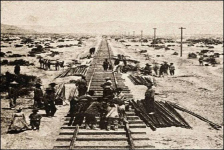
The picture you can see below shows a train standing at Cantt station and it is often claimed that it was the train which first ran from Karachi to Cotry.
But I suspect that this may be the train that ran through here in 1898 after the completion of the Ferrier Railway Station, which we call Kent Railway Station.
The first thing is that there was no camera until 1861 and even if it had been invented, it would not have reached India. Therefore, this cannot be the picture of the first train, which some people, even the railway people, present by making the first train.
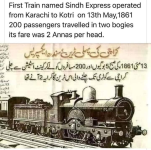
Finally the moment has arrived when the first train with 4 bogies departed for Kotri carrying 200 passengers from Karachi City Station on Monday, 13 May 1861 at 05:30 am. The fare was charged for two passengers per passenger.
In this era, the railway here was called North Western Railway, which after independence was called West Pakistan Railway and now Pakistan Railway.
The system given by the British, which was started with a mere 169 km long line, today, Alhamdulillah, Pakistan's railway line has become more than 7700 km long and a lot of work was done on it in the 60s.
However, the inflation has increased now and the ticket between Karachi and Hyderabad which was only two or 12 paise, is now worth one thousand rupees.
From Karachi To Kotri in 1861
Karachi, the largest city of Pakistan, has the honor that it was the first city of present Pakistan and the second of the suburbs from where the railway system began.
The train in Britain had started since 1830 and when the East India Company requested, the British Parliament approved an act in 1849 which resulted in the agreement of the East India Company with the Railway Company and the railway line in India. The work of laying has been started.
The first train operated on 16 April 1853 from Bandra station to Thane station in Bombay carrying 14 bogies and 400 passengers and the train covered a distance of 20 miles or 34 kilometers in about one hour.
In the next phase, the railway line was extended from the police station to Kalyana and then Pune.
Karachi was the second largest city of India after Bombay, on which the British government paid special attention and the work of laying a 108 mile or 169 km long railway line from Karachi to Kotri was started here in 1858 which was completed three years later in 1861 The wind.
It should be clear that the construction of Karachi City Station had been started long ago in 1850 and at the same time construction of Farrier Railway Station was also started.
Karachi City Station since it was small and initially consisted of only two rooms so it was completed in 1855 while Ferrier Railway Station had special courtesy of British and they wanted to make it a bigger and modern railway station so its construction It was also delayed and that song was completed by going somewhere in 1898
However, thanks to the efforts of Sir Henry-David Ferrier, the railway was able to run on it until 1861 after the tracks had parted.
The picture you can see below shows a train standing at Cantt station and it is often claimed that it was the train which first ran from Karachi to Cotry.
But I suspect that this may be the train that ran through here in 1898 after the completion of the Ferrier Railway Station, which we call Kent Railway Station.
The first thing is that there was no camera until 1861 and even if it had been invented, it would not have reached India. Therefore, this cannot be the picture of the first train, which some people, even the railway people, present by making the first train.
Finally the moment has arrived when the first train with 4 bogies departed for Kotri carrying 200 passengers from Karachi City Station on Monday, 13 May 1861 at 05:30 am. The fare was charged for two passengers per passenger.
In this era, the railway here was called North Western Railway, which after independence was called West Pakistan Railway and now Pakistan Railway.
The system given by the British, which was started with a mere 169 km long line, today, Alhamdulillah, Pakistan's railway line has become more than 7700 km long and a lot of work was done on it in the 60s.
However, the inflation has increased now and the ticket between Karachi and Hyderabad which was only two or 12 paise, is now worth one thousand rupees.
Pakistan Defence Latest


Country Watch Latest


Latest Posts
-

-
 Breaking News: Yemen's Houthis strike Saudi Arabia's Abha airport with missiles and drones in a sharp escalation (34 Viewers)
- Latest: Mighty_Dragon_Strike
-

-