How money laundering became a national epidemic

MNZGamerX

Registered Member
Joined
Dec 12, 2023
Messages
1,850
Reaction score
2,026
Reputation
1,131.9
Country of Origin
Country of Residence
Politicians and businessmen grab headlines, but wealthy from all walks of life engaged in illicit transfer of funds abroad; This is the first of a two-part series on offshore money laundering from Bangladesh
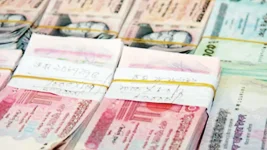
taka-currency-b2c3278dfd89946c1713192834fbc0be.webp

Golam Mowla
Publish : 29 Nov 2025, 11:55 PM

For years, public outrage over money laundering from Bangladesh has focused on familiar villains—politicians and business tycoons accused of siphoning billions abroad. But a closer look reveals a quieter, more pervasive reality: the outflow of wealth stretches to those from all walks of life.

Doctors, lawyers, bureaucrats, police officials, real estate owners, and even members of the middle class with professional clout have joined the offshore exodus.

Not a single taka of laundered money has returned, despite repeated promises and investigations.

Yet the number of Bangladeshis buying homes and parking assets abroad continues to grow.

Bangladesh’s legal framework poses significant hurdles to asset recovery.

Under the Prevention of Money Laundering Act 2012, only criminal cases can be pursued, meaning foreign asset seizure requires court approval—a process that can take years.

The first step in recovering laundered money is to legally cancel ownership of those assets abroad, said Bangladesh Bank spokesperson Arif Hossain Khan.

“Bangladesh Bank, ACC, CID, and the Ministry of Foreign Affairs are working jointly on this.”

Despite a June 14 notification outlining plans to resolve 30 prioritized cases by 2025, the actual process of fund recovery has yet to begin.

The hidden faces

Leaked financial records from offshore havens, including the Panama and Paradise Papers, had once placed the spotlight on global billionaires and political figures. But Bangladesh’s own intelligence files tell a more complex story—one where the list of those shifting wealth abroad includes bureaucrats, NBR officials, engineers, doctors, and even law enforcers.

According to government sources, over 570 officials—both current and retired—have come under the scanner for suspicious overseas transactions and property holdings. Many of them have no political affiliations; some are even known to keep an apolitical profile.

Yet their families maintain lavish homes in Canada, Malaysia, Singapore, and the UAE—properties often registered under the names of spouses or relatives.

These trends have given rise to notorious enclaves like “Begum Para” in Toronto, where numerous Bangladeshi families—often with one spouse still serving in public office—own expensive homes, funded through undeclared means.

Data from the Bangladesh Bank’s BFIU and the Real Estate Board of Canada say that many influential families in Bangladesh have bought permanent houses and flats in the Toronto and Mississauga areas in the past decade.

In Canada, this is called “Begum Para”—where the family lives abroad, and the husband or entrepreneur runs the business in the country.

A 2023 Canadian parliamentary report mentioned that the property purchase rate of Bangladeshis has increased the fastest among South Asian countries.

Similarly, under Malaysia's Malaysia My Second Home (MM2H) program, at least 4,500 Bangladeshis took up permanent residence from 2010 to 2022.

Time shields traffickers


The Panama Papers, Paradise Papers, and Offshore Leaks have revealed dozens of Bangladeshi individuals and entities linked to foreign money laundering.

These include prominent business figures, politicians, and government officials.

Many own luxury properties and offshore companies registered in jurisdictions such as the British Virgin Islands and Dubai.

Despite receiving information on at least 200 apartments—including one linked to a former land minister—the ACC has taken no action.

TIB attributes this inaction to political shielding rather than legal limitations.


Government officials maintain that asset recovery is impossible without new legislation.

“The draft law is in its final stages,” said a Finance Ministry spokesperson. “We cannot give a specific timeline, but it remains a government priority.”

In 2016, the ACC formed the ‘Offshore Company Investigation Cell.’ The purpose was to verify the involvement of Bangladeshis based on ICIJ information.

Although bank account verification and initial interrogations were initially started, they stalled due to a lack of information from abroad. Later, in 2022, the ACC submitted the names of 69 Bangladeshis to the court on the orders of the High Court, but no charge sheet has been filed against anyone to date.

At the same time, the Bangladesh Financial Intelligence Unit (BFIU) identified 210 suspicious transactions (STR) in 2019-2023, most of which were foreign-oriented.

Economic analysts caution that further delays could render recovery efforts futile.

Under international law, ownership of illicit assets gains legal protection once the statute of limitations expires.

In stark contrast, 23 other countries—including India, the UK, France, Sweden, and Spain—have collectively reclaimed over $1.3 billion from individuals named in the leaks.

As legal inertia persists, questions mount over when, if ever, Bangladesh will see the return of its lost assets.

Estimates from the government indicate that over the past 15 years, people have laundered between $75 billion and $100 billion abroad.

Finance Ministry sources say disagreements persist over whether the law should allow civil proceedings and settlements or remain strictly criminal.

Many Bangladeshis now dual citizens in 101 countries

As per the Immigration Division at the Ministry of Home Affairs, Bangladeshis currently have the opportunity to acquire dual citizenship in 101 countries.

Among these countries are several nations across Africa, including Egypt, South Africa, Kenya, Algeria, Sudan, Morocco, Ghana, Rwanda, Burundi, Tunisia, Sierra Leone, Libya, Congo, Liberia, the Central African Republic, Eritrea, Gambia, Botswana, and Mauritius.

In South America, 12 countries are included in the list, such as Brazil, Bolivia, Colombia, Venezuela, Suriname, Argentina, Peru, Ecuador, Chile, Uruguay, and Guyana.

Additionally, Bangladeshis can also hold dual citizenship in countries across the Caribbean and beyond, including Cuba, the Dominican Republic, Haiti, the Bahamas, Jamaica, Trinidad and Tobago, Dominica, Saint Lucia, Barbados, Saint Vincent and the Grenadines, Saint Kitts and Nevis, and even Fiji.

First a leak, then silence


The Panama Papers leak in April 2016 caused a global storm. It shows that politicians, businessmen, and influential people from different countries have formed offshore companies and laundered huge amounts of money to tax havens. Bangladeshi citizens and institutions were also on the list.

The first batch of documents released showed that Bangladeshi citizens had opened companies in countries like Panama, the British Virgin Islands, Belize, and Seychelles and transferred money.

Among them were businessmen Mahbubur Rahman, Mohammad Rafiqul Islam, Mohammad Shahidul Islam, and several other expatriate entrepreneurs.

Although some claimed that this was an “investment opportunity,” investigations showed that most of these companies were shell companies—that is, companies created solely to hide the destination of the money.

In May of the same year, the names of several more Bangladeshis emerged in the second batch of documents, some of whom are involved in the garment, construction, real estate, or shipbreaking industries.

However, even after the list was published, no major investigation was carried out in the country.
 
Politicians and businessmen grab headlines, but wealthy from all walks of life engaged in illicit transfer of funds abroad; This is the first of a two-part series on offshore money laundering from Bangladesh

View attachment 162513

Golam Mowla
Publish : 29 Nov 2025, 11:55 PM

For years, public outrage over money laundering from Bangladesh has focused on familiar villains—politicians and business tycoons accused of siphoning billions abroad. But a closer look reveals a quieter, more pervasive reality: the outflow of wealth stretches to those from all walks of life.

Doctors, lawyers, bureaucrats, police officials, real estate owners, and even members of the middle class with professional clout have joined the offshore exodus.

Not a single taka of laundered money has returned, despite repeated promises and investigations.

Yet the number of Bangladeshis buying homes and parking assets abroad continues to grow.

Bangladesh’s legal framework poses significant hurdles to asset recovery.

Under the Prevention of Money Laundering Act 2012, only criminal cases can be pursued, meaning foreign asset seizure requires court approval—a process that can take years.

The first step in recovering laundered money is to legally cancel ownership of those assets abroad, said Bangladesh Bank spokesperson Arif Hossain Khan.

“Bangladesh Bank, ACC, CID, and the Ministry of Foreign Affairs are working jointly on this.”

Despite a June 14 notification outlining plans to resolve 30 prioritized cases by 2025, the actual process of fund recovery has yet to begin.

The hidden faces

Leaked financial records from offshore havens, including the Panama and Paradise Papers, had once placed the spotlight on global billionaires and political figures. But Bangladesh’s own intelligence files tell a more complex story—one where the list of those shifting wealth abroad includes bureaucrats, NBR officials, engineers, doctors, and even law enforcers.

According to government sources, over 570 officials—both current and retired—have come under the scanner for suspicious overseas transactions and property holdings. Many of them have no political affiliations; some are even known to keep an apolitical profile.

Yet their families maintain lavish homes in Canada, Malaysia, Singapore, and the UAE—properties often registered under the names of spouses or relatives.

These trends have given rise to notorious enclaves like “Begum Para” in Toronto, where numerous Bangladeshi families—often with one spouse still serving in public office—own expensive homes, funded through undeclared means.

Data from the Bangladesh Bank’s BFIU and the Real Estate Board of Canada say that many influential families in Bangladesh have bought permanent houses and flats in the Toronto and Mississauga areas in the past decade.

In Canada, this is called “Begum Para”—where the family lives abroad, and the husband or entrepreneur runs the business in the country.

A 2023 Canadian parliamentary report mentioned that the property purchase rate of Bangladeshis has increased the fastest among South Asian countries.

Similarly, under Malaysia's Malaysia My Second Home (MM2H) program, at least 4,500 Bangladeshis took up permanent residence from 2010 to 2022.

Time shields traffickers


The Panama Papers, Paradise Papers, and Offshore Leaks have revealed dozens of Bangladeshi individuals and entities linked to foreign money laundering.

These include prominent business figures, politicians, and government officials.

Many own luxury properties and offshore companies registered in jurisdictions such as the British Virgin Islands and Dubai.

Despite receiving information on at least 200 apartments—including one linked to a former land minister—the ACC has taken no action.

TIB attributes this inaction to political shielding rather than legal limitations.


Government officials maintain that asset recovery is impossible without new legislation.

“The draft law is in its final stages,” said a Finance Ministry spokesperson. “We cannot give a specific timeline, but it remains a government priority.”

In 2016, the ACC formed the ‘Offshore Company Investigation Cell.’ The purpose was to verify the involvement of Bangladeshis based on ICIJ information.

Although bank account verification and initial interrogations were initially started, they stalled due to a lack of information from abroad. Later, in 2022, the ACC submitted the names of 69 Bangladeshis to the court on the orders of the High Court, but no charge sheet has been filed against anyone to date.

At the same time, the Bangladesh Financial Intelligence Unit (BFIU) identified 210 suspicious transactions (STR) in 2019-2023, most of which were foreign-oriented.

Economic analysts caution that further delays could render recovery efforts futile.

Under international law, ownership of illicit assets gains legal protection once the statute of limitations expires.

In stark contrast, 23 other countries—including India, the UK, France, Sweden, and Spain—have collectively reclaimed over $1.3 billion from individuals named in the leaks.

As legal inertia persists, questions mount over when, if ever, Bangladesh will see the return of its lost assets.

Estimates from the government indicate that over the past 15 years, people have laundered between $75 billion and $100 billion abroad.

Finance Ministry sources say disagreements persist over whether the law should allow civil proceedings and settlements or remain strictly criminal.

Many Bangladeshis now dual citizens in 101 countries

As per the Immigration Division at the Ministry of Home Affairs, Bangladeshis currently have the opportunity to acquire dual citizenship in 101 countries.

Among these countries are several nations across Africa, including Egypt, South Africa, Kenya, Algeria, Sudan, Morocco, Ghana, Rwanda, Burundi, Tunisia, Sierra Leone, Libya, Congo, Liberia, the Central African Republic, Eritrea, Gambia, Botswana, and Mauritius.

In South America, 12 countries are included in the list, such as Brazil, Bolivia, Colombia, Venezuela, Suriname, Argentina, Peru, Ecuador, Chile, Uruguay, and Guyana.

Additionally, Bangladeshis can also hold dual citizenship in countries across the Caribbean and beyond, including Cuba, the Dominican Republic, Haiti, the Bahamas, Jamaica, Trinidad and Tobago, Dominica, Saint Lucia, Barbados, Saint Vincent and the Grenadines, Saint Kitts and Nevis, and even Fiji.

First a leak, then silence


The Panama Papers leak in April 2016 caused a global storm. It shows that politicians, businessmen, and influential people from different countries have formed offshore companies and laundered huge amounts of money to tax havens. Bangladeshi citizens and institutions were also on the list.

The first batch of documents released showed that Bangladeshi citizens had opened companies in countries like Panama, the British Virgin Islands, Belize, and Seychelles and transferred money.

Among them were businessmen Mahbubur Rahman, Mohammad Rafiqul Islam, Mohammad Shahidul Islam, and several other expatriate entrepreneurs.

Although some claimed that this was an “investment opportunity,” investigations showed that most of these companies were shell companies—that is, companies created solely to hide the destination of the money.

In May of the same year, the names of several more Bangladeshis emerged in the second batch of documents, some of whom are involved in the garment, construction, real estate, or shipbreaking industries.

However, even after the list was published, no major investigation was carried out in the country.

It has been interesting that the Universities-identity cards of Nepal -Bangladesh and Pakistan was not having any recommendations in Sydney, till 2005. When we were passout by then......
Even my BRAB Bihar University had full recognition for permanent visa eligibility, but few Pakistanis very sad, why 'no' university of Pakistan had any recognition there? 🙂

Similarly our Gulf's friends got extremely angry as Indian Muslim on my then work place, Mr Faisel Nabi wasn't qualified for even Government's pension of Australia, similar to Santosh tiwari? 🕳️
Mr F Nabi was brought from ONGC, a Central Government job of India, and i don't think other Muslims may even match him/me 🙂
🇮🇳
 

Attachments

Politicians and businessmen grab headlines, but wealthy from all walks of life engaged in illicit transfer of funds abroad; This is the first of a two-part series on offshore money laundering from Bangladesh

View attachment 162513

Golam Mowla
Publish : 29 Nov 2025, 11:55 PM

For years, public outrage over money laundering from Bangladesh has focused on familiar villains—politicians and business tycoons accused of siphoning billions abroad. But a closer look reveals a quieter, more pervasive reality: the outflow of wealth stretches to those from all walks of life.

Doctors, lawyers, bureaucrats, police officials, real estate owners, and even members of the middle class with professional clout have joined the offshore exodus.

Not a single taka of laundered money has returned, despite repeated promises and investigations.

Yet the number of Bangladeshis buying homes and parking assets abroad continues to grow.

Bangladesh’s legal framework poses significant hurdles to asset recovery.

Under the Prevention of Money Laundering Act 2012, only criminal cases can be pursued, meaning foreign asset seizure requires court approval—a process that can take years.

The first step in recovering laundered money is to legally cancel ownership of those assets abroad, said Bangladesh Bank spokesperson Arif Hossain Khan.

“Bangladesh Bank, ACC, CID, and the Ministry of Foreign Affairs are working jointly on this.”

Despite a June 14 notification outlining plans to resolve 30 prioritized cases by 2025, the actual process of fund recovery has yet to begin.

The hidden faces

Leaked financial records from offshore havens, including the Panama and Paradise Papers, had once placed the spotlight on global billionaires and political figures. But Bangladesh’s own intelligence files tell a more complex story—one where the list of those shifting wealth abroad includes bureaucrats, NBR officials, engineers, doctors, and even law enforcers.

According to government sources, over 570 officials—both current and retired—have come under the scanner for suspicious overseas transactions and property holdings. Many of them have no political affiliations; some are even known to keep an apolitical profile.

Yet their families maintain lavish homes in Canada, Malaysia, Singapore, and the UAE—properties often registered under the names of spouses or relatives.

These trends have given rise to notorious enclaves like “Begum Para” in Toronto, where numerous Bangladeshi families—often with one spouse still serving in public office—own expensive homes, funded through undeclared means.

Data from the Bangladesh Bank’s BFIU and the Real Estate Board of Canada say that many influential families in Bangladesh have bought permanent houses and flats in the Toronto and Mississauga areas in the past decade.

In Canada, this is called “Begum Para”—where the family lives abroad, and the husband or entrepreneur runs the business in the country.

A 2023 Canadian parliamentary report mentioned that the property purchase rate of Bangladeshis has increased the fastest among South Asian countries.

Similarly, under Malaysia's Malaysia My Second Home (MM2H) program, at least 4,500 Bangladeshis took up permanent residence from 2010 to 2022.

Time shields traffickers


The Panama Papers, Paradise Papers, and Offshore Leaks have revealed dozens of Bangladeshi individuals and entities linked to foreign money laundering.

These include prominent business figures, politicians, and government officials.

Many own luxury properties and offshore companies registered in jurisdictions such as the British Virgin Islands and Dubai.

Despite receiving information on at least 200 apartments—including one linked to a former land minister—the ACC has taken no action.

TIB attributes this inaction to political shielding rather than legal limitations.


Government officials maintain that asset recovery is impossible without new legislation.

“The draft law is in its final stages,” said a Finance Ministry spokesperson. “We cannot give a specific timeline, but it remains a government priority.”

In 2016, the ACC formed the ‘Offshore Company Investigation Cell.’ The purpose was to verify the involvement of Bangladeshis based on ICIJ information.

Although bank account verification and initial interrogations were initially started, they stalled due to a lack of information from abroad. Later, in 2022, the ACC submitted the names of 69 Bangladeshis to the court on the orders of the High Court, but no charge sheet has been filed against anyone to date.

At the same time, the Bangladesh Financial Intelligence Unit (BFIU) identified 210 suspicious transactions (STR) in 2019-2023, most of which were foreign-oriented.

Economic analysts caution that further delays could render recovery efforts futile.

Under international law, ownership of illicit assets gains legal protection once the statute of limitations expires.

In stark contrast, 23 other countries—including India, the UK, France, Sweden, and Spain—have collectively reclaimed over $1.3 billion from individuals named in the leaks.

As legal inertia persists, questions mount over when, if ever, Bangladesh will see the return of its lost assets.

Estimates from the government indicate that over the past 15 years, people have laundered between $75 billion and $100 billion abroad.

Finance Ministry sources say disagreements persist over whether the law should allow civil proceedings and settlements or remain strictly criminal.

Many Bangladeshis now dual citizens in 101 countries

As per the Immigration Division at the Ministry of Home Affairs, Bangladeshis currently have the opportunity to acquire dual citizenship in 101 countries.

Among these countries are several nations across Africa, including Egypt, South Africa, Kenya, Algeria, Sudan, Morocco, Ghana, Rwanda, Burundi, Tunisia, Sierra Leone, Libya, Congo, Liberia, the Central African Republic, Eritrea, Gambia, Botswana, and Mauritius.

In South America, 12 countries are included in the list, such as Brazil, Bolivia, Colombia, Venezuela, Suriname, Argentina, Peru, Ecuador, Chile, Uruguay, and Guyana.

Additionally, Bangladeshis can also hold dual citizenship in countries across the Caribbean and beyond, including Cuba, the Dominican Republic, Haiti, the Bahamas, Jamaica, Trinidad and Tobago, Dominica, Saint Lucia, Barbados, Saint Vincent and the Grenadines, Saint Kitts and Nevis, and even Fiji.

First a leak, then silence


The Panama Papers leak in April 2016 caused a global storm. It shows that politicians, businessmen, and influential people from different countries have formed offshore companies and laundered huge amounts of money to tax havens. Bangladeshi citizens and institutions were also on the list.

The first batch of documents released showed that Bangladeshi citizens had opened companies in countries like Panama, the British Virgin Islands, Belize, and Seychelles and transferred money.

Among them were businessmen Mahbubur Rahman, Mohammad Rafiqul Islam, Mohammad Shahidul Islam, and several other expatriate entrepreneurs.

Although some claimed that this was an “investment opportunity,” investigations showed that most of these companies were shell companies—that is, companies created solely to hide the destination of the money.

In May of the same year, the names of several more Bangladeshis emerged in the second batch of documents, some of whom are involved in the garment, construction, real estate, or shipbreaking industries.

However, even after the list was published, no major investigation was carried out in the country.


they are actually the investment mode, not your ETFs, mutual funds or investment boutiques.

finance, is nothing, more than a lie!
 
Seems like a very corrupt society.
 
It has been interesting that the Universities-identity cards of Nepal -Bangladesh and Pakistan was not having any recommendations in Sydney, till 2005. When we were passout by then......
Even my BRAB Bihar University had full recognition for permanent visa eligibility, but few Pakistanis very sad, why 'no' university of Pakistan had any recognition there? 🙂

Similarly our Gulf's friends got extremely angry as Indian Muslim on my then work place, Mr Faisel Nabi wasn't qualified for even Government's pension of Australia, similar to Santosh tiwari? 🕳️
Mr F Nabi was brought from ONGC, a Central Government job of India, and i don't think other Muslims may even match him/me 🙂
🇮🇳

And now Indian degrees are pushed aside, the west gave Indians a lot of free passes and look where it got them today.

So many H1b frauds and visa frauds with fraud documents.

If India is so great in education why is it so behind in terms of innovation?

Apart from jugad what innovation comes out of India?
 
And now Indian degrees are pushed aside, the west gave Indians a lot of free passes and look where it got them today.

So many H1b frauds and visa frauds with fraud documents.

If India is so great in education why is it so behind in terms of innovation?

Apart from jugad what innovation comes out of India?

👍
Indian-origin engineers have significantly reshaped the US technology sector 🇮🇳, transitioning from students to leaders in major companies like Microsoft, Google, and IBM. Their strong educational foundations in India, combined with opportunities in America, have fueled innovation and global impact. These leaders exemplify a successful migration story, blending their roots with American ingenuity to redefine technological possibilities.

Their success is more than personal triumph; it reflects a broader story of how migration, education, and ambition converge to drive the knowledge economy. :)
Engineers leading Microsoft, Google, IBM, and pioneering start-ups did not simply adapt to the competitive American landscape, they redefined it. 👍
Their journeys show how strong foundations in science and mathematics, combined with opportunities in the US, have produced leaders capable of transforming an era of rapid technological change.
🇮🇳
 
Exposing money laundering: How illicit funds escape Bangladesh

This is the second and final part of a two-part series tracing how illicit wealth is siphoned offshore by individuals from diverse professions, with little recovery and even less accountability

Money-Laundering-bc12c146cf9203779dd6d3cb56c55efa.webp

Golam Mowla
Publish : 30 Nov 2025
The Panama Papers, Paradise Papers, and Offshore Leaks revealed dozens of Bangladeshi individuals and entities linked to foreign money laundering.

These include prominent business figures, politicians, and government officials.

Many own luxury properties and offshore companies registered in jurisdictions such as the British Virgin Islands, and Dubai.

For example, the Paradise Papers (2020) listed figures such as Farida Y, Shahid Ullah, Chowdhury Faisal, Ahmad Samir, Musa Bin Shamsher, Fazle Elahi, and KH Asadul Islam, many of whom are reported to hold assets in the United States, Russia, and Ireland.

Domestic investigations have also flagged alleged money flows to Canada.

Named individuals include Ismail Chowdhury Samrat (former Jubo League leader), Khaled Mahmud Bhuiyan (organizing secretary of Jubo League), Atiqul Islam (former mayor of Dhaka North City Corporation), and Nazrul Islam Majumder, chairman of Nassa Group.

Laundering by all

According to an investigation by the ACC, a few AB Bank officials allegedly siphoned off Tk236 crore to the UAE and Singapore under the guise of offshore banking.

Reported in November 2020, the amount was embezzled in the name of loans for three non-existent institutions.

The entire operation was endorsed by senior officials of the bank, and the plan was specifically designed for the purpose of embezzling money, it added.

According to the ACC, between 2014 and 2016, bank officials and other relevant individuals embezzled Tk236.08 crore from the bank under the guise of offshore banking.

The money was then siphoned off to Dubai and Singapore in dollars.

In 2022, the Bangladesh Financial Intelligence Unit (BFIU) listed 69 and named 10 of them in its report submitted to the High Court about those mentioned in the Panama Papers and Paradise Papers leaks on money laundering.

Take another example of one Rabiul Islam, also known as Arav Khan, a gold trader who is accused in the murder of Mamun Imran Khan (a Special Branch police inspector) in Dhaka back in 2018.

Following the filing of charges, Arav Khan reportedly fled Bangladesh, first to India and then to Dubai, using an alias and reportedly an Indian passport.

He opened a jewelry business, “Arav Jewellers,” in Dubai in 2023. According to reports, his Dubai jewelry shop inauguration included an extravagant display (e.g., a large gold “bird of prey” emblem) and attracted Bangladeshi celebrities.

In April 2025, a Dhaka Metropolitan Sessions Judge’s Court sentenced eight people—including Arav Khan and his wife—to life imprisonment for the murder of Inspector Khan.

While there are allegations of Bangladeshis of various professions siphoning money overseas, most have been under the radar, since most of the politicians and businesspeople receive most of the flak.

Former central bank governors Fazle Kabir and Rouf Talukder have publicly denied allegations, claiming they hold no assets in Canada.

The Anti-Corruption Commission (ACC) in January earlier this year sounded the alarm over a troubling trend of public servants secretly acquiring dual citizenship and foreign passports, allegedly to evade anti-corruption investigations and legal scrutiny.

The ACC highlighted cases where officials violated the Government Service Act, 2018, by obtaining foreign passports while retaining their positions in Bangladesh.

This breach of Section 40 of the law, the ACC claims, facilitates the concealment of ill-gotten wealth abroad and allows corrupt individuals to avoid accountability.

The commission’s investigations have revealed that some officials exploit dual citizenship not only to launder illegally amassed assets but also to undermine the country's economy and the integrity of public service.

A social disease


Economists say the biggest misconception about money laundering is that it’s driven solely by those in power. In reality, corruption has become democratized.

“Laundering networks are now embedded in every layer of society,” said one economist familiar with the government’s anti-money-laundering efforts.

“Doctors under-declare income, lawyers handle dubious property transactions, contractors over-invoice projects, and mid-level bureaucrats send money abroad under the cover of education or investment. This is no longer a crime of the elite—it’s a social phenomenon.”

Bangladesh’s rising trend of trade-based money laundering—using fake import-export invoices or inflated project costs—has allowed many professionals and private businesses to transfer funds abroad without raising alarms. Meanwhile, hundi operators have made it easy for well-off families to pay for property purchases overseas without using formal banking channels.

Little recovery, lots of reports

In the past decade, Bangladesh has formed multiple committees, sent inquiries to foreign governments, and signed agreements to trace and repatriate stolen wealth. Yet the results remain dismal.

Agencies such as the Anti-Corruption Commission (ACC), Bangladesh Financial Intelligence Unit (BFIU), and Criminal Investigation Department (CID) have identified thousands of suspected accounts and properties abroad—worth thousands of crores in total. However, no meaningful recovery has taken place.

Officials privately admit that international cooperation is hard to secure without airtight evidence or convictions. In many cases, domestic agencies lack the legal tools to pursue assets held under foreign entities or family names.

The Laundered Assets Recovery Committee is working to recover assets converted into laundered money from the country.

So far, assets worth about Tk5,000 crore have been seized in joint operations by various organizations.

In addition, Mutual Legal Assistance Requests (MLARs) have been sent to 20 countries to collect information on laundered money and investments abroad.

It is learned that the Anti-Corruption Commission (ACC) has sent Mutual Legal Assistance Requests (MLARs) to the United States, Singapore, Hong Kong, and Cyprus to trace the assets of former Prime Minister Sheikh Hasina and her family in the investigation of illegal assets and money laundering.

Through these MLARs sent through the Ministry of Home Affairs, information regarding the source of money, type of transactions, and location of assets has been sought from those countries.

Tk40,000 crore assets found abroad

The Central Intelligence Cell (CIC) under the NBR has brought to light new information about the huge amount of assets laundered from Bangladesh.

The agency said that influential individuals and various institutions in the country have built assets worth at least Tk40,000 crore abroad.

A total of 52 Bangladeshis who have built this asset have already been identified. Their passports have already been seized.

From January to April, a special team of the Central Intelligence Cell (CIC) conducted on-site investigations and found significant assets in Singapore, Malaysia, Dubai, London, New York, Virginia, Florida, and Kuala Lumpur. Among them, Singapore, Malaysia, Dubai, and London have the highest wealth.

A total of 346 properties have been identified in the names of individuals and companies. CIC Director General (DG) Ahsan Habib told Bangla Tribune, “Fifty-two influential Bangladeshis have built up assets worth about Tk40,000 crore outside the country. Their passports have already been seized.”

The politics of silence

Ironically, the political obsession with blaming rivals has obscured the bigger picture. Every major money-laundering scandal becomes a political football—but few touch the structural causes that make illicit transfers possible.

“When the issue is painted as only a political one, the bureaucracy and the professional classes slip under the radar,” said a former central bank official. “That’s why despite knowing who the culprits are, we’ve seen no punishment, no reform, and no repatriation.”

Economist Dr. Mustafa K. Mujeri warned that delays only strengthen the legal protection of illicit assets.

“As time goes by, traffickers’ illegal holdings become safer. The recovery process is growing more difficult by the day,” he said.

Widening the net

Analysts say Bangladesh must urgently redefine its anti-laundering strategy to treat illicit wealth as a national problem—not a partisan one.

India has aggressively enforced its Prevention of Money Laundering Act since 2018, recovering Rs23,000 crore in FY25 alone.

An additional Rs15,000 crore was returned to victims through court-approved settlements.

Sri Lanka passed the Proceeds of Crime Act in April 2025, allowing asset seizure without court orders.

Pakistan recovered £190 million from the UK in 2019.

Transparency International Bangladesh (TIB) Executive Director Dr. Iftekharuzzaman criticized the politicization of anti-money laundering efforts.

“The law has been used selectively. Investigative agencies are plagued by party influence. Without reforms, effective results will remain elusive,” he said.

A collective failure

Money laundering in Bangladesh is no longer a story about a few powerful men. It’s about the erosion of ethics across institutions—from the courtroom to the clinic to the construction site.

Bangladesh Bank Governor Dr. Ahsan H. Mansur told Bangla Tribune that they are directly investigating those who embezzled bank money.

“However, the Anti-Corruption Commission (ACC) and CID can work on the money that has gone abroad through bureaucrats, doctors, engineers, and other professionals. That is not our job.”

Bangladesh Bank's focus is mainly on money laundered through the banking sector. The relevant law enforcement agencies have been urged to work in a coordinated manner to investigate money laundered through other sectors, he added.

TIB executive director Dr. Iftekharuzzaman said that money laundering has not stopped in the country, but those who get the opportunity are still laundering money.

He said, “Money laundering used to happen before; it is still happening. There is no reason to think that money laundering has stopped from the country after August 5 last year.”

Responding to Bangla Tribune, he said that bringing back laundered money is a very difficult and expensive process. Therefore, more attention should be paid not only to trying to bring back the money but also to the system to prevent money laundering.

“We are still not seeing that effective initiative,” said the TIB Executive Director.

Iftekharuzzaman said that very little laundered money is repatriated. Therefore, strict monitoring is needed on the routes and processes through which money is laundered.

He commented that money laundering can be prevented to a large extent if corruption in the NBR and customs officials can be stopped.

He further said: “Not limited to just a few business groups discussed, equal action should be taken against all those involved in money laundering. No matter who it is—bureaucrats, doctors, engineers, or senior police officers—no one can be favored. Otherwise, some people or businessmen will be pressured, and big swindlers will get away with it.”

“To bring back the laundered money, relevant agencies, including NBR, BFIU, ACC, and CID, will have to work more efficiently and in a coordinated manner. If necessary, trained people can be brought from abroad and appointed for this work.”

The utmost importance should be given to taking effective steps to prevent money laundering. Prevention should be the main goal, he added.

Not every laundering is the same

Dr Omar Farooq, assistant professor in the Department of Economics at Stanford University and financial crime analyst, said that laundered money is not a single type.

A large part of it originates from criminal activities, while another part, although it is legitimate income, goes abroad due to policy uncertainty and financial insecurity.

He said that criminal money often comes from bank fraud, commission trading, or bribery. He described such money as “proceeds of crime.”

On the other hand, when people have tax-paid or legitimate income, when they send that money abroad due to policy uncertainty or investment insecurity, it creates a different kind of problem.

Farooq said: “In the case of criminal money, justice is needed at two levels. First, the criminal liability is enforced, and then the money laundering is tried. Both these processes are long and complicated, because collecting evidence and legal cooperation at home and abroad is time-consuming.”

The area of repatriation of legitimate income requires a different strategy. He said, “If the government relies only on ‘punitive’ or ‘money laundering’ methods, it will not be effective. Because there is no trust in these processes, the policy is uncertain, and there is no security of investment.”

Farooq suggested that incentive policies should be adopted to repatriate legitimate income abroad. Such as tax breaks, safe investment channels, and ensuring financial confidentiality.

If there are no such incentives, legitimate income will not return to the banking channel.

He further said that the job of policymakers should be to adopt two separate policies according to the nature of the laundered money. First, in the case of criminal income, strict legal measures and ensuring asset recovery. Second, in the case of legitimate income, increasing trust and incentives and creating an investment-friendly framework.

He also warned on the issue of safe tax administration: “Giving opportunities to launder black money at various times may provide immediate benefits but will discourage taxpayers in the long run. This should be stopped on an urgent basis; otherwise, the tendency of people to not pay taxes will increase.”

While it is important to bring back laundered money, it is equally important to stop opportunities to launder black money, he added.

 
Politicians and businessmen grab headlines, but wealthy from all walks of life engaged in illicit transfer of funds abroad; This is the first of a two-part series on offshore money laundering from Bangladesh

View attachment 162513

Golam Mowla
Publish : 29 Nov 2025, 11:55 PM

For years, public outrage over money laundering from Bangladesh has focused on familiar villains—politicians and business tycoons accused of siphoning billions abroad. But a closer look reveals a quieter, more pervasive reality: the outflow of wealth stretches to those from all walks of life.

Doctors, lawyers, bureaucrats, police officials, real estate owners, and even members of the middle class with professional clout have joined the offshore exodus.

Not a single taka of laundered money has returned, despite repeated promises and investigations.

Yet the number of Bangladeshis buying homes and parking assets abroad continues to grow.

Bangladesh’s legal framework poses significant hurdles to asset recovery.

Under the Prevention of Money Laundering Act 2012, only criminal cases can be pursued, meaning foreign asset seizure requires court approval—a process that can take years.

The first step in recovering laundered money is to legally cancel ownership of those assets abroad, said Bangladesh Bank spokesperson Arif Hossain Khan.

“Bangladesh Bank, ACC, CID, and the Ministry of Foreign Affairs are working jointly on this.”

Despite a June 14 notification outlining plans to resolve 30 prioritized cases by 2025, the actual process of fund recovery has yet to begin.

The hidden faces

Leaked financial records from offshore havens, including the Panama and Paradise Papers, had once placed the spotlight on global billionaires and political figures. But Bangladesh’s own intelligence files tell a more complex story—one where the list of those shifting wealth abroad includes bureaucrats, NBR officials, engineers, doctors, and even law enforcers.

According to government sources, over 570 officials—both current and retired—have come under the scanner for suspicious overseas transactions and property holdings. Many of them have no political affiliations; some are even known to keep an apolitical profile.

Yet their families maintain lavish homes in Canada, Malaysia, Singapore, and the UAE—properties often registered under the names of spouses or relatives.

These trends have given rise to notorious enclaves like “Begum Para” in Toronto, where numerous Bangladeshi families—often with one spouse still serving in public office—own expensive homes, funded through undeclared means.

Data from the Bangladesh Bank’s BFIU and the Real Estate Board of Canada say that many influential families in Bangladesh have bought permanent houses and flats in the Toronto and Mississauga areas in the past decade.

In Canada, this is called “Begum Para”—where the family lives abroad, and the husband or entrepreneur runs the business in the country.

A 2023 Canadian parliamentary report mentioned that the property purchase rate of Bangladeshis has increased the fastest among South Asian countries.

Similarly, under Malaysia's Malaysia My Second Home (MM2H) program, at least 4,500 Bangladeshis took up permanent residence from 2010 to 2022.

Time shields traffickers


The Panama Papers, Paradise Papers, and Offshore Leaks have revealed dozens of Bangladeshi individuals and entities linked to foreign money laundering.

These include prominent business figures, politicians, and government officials.

Many own luxury properties and offshore companies registered in jurisdictions such as the British Virgin Islands and Dubai.

Despite receiving information on at least 200 apartments—including one linked to a former land minister—the ACC has taken no action.

TIB attributes this inaction to political shielding rather than legal limitations.


Government officials maintain that asset recovery is impossible without new legislation.

“The draft law is in its final stages,” said a Finance Ministry spokesperson. “We cannot give a specific timeline, but it remains a government priority.”

In 2016, the ACC formed the ‘Offshore Company Investigation Cell.’ The purpose was to verify the involvement of Bangladeshis based on ICIJ information.

Although bank account verification and initial interrogations were initially started, they stalled due to a lack of information from abroad. Later, in 2022, the ACC submitted the names of 69 Bangladeshis to the court on the orders of the High Court, but no charge sheet has been filed against anyone to date.

At the same time, the Bangladesh Financial Intelligence Unit (BFIU) identified 210 suspicious transactions (STR) in 2019-2023, most of which were foreign-oriented.

Economic analysts caution that further delays could render recovery efforts futile.

Under international law, ownership of illicit assets gains legal protection once the statute of limitations expires.

In stark contrast, 23 other countries—including India, the UK, France, Sweden, and Spain—have collectively reclaimed over $1.3 billion from individuals named in the leaks.

As legal inertia persists, questions mount over when, if ever, Bangladesh will see the return of its lost assets.

Estimates from the government indicate that over the past 15 years, people have laundered between $75 billion and $100 billion abroad.

Finance Ministry sources say disagreements persist over whether the law should allow civil proceedings and settlements or remain strictly criminal.

Many Bangladeshis now dual citizens in 101 countries

As per the Immigration Division at the Ministry of Home Affairs, Bangladeshis currently have the opportunity to acquire dual citizenship in 101 countries.

Among these countries are several nations across Africa, including Egypt, South Africa, Kenya, Algeria, Sudan, Morocco, Ghana, Rwanda, Burundi, Tunisia, Sierra Leone, Libya, Congo, Liberia, the Central African Republic, Eritrea, Gambia, Botswana, and Mauritius.

In South America, 12 countries are included in the list, such as Brazil, Bolivia, Colombia, Venezuela, Suriname, Argentina, Peru, Ecuador, Chile, Uruguay, and Guyana.

Additionally, Bangladeshis can also hold dual citizenship in countries across the Caribbean and beyond, including Cuba, the Dominican Republic, Haiti, the Bahamas, Jamaica, Trinidad and Tobago, Dominica, Saint Lucia, Barbados, Saint Vincent and the Grenadines, Saint Kitts and Nevis, and even Fiji.

First a leak, then silence


The Panama Papers leak in April 2016 caused a global storm. It shows that politicians, businessmen, and influential people from different countries have formed offshore companies and laundered huge amounts of money to tax havens. Bangladeshi citizens and institutions were also on the list.

The first batch of documents released showed that Bangladeshi citizens had opened companies in countries like Panama, the British Virgin Islands, Belize, and Seychelles and transferred money.

Among them were businessmen Mahbubur Rahman, Mohammad Rafiqul Islam, Mohammad Shahidul Islam, and several other expatriate entrepreneurs.

Although some claimed that this was an “investment opportunity,” investigations showed that most of these companies were shell companies—that is, companies created solely to hide the destination of the money.

In May of the same year, the names of several more Bangladeshis emerged in the second batch of documents, some of whom are involved in the garment, construction, real estate, or shipbreaking industries.

However, even after the list was published, no major investigation was carried out in the country.
The black money and its laundering is an issue in almost every country to some extent and that used to be the case with Pakistan too. But the problem really started spreading its tentacles in late 1970s after the Soviet occupation of Afghanistan in late 1979. The state of Pakistan then allowed the Afghans to freely move in the whole country, start businesses in Pakistan, and then support the Afghan resistance against the Soviet occupation. The underground network thus allowed later took the form of a mix of powerful mafias across the whole of Pakistan and Afghanistan. Due to whatever reasons, that Afghan mafia was allowed to operate in Pakistan. This mafia was involved in massive smuggling of drugs/narcos from Afghanistan and the Afghan transit trade stuff from all over the world, especially from China, into Pakistan.

These Afghani mafias established a whole supply network, with the help of Afghan refugees living in goths or small localities near all major Pakistani transportation hubs, to receive/forward and distribute this smuggled stuff in the whole Pakistan. Afghanis would convert all their money (thus collected in rupees from Pakistani traders) into US dollars in the black market and then smuggle those dollars into Afghanistan.
 
The black money and its laundering is an issue in almost every country to some extent and that used to be the case with Pakistan too. But the problem really started spreading its tentacles in late 1970s after the Soviet occupation of Afghanistan in late 1979. The state of Pakistan then allowed the Afghans to freely move in the whole country, start businesses in Pakistan, and then support the Afghan resistance against the Soviet occupation. The underground network thus allowed later took the form of a mix of powerful mafias across the whole of Pakistan and Afghanistan. Due to whatever reasons, that Afghan mafia was allowed to operate in Pakistan. This mafia was involved in massive smuggling of drugs/narcos from Afghanistan and the Afghan transit trade stuff from all over the world, especially from China, into Pakistan.

These Afghani mafias established a whole supply network, with the help of Afghan refugees living in goths or small localities near all major Pakistani transportation hubs, to receive/forward and distribute this smuggled stuff in the whole Pakistan. Afghanis would convert all their money (thus collected in rupees from Pakistani traders) into US dollars in the black market and then smuggle those dollars into Afghanistan.
The shocking rise in US dollar's price from Rs17 in 1987 to Rs48 in 1990s, Rs64 in early 2000s, Rs104 in 2014, and then Rs298 in 2022 was the result of manipulation/smuggling of dollar out of Pakistan by this mafia. Dollar even briefly touched the Rs329 rate in late 2022 when the Afghan mafia was telling the Pakistani traders it would touch Rs350 level just in a couple of months.

Can you believe that Afghans would smuggle massive quantities of narcotics into Pakistan and the smuggle grain, sugar, medicine, cement, and dollar out from Pakistan in return. A good portion of the narcotics smuggled from Afghanistan into Pakistan was smuggled to the rest of the world too.

While the Pak rupee was fast sliding down during 2000s through 2024, many Pakistanis, especially traders, started converting their savings (from cash economy) to dollar. That caused even faster slide for Pak rupee.
 
The shocking rise in US dollar's price from Rs17 in 1987 to Rs48 in 1990s, Rs64 in early 2000s, Rs104 in 2014, and then Rs298 in 2022 was the result of manipulation/smuggling of dollar out of Pakistan by this mafia. Dollar even briefly touched the Rs329 rate in late 2022 when the Afghan mafia was telling the Pakistani traders it would touch Rs350 level just in a couple of months.

Can you believe that Afghans would smuggle massive quantities of narcotics into Pakistan and the smuggle grain, sugar, medicine, cement, and dollar out from Pakistan in return. A good portion of the narcotics smuggled from Afghanistan into Pakistan was smuggled to the rest of the world too.

While the Pak rupee was fast sliding down during 2000s through 2024, many Pakistanis, especially traders, started converting their savings (from cash economy) to dollar. That caused even faster slide for Pak rupee.
Pak rupee was able to stabilize from its continuous down slide only after the Pak establishment took on the Afghan mafia, albite to only the extent required to keep the rupee afloat.

Now, in the current border spat and high political tensions between the two countries, the government of Pakistan has stopped all trade passing through the Pak-Afghan border. While the all powerful mafia is trying to create political instability to pressurize the state of Pakistan, let's hope the trade remains shut for at least a good number of months. That will certainly have a very healthy effect on Pak economy because Pak government was indeed unable to completely dismantle that huge mafia before the closure of Pak-Afghan border. There is a need to dismantle the massive infrastructure that has taken deep root during the negligence of almost five decades.
 
👍
Indian-origin engineers have significantly reshaped the US technology sector 🇮🇳, transitioning from students to leaders in major companies like Microsoft, Google, and IBM. Their strong educational foundations in India, combined with opportunities in America, have fueled innovation and global impact. These leaders exemplify a successful migration story, blending their roots with American ingenuity to redefine technological possibilities.

Their success is more than personal triumph; it reflects a broader story of how migration, education, and ambition converge to drive the knowledge economy. :)
Engineers leading Microsoft, Google, IBM, and pioneering start-ups did not simply adapt to the competitive American landscape, they redefined it. 👍
Their journeys show how strong foundations in science and mathematics, combined with opportunities in the US, have produced leaders capable of transforming an era of rapid technological change.
🇮🇳

LAMO using godi media to cite your claims.


To view this content we will need your consent to set third party cookies.
For more detailed information, see our cookies page.


To view this content we will need your consent to set third party cookies.
For more detailed information, see our cookies page.


To view this content we will need your consent to set third party cookies.
For more detailed information, see our cookies page.
 
LAMO using godi media to cite your claims.


To view this content we will need your consent to set third party cookies.
For more detailed information, see our cookies page.


To view this content we will need your consent to set third party cookies.
For more detailed information, see our cookies page.


To view this content we will need your consent to set third party cookies.
For more detailed information, see our cookies page.


Our political background is all about the prime newspapers we have, which is TOI and it's Branch the "economic Times".
A lie we read and this way, we find a lie you people read in your respectively countries 🙂

These all started since 1991 economic reforms by Mr Shariff in Pakistan and Rao government in India, same year. The bluffs of billionaires, the Foreign companies/MNCs and the claim of their prosperity in other Asian countries.
Which gives others a "right" to speak at least as many lies as other's media speak on world platforms 🕳️
🇮🇳
 
Last edited:
Our political background is all about the prime newspapers we have, which is TOI and it's Branch the "economic Times".
A lie we read and this way, we find a lie you people read in your respectively countries 🙂

These all started since 1991 economic reforms by Mr Shariff in Pakistan and Rao government in India, same year. The bluffs of billionaires, the Foreign companies/MNCs and the claim of their prosperity in other Asian countries.
Which gives others a "right" to speak at least as many lies as other's media speak on world platforms 🕳️
🇮🇳

So who's bluffing about India, clearly not the people pointing out gorehaba.
 
An estimated $16 billion escapes Bangladesh illegally every year, culminating in an alarming $234 billion siphoned out of the country between 2009 and 2023. According to findings published in a government economic white paper, this systemic capital flight is driven by institutional corruption, regulatory loopholes, and weak banking governance. Illicit funds primarily escape Bangladesh through a combination of trade manipulation, informal financial networks, and emerging digital channels. :coffee:


Exposing money laundering: How illicit funds escape Bangladesh​


The Panama Papers, Paradise Papers, and Offshore Leaks revealed dozens of Bangladeshi individuals and entities linked to foreign money laundering. ☕

Many own luxury properties and offshore companies registered in jurisdictions such as the British Virgin Islands, and Dubai. ☕

The money was then siphoned off to Dubai and Singapore in dollars. ☕

Following the filing of charges, Arav Khan reportedly fled Bangladesh, first to India and then to Dubai, using an alias and reportedly an Indian passport. ☕

The Anti-Corruption Commission (ACC) in January earlier this year sounded the alarm over a troubling trend of public servants secretly acquiring dual citizenship and foreign passports, allegedly to evade anti-corruption investigations and legal scrutiny. ☕

A social disease


Bangladesh’s rising trend of trade-based money laundering—using fake import-export invoices or inflated project costs—has allowed many professionals and private businesses to transfer funds abroad without raising alarms. Meanwhile, hundi operators have made it easy for well-off families to pay for property purchases overseas without using formal banking channels. ☕

Little recovery, lots of reports

In the past decade, Bangladesh has formed multiple committees, sent inquiries to foreign governments, and signed agreements to trace and repatriate stolen wealth. Yet the results remain dismal.

Agencies such as the Anti-Corruption Commission (ACC), Bangladesh Financial Intelligence Unit (BFIU), and Criminal Investigation Department (CID) have identified thousands of suspected accounts and properties abroad—worth thousands of crores in total. However, no meaningful recovery has taken place.

Officials privately admit that international cooperation is hard to secure without airtight evidence or convictions. In many cases, domestic agencies lack the legal tools to pursue assets held under foreign entities or family names.


Users who are viewing this thread

Pakistan Defence Latest

Country Watch Latest

Back
Top