Navigation
Install the app
How to install the app on iOS
Follow along with the video below to see how to install our site as a web app on your home screen.
Note: This feature may not be available in some browsers.
More options
Style variation
You are using an out of date browser. It may not display this or other websites correctly.
You should upgrade or use an alternative browser.
You should upgrade or use an alternative browser.
IFX Indonesian Fighter Experiment (KF21/IFX program)
- Thread starter Indos
- Start date
More options
Who Replied?

Indos
INT'L MOD
- Thread starter
- #272
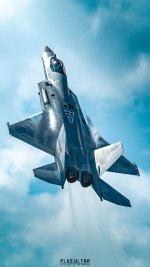
About a month ago, Defense enthusias community in Indonesia has discussion in twitter with KF21/ IFX topic. Participants include Indonesian KF21/ IFX test pilot and former Jane defense representatif, Alman Helvast.
Many interesting info there
But one that is important to share is the input given by Defense Ministry representatif saying Indonesia cost share for 2025 has been paid in June (80 - 100 million USD) and Indonesia commit on the program.
KF21 flying performance already exceeding the requirement of Indonesian Airforce. The plane is powerful and has low drag. Good performance, better than F16 in maneuver and power. KF21 flying performance is still good and exceeding expectation with Heavy load and full of armament and fuel tanks. Cockpit is automatic and digitalized, easy to fly and operate.
Indos
INT'L MOD
- Thread starter
- #273
Yudi Supriono post (defense related writer, former journalist)
------------
A few months ago, PT Dirgantara Indonesia (PTDI) sent several engineers to Korea Aerospace Industries (KAI). One of the engineer batches was specifically assigned to work on the Final Assembly Line (FAL).
------------
A few months ago, PT Dirgantara Indonesia (PTDI) sent several engineers to Korea Aerospace Industries (KAI). One of the engineer batches was specifically assigned to work on the Final Assembly Line (FAL).
Indos
INT'L MOD
- Thread starter
- #274
Yudi Supriono post (respected and credible defense writer)
----------
More Good News: PT Dirgantara Indonesia to Implement Robotic Drilling System (RDS) for N219 Aircraft Production
Following the earlier installation of several robotic production tools in the KF-X/IF-X hangar at PT Dirgantara Indonesia (PTDI), the company is now taking another step forward by introducing a Robotic Drilling System (RDS) for the N219 aircraft program.
The RDS serves as a crucial production aid that enhances accuracy, precision, and speed in the drilling and assembly of aircraft components—particularly in the fuselage and wing sections.
This technological advancement is part of PTDI’s efforts to strengthen its N219 production capacity, targeting an output of 12 aircraft per year, while ensuring that the assembly process meets international quality standards.
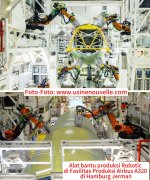
Photo: Robotic production tool at the Airbus A320 manufacturing facility in Hamburg, Germany.
----------
More Good News: PT Dirgantara Indonesia to Implement Robotic Drilling System (RDS) for N219 Aircraft Production
Following the earlier installation of several robotic production tools in the KF-X/IF-X hangar at PT Dirgantara Indonesia (PTDI), the company is now taking another step forward by introducing a Robotic Drilling System (RDS) for the N219 aircraft program.
The RDS serves as a crucial production aid that enhances accuracy, precision, and speed in the drilling and assembly of aircraft components—particularly in the fuselage and wing sections.
This technological advancement is part of PTDI’s efforts to strengthen its N219 production capacity, targeting an output of 12 aircraft per year, while ensuring that the assembly process meets international quality standards.
Photo: Robotic production tool at the Airbus A320 manufacturing facility in Hamburg, Germany.
Indos
INT'L MOD
- Thread starter
- #276
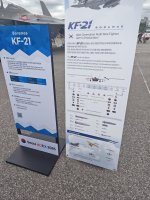
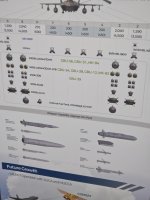
I think if we continue cooperation with KF21/IFX block 3, including buying at least 50 planes (outside the initial 48 IF21), we could possibly get our avionics company, InfoGlobal, to provide cockpit and some avionics for IF21 variant
---------
Korean Aerospace CEO
Involving other countries in the development of the second phase raises very complex issues, such as the exposure of the technology in the first phase.
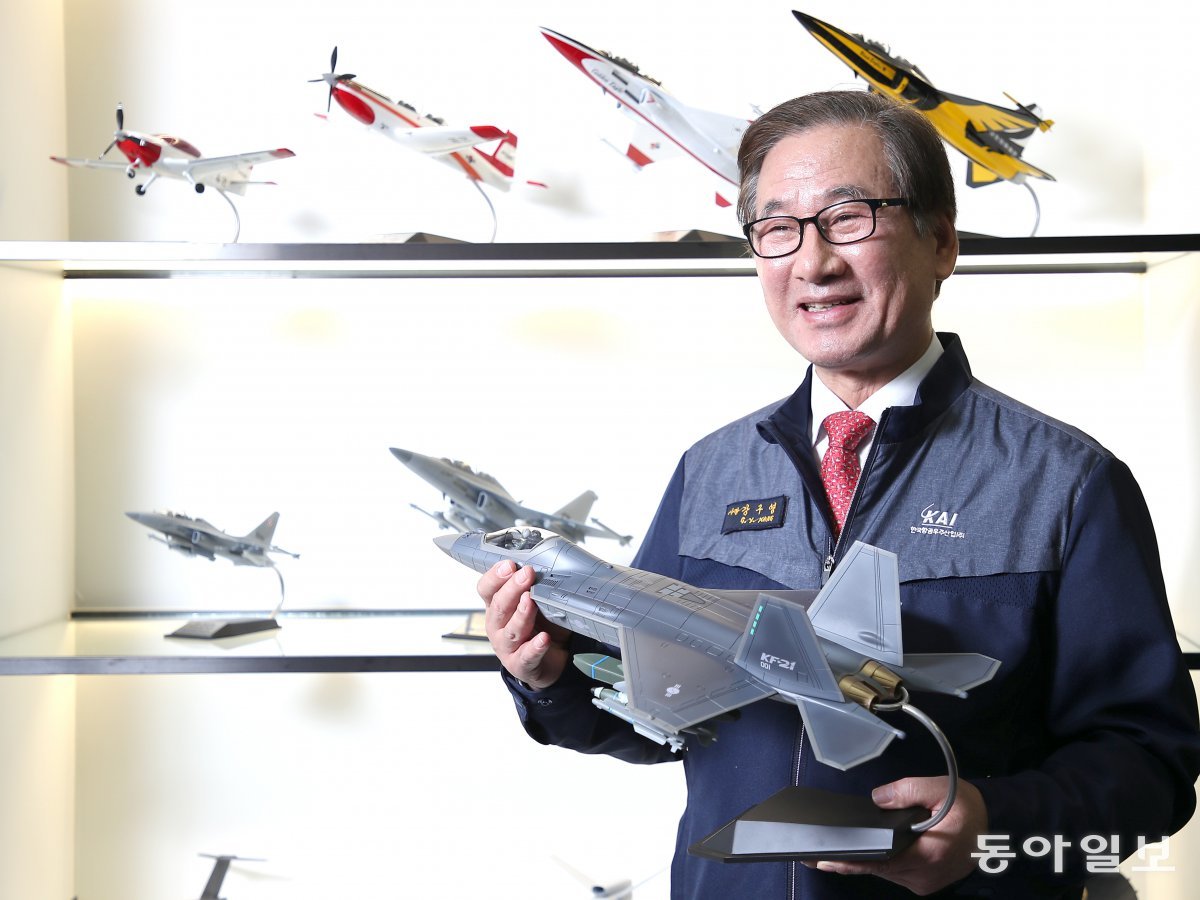
Picture : FPX Allen
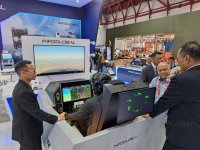
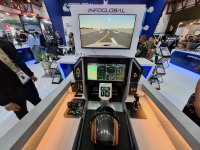
---------
Korean Aerospace CEO
Involving other countries in the development of the second phase raises very complex issues, such as the exposure of the technology in the first phase.
“KF-21은 AI기술 등 집약… 동남아 넘어 유럽도 관심”
“KF-21을 4.5세대 전투기라고 하는데, 과소평가라고 생각합니다. 4.5세대 프랑스 라팔, 유럽 유로파이터 타이푼 등과 비교하면 성능이 뛰어나거든요. 그래서 저는 5세대(완전한 스텔스 기능을 갖춘 전투기)에 가까운 4.9세대 전투기라고 부릅니다. 게다가 가격까지 …
www.donga.com
Picture : FPX Allen
Indos
INT'L MOD
- Thread starter
- #278
KT-1B Woong Bee Aircraft to Be Developed in Bandung, Indonesia
SEOUL, KOMPAS — PT Dirgantara Indonesia and Korean Aerospace Industries (KAI) on Monday (October 20, 2025) agreed to strengthen their partnership. The step was marked by the signing of a framework agreement related to the KT-1B Woong Bee aircraft development program. The agreement was signed on the sidelines of the ADEX 2025 aerospace and defense exhibition in Seoul, South Korea.
PT Dirgantara Indonesia was represented by Director of Commerce, Technology, and Development Moh Arief Faisal, while KAI was represented by EVP of Global Business Development Division Cho Woo Rae. After the signing, Arief explained that the agreement was an initial step toward joint production of the KT-1B Woong Bee.
However, Arief did not specify when the production process would begin. The KT-1B Woong Bee is a trainer aircraft that has been used by the Indonesian Air Force (TNI AU) for decades. The aircraft’s KT-1B variant is currently operated by the Jupiter Aerobatic Team of the Indonesian Air Force.
“Since KAI will no longer produce it, PT DI will take over the production of the KT-1B Woong Bee through this partnership,” said Arief. Gradually, the aircraft’s production line will be moved to PT DI’s manufacturing center in Bandung.
Later, PT DI will handle maintenance services and fulfill aircraft orders, especially across the Asian region. Besides Indonesia, the KT-1B Woong Bee is also operated by the air forces of South Korea, Peru, and Turkey.
Furthermore, Arief mentioned that this collaboration opens opportunities for Indonesia to enhance its expertise in military and trainer aircraft development, which could also be applied to the ongoing KF-21 Boramae fighter jet program.
KAI expressed similar optimism, stating that the agreement reflects the company’s trust in Indonesia’s capability and experience as a reliable partner in the aerospace industry.
Indonesia began using the KT-1 Woong Bee in 2003, replacing the T-34 Charlie trainer aircraft that had been used since 1979 and was originally manufactured by Beechcraft Corporation (USA). In military aviation, the KT-1 has also been developed for counter-insurgency (COIN) missions.
In South Korea’s defense industry history, the KT-1 Woong Bee marked an important milestone toward self-reliance in aerospace technology. South Korean Air Force Chief of Staff Marshal Son Sug-rag stated that both the KT-1 Woong Bee and the T-50 Golden Eagle—also used by the Indonesian Air Force—represent key achievements in the nation’s defense industry.
According to Son, these aircraft have become an integral part of South Korea’s defense and export success. The T-50, which evolved into the FA-50 light fighter, has even proven its combat effectiveness (“battle proven”). Philippine Air Force pilots successfully deployed the FA-50 during the Liberation of Marawi mission in 2017, which aimed to restore stability in the region.
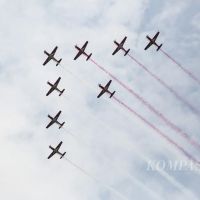
PTDI-News-KT-1B Woong Bee Aircraft to Be Developed in Bandung
SEOUL, KOMPAS — PT Dirgantara Indonesia and Korean Aerospace Industries (KAI) on Monday (October 20, 2025) agreed to strengthen their partnership. The step was marked by the signing of a framework agreement [...]
 www.indonesian-aerospace.com
Indos
INT'L MOD
- Thread starter
- #279
Indonesia Sends Skilled Workers to South Korea’s Shipbuilding and Fighter Jet Industries
Achmad Ali
October 10, 2025 | 7:06 pm
Pasuruan, East Java. Indonesia has sent 600 workers abroad this week, including skilled personnel bound for South Korea’s shipbuilding and fighter jet manufacturing industries, Migrant Worker Protection Minister Mukhtarudin said on Thursday.
The latest deployment underscores Indonesia’s growing effort to place workers not only in traditional service sectors but also in advanced industrial fields.
The deployment, facilitated by manpower agency Prima Duta Sejati, also includes workers headed for Japan’s construction, food manufacturing, and nursing sectors, as well as caregivers bound for Taiwan and Hong Kong.
Mukhtarudin said the demand for Indonesian labor remains strong in key technical fields such as construction, welding, painting, and electrical work, where Indonesian workers are valued for their adaptability and skill.

Indonesia Sends Skilled Workers to South Korea’s Shipbuilding and Fighter Jet Industries
Indonesia deploys 600 workers abroad, including those joining South Korea’s shipbuilding and fighter jet industries.
Indos
INT'L MOD
- Thread starter
- #280
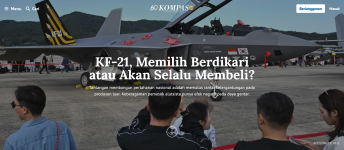
KF-21: Choosing Self-Reliance or Remaining a Buyer?
By Bonifasius Josie Susilo H | ~1 minute read
In Indonesia, the baby boomer and Generation X demographics are familiar with the term swadesi — a word meaning self-reliance, popularized by India’s independence leader Mahatma Gandhi.
The central challenge in developing a strong national defense lies in breaking the chain of dependence on foreign arms producers. A wide diversity of defense equipment suppliers, while seemingly advantageous, can reduce interoperability and weaken deterrence capability.
The concept of self-reliance (swadesi), popularized by Mahatma Gandhi, offers a valuable historical reflection. During India’s struggle against British colonial domination, Gandhi championed local production, urging citizens to wear hand-spun and hand-woven clothing. This movement expressed national pride and economic independence, reducing reliance on imported goods monopolized by British trading companies.
Indonesia’s founding father Sukarno later absorbed the essence of swadesi into the national principle of “berdikari” — standing on one’s own feet. During the New Order era, the term became part of National Awakening Day commemorations, symbolizing self-sufficiency.
That spirit of independence was vividly reflected again during the ADEX 2025 Aerospace and Defense Exhibition in Seoul, South Korea. Major Korean names familiar to Indonesians — such as Hyundai and KIA — showcased how an integrated national ecosystem can elevate a country’s technological sovereignty. With the motto “From Land to Space,” Hyundai Rotem has been active since 1994 in aerospace and space-technology development, collaborating with the Korea Aerospace Research Institute on new rocket programs. Alongside LIG, Hanwha, and KAI, Hyundai contributes to Korea’s network of advanced defense manufacturers.
Notably, Hanwha and KAI are both directly involved in the KF-21 Boramae fighter-jet program, in which Indonesia is a partner nation. At ADEX 2025, their products were presented as parts of a seamless ecosystem, where large prime contractors are supported by smaller, high-tech industries.
A Hanwha spokesperson explained that today’s defense industry emphasizes real-time integration across land, sea, and air domains, supported by data-networked systems. Hanwha itself develops Synthetic Aperture Radar (SAR) satellites to support this connectivity. Visitors to the exhibition could see the concept of interoperability dramatized like a live theater — a unified command system coordinating layered defense coverage from short to long range.
Within the KF-21 program, Hanwha has developed its own AESA radar, with forty units to be supplied for integration into the aircraft produced by KAI. By 2026, the program will transition from development to full-scale production, yet further upgrades are already planned. KAI representatives revealed that after initial production, the 4.5-generation jet will evolve into a 5th-generation fighter, incorporating internal missile bays and other advanced features.
“The steps and stages to achieve that have already been neatly arranged,” he said.
Although the South Korean Air Force currently uses several products from the United States, such as the F-15 and F-35, Seoul has determined that the KF-21 Boramae will become the backbone of the country’s fighter squadrons.
As a partner, Indonesia will continue to be invited to participate in its development.
For Indonesia, continued collaboration in the KF-21 program offers more than just access to new aircraft — it is a gateway to mastering technology, building an integrated defense-industry ecosystem, and strengthening cross-service interoperability.
As CSIS defense analyst Nicky Fahrizal observes:
“Partnerships like this help Indonesia learn how to develop technology, ecosystem management, and work culture. The capabilities gained can reduce dependency on foreign suppliers. More importantly, they enable us to build systems that are interoperable across forces — because when systems can’t communicate, even a large arsenal loses its deterrent power.”
(The article draws a parallel to Indonesia’s defense industry and the KF-21 fighter jet program — questioning whether the nation will choose genuine technological independence or continue relying on foreign purchases.)
:quality(80)/https://cdn-dam.kompas.id/images/2025/10/27/969e01d25d7238cc4c17b75b7966c6ac-SKOREA_MILITARY_DEFENCE_AEROSPACE_133389032.jpg)
KF-21, Memilih Berdikari atau Akan Selalu Membeli?
Tantangan membangun pertahanan nasional adalah memutus rantai ketergantungan pada produsen luar. Keberagaman pemasok alutsista punya efek negatif pada daya gentar.
 www.kompas.id
Indos
INT'L MOD
- Thread starter
- #281
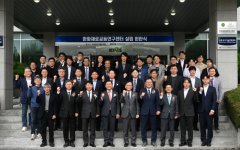
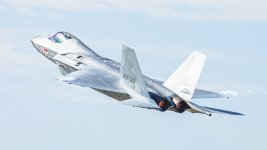
The Korea Institute of Materials Science (KIMS) held an opening ceremony for the “KIMS–Hanwha Joint Research Center for Materials” on Wednesday, October 22, at its headquarters in Changwon, Gyeongsangnam-do, in collaboration with Hanwha Aerospace. The establishment of this center marks the beginning of Korea’s full-fledged efforts to localize core materials for aircraft engines, which have long relied heavily on imports. Through joint research with Hanwha Aerospace, one of Korea’s leading aerospace and defense companies, the initiative aims to secure original technologies for advanced aircraft engine and UAV engine materials, a key national priority.
KIMS and Hanwha Aerospace are advancing technologies for the forging and heat-resistant coating processes of nickel- and titanium-based alloys, which are core materials for aircraft engines and have traditionally relied heavily on overseas sources. The goal is to apply these technologies to next-generation aircraft engines for both manned and unmanned aerial vehicles (UAVs). To achieve this, the two organizations plan to leverage KIMS’state-of-the-art testing infrastructure, including ultra-high-temperature environment testing facilities essential for aircraft engine materials development, to actively pursue joint technology development. With the establishment of the Joint Research Center, a comprehensive, full-cycle R&D platform-spanning from research and development to testing, evaluation, and mass production-is now in place. This is expected to accelerate Korea’s national efforts toward self-reliance and technological sovereignty in aircraft engine materials.
President Chul-Jin Choi of KIMS stated, “The establishment of this joint research center is the result of strategic cooperation aimed at achieving localization of core aircraft engine materials and enhancing global competitiveness.” He added, “Through this collaboration, we expect to see the organic integration of fundamental materials research capabilities and practical industrial technologies, enabling Korea to play a pivotal role in achieving self-reliance and technological sovereignty in the aerospace and defense sectors.”
Indos
INT'L MOD
- Thread starter
- #283
Prabowo visits South Korea for APEC meeting. He is expected to stay in Korea for three days.
Interesting to see that South Korea DAPA Minister that welcomed him at the airport. DAPA is the ministry that involve with KF21/IFX program. I would say the closest cooperation between two governments is in the KF21/IFX program that involve high tech and sensitive defense technologies.
Interesting to see that South Korea DAPA Minister that welcomed him at the airport. DAPA is the ministry that involve with KF21/IFX program. I would say the closest cooperation between two governments is in the KF21/IFX program that involve high tech and sensitive defense technologies.
Last edited:
Indos
INT'L MOD
- Thread starter
- #284
President Lee Jae-myung welcomes Indonesian leaders with greetings, even showing consideration fo...
-----------------
Korea–Indonesia Summit
November 1, 2025 – Gyeongju, South Korea
President Lee Jae-myung (Republic of Korea)
“Your Excellency President Prabowo Subianto of Indonesia,
I sincerely welcome you to South Korea.
Indonesia and the Republic of Korea have built cooperative relations in many fields over many years — not only in trade and investment, but also in the areas of security and defense. I look forward to even deeper and more substantial cooperation in the years ahead.
In particular, our two nations have forged a profound partnership in the military and defense sector, such as through the joint development of fighter aircraft, and I hope this collaboration will continue to yield even greater results.
Indonesia has long upheld the spirit of what we learned as the “Bandung Principles” — maintaining balance, strategic autonomy, cooperation, and pragmatism in diplomacy and security. These same principles serve as a strong foundation for Korea’s current foreign and security strategy.
In today’s unstable security environment, I ask that you share your experience and insights with me and with the people of Korea.
I also wish to congratulate you on your outstanding governance. I heard that your approval rating surpassed 80% in your first year in office — truly remarkable, and deserving of warm congratulations.
Although your planned state visit to Korea in September did not take place, I would like to extend an invitation for you to make the state visit soon. Our people will warmly welcome you when you come. Once again, welcome to Korea.”
President Prabowo Subianto (Republic of Indonesia)
“(Based on interpretation) Thank you, Mr. President, and my gratitude to the Korean government and senior officials.
It is a great honor for me to visit your country and to meet with you all. I apologize that I was unable to make the state visit planned for September, but I will instruct our Foreign Minister to arrange for it to take place as soon as possible.
I would also like to congratulate you for your excellent leadership in successfully hosting the APEC Summit. The Korean government has prepared the event exceptionally well, with every session conducted efficiently and punctually.
Thank you for the beautiful gala dinner yesterday. The performance was fascinating — I am convinced that Korea will continue to captivate the world with its music and dance. All of Indonesia’s young people are passionate fans of K-pop. Thank you again.
Indonesia attaches great importance to its relations with Korea. We view Korea as a key partner, not only in economic cooperation but across many sectors.
Our governments are in close contact, and exchanges between our business communities are also very active. Since taking office, I have met with more than 20 Korean business leaders in Indonesia to discuss cooperation. We maintain an open stance toward Korean investment in the Indonesian economy.
Furthermore, we hope to continue close cooperation in defense, particularly in regard to the KF-21 fighter jet program. Follow-up discussions are ongoing, covering topics such as pricing, funding plans, and economic viability.
These discussions are taking place not only among government officials but also among our technical experts. However, as defense cooperation matters are sensitive, I propose that further detailed discussions be held in a closed session.”
#KoreaIndonesiaSummit #PresidentLeeJaemyung #KF21 #MBCNews #GyeongjuSummit
Users who are viewing this thread
Total: 1 (members: 0, guests: 1)


