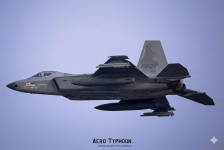
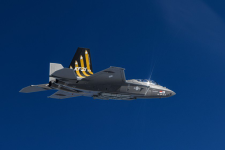
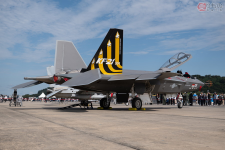
IFX Indonesian Fighter Experiment (KF21/IFX program)

This is a post from Yudi Supriono, former journalist who previously worked in credible aerospace magazine, angkasa. He has insider information as former journalist and is basically the only one that has for the first time show autoclave (for composite production) and robotic machinery (for assembly line) inside Indonesian Aeorospace IFX production and assembly hangars.

To view this content we will need your consent to set third party cookies.
For more detailed information, see our cookies page.


To view this content we will need your consent to set third party cookies.
For more detailed information, see our cookies page.


---------------

1768736777413.png


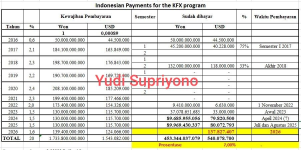
Indonesia's Cost Share in the KFX/IFX (KF-21) Program
--Cost share from 2016 to 2026 was 20% (approximately USD 1.5 billion).
--Cost share reduction to 7% (approximately USD 530 million).
--South Korea's request for the remaining 13% (almost USD 1 billion) is to be paid between 2026 and 2034 in the form of KF-21 procurement for the Indonesian Air Force.

Indonesia payment history in KFX/IFX (KF21) program (Only EMD phase-2016-2026, TD Phase cost share is not included)

EMD : Engineering and Manufacturing Development (Starting since 2016, Korea Aerospace (with LM assistance) and Indonesian Aerospace) - using C103 design developed during TD phase

TD : Technology Development (starting since June 2011 - ADD Korea and Indonesian Aerospace)

1768736667055.png

"The C103 is a Eurofighter-like 4.5th-generation plane that can easily be upgraded to a fifth-generation fighter, while the C501 is a fourth-generation one," said a local aviation analyst on condition of anonymity.

The ADD has reserved space for a conformable weapons bay in its C103 design, which would give it the makings of a low-observable fighter.


To view this content we will need your consent to set third party cookies.
For more detailed information, see our cookies page.


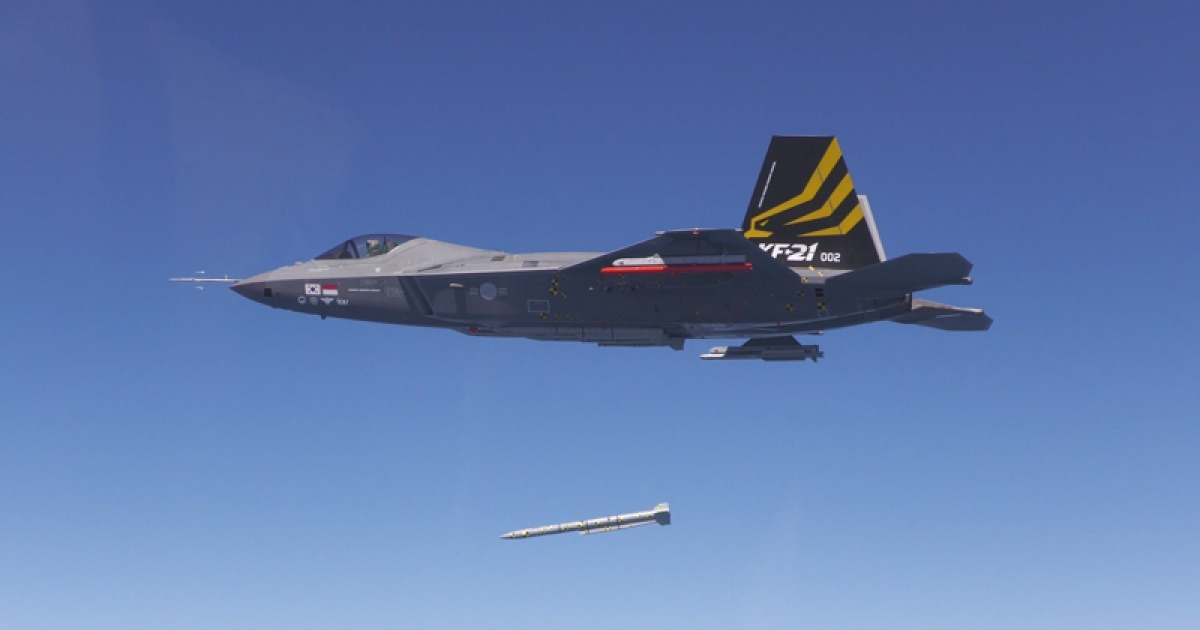
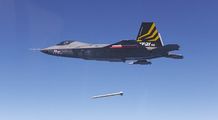
KF-21/IF-X fighter jet jointly developed by Korea and Indonesia​


Korean Embassy in Indonesia

Korean source :

The KF-21 development program, originally valued at 8.1 trillion won, was launched as a joint project with Indonesia. However, tensions arose after Indonesia failed to pay its pledged contributions on time, and after an attempt by a dispatched Indonesian researcher to leak technical data was uncovered. In June last year, the two countries reached an agreement to reduce Indonesia’s contribution from 1.6 trillion won to 600 billion won, allowing the project to overcome a major hurdle.

Indonesia has paid 500 billion won to date and is scheduled to pay the remaining 100 billion won this year. As a result of the reduced contribution, the South Korean government has decided not to transfer the fifth prototype to Indonesia, which had originally been planned.
 
Last edited:
To view this content we will need your consent to set third party cookies.
For more detailed information, see our cookies page.


KF-21 cleared for production after early test flight completion: DAPA​


S. Korea’s KF-21 Boramae completes flight test programme​

By
Roy Choo
-
January 16, 2026


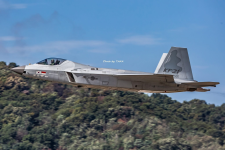
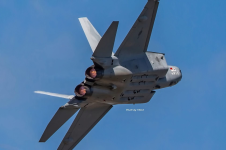
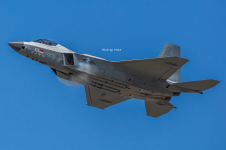
The KF-21 Boramae 4.5-generation fighter from Korea Aerospace Industries (KAI) has now completed its flight test programme. The milestone was achieved on 12 January, two months ahead of schedule, as announced by South Korea’s Defense Acquisition Program Administration (DAPA).

The 42-month test programme comprised 1,600 flights flown by six KF-21 prototypes, including two twin-seat aircraft. More than 13,000 test points were examined.

DAPA added that the final test flight involved the fourth KF-21 prototype, which departed from KAI’s Sacheon facility and conducted flight performance verification.

1769046983850.png

Following completion of the extensive flight test programme, the fighter will transition to its system development phase in the first half of 2026. Deliveries of initial-production KF-21 aircraft to the Republic of Korea Air Force (ROKAF) are then scheduled to begin in the second half of this year.

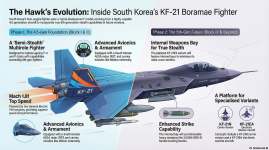
The ROKAF has 40 air-to-air-optimised KF-21 Block I aircraft on order, with 20 planned for production by 2027 and a further 20 by 2028. The air force is then expected to place an order for Block II aircraft, which add enhanced air-to-ground capabilities and other improvements, giving the KF-21 a more multirole operational capability.

1769047017046.png

Another variant, the KF-21EX – previously known as the Block III – is being developed specifically to qualify as a fifth-generation fighter. It features an internal weapons bay for increased low observability.

KAI is also keenly eying the export market for the KF-21. However, Indonesia, a key programme partner, has faced issues with delayed payments and allegations of data theft, which have hindered its full commitment.

1769047049852.png

In June 2025, South Korea and Indonesia renegotiated Jakarta’s participation in the programme, reducing its original contribution from KRW1.6 trillion (US$1.12 billion) to KRW600 billion.

Under the new terms, Indonesia will no longer receive the fifth KF-21 prototype for its own flight testing and weapons integration. Reports also indicate that Indonesia has recently initiated negotiations for the acquisition of 16 KF-21 Block II aircraft.

The Philippines could also emerge as a potential KF-21 customer, and media reports suggest Manila is in talks to purchase between 12 and 24 aircraft. In all, the Philippine Air Force requires 40 multirole fighters.

by Roy Choo

 
Indonesia, a KF-21 Co-Development Partner, Cancels F-15EX Acquisition as Rafale Deliveries Begin

1770217868452.png

Yoon Tae-hee | 3–4 min read

Indonesia opts for “conditions-driven” force restructuring instead of U.S.-made Eagle II

As deliveries of France’s Rafale fighter jets move into full swing, Indonesia has effectively abandoned plans to acquire the latest U.S.-made F-15EX Eagle II fighter. With Boeing confirming that the proposed deal—once discussed at up to 24 aircraft—“is no longer being pursued,” attention is once again turning to a shift in Indonesia’s fighter procurement strategy.

According to U.S. defense outlet The War Zone (TWZ) on Feb. 3 (local time), Berndt Peters, Vice President of Boeing Defense, Space & Security, stated at the Singapore Airshow that “the F-15EX for Indonesia is no longer a target of Boeing’s sales efforts.” Boeing declined to elaborate on the reasons, saying the matter involved both the Indonesian and U.S. governments under the Foreign Military Sales (FMS) framework.

In February 2022, the U.S. State Department approved the export of an F-15EX derivative to Indonesia. In August 2023, Jakarta formally expressed interest in acquiring up to 24 aircraft, designating the variant as the F-15IND. A memorandum of understanding (MOU) was even signed at Boeing’s F-15 production facility in St. Louis, Missouri. At the time, Indonesian Defense Minister Prabowo Subianto toured the facility and described the aircraft as “a cutting-edge fighter that will safeguard national defense.”

However, negotiations subsequently stalled for an extended period, and Boeing’s recent remarks indicate the program has effectively entered a termination phase. While factors such as total project cost, delivery timelines, and long-term operational and support conditions are believed to have played a role, no official explanation has been disclosed.

Timing Matters: Rafale Deliveries and a Strategic Pivot

The timing of the decision is notable. Just before the U.S. approved the F-15 sale, Indonesia announced the purchase of 42 Dassault Rafale fighters, which are now being delivered. The War Zone previously speculated that Washington may have attempted to persuade Indonesia to adopt a “mixed fleet” concept, operating both Rafales and F-15s. In the end, however, the F-15EX was dropped from the equation.

Conditions Over Country: A Decision Linked to KF-21 and KAAN

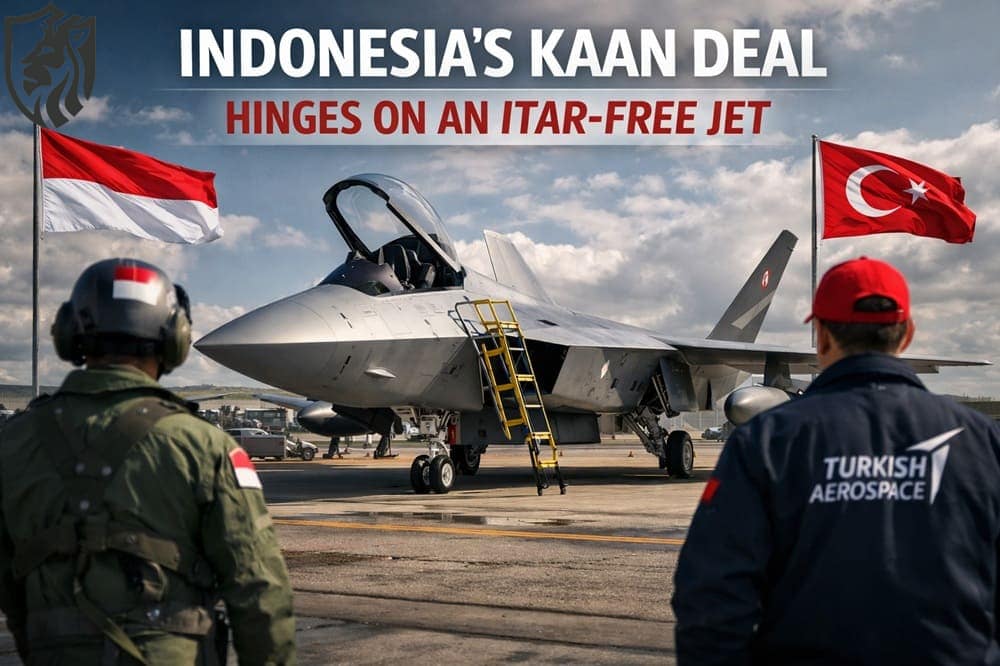
The move aligns closely with Indonesia’s recent fighter acquisition philosophy. Indonesia is a joint development partner in South Korea’s KF-21 program and has also signed a contract to acquire Türkiye’s KAAN fifth-generation fighter. During contract implementation, Jakarta has consistently emphasized exemption from the U.S. International Traffic in Arms Regulations (ITAR) as a key condition.

Analysts interpret the F-15EX withdrawal as part of a broader strategy that prioritizes operational autonomy and control risk over the country of origin of the platform. Having previously experienced sanctions and export restrictions, Indonesia has shown a strong preference for force structures that do not depend excessively on approval from a single foreign government.

In the case of the KAAN, early discussions involved the use of U.S.-made General Electric engines. However, questions remain over how firmly Türkiye’s long-term commitment to transitioning the aircraft to a non-ITAR configuration can be guaranteed during actual force deployment.

(There is no early discussion of the use of US made general electric for Indonesia ordered Kan, Indonesia acquistion from the start already stated that Kan should be ITAR free which shows not only engine, but whole components must be ITAR free which i some thing that pretty difficult to met - Indos clarification)


Top-Tier Regional Air Power Remains—Boeing Shifts Focus

Even without the F-15EX, the Indonesian Air Force is on track to maintain one of Southeast Asia’s most modern fighter fleets. In addition to the Rafale, it operates upgraded F-16s and Russian-made Su-27/30 fighters. However, maintenance and sustainment of Russian platforms have become increasingly challenging due to sanctions following the war in Ukraine.

While the outcome is a setback for Boeing, the company’s broader outlook remains positive. The U.S. Air Force has expanded its F-15EX procurement target in the FY2026 budget, and export orders—such as Israel’s F-15IA deal—support a stable production outlook. Boeing has also stated it will continue existing cooperation with Indonesia, including programs involving the AH-64 Apache attack helicopter.

As Rafale deliveries begin, Indonesia—despite being a joint developer of the KF-21—now stands at the center of regional attention over which fighter platform, under what conditions, will ultimately form the backbone of its future air combat power in Southeast Asia.

By Yoon Tae-hee
© Seoul Shinmun. All rights reserved. Unauthorized reproduction, redistribution, and AI training/use prohibited.


To view this content we will need your consent to set third party cookies.
For more detailed information, see our cookies page.


To view this content we will need your consent to set third party cookies.
For more detailed information, see our cookies page.
 

KAI Aims to Conclude Final KF-21 Negotiations with Indonesia in the First Half of This Year

Financial News | 4–5 min read
Kang Gu-gwi | Feb. 12, 2026, 07:00
1770865057738.png


Key Focus of This Year’s 10.4 Trillion Won Order Target… Securing Mass Production Funding in Advance Through 500 Billion Won Convertible Bonds

[Financial News] Korea Aerospace Industries (KAI) is seeking to finalize negotiations with Indonesia regarding the KF-21 fighter jet program within the first half of this year. Through this effort, the company aims to achieve its 2026 order guidance of 10.4383 trillion won and revenue of 5.7306 trillion won, potentially marking the first time in its history that annual revenue exceeds 5 trillion won.

According to industry sources on Feb. 12, KAI stated during a recent conference call:

“The core objective of our order target is the first export of the KF-21. The initial KF-21 export volume is included within our completed aircraft export target of 6.5 trillion won. We are making efforts to conclude final negotiations with Indonesia within the first half of the year. Delivery schedules for Indonesia are currently under negotiation, since there are still aircraft to be delivered to the South Korean government, and we are coordinating Indonesia’s delivery timeline accordingly.”
South Korea and Indonesia have been jointly pursuing the KF-21 fighter development program (known in Indonesia as IF-X) since 2015, sharing a total project cost of 8.1 trillion won from 2015 through 2026.

Under the agreement signed in January 2016, Indonesia committed to paying 20% of the KF-21 development cost, originally around 1.7 trillion won (later reduced to approximately 1.6245 trillion won) by June 2026. In return, Indonesia would receive one prototype aircraft and various technical data, and the two countries agreed that 48 fighter jets would be produced locally in Indonesia.

1770865184648.png

In the second half of last year, Indonesian President Prabowo Subianto met with South Korean President Lee Jae-myung and stated:

“We will continue follow-up discussions regarding the KF-21 program. I understand that discussions are ongoing, including negotiations on price and funding plans as well as economic feasibility. These discussions are being carried out not only among government officials but also between technical teams.”
President Lee responded:

“A deep cooperative relationship has been established in the military and security field through initiatives such as joint fighter development. I hope we can continue this cooperation so that it leads to even greater outcomes.”

KAI Also Eyes U.S. Navy Trainer Jet Program (UJTS)

Another major opportunity KAI is focusing on is the U.S. Navy’s trainer aircraft acquisition program known as UJTS (Undergraduate Jet Training System). The U.S. Navy is pursuing the program to replace its aging fleet of 188 T-45 Goshawk training aircraft.

The U.S. Navy is reportedly seeking a new trainer aircraft capable of meeting performance requirements such as:

  • Minimum speed of Mach 0.9 / 450–500 KIAS
  • Sustained angle of attack above 20 degrees
  • Sustained load factor of at least 6G
  • Operating altitude of at least 41,000 feet
  • Turn rate of at least 12 degrees per second
KAI stated in its conference call:

“A draft Request for Proposal (RFP) is expected to be released in February, and we do not expect the schedule to be delayed. The final RFP is also expected to be issued within 30 days after the draft, meaning full-scale competition will begin soon.”

Mass Production Preparation: Issuing 500 Billion Won in Convertible Bonds

As major orders are expected to accelerate, KAI is also proactively securing funding by issuing 500 billion won in convertible bonds (CB). The funds will be used to support long-term growth initiatives, including mass production of the KF-21 and the Light Armed Helicopter (LAH), as well as expanding overseas exports of platforms such as the KF-21, FA-50, and Surion helicopter.

KAI explained:

“The purpose is to secure funds for KF-21 mass production payments and early procurement for FA-50 export orders. Compared to our existing corporate bonds with an interest rate of 3.7%, we expect to reduce annual financial costs by over 18 billion won. We believe the funds raised will contribute directly to higher revenue and improved profitability.”

Forecasts for KAI’s Growth

Shinhan Investment Corp. projected KAI’s revenue to reach:

  • 5.5244 trillion won in 2026
  • 6.7451 trillion won in 2027
It also estimated operating profit to surge to:

  • 504.6 billion won in 2026
  • 737.4 billion won in 2027
Reporter: Kang Gu-gwi ([email protected])
© Financial News. Unauthorized reproduction and redistribution prohibited.

 
This is from Indonesian writer specializing in aerospace post in his FB page. He has insider information from Indonesian Aerospace team as former journalist :

1770866097488.png
Since July last year, the last batch of our engineers has already departed for South Korea. There are FAL and flightline mechanics, QC personnel, and others as well.
Let’s see who will come out on top later! 😁
 

[Exclusive] KF-21 Reveals Weapons-Carrying Capability: “Better Than the Rafale”


1771418509094.png
Photo provided by KAI.


HOME > Story↑Up > Military Enthusiasts
Maximum payload of 7.7 tons, capable of carrying four air-to-ground missiles… praised for real operational efficiency

2026.02.13 (Fri) 10:54:30

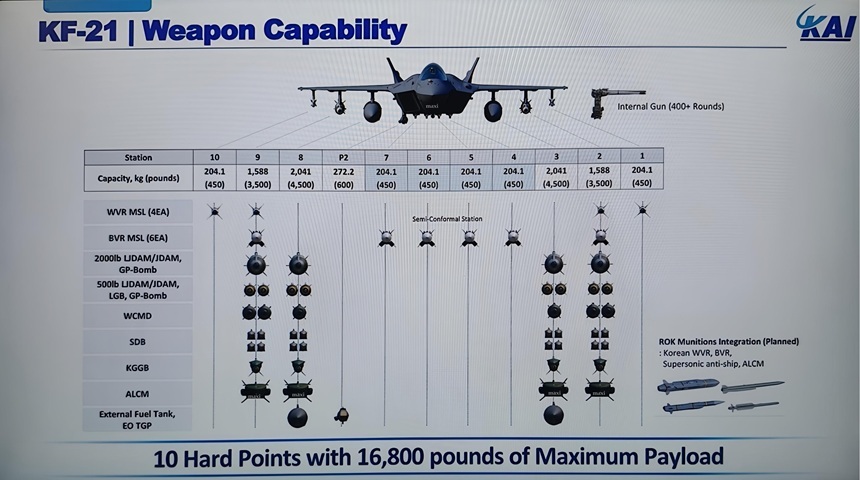
[Biz Korea][/B] The official weapons capability of the KF-21 Boramae has finally been confirmed, after only partial information circulated through last year’s Seoul ADEX and the Singapore Airshow. The KF-21’s maximum weapons payload is approximately 7.7 tons (16,800 lbs). On paper, this may appear inferior compared to competing aircraft, but it has now been confirmed that its actual strike capability—especially the level required for large-scale full-scale warfare—is equal to or even superior.

The KF-21 is a medium-class fighter equipped with twin General Electric (GE) F414-GE-400K engines. In terms of size and category, it is directly comparable to Boeing’s F/A-18E/F Super Hornet and Dassault’s Rafale. Its economic advantage in acquisition and maintenance costs has already been widely recognized, but until now, it has been difficult to make concrete comparisons regarding air combat and precision strike capabilities. However, the recently disclosed detailed operational capabilities of its 10 weapon stations (hardpoints) are sufficient to eliminate such concerns.

The KF-21 Boramae demonstrates superiority over competing aircraft in air-to-air, air-to-ground, and multirole missions, based on its maximum payload of 7.7 tons and 10 hardpoints.

On a simple numerical basis, the Rafale can carry 9.5 tons across 14 hardpoints, and the Super Hornet can carry about 8 tons across 11 hardpoints, both exceeding the KF-21 (10 hardpoints, 7.62 tons). However, the key factor in fighter armament is not simply “how much it can carry,” but rather “how effectively it can operate weapons without interference.” Actual weapon combinations vary significantly depending on aerodynamic airflow, spacing between pylons, and internal wiring design.

Maximized Efficiency in Air-to-Air Combat

The KF-21’s efficiency is maximized in air-to-air engagements. It can mount missiles at eight locations, including semi-recessed stations under the fuselage. In particular, it can operate six Meteor long-range air-to-air missiles as a standard loadout. In contrast, although the Rafale has more hardpoints, the number of Meteors it can actually carry is limited to four. The Super Hornet can carry more missiles, but once external fuel tanks are installed to secure combat radius, its practical air-to-air missile load tends to converge to a level similar to the KF-21.

Overwhelming Practical Efficiency in Air-to-Ground Strike

The KF-21’s air-to-ground strike capability is also overwhelmingly efficient in practical terms. It can operate up to 16 Small Diameter Bombs (SDBs), which is on par with the larger Super Hornet. This contrasts with the Rafale, which theoretically can carry up to 12 HAMMER guided bombs, but in real operations often carries only around six due to weapon interference issues.

Clear Advantage in Long-Range Air-to-Ground Missile Operations

The difference becomes even more pronounced in operating long-range air-to-ground missiles, which carry high strategic value. The Rafale can theoretically carry up to three Storm Shadow missiles, but in reality, carrying three is rarely done. Due to range and takeoff/landing weight constraints, it often carries only one or two. Meanwhile, the KF-21—reflecting the unique operational environment of the Republic of Korea Air Force (striking North Korea’s underground strategic targets)—has secured the payload design and internal wiring necessary to operate four large air-to-ground missiles. This suggests that the KF-21 has an advantage in delivering large-scale firepower during the early stages of a full-scale war.

Greater Gap in Multirole Missions

This gap widens further in multirole missions, where a fighter must conduct ground strikes and then perform aggressive air superiority operations. When carrying air-to-ground weapons, the Rafale’s air-to-air missile load drops sharply to four missiles, limiting its ability to respond to unexpected aerial engagements. Since it typically takes two missiles to destroy one enemy aircraft, and at least two missiles must be reserved as a contingency, the Rafale effectively has only one real engagement opportunity during multirole missions.

In contrast, the KF-21 can maintain six air-to-air missiles even while carrying large air-to-ground missiles and external fuel tanks, which can be interpreted as providing three opportunities to engage enemy aircraft. This means the KF-21 can continue performing aggressive air superiority missions even after completing its strike mission.

Limitations and Future Improvements

Of course, the Super Hornet still holds an advantage in expandability, as it can mount up to 14 AIM-120 AMRAAM missiles using adapters. In addition, the KGGB (Korean GPS-guided bomb) currently in service weighs only 500 pounds (226 kg), but only four can be carried at once. Therefore, development of a multi-bomb rack system is needed to improve the efficiency of KGGB and other domestic guided bombs.

Other improvements could include mounting small guided bombs on the semi-recessed fuselage stations currently reserved only for Meteor missiles, or increasing the size of external fuel tanks to enhance long-range flight capability. The KF-21’s “practical weapons capability” must continue evolving in order to simultaneously strengthen the Republic of Korea’s military power and improve export competitiveness.

Kim Min-seok, Research Fellow, Korea Defense and Security Forum


1771588409234.jpegas per my conversation with the Head of Marketing Mr "mario" lee at WDS he told me they will start making deliveries for Korean airforce's 120 jet order from September 2026, because they hit their 1600 sorties target earlier than expected in January.
Is there a similar plan for the Indonesian airforce deliveries too?
 
View attachment 179900as per my conversation with the Head of Marketing Mr "mario" lee at WDS he told me they will start making deliveries for Korean airforce's 120 jet order from September 2026, because they hit their 1600 sorties target earlier than expected in January.
Is there a similar plan for the Indonesian airforce deliveries too?

They have reduced their order from 48 units, to 16 units.


Indonesia has been a problematic development partner due to financial issues.
 
To view this content we will need your consent to set third party cookies.
For more detailed information, see our cookies page.


This is likely making Indonesia can access to US technology as deep as South Korea. With KF21 relies on some US critical technologies then it is likely a big break through for Indonesian Aerospace to do the development of IFX using the KF21 prototype

View attachment 179900as per my conversation with the Head of Marketing Mr "mario" lee at WDS he told me they will start making deliveries for Korean airforce's 120 jet order from September 2026, because they hit their 1600 sorties target earlier than expected in January.
Is there a similar plan for the Indonesian airforce deliveries too?

Similar plan ? Nope

IFX is very likely to be build locally in Indonesia, so there are still some time need to prepare for the manufacturing line and the Indonesian engineers familiarity with the plane (not limited to limited engineers working in Korea) for mass production
 
They have reduced their order from 48 units, to 16 units.


Indonesia has been a problematic development partner due to financial issues.

So what ? In Indonesia there is the manufacturing line and negotiation for prototype given to Indonesian Aerospace is on going. The prototype is intended for development in Indonesia as test bed plane.

We are likely to produce in Indonesia more than 100 planes even likely continue beyond 2045. As KF21 development is likely continuing, so it is pretty reasonable to expect what I said to likely to happen

Initial bach order is something usual, I dont know why many think Indonesia stop at 16 planes while we are already in the program since 2011 during TD phase ?
 

Users who are viewing this thread

Country Watch Latest

Back
Top