Navigation
Install the app
How to install the app on iOS
Follow along with the video below to see how to install our site as a web app on your home screen.
Note: This feature may not be available in some browsers.
More options
Style variation
You are using an out of date browser. It may not display this or other websites correctly.
You should upgrade or use an alternative browser.
You should upgrade or use an alternative browser.
Images - Pakistan Air Force in the Mirror of History.
- Thread starter ghazi52
- Start date
More options
Who Replied?


ghazi52
THINK TANK: CONSULTANT
- Thread starter
- #663
Rare footage of North American F-86F Sabres arriving in Pakistan with U. S Air Force markings on them.
The aircraft were ferried to Mauripur, Karachi, by Pakistani and U.S. pilots. Air Marshal Asghar Khan is seen welcoming them. Under the 1954 U.S. Mutual Defense Assistance Program, Pakistan received about 150 F-86F Sabres. Formal induction into the PAF began on 13 June 1956.
The first aircraft arrived mid-1956 (No. 15 Squadron received them in July), with the first operational flight on 4 September 1956.
Special thanks to the "Pakistan & Afghanistan Archives" Facebook page for providing the footage, and to Usman Shabbir for additional information about the location and personnel in the footage.
Background Score: "Mere Uqaab Mere Jahaz"
Artist: The Milestones
Vocalist: Candy Pereira
Composers: Ali Tim and Ziyyad Gulzar
The aircraft were ferried to Mauripur, Karachi, by Pakistani and U.S. pilots. Air Marshal Asghar Khan is seen welcoming them. Under the 1954 U.S. Mutual Defense Assistance Program, Pakistan received about 150 F-86F Sabres. Formal induction into the PAF began on 13 June 1956.
The first aircraft arrived mid-1956 (No. 15 Squadron received them in July), with the first operational flight on 4 September 1956.
Special thanks to the "Pakistan & Afghanistan Archives" Facebook page for providing the footage, and to Usman Shabbir for additional information about the location and personnel in the footage.
Background Score: "Mere Uqaab Mere Jahaz"
Artist: The Milestones
Vocalist: Candy Pereira
Composers: Ali Tim and Ziyyad Gulzar
ghazi52
THINK TANK: CONSULTANT
- Thread starter
- #664
Induction Of F-7P & F-16 In PAF .
A late-1980s to early-1990s PAF promotional documentary chronicling the induction of the Chinese-built Chengdu F-7P “Skybolt” and the American-built General Dynamics (later Lockheed Martin) F-16 Fighting Falcon into Pakistan Air Force service.
It covers the F-16’s arrival in the early-to-mid 1980s under the Peace Gate programme and the F-7P’s first deliveries around 1988–89, introduced as a lower-cost, high-numbers complement after U.S. sanctions restricted further F-16 supplies.
The film follows the classic late-Cold-War military style: formal narration, archival footage of take-offs, landings and formations, induction ceremonies and base activity, framed with the patriotic, operational tone typical of PAF and Pakistani state productions of the era.
A late-1980s to early-1990s PAF promotional documentary chronicling the induction of the Chinese-built Chengdu F-7P “Skybolt” and the American-built General Dynamics (later Lockheed Martin) F-16 Fighting Falcon into Pakistan Air Force service.
It covers the F-16’s arrival in the early-to-mid 1980s under the Peace Gate programme and the F-7P’s first deliveries around 1988–89, introduced as a lower-cost, high-numbers complement after U.S. sanctions restricted further F-16 supplies.
The film follows the classic late-Cold-War military style: formal narration, archival footage of take-offs, landings and formations, induction ceremonies and base activity, framed with the patriotic, operational tone typical of PAF and Pakistani state productions of the era.
ghazi52
THINK TANK: CONSULTANT
- Thread starter
- #671
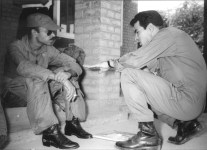
Air Marshal Mohammad Asghar Khan (Commander-in-Chief of the Pakistan Air Force, 1957–1965) at Stewart Air Force Base (near Newburgh, New York), 1963-64 (c).
Pakistan inducted its first C-130s in March 1963. In the clip he confirms Pakistan has “a few” and that some crews have already been trained — placing the interview after the induction.
The discussion focuses on U.S. military aid to India and Pakistan’s view that India (not China) was the greater threat. This became a major Pakistani concern after the 1962 Sino-Indian War, when the United States began providing significant military assistance to India. These issues were actively debated in 1963–1964.
Pakistan inducted its first C-130s in March 1963. In the clip he confirms Pakistan has “a few” and that some crews have already been trained — placing the interview after the induction.
The discussion focuses on U.S. military aid to India and Pakistan’s view that India (not China) was the greater threat. This became a major Pakistani concern after the 1962 Sino-Indian War, when the United States began providing significant military assistance to India. These issues were actively debated in 1963–1964.
ghazi52
THINK TANK: CONSULTANT
- Thread starter
- #673
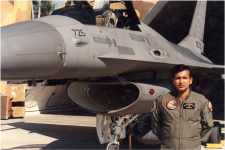
This PAF F-16A (725) sports a Soviet kill marking: that of Col. Alexander Vladimirovich Ruskoi of the Russian Air Force, whose Su-25 was brought down by Sqn Ldr Athar Hussain Bukhari on the evening of August 4, 1988.
Ruskoi was captured and, after his subsequent release, went on to become Vice President of his country. Bukhari retired as an Air Marshal.
Posing in front of the aircraft is Flt Lt Younas, the then flight surgeon of No. 14 Squadron.
ghazi52
THINK TANK: CONSULTANT
- Thread starter
- #674
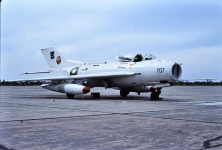
Pakistan Air Force Shenyang F-6 serial 707, wearing the proud markings of the Combat Commanders’ School (CCS) — the PAF’s elite “Top Gun.”
Born in 1976 at Sargodha (now Mushaf), the CCS began with Mirages and F-6s. The F-6 flight soon earned the name “Dashings.” F-16s arrived later, then F-7s and JF-17s, but the spirit remained the same: forge elite leaders through the hardest tactics and weapons training.
The F-6 itself was no ordinary jet. After the 1965 embargo, Pakistan received around 260 of these Chinese-built MiG-19s. Heavily upgraded at Kamra with Western seats, avionics, Sidewinders and rockets, they became true workhorses. In the 1971 war three squadrons flew hundreds of combat sorties and claimed hard-won victories. The single-seaters retired in 2002, their legacy intact.
Serial 707, finished in the school’s clean white scheme and distinctive CCS emblem, still carries that proud history in every line.
Born in 1976 at Sargodha (now Mushaf), the CCS began with Mirages and F-6s. The F-6 flight soon earned the name “Dashings.” F-16s arrived later, then F-7s and JF-17s, but the spirit remained the same: forge elite leaders through the hardest tactics and weapons training.
The F-6 itself was no ordinary jet. After the 1965 embargo, Pakistan received around 260 of these Chinese-built MiG-19s. Heavily upgraded at Kamra with Western seats, avionics, Sidewinders and rockets, they became true workhorses. In the 1971 war three squadrons flew hundreds of combat sorties and claimed hard-won victories. The single-seaters retired in 2002, their legacy intact.
Serial 707, finished in the school’s clean white scheme and distinctive CCS emblem, still carries that proud history in every line.
ghazi52
THINK TANK: CONSULTANT
- Thread starter
- #675
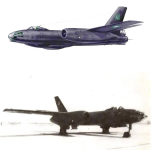
The PAF's touch and go with the Il-28 - a thread:
During 1965–71, the Pakistan Air Force had to absorb, at the cost of significant combat capacity, five years of the US arms embargo which was imposed on Pakistan at the start of 1965 Indo-Pak war.
During this period PAF had continued structurally to suffer a growing offence-defence imbalance with a dwindling number of B-57s and F-86s that had to be replaced by the lighter and shorter-range Chinese F-6s and a worsening obsolescence in its combat force.
The older F-86s and B-57s were being supported with difficulty by clandestine and piecemeal purchases of spares and by some indigenous manufacture. To support the dwindling numbers of B-57s, it was decided to procure additional aircraft of similar category to supplementthe bomber force.
The Il-28 (a Soviet aircraft to be supplied by China) was selected, primarily because it was readily available from a friendly source and also most likely due to its very affordable cost. A team of three experienced B-57 aircrews led by Gp Capt Rais A Rafi, a B-57 veteran from the 1965 war, along with Flt Lt's Khadim ul Bashar, Sikandar Mehmood and navigators Flt Lt's Muhammad Akhtar, Salah ud Din Qazi, and Iftikhar Ghauri proceeded to China for conversion on the Il-28 and their subsequent ferry to Pakistan.
The tail gunners were NCOs of the Armament trade. The team also included two engineers and about 15 airmen from different trades.
The aircrew flew to Beijing via Dacca and then onwards to the airbase at Xinjian where PAF pilots had already been trained on the F-6 and seemed.to have created a very good impression of their abilities.
The Chinese hosts were very courteous, friendly and keen on training PAF aircrew and also at the same time wanted to learn from them. Rais A Rafi takes up the story: "They had selected Muslim Kitchen staff from Sinkiang province who prepared food according to our Muslim requirements. I remember the name of the cook, Abdul Hye. We often called him HYE and would respond by answering HAAYE, which in Chinese or Uighur language meant” YES SIR”. It was great but innocent fun. Only the interpreter “friends” knew English.
But soon we could talk to each other in sign language. After formal receptions and “Kumbais” of “Maut Aiees”, which some of us enjoyed, we settled down to normal life. They operated the Air Force like the Army, based upon the Soviet system. Most of the senior commanders were serving Army. But squadron commander downwards were Air Force. The Base Commander often sat in the mobile. The morning briefing started with reading of Mao’s sayings from the Red Book.
Everyone had to fly strictly according to the briefed exercise; not a slight diversion was allowed. Our instructors sitting by the side and interpreter, often a woman, sitting in the tail gunner’s cockpit had no problem in teaching us. We could have gone solo after one dual [flight] but had to do four sorties as per the syllabus. Result were very good.
Their flight safety and maintenance record was outstanding. Throughout our flying, we could not put a single unserviceability on their Form 781. No accidents either. Amazing. At the end of the course their senior officers from Beijing HQ with Gp Capt Inam ul Haq, our Air Attache, visited us. I was asked to give my impressions. After consulting Gp Capt Inam, I pointed out to our friends that they ought to give more freedom of flying to their pilots. This was appreciated."
The aircrew returned to Pakistan after completing their conversion and after approximately a month proceeded back to Hotien in a C-130 and this time lead by Air Commodore F.S. Hussain, along with several F-6 pilots to ferry the aircraft to Pakistan.
After the usual Chinese welcome, the F-6s took off under the leadership of Wg Cdr Mian Sadruddin. The three Il-28s, to be officially known as B-56 in PAF, took off for Pakistan, led by Wg Cdr Rais A Rafi. The aircraft flew in trail with no radar coverage, and only relying on radio compasses, joined over the clouds and flew over the Himalayas, which they could not see due to extensive cloud cover, hoping to home to Gilgit.
The navigators took a sigh of relief when Gilgit beacon responded. The aircraft maintained a strict RT silence, so there was no contact with the F-6 formation and while the F-6s landed in Peshawar due to their short range, the B-56s pressed on to Sargodha. After a quick refuelling stop, the three aircraft took off for Mauripur where they landed just before dusk. Next day Rais A. Rafi gave a dual check to Air Cdre Masroor Hussain, the Base Commander.
After an assessment of the aircraft based on aircrews’ feedback, it was decided not to fly this type against heavily defended targets. The Il-28, being a first-generation makeshift light bomber, had hard controls and was found to be very unmaneuverable. It was difficult to fly at night, particularly at low level and was deemed no match to for the B-57.
In PAF it was nicknamed by the pilots as TONGA (horse cart), who had hoped that they would not be required to fly it over AAA-infested IAF airfields as that would be a one-way journey. However, No. 8 Sqn was converted to B-56 and started operating the type along with B-57s.
The squadron carried out some day and night skip bombing attacks at Sonmiani using B-56s and also took part in a PAF level day and night exercise, while deployed at Mianwali air base.
The aircraft was deemed very reliable from the serviceability point of view but considered a dead duck operationally. It was kept for use in emergency situations and that too against only lightly defended targets. An idea to use these aircraft for maritime roles was conceived and considered but abandoned quickly as the aircraft presumably did not offer much space and flexibility to house the required equipment.
Due to their limited operational utilisation the aircraft were retired after just a few years and well before they could be used in the 1971 war. The three aircraft were seen parked at Mauripur for several years before two of them were written off due to a fire started by exhaust flames from a T-33. Along with the wreck of the burned aircraft the third one was also retired and sold for scrap. This brought to an end the brief experiment of PAF with the Il-28.
Source: Eagles of Destiny: Volume (II) Growth and Wars of the Pakistan Air Force1956-1971
Users who are viewing this thread
Total: 1 (members: 0, guests: 1)

Country Watch Latest
-
-
-

-
 China blocking sale of tunnel boring machines to India: Piyush Goyal to German minister (1 Viewer)
- Latest: retaxis
-

Latest Posts
-

-

-
-
-
 Executed in Saudi Arabia: Grieving father seeks justice, return of son’s body (24 Viewers)
- Latest: RocketLaw