Navigation
Install the app
How to install the app on iOS
Follow along with the video below to see how to install our site as a web app on your home screen.
Note: This feature may not be available in some browsers.
More options
Style variation
You are using an out of date browser. It may not display this or other websites correctly.
You should upgrade or use an alternative browser.
You should upgrade or use an alternative browser.
Images - Pakistan Air Force in the Mirror of History.
- Thread starter ghazi52
- Start date
More options
Who Replied?


ghazi52
THINK TANK: CONSULTANT
- Thread starter
- #334
LEADING THE FIRST PLANE TO PAKISTAN
With the World War coming to an end The young Flying Officer Khyber Khan came back from Burma from where he did countless mission over Japan, Ever more radiant and confident with his resent war experience he was promoted to Flt Lt.
On August 14th ,1947 Pakistan came into existence. Soon thereafter the assets were distributed between the 2 newly born Air Forces of Pakistan and India. In addition to some other equipment
6 Harvard aircraft were also allotted out to RPAF. At that time these aircrafts were positioned at Ambala and had to be flown across to Pakistan. This first contingent consisting of 6 Harvard-2B trainers arrived in Pakistan on September 6th, 1947.
The leader of this six-ship was none other than Khyber Kahn, and included Aziz Ahmed Siddiqui, Rahim Khan, Zafar Chaudhry and 2 cadet pilots. The very next day the planes were painted with newly designed Pakistan markings, which swept a thrill through Risalpur, with everyone rushing to have himself photographed next to the crescent and the star.
FIRST TRANING SORTIE

Royal Pakistan Air Force was born on August 14th, 1947. The very next day, i.e. on August 15th RPAF Flying Training School was formed at Risalpur.
Initially 3 small training units were established; the Elementary Flying Training Squadron with 4 Tiger Moths, an Advanced Flying Training Squadron with 4 Harvard 2Bs and a flight of Harvard 2C for Squadron training.
Flt Lt Khyber Khan was immediately posted to the school, Were he made history by flying the First Training Sortie on September 22, 1947, merely 5 weeks after the establishment of the school.
After the initial flying on DH-82 Tiger Moth further flying training continued at the Advanced Flying Training Squadron on the famous T-6G Harvard, Which has been described as one of the best trainers ever built.
Flt Lt Khyber Khan was one of the 3 Flying Instructors who formed the Harvard flight; the other 2 were Zafar A Chaudhry and Rahim Khan.

With the World War coming to an end The young Flying Officer Khyber Khan came back from Burma from where he did countless mission over Japan, Ever more radiant and confident with his resent war experience he was promoted to Flt Lt.
On August 14th ,1947 Pakistan came into existence. Soon thereafter the assets were distributed between the 2 newly born Air Forces of Pakistan and India. In addition to some other equipment
6 Harvard aircraft were also allotted out to RPAF. At that time these aircrafts were positioned at Ambala and had to be flown across to Pakistan. This first contingent consisting of 6 Harvard-2B trainers arrived in Pakistan on September 6th, 1947.
The leader of this six-ship was none other than Khyber Kahn, and included Aziz Ahmed Siddiqui, Rahim Khan, Zafar Chaudhry and 2 cadet pilots. The very next day the planes were painted with newly designed Pakistan markings, which swept a thrill through Risalpur, with everyone rushing to have himself photographed next to the crescent and the star.
FIRST TRANING SORTIE
Royal Pakistan Air Force was born on August 14th, 1947. The very next day, i.e. on August 15th RPAF Flying Training School was formed at Risalpur.
Initially 3 small training units were established; the Elementary Flying Training Squadron with 4 Tiger Moths, an Advanced Flying Training Squadron with 4 Harvard 2Bs and a flight of Harvard 2C for Squadron training.
Flt Lt Khyber Khan was immediately posted to the school, Were he made history by flying the First Training Sortie on September 22, 1947, merely 5 weeks after the establishment of the school.
After the initial flying on DH-82 Tiger Moth further flying training continued at the Advanced Flying Training Squadron on the famous T-6G Harvard, Which has been described as one of the best trainers ever built.
Flt Lt Khyber Khan was one of the 3 Flying Instructors who formed the Harvard flight; the other 2 were Zafar A Chaudhry and Rahim Khan.
ghazi52
THINK TANK: CONSULTANT
- Thread starter
- #335
KHYBER KHAN- THE CONQUEROR OF SKARDU
The next milestone in Khyber Khan’s life as a Air warrior came in the shape of the unforgettable and daring exploit of transporting a mortar gun in the rear seat of a T-6 Harvard aircraft to Gilgit, Which was instrumental in the capture of Skardu.
Soon after independence on October 26th, 1947 the Hindu Maharaja of Kashmir declared accession of the Muslim majority state to India, in complete disregard of the principle enunciate in the document concerning partition. He invited Indian Military help and on October 27, Indian forces moved into the state, Thus exposing a pre-conceived plan for the occupation of Kashmir.
No sooner did the news of the Maharaja accession spread that the people of Poonch and Mirpure district formed the Azad Kashmir Government at Muzaffarabad.
During the first Indo-Pak was of 1948, forward elements of Azad Kashmir forces had by-passed Skardu in pursuit of the Indian units fleeing south towards Kashmir. However a Dogra battalion entrenched within kharphocho Fort posed a serious threat in the rear of the advancing column and had to be removed in order to secure the lines of communication.
Due to the location of the fort, a direst frontal assault was deemed extremely hazardous and the Azad Kashmir forces did not posses any suitable weapon with which to engage the entrenched Dogras.
There as no artillery support and air strike was not advisable. Lest it led to an all-out war against the numerically far superior RIAF.
It was finally decided that a mortar gun capable of firing a high trajectory projectile could possibly be the only weapon that could effectively target the fort. Thus efforts were commenced to make one available to the Azad Kashmir forces.
Till the early 1950s, the only access to this part of the country was an unreliable mule track, which remained blocked for most of the year due to land slides and snow. The present runway at Gilgit and Skardu had not been built. The first 2 attempts to deliver a mortar gun having failed, It was decided to airlift one into Gilgit.
The honor of being picked up for this vital mission went to Flt Lt Khyber Khan who was them commanding the Advanced Flying School at Risalpur. He was aware that the mission was very dangerous and hazardous because the enemy was on RED Alert and he had to be extra cautious. In order to accommodate the unwieldy barrel of the mortar cannon the rear canopy of the T-6G Harvard was removed and the weapon was strapped to the seat.
The rear cockpit instrument panel was also removed to make more space and its barrel was placed in a tilted position in a manner that it lay only a few inches behind the head of the pilot.
Flight Lieutenant Khyber Khan took off from Risalpur in the Peshawar Valley in the afternoon of April 14th, 1948. Even at 12 thousand feet the flight was bumpy, and the farther he flew the higher the mountains rose, crowding him on both sides in this narrowing valley below.
Halfway the sky was getting darker and T-6 could not climb over such a mountains, suddenly the aircraft jolted severely causing the pilot some alarm, Survival was at stake in case of engine failure or an intensive downdraft at this low
height. And what id the barrel got loose? Instinctively Khyber silently prayed and by the Grace of God thing started to look better the weather got good, but this relief was short lived because moments later he saw 2 objects high above Chilas ahead of him. These had to be Indian Tempest fighting patrolling west of Nanga Parbat.
The T-6G swooped down to water level till a turn in the river shielded it from enemy’s view. Still keeping low and watchful for any lurking intruders above, He turned west towards the Gilgit as he approached the destination, Clouds began to gather again and he realized it would be soon too dark and better land soon.
The Gilgit scouts had fire as a signal for him and a rugged runway was made which was sandy and a 3 pointer landing was made the plane just stopped close to the mountain base.
The Militia and the Scouts has been waiting anxiously for this special mission. They received the aircraft with jubilation and loud cheers of Allah - o- Akbar under the pilot, supervision the mortar was quickly taken out and placed near a waiting camel. The men them gathered large stones and made a wall around the plane and camouflaged it from the top.
While Khyber Khan was provided the Scouts commandant, own Charger Horse to take him to the camp, a full platoon was decided to mount guard for the night at the field. Occasionally a sentry would stand looking intently at the T-6G and then smile affectionately patting its wings.
Indian fighter came the next morning to strafe the side, but the pilot was by then speeding home in hid T-6G. And in the mounted column a Bactrian camel plodded along the bank of the Indus river carring the heavy mortar cannon over a rocky track towards distant Sakdu, to the vicinity of the enemy help Kharphocho Fort. 3 days later the mortar fired thrice and the Dogras hastily raised the white flag of surrender over the rampart of Kharphocho, Skardu had fallen. Flt Lt Khyber khan got the message from the commandant of the liberation forces telling him that they conquered Skardu
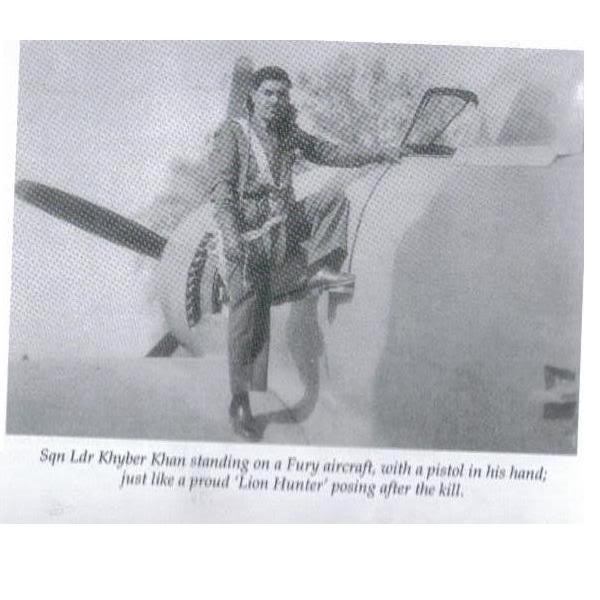
The next milestone in Khyber Khan’s life as a Air warrior came in the shape of the unforgettable and daring exploit of transporting a mortar gun in the rear seat of a T-6 Harvard aircraft to Gilgit, Which was instrumental in the capture of Skardu.
Soon after independence on October 26th, 1947 the Hindu Maharaja of Kashmir declared accession of the Muslim majority state to India, in complete disregard of the principle enunciate in the document concerning partition. He invited Indian Military help and on October 27, Indian forces moved into the state, Thus exposing a pre-conceived plan for the occupation of Kashmir.
No sooner did the news of the Maharaja accession spread that the people of Poonch and Mirpure district formed the Azad Kashmir Government at Muzaffarabad.
During the first Indo-Pak was of 1948, forward elements of Azad Kashmir forces had by-passed Skardu in pursuit of the Indian units fleeing south towards Kashmir. However a Dogra battalion entrenched within kharphocho Fort posed a serious threat in the rear of the advancing column and had to be removed in order to secure the lines of communication.
Due to the location of the fort, a direst frontal assault was deemed extremely hazardous and the Azad Kashmir forces did not posses any suitable weapon with which to engage the entrenched Dogras.
There as no artillery support and air strike was not advisable. Lest it led to an all-out war against the numerically far superior RIAF.
It was finally decided that a mortar gun capable of firing a high trajectory projectile could possibly be the only weapon that could effectively target the fort. Thus efforts were commenced to make one available to the Azad Kashmir forces.
Till the early 1950s, the only access to this part of the country was an unreliable mule track, which remained blocked for most of the year due to land slides and snow. The present runway at Gilgit and Skardu had not been built. The first 2 attempts to deliver a mortar gun having failed, It was decided to airlift one into Gilgit.
The honor of being picked up for this vital mission went to Flt Lt Khyber Khan who was them commanding the Advanced Flying School at Risalpur. He was aware that the mission was very dangerous and hazardous because the enemy was on RED Alert and he had to be extra cautious. In order to accommodate the unwieldy barrel of the mortar cannon the rear canopy of the T-6G Harvard was removed and the weapon was strapped to the seat.
The rear cockpit instrument panel was also removed to make more space and its barrel was placed in a tilted position in a manner that it lay only a few inches behind the head of the pilot.
Flight Lieutenant Khyber Khan took off from Risalpur in the Peshawar Valley in the afternoon of April 14th, 1948. Even at 12 thousand feet the flight was bumpy, and the farther he flew the higher the mountains rose, crowding him on both sides in this narrowing valley below.
Halfway the sky was getting darker and T-6 could not climb over such a mountains, suddenly the aircraft jolted severely causing the pilot some alarm, Survival was at stake in case of engine failure or an intensive downdraft at this low
height. And what id the barrel got loose? Instinctively Khyber silently prayed and by the Grace of God thing started to look better the weather got good, but this relief was short lived because moments later he saw 2 objects high above Chilas ahead of him. These had to be Indian Tempest fighting patrolling west of Nanga Parbat.
The T-6G swooped down to water level till a turn in the river shielded it from enemy’s view. Still keeping low and watchful for any lurking intruders above, He turned west towards the Gilgit as he approached the destination, Clouds began to gather again and he realized it would be soon too dark and better land soon.
The Gilgit scouts had fire as a signal for him and a rugged runway was made which was sandy and a 3 pointer landing was made the plane just stopped close to the mountain base.
The Militia and the Scouts has been waiting anxiously for this special mission. They received the aircraft with jubilation and loud cheers of Allah - o- Akbar under the pilot, supervision the mortar was quickly taken out and placed near a waiting camel. The men them gathered large stones and made a wall around the plane and camouflaged it from the top.
While Khyber Khan was provided the Scouts commandant, own Charger Horse to take him to the camp, a full platoon was decided to mount guard for the night at the field. Occasionally a sentry would stand looking intently at the T-6G and then smile affectionately patting its wings.
Indian fighter came the next morning to strafe the side, but the pilot was by then speeding home in hid T-6G. And in the mounted column a Bactrian camel plodded along the bank of the Indus river carring the heavy mortar cannon over a rocky track towards distant Sakdu, to the vicinity of the enemy help Kharphocho Fort. 3 days later the mortar fired thrice and the Dogras hastily raised the white flag of surrender over the rampart of Kharphocho, Skardu had fallen. Flt Lt Khyber khan got the message from the commandant of the liberation forces telling him that they conquered Skardu
ghazi52
THINK TANK: CONSULTANT
- Thread starter
- #336
What the world thinks of PAF
Indian resources have naturally refuted and denied PAF air superiority over the FIVE times larger IAF in the 65 and 71 wars. Indian and Pakistani claims and counter claims are pointless on this subject as they tend to be biased and blurred with nationalism.
The only way to assess this is through the neutral and qualified international opinion, which has now become aviation history. Check out autobiography of Gen. Chuck Yeagers (yes, the one who broke the sound barrier), who 'refereed' the 1971 war and flew up and down the region collecting wreckage of IAF aircraft shot down by the PAF.
Here is what he says, "the Pakistanis scored a three-to-one kill ratio knocking out 102 Indian jets and losing 34 of their own. I am certain about the figures because I went out several times a day in a chopper and counted the wrecks below. I counted wrecks, documented them by serial numbers, identified the components such as engines and rocket pods" Now he is not exactly a Pakistani, is he?
Check out the following world reputed aviation journals.
USA - Aviation week & space technology - December 1968 issue.
"For the PAF, the 1965 war was as climatic as the Israeli victory over the Arabs in 1967. A further similarity was that Indian air power had an approximately 5:1 numerical superiority at the start of the conflict. Unlike the Middle East conflict, the Pakistani air victory was achieved to a large degree by air-to-air combat rather than on ground. But it was as absolute as that attained by Israel.
UK - Air International - November - 1991
" the average PAF pilot is almost certainly possessed of superior skills when compared with, say, an average American pilot. As to those who are rated above average, they compare favourably to the very best "
Encyclopaedia of Aircraft printed in several countries by Orbis publications - Volume 5
"Pakistan's air force gained a remarkable victory over India in this brief 22 day war exploiting its opponents weaknesses in exemplary style - Deeply shaken by reverse, India began an extensive modernisation and training program, meanwhile covering its defeat with effective propaganda smoke screen.
If you feel more at ease with German and French, then also checkout the followings
Air Action (France) December 1988 and January 1989
Flugzeug (Germany) February (2) 1989
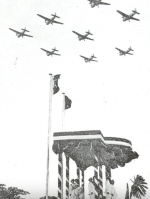
In addition to this, PAF put on show for inspection, its entire fleets after BOTH of the wars in presence of world dignitaries and aviation community. The five times bigger IAF should have annihilated the tiny PAF to prevent such displays!!!!!!
Now these are FACTS - what rides on a wave of nationalism is just fiction.
Mabaig.co.uk


ghazi52
THINK TANK: CONSULTANT
- Thread starter
- #341
RED DRAGONS - 1951
'The Red Dragons' climbing vertically during a display of formation aerobatics in 1951. The aircraft nearest to the camera, marked 'Z' is flown by Sqn Ldr Zafar Chaudhry, who later became the Chief of the Air Staff.
Picture-: Air Marshal Z A Chaudhry
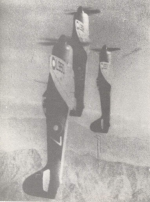
'The Red Dragons' climbing vertically during a display of formation aerobatics in 1951. The aircraft nearest to the camera, marked 'Z' is flown by Sqn Ldr Zafar Chaudhry, who later became the Chief of the Air Staff.
Picture-: Air Marshal Z A Chaudhry
ghazi52
THINK TANK: CONSULTANT
- Thread starter
- #343
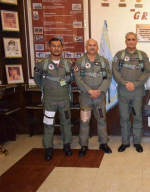
The Combat Commanders School (CCS) is the Pakistan Air Force leadership education and training institute.
CCS serves as a bridge for seasoned PAF fighter pilots usually those with 13 to 15 years of flying experience as they are summoned to take on command roles within the PAF.
Experienced air defence controllers are also trained and examined at CCS. For an officer, CCS is a once in a lifetime opportunity for directly relevant growth, and a daunting obstacle that could put an end to one’s career with the PAF............
CCS serves as a bridge for seasoned PAF fighter pilots usually those with 13 to 15 years of flying experience as they are summoned to take on command roles within the PAF.
Experienced air defence controllers are also trained and examined at CCS. For an officer, CCS is a once in a lifetime opportunity for directly relevant growth, and a daunting obstacle that could put an end to one’s career with the PAF............
Users who are viewing this thread
Total: 2 (members: 0, guests: 2)
Pakistan Defence Latest


Country Watch Latest
-
 Trump orders military base mass shooter to be executed by firing squad (7 Viewers)
- Latest: shapurzolaktaf
-

-

-

-

Latest Posts
-

-
Trump orders military base mass shooter to be executed by firing squad (7 Viewers)
- Latest: shapurzolaktaf
-

-
-
