
Navigation
Install the app
How to install the app on iOS
Follow along with the video below to see how to install our site as a web app on your home screen.
Note: This feature may not be available in some browsers.
More options
Style variation
You are using an out of date browser. It may not display this or other websites correctly.
You should upgrade or use an alternative browser.
You should upgrade or use an alternative browser.
IMF - International Monetary Fund Program Updates
- Thread starter ghazi52
- Start date
More options
Who Replied?


ghazi52
THINK TANK: CONSULTANT

- Thread starter
- #392
Govt partially meets 19 IMF actions
Three key reforms delayed as procurement rules await cabinet approvalShahbaz Rana
August 21, 2026
ISLAMABAD: Despite being a top priority for both the International Monetary Fund (IMF) and Prime Minister Shehbaz Sharif, the government managed to complete only four out of 19 actions due by end-June, which the global lender had identified to improve weak economic governance.
Proceedings of the Economic Governance Systems Committee – one of three ministerial bodies tasked with implementing the IMF action plan – show that only four actions were fully met during the January-June 2026 period.
Planning Minister Ahsan Iqbal, who heads the committee, chaired its fourth meeting this week and directed officials to expedite progress on the remaining action points.
According to top government officials, of the 19 priority and complementary actions assigned to the committee for completion by June, 12 were only partially implemented, while three were delayed.
ghazi52
THINK TANK: CONSULTANT
- Thread starter
- #393
The IMF had highlighted serious governance gaps in its Pakistan Governance and Corruption Diagnostic Assessment. To address these vulnerabilities, which can foster corrupt practices, the prime minister launched a 142-point reform agenda in December last year, aimed at strengthening institutions and the rule of law over three years.
Of the 142 actions, Iqbal's committee was responsible for overseeing 59 actions. For the first six months, 19 fell under the Economic Governance Systems committee.
During the launching ceremony at the PM's House, Sharif said under his governance plan, there were 59 priority actions and 83 complementary actions that would be implemented over three years.
However, performance against the initial targets remained weak. Most of the 19 actions due by June, largely considered easier tasks involving regulatory changes and publication of reports, were not completed.
Only four actions were declared complete: formation of a methodology working group, review of international best practices in judicial governance, some legal clarifications, and revisions to civil servants' asset declaration rules.
Of the 142 actions, Iqbal's committee was responsible for overseeing 59 actions. For the first six months, 19 fell under the Economic Governance Systems committee.
During the launching ceremony at the PM's House, Sharif said under his governance plan, there were 59 priority actions and 83 complementary actions that would be implemented over three years.
However, performance against the initial targets remained weak. Most of the 19 actions due by June, largely considered easier tasks involving regulatory changes and publication of reports, were not completed.
Only four actions were declared complete: formation of a methodology working group, review of international best practices in judicial governance, some legal clarifications, and revisions to civil servants' asset declaration rules.
ghazi52
THINK TANK: CONSULTANT
- Thread starter
- #394
Partially completed actions
The government partially implemented a key reform to approve the new Public Procurement Rules 2025 by removing preferential treatment for state-owned enterprises (SOEs) in public contracts.
Currently, contracts are often awarded to SOEs without competitive bidding, despite their limited capacity and without independent price discovery. Several infrastructure projects, including the NIH underpass in Islamabad, have faced delays under such arrangements.
A finance ministry official said the PM's Office has endorsed the draft rules, which are now with the Cabinet Committee on Legislative Cases (CCLC) awaiting cabinet approval. Revising these rules in line with IMF requirements would mark a significant shift from the existing practice of awarding multi-billion-rupee contracts without open competition.
Another IMF condition required an assessment of systemic strengths and weaknesses in the judicial system, particularly in economic dispute resolution. Officials said this had been partially met, with reviews of relevant laws, policies and reports still underway.
Similarly, a working group tasked with examining the causes of litigation delays and case backlogs has only partially completed its work.
The government partially implemented a key reform to approve the new Public Procurement Rules 2025 by removing preferential treatment for state-owned enterprises (SOEs) in public contracts.
Currently, contracts are often awarded to SOEs without competitive bidding, despite their limited capacity and without independent price discovery. Several infrastructure projects, including the NIH underpass in Islamabad, have faced delays under such arrangements.
A finance ministry official said the PM's Office has endorsed the draft rules, which are now with the Cabinet Committee on Legislative Cases (CCLC) awaiting cabinet approval. Revising these rules in line with IMF requirements would mark a significant shift from the existing practice of awarding multi-billion-rupee contracts without open competition.
Another IMF condition required an assessment of systemic strengths and weaknesses in the judicial system, particularly in economic dispute resolution. Officials said this had been partially met, with reviews of relevant laws, policies and reports still underway.
Similarly, a working group tasked with examining the causes of litigation delays and case backlogs has only partially completed its work.
ghazi52
THINK TANK: CONSULTANT
- Thread starter
- #395
Finance minister kicks off talks with visiting IMF mission
Khaleeq KianiSeptember 29, 2026
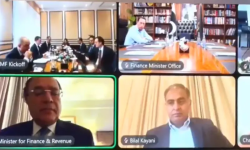
Minister for Finance and Revenue Muhammad Aurangzeb holds a kick-off meeting with a visiting staff mission of the International Monetary Fund, on Sept 29, 2026. — X/Financegovpk
ISLAMABAD: Minister for Finance and Revenue Muhammad Aurangzeb held a kick-off meeting on Tuesday with a visiting staff mission of the International Monetary Fund (IMF).
The IMF mission, led by Iva Petrova, is in Islamabad for the fourth review of Pakistan’s $7 billion Extended Fund Facility (EFF) arrangement and the third review of the $1.4bn Resilience and Sustainability Facility (RSF).
Aurangzeb, in a virtual meeting, briefed the IMF team on the latest macroeconomic indicators, improvements in credit rating and overall investment climate amid a challenging outlook emanating from prolonged Iran conflict.
On the successful conclusion of talks, Pakistan will be entitled to disbursement of about $1.2bn under the two programmes: $1bn under the EFF and $200 million under the RSF by the end of October or early November, but may require waivers from the IMF’s executive board for slippages on structural benchmarks.
ghazi52
THINK TANK: CONSULTANT
- Thread starter
- #396
The authorities are in continuous breach of structural benchmarks regarding the sovereign wealth fund (SWF) law that was originally missed in March.
The federal government already notified new procurement rules on Monday, two days ahead of the deadline, ie, Sept 30.
The SWF law is part of the discussions with the visiting IMF team. Authorities are in breach of an end-March 2026 structural benchmark on amendments to the Sovereign Wealth Fund Act to adopt governance mechanisms and safeguards for seven state-owned enterprises (SOEs), involving an asset portfolio of about $8bn.
Most of them are blue-chip entities listed on the stock exchange but remain outside normal reporting requirements. They include OGDCL, Pakistan Petroleum Limited (PPL), Mari Petroleum, National Bank of Pakistan (NBP), Govt Holdings, Pakistan Development Fund, and the Neelum-Jhelum Hydropower project. The amendments are pending parliamentary approval.
The IMF team has been in Pakistan since Sept 23. It spent the initial days in Karachi for engagements with the State Bank of Pakistan (SBP) and other stakeholders.
The staff mission has so far held engagements with officials from SBP, the finance ministry, the Federal Board of Revenue (FBR), the Establishment Division, and the finance secretaries of Khyber Pakhtunkhwa and Punjab.
The federal government already notified new procurement rules on Monday, two days ahead of the deadline, ie, Sept 30.
The SWF law is part of the discussions with the visiting IMF team. Authorities are in breach of an end-March 2026 structural benchmark on amendments to the Sovereign Wealth Fund Act to adopt governance mechanisms and safeguards for seven state-owned enterprises (SOEs), involving an asset portfolio of about $8bn.
Most of them are blue-chip entities listed on the stock exchange but remain outside normal reporting requirements. They include OGDCL, Pakistan Petroleum Limited (PPL), Mari Petroleum, National Bank of Pakistan (NBP), Govt Holdings, Pakistan Development Fund, and the Neelum-Jhelum Hydropower project. The amendments are pending parliamentary approval.
The IMF team has been in Pakistan since Sept 23. It spent the initial days in Karachi for engagements with the State Bank of Pakistan (SBP) and other stakeholders.
The staff mission has so far held engagements with officials from SBP, the finance ministry, the Federal Board of Revenue (FBR), the Establishment Division, and the finance secretaries of Khyber Pakhtunkhwa and Punjab.
ghazi52
THINK TANK: CONSULTANT
- Thread starter
- #397
IMF-linked plan to boost local currency bond market unveiled
Khaleeq KianiSeptember 30, 2026
ISLAMABAD: The government on Tuesday announced that the general public would be allowed to trade government securities, including treasury bills and bonds, through the stock market as part of efforts to improve compliance under the International Monetary Fund (IMF) programme currently being reviewed by a visiting staff mission for the disbursement of around $1.2 billion.
The announcement of a strategic action plan for development of the Local Currency Bond Market (LCBM) followed a customary kick-off meeting between Finance Minister Muhammad Aurangzeb and an IMF staff mission led by Iva Petrova.
The mission held discussions with the authorities on power-sector developments, privatisation, petroleum-sector issues, the Federal Board of Revenue (FBR) and the automobile sector, particularly the medium-term automobile development plan.
The finance minister is reported to have briefed the mission on the latest macroeconomic indicators, improvements in credit ratings and the overall investment climate amid a challenging outlook stemming from the prolonged Iran conflict, including its impact on revenues.
On successful conclusion of the talks, Pakistan would be entitled to disbursement of about $1.2bn under the two programmes — $1bn under the Extended Fund Facility (EFF) and $200m under the Resilience and Sustainability Facility (RSF) — by the end of October or early November. However, the country may require waivers from the IMF executive board for slippages on structural benchmarks.
The finance ministry said announcement of the strategic plan for the LCBM by Sept 30 was required under the IMF programme.
ghazi52
THINK TANK: CONSULTANT
- Thread starter
- #398
The joint study noted that Pakistan had built much of the institutional framework of an emerging LCBM, but market outcomes remained closer to those of a developing market.
Development was uneven across six pillars, with money market and financial infrastructure foundations comparatively advanced, while primary-market predictability, secondary-market liquidity and the legal and regulatory framework remained below the practices of larger emerging markets. The narrow investor base was identified as the biggest gap.
Therefore, the plan seeks to develop a liquid, transparent and diversified LCBM to reduce the cost and risk of government financing over the medium term, support effective monetary-policy transmission and provide a reliable benchmark yield curve for private-sector financing.
It pursues five strategic objectives, including strengthening institutional capacity and coordination, ensuring clear ownership and accountability, and making primary issuance more predictable and market-based through a published benchmark policy and a well-informed medium-term debt strategy.
It also seeks to build executable secondary-market liquidity and a functioning private securities-financing (or repo) market, broaden the investor base across institutional, retail and foreign investors, modernise market infrastructure and remove legal and tax impediments to trading and secured funding.
Under the plan, eligible bank customers would be allowed to trade exchange-listed government securities through their banks under the supervision of State Bank, Securities and Exchange Commission of Pakistan, Pakistan Stock Exchange and Central Depository Company.
Development was uneven across six pillars, with money market and financial infrastructure foundations comparatively advanced, while primary-market predictability, secondary-market liquidity and the legal and regulatory framework remained below the practices of larger emerging markets. The narrow investor base was identified as the biggest gap.
Therefore, the plan seeks to develop a liquid, transparent and diversified LCBM to reduce the cost and risk of government financing over the medium term, support effective monetary-policy transmission and provide a reliable benchmark yield curve for private-sector financing.
It pursues five strategic objectives, including strengthening institutional capacity and coordination, ensuring clear ownership and accountability, and making primary issuance more predictable and market-based through a published benchmark policy and a well-informed medium-term debt strategy.
It also seeks to build executable secondary-market liquidity and a functioning private securities-financing (or repo) market, broaden the investor base across institutional, retail and foreign investors, modernise market infrastructure and remove legal and tax impediments to trading and secured funding.
Under the plan, eligible bank customers would be allowed to trade exchange-listed government securities through their banks under the supervision of State Bank, Securities and Exchange Commission of Pakistan, Pakistan Stock Exchange and Central Depository Company.
ghazi52
THINK TANK: CONSULTANT
- Thread starter
- #399
Pakistan, IMF reach staff-level agreement for $1.2bn tranche
Khaleeq KianiOctober 8, 2026
ISLAMABAD: The International Monetary Fund (IMF) on Thursday reached a staff-level agreement (SLA) with the Pakistani authorities on the fourth review under the $7 billion Extended Fund Facility (EFF) and the third review under the $1.4bn Resilience and Sustainability Facility (RSF), qualifying Pakistan to draw about $1.2bn from the Fund’s resources within four to five weeks.
“The IMF team has reached an SLA with the Pakistani authorities on the fourth review of the 37-month Extended Arrangement under the Extended Fund Facility (EFF) and the third review of the 28-month arrangement under the Resilience and Sustainability Facility (RSF)”, the lending agency announced in an early morning statement.
The SLA is subject to approval by the IMF Executive Board. Upon approval, Pakistan will have access to about $1bn (SDR 760 million) under the EFF and about $210 million (SDR 154 million) under the RSF, bringing total disbursements under the two arrangements to about $5.7bn, it said.
ghazi52
THINK TANK: CONSULTANT
- Thread starter
- #401
The two sides also concluded Article IV consultations, the IMF announced from Washington headquarters.
“Program implementation under the EFF has remained broadly on track despite a challenging external environment. The authorities remain committed to preserving macroeconomic stability, strengthening public finances, ensuring that inflation returns durably to the State Bank of Pakistan’s target range, enhancing energy sector viability, strengthening social protection, and accelerating reforms to foster sustainable, private sector-led, and inclusive growth,” the IMF statement said.
The authorities have also continued to advance their climate reform agenda under the RSF to strengthen Pakistan’s resilience and reduce vulnerabilities to climate-related risks, it added.
The fund team led by Iva Petrova was in Pakistan and held discussions under the 2026 Article IV consultation and on the 4th review EFF and the 3rd review under the RSF from September 23 to October 7.
“Supported by the EFF, the authorities have successfully navigated the impact of the Middle East conflict, and strong policies have helped preserve macroeconomic stability. Real GDP growth reached 4 per cent in the first three quarters of FY26, and although higher energy prices and supply disruptions weakened somewhat the momentum, FY26 growth is estimated at 3.6pc.”
Headline inflation moderated to about 10.3pc in September after peaking in May, while core inflation remained contained, the fund said.
It added: “The current account was broadly balanced in FY26 supported by strong remittances, and gross reserves rose to about $21.5bn by end-September. Sovereign rating upgrades and renewed international market access also point to stronger policy credibility. Nevertheless, the fund said risks remain high, particularly from geopolitical tensions, volatile energy prices, tighter global financial conditions, and trade disruptions.”
The authorities remain committed to sound macroeconomic policies, which are critical to safeguarding stability amidst the ongoing shock-prone environment, it further stated.
“Program implementation under the EFF has remained broadly on track despite a challenging external environment. The authorities remain committed to preserving macroeconomic stability, strengthening public finances, ensuring that inflation returns durably to the State Bank of Pakistan’s target range, enhancing energy sector viability, strengthening social protection, and accelerating reforms to foster sustainable, private sector-led, and inclusive growth,” the IMF statement said.
The authorities have also continued to advance their climate reform agenda under the RSF to strengthen Pakistan’s resilience and reduce vulnerabilities to climate-related risks, it added.
The fund team led by Iva Petrova was in Pakistan and held discussions under the 2026 Article IV consultation and on the 4th review EFF and the 3rd review under the RSF from September 23 to October 7.
“Supported by the EFF, the authorities have successfully navigated the impact of the Middle East conflict, and strong policies have helped preserve macroeconomic stability. Real GDP growth reached 4 per cent in the first three quarters of FY26, and although higher energy prices and supply disruptions weakened somewhat the momentum, FY26 growth is estimated at 3.6pc.”
Headline inflation moderated to about 10.3pc in September after peaking in May, while core inflation remained contained, the fund said.
It added: “The current account was broadly balanced in FY26 supported by strong remittances, and gross reserves rose to about $21.5bn by end-September. Sovereign rating upgrades and renewed international market access also point to stronger policy credibility. Nevertheless, the fund said risks remain high, particularly from geopolitical tensions, volatile energy prices, tighter global financial conditions, and trade disruptions.”
The authorities remain committed to sound macroeconomic policies, which are critical to safeguarding stability amidst the ongoing shock-prone environment, it further stated.
ghazi52
THINK TANK: CONSULTANT
- Thread starter
- #402
Pakistan’s growth during FY27 projected at 3.5pc, inflation at 9.9pc: IMF
Khaleeq KianiOctober 13, 2026
ISLAMABAD: The International Monetary Fund (IMF) has projected Pakistan’s economic growth at 3.5 per cent during the current fiscal year and inflation to remain close to double digits for another year, notwithstanding global growth rebounding to 3.4pc.
In its flagship World Economic Outlook, released at the launch of the World Bank-IMF annual meetings in Bangkok, the fund estimated Pakistan’s current account deficit to widen to 1pc of GDP from a surplus of 0.5pc in FY2025. Headline inflation is projected to rise significantly to 9.9pc from 7.1pc last year.
However, the Washington-based lending agency projected Pakistan’s unemployment rate to decline to 6.5pc this year, compared with 6.9pc last year and 7.1pc a year earlier.
The fund, which concluded its review of Pakistan’s economic situation last week, did not explain the projected decline in unemployment despite the rising population and its other economic forecasts, including higher inflation and a widening current account deficit.
The fund’s growth projections are significantly lower than the government’s 4pc target for the current year and the 3.8pc forecast by the World Bank last month. Its estimated 3.5pc growth rate for Pakistan is slightly lower than the 3.6pc recorded last year but higher than the 3.2pc in FY2025.
Saying global economic activity had proved resilient despite multiple challenges, the international lender projected global growth to slow to 3.1pc in 2026 before rebounding to 3.4pc in 2027. Global headline inflation is projected to rise notably to 4.7pc in 2026 before easing to 4.1pc in 2027, it added.
ghazi52
THINK TANK: CONSULTANT
- Thread starter
- #405
Pakistan to assume IMF, World Bank board chairmanship for first time in over 7 decades
News DeskOctober 16, 2026
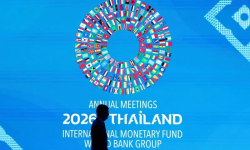
US Federal Reserve Chairman Kevin Warsh attends the IMF/World Bank 2026 Annual Meetings at Queen Sirikit National Convention Center (QSNCC) in Bangkok, Thailand, October 16. — Reuters
Pakistan has been named the incoming chair of the Boards of Governors of the International Monetary Fund (IMF) and the World Bank Group (WBG) for next year, for the first time since 1953, the Ministry of Economic Affairs said on Friday.
Federal Minister for Economic Affairs Ahad Khan Cheema, who is also Pakistan’s governor to the World Bank, was formally announced as the incoming chair during the plenary session of the 2026 WBG-IMF Annual Meetings in Bangkok, according to the ministry’s statement.
The IMF-World Bank annual meetings — scheduled to run from October 12 to 18 — have brought together more than 15,000 participants from 191 countries, including central bank governors, economic policymakers and business leaders, for discussions on the world economy.
The statement described the development as a “historic milestone”, noting that Pakistan would return to the chairmanship for the first time since 1953.
The ministry said the “role would provide Pakistan an opportunity to contribute to global economic and development discussions and facilitate constructive dialogue among member countries”.
Following the plenary session, Cheema was briefed by the WBG Corporate Secretariat on the responsibilities of the chairmanship. He also met WBG Vice President and Corporate Secretary Aradhana Kumar-Capoor to discuss institutional support and coordination during Pakistan’s term, the statement added.
The minister also met Carlos Carvallo Spalding, governor of Paraguay’s central bank and the outgoing chair of the Boards of Governors, according to the statement.
He congratulated Spalding on completing his tenure and commended his stewardship, the statement said. The two exchanged views on the responsibilities of the office and priorities for the coming year.
Users who are viewing this thread
Total: 2 (members: 0, guests: 2)
Pakistan Defence Latest
-

-
-
 Federal cabinet gives nod to imposition of emergency in KP; summary sent to president (16 Viewers)
- Latest: hydrabadi_arab
-

Country Watch Latest
-
 Iran - Israel/US War: Israel-US declare war on Iran, Iran responds (645 Viewers)
- Latest: hussain0216
-

-
-

-

Latest Posts
-
Iran - Israel/US War: Israel-US declare war on Iran, Iran responds (645 Viewers)
- Latest: hussain0216
-
-
The Prime Minister of Singapore travels on official duty aboard a low-cost airline (7 Viewers)
- Latest: nahtanbob
-