
MNZGamerX
Registered Member

Washington has started dealing with regional players without regard for Indian interests.
By Nazmus Sakib
Published On 4 Jul 2026
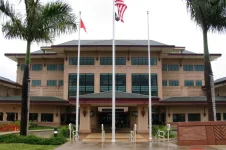
Last month, the United States military renamed its Indo-Pacific Command back to Pacific Command. The Pentagon claimed it was just a return of history, going back to its old name while the jurisdiction remained the same. But Geopolitics 101 will tell you names are never just names. They are signals, postures, and compressed strategies. They tell you what to pay attention to in the coming phases of diplomacy and military movements.
The “Indo” was added in 2018 under the first Trump administration as a deliberate bow to New Delhi. It was America’s way of saying: China is the main challenge in the bipolar world, India is the indispensable democratic counterweight, and the Indian and Pacific Oceans are one seamless strategic theatre.
Then Defense Secretary James Mattis had noted that the renaming was an acknowledgement of the increasing interlink between the Pacific and India: “from Bollywood to Hollywood, and from penguins to polar bears”, as he put it.
But no more, apparently. The “Indo” is gone. The symbolism swiftly got attention. Responding to the renaming, Indian member of Parliament Shashi Tharoor wrote on X, “One more nail in the coffin of the Quad?”, referring to the partnership between the US, Australia, India and Japan.
But the move is even more significant for South Asia. Washington is quietly declaring the end of an era in which India was America’s presumed subcontractor for the region. There are many good reasons and recent developments that led to this shift.
For years, the American mental map of the subcontinent had India in bold font. Pakistan was a headache. Bangladesh was a garment factory and a development project. Nepal was a Himalayan buffer wall best discussed after checking with New Delhi. Smaller neighbours were sovereign, in theory and treated as tenants in India’s geopolitical apartment complex, in practice.
That map is now being redrawn in real time.
A new, more fluid South Asia is emerging in which the US is engaging Pakistan, Bangladesh and Nepal directly, more closely – not as afterthoughts of India’s regional policy, but as actors with their own agency, assets and interests. Like any business transaction, getting rid of the middleman is beneficial for both principals.
These countries are not becoming Cold War-style allies. They are becoming something more modern and, in many ways, more useful to America in a multipolar world: Transactional partners who cooperate where interests overlap and preserve the freedom to deal with China, Russia, India or anyone else.
Some Indian strategists have argued that this gradual decoupling makes America even a regional rival. Indeed, American officials increasingly view India not just as a strategic partner but as a rising commercial competitor whose advances in pharmaceuticals, IT, electronics manufacturing, and semiconductor ambitions could one day challenge US companies.
Learning from its experience with China during the euphoric post-Soviet era of American unipolarity, which mercantilists argue disproportionately benefitted China at the expense of American interests, the US is reluctant to repeat the same mistake with India.
More broadly, Washington appears determined to prevent any single power – including India – from dominating South Asia, and is actively fostering a pluralistic regional balance. What we are really witnessing is the end of India’s regional veto. Washington has stopped treating every capital in South Asia as a branch office of New Delhi.
The US is pursuing selective accommodation with Beijing, supporting democratic transitions in Bangladesh despite New Delhi’s concerns about losing a client regime, engaging Nepal directly, and taking actions in Myanmar that the Indian government sees as complicating its northeastern security.
Pakistan offers a revealing case study in this shift. For decades, the US-Pakistan relationship was trapped in a dysfunctional cycle centred almost exclusively on counterterrorism. But Islamabad has successfully changed the equation with its diplomatic “charm offensive”.
Field Marshal Asim Munir is positioning Pakistan as a strategic link between Gulf capital, American technology, and Pacific economies seeking critical minerals. With vast reserves potentially worth trillions, including the Reko Diq copper and gold deposits, Pakistan could become an alternative to Chinese-dominated supply chains.
Through direct military-led outreach to Trump’s personal and family circles, Pakistan secured a favourable 19 percent tariff and a US terrorist designation for the Balochistan Liberation Army. Pakistan can maintain close ties with China while expanding pragmatic cooperation with the US on minerals, trade, and regional stability.
Bangladesh, with 170 million people and a strategic perch on the Bay of Bengal, is even more compelling. It is a manufacturing powerhouse near vital maritime routes, India’s northeast and a volatile Myanmar. For too long, Washington saw it mostly through the lenses of development aid or Indian security concerns.
Today, a more confident Bangladesh can pursue US investment, energy deals and technology partnerships while still buying Chinese equipment and trading with India. By leading or supporting a humanitarian intervention for Rohingya repatriation and a safe zone (potentially via United Nations or sanctions pressure on Myanmar), the US could counter growing China-India-Myanmar alignment, rebuild influence in Dhaka after its shift from an “India first” policy, and secure leverage in a key area.
By romanticising the India relationship and granting it an informal veto, Washington reinforced a hierarchical geopolitical architecture where India was at the top. Washington was so eager for a China counterweight that it sometimes confused partnership with deference. The restoration of the Pacific Command name suggests that era has reached its natural limit.
This doesn’t mean India has been shown the door – just asked to share the dance floor. Washington still wants Delhi’s market power, blue-water navy and coding talent, but the romance is giving way to a pragmatic, line-item partnership. South Asia is turning into a buzzing bazaar where capitals cut issue-by-issue deals: Pakistan swaps minerals for security guarantees even while courting Beijing; Bangladesh takes US engagements without slamming other doors. That swirl enlarges America’s options and forces India to win friends with competitive offers instead of regional vetoes.
When the Pentagon lopped “Indo” off Pacific Command, it merely stamped a change already visible on the ground: The subcontinent now appears as a mosaic, not a mural signed by India. In today’s world, lasting influence belongs to whoever can juggle the most relationships at once, and that’s the new game on this crowded chessboard.
By Nazmus Sakib
Published On 4 Jul 2026
Last month, the United States military renamed its Indo-Pacific Command back to Pacific Command. The Pentagon claimed it was just a return of history, going back to its old name while the jurisdiction remained the same. But Geopolitics 101 will tell you names are never just names. They are signals, postures, and compressed strategies. They tell you what to pay attention to in the coming phases of diplomacy and military movements.
The “Indo” was added in 2018 under the first Trump administration as a deliberate bow to New Delhi. It was America’s way of saying: China is the main challenge in the bipolar world, India is the indispensable democratic counterweight, and the Indian and Pacific Oceans are one seamless strategic theatre.
Then Defense Secretary James Mattis had noted that the renaming was an acknowledgement of the increasing interlink between the Pacific and India: “from Bollywood to Hollywood, and from penguins to polar bears”, as he put it.
But no more, apparently. The “Indo” is gone. The symbolism swiftly got attention. Responding to the renaming, Indian member of Parliament Shashi Tharoor wrote on X, “One more nail in the coffin of the Quad?”, referring to the partnership between the US, Australia, India and Japan.
But the move is even more significant for South Asia. Washington is quietly declaring the end of an era in which India was America’s presumed subcontractor for the region. There are many good reasons and recent developments that led to this shift.
For years, the American mental map of the subcontinent had India in bold font. Pakistan was a headache. Bangladesh was a garment factory and a development project. Nepal was a Himalayan buffer wall best discussed after checking with New Delhi. Smaller neighbours were sovereign, in theory and treated as tenants in India’s geopolitical apartment complex, in practice.
That map is now being redrawn in real time.
A new, more fluid South Asia is emerging in which the US is engaging Pakistan, Bangladesh and Nepal directly, more closely – not as afterthoughts of India’s regional policy, but as actors with their own agency, assets and interests. Like any business transaction, getting rid of the middleman is beneficial for both principals.
These countries are not becoming Cold War-style allies. They are becoming something more modern and, in many ways, more useful to America in a multipolar world: Transactional partners who cooperate where interests overlap and preserve the freedom to deal with China, Russia, India or anyone else.
Some Indian strategists have argued that this gradual decoupling makes America even a regional rival. Indeed, American officials increasingly view India not just as a strategic partner but as a rising commercial competitor whose advances in pharmaceuticals, IT, electronics manufacturing, and semiconductor ambitions could one day challenge US companies.
Learning from its experience with China during the euphoric post-Soviet era of American unipolarity, which mercantilists argue disproportionately benefitted China at the expense of American interests, the US is reluctant to repeat the same mistake with India.
More broadly, Washington appears determined to prevent any single power – including India – from dominating South Asia, and is actively fostering a pluralistic regional balance. What we are really witnessing is the end of India’s regional veto. Washington has stopped treating every capital in South Asia as a branch office of New Delhi.
The US is pursuing selective accommodation with Beijing, supporting democratic transitions in Bangladesh despite New Delhi’s concerns about losing a client regime, engaging Nepal directly, and taking actions in Myanmar that the Indian government sees as complicating its northeastern security.
Pakistan offers a revealing case study in this shift. For decades, the US-Pakistan relationship was trapped in a dysfunctional cycle centred almost exclusively on counterterrorism. But Islamabad has successfully changed the equation with its diplomatic “charm offensive”.
Field Marshal Asim Munir is positioning Pakistan as a strategic link between Gulf capital, American technology, and Pacific economies seeking critical minerals. With vast reserves potentially worth trillions, including the Reko Diq copper and gold deposits, Pakistan could become an alternative to Chinese-dominated supply chains.
Through direct military-led outreach to Trump’s personal and family circles, Pakistan secured a favourable 19 percent tariff and a US terrorist designation for the Balochistan Liberation Army. Pakistan can maintain close ties with China while expanding pragmatic cooperation with the US on minerals, trade, and regional stability.
Bangladesh, with 170 million people and a strategic perch on the Bay of Bengal, is even more compelling. It is a manufacturing powerhouse near vital maritime routes, India’s northeast and a volatile Myanmar. For too long, Washington saw it mostly through the lenses of development aid or Indian security concerns.
Today, a more confident Bangladesh can pursue US investment, energy deals and technology partnerships while still buying Chinese equipment and trading with India. By leading or supporting a humanitarian intervention for Rohingya repatriation and a safe zone (potentially via United Nations or sanctions pressure on Myanmar), the US could counter growing China-India-Myanmar alignment, rebuild influence in Dhaka after its shift from an “India first” policy, and secure leverage in a key area.
By romanticising the India relationship and granting it an informal veto, Washington reinforced a hierarchical geopolitical architecture where India was at the top. Washington was so eager for a China counterweight that it sometimes confused partnership with deference. The restoration of the Pacific Command name suggests that era has reached its natural limit.
This doesn’t mean India has been shown the door – just asked to share the dance floor. Washington still wants Delhi’s market power, blue-water navy and coding talent, but the romance is giving way to a pragmatic, line-item partnership. South Asia is turning into a buzzing bazaar where capitals cut issue-by-issue deals: Pakistan swaps minerals for security guarantees even while courting Beijing; Bangladesh takes US engagements without slamming other doors. That swirl enlarges America’s options and forces India to win friends with competitive offers instead of regional vetoes.
When the Pentagon lopped “Indo” off Pacific Command, it merely stamped a change already visible on the ground: The subcontinent now appears as a mosaic, not a mural signed by India. In today’s world, lasting influence belongs to whoever can juggle the most relationships at once, and that’s the new game on this crowded chessboard.


