Setting Up a Business in India Is Hard. Leaving Is Even Harder.
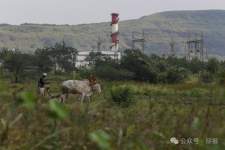
General Motors spent four years trying to unload its factory in Pune, western India.
Photo: Dhiraj Singh/Bloomberg News
NEW DELHI—For General Motors, getting out of India turned into a grinding, years-long odyssey.
The U.S. automaker stopped selling cars here in 2017 and said in 2020 it would close its last plant in the South Asian nation.
Yet only last year did GM largely complete its exit.
The company’s ordeal is a warning to American firms about the challenges of operating in India.
Analysts say the retreat was part of GM’s drive to shrink its global footprint and plow money into higher-profit markets.
From the start, however, it hit brick walls.
In 2021, about 1,100 workers at one plant rejected what GM called a generous severance package and instead filed a flurry of lawsuits alleging labor-law and pay violations.
The auto maker also became embroiled in tax disputes and caught up in the fallout from collapsing India-China geopolitical ties.
Labor rules required GM to pay workers roughly a year’s wages on top of its proposed severance.
One court ordered the company to keep paying half wages until the dispute was resolved—GM appealed and eventually won.
“We never imagined it would get this bad, right from the beginning,” said Prajot Gaonkar, former head of employee relations at GM India.
“It was crazy, simply insane.”
Multinationals drawn to India’s vast labor pool and consumer market are often scared off by red tape.
The hurdles aren’t limited to setting up—New Delhi has lately tried to streamline those rules—but also to getting out when things go wrong.
Regulations make layoffs difficult, politicians loathe investor exits, and courts can issue contradictory rulings on similar facts.
“Exit barriers are a key reason India’s manufacturing sector is underdeveloped,” said Shoumitro Chatterjee, an assistant professor of international economics at Johns Hopkins University and co-author of a new paper on Indian manufacturing.
Such barriers “act like an entry cost that deters firms from coming in.”

GM’s initial request to shutter the Pune plant was denied.
Photo: Dhiraj Singh/Bloomberg News
India, facing new U.S. tariffs of 50 %, can ill afford hurdles that restrain its economic potential, say economists.
Government data cited in Chatterjee’s paper show that fully closing a factory in India takes an average of 4.3 years, versus one year in Singapore, 15 months in Germany and one to two years in the U.K.
GM’s India retreat was part of a strategic decision to pull back from unprofitable overseas markets and channel funds into electric vehicles.
Legal filings show GM lost more than 1 billion in India over two decades.
In 2017, GM sold a plant in Gujarat relatively smoothly after offering to transfer workers to its other factory in Pune, Maharashtra.
Unloading the Pune plant dragged on for four years.
GM first tried to sell the facility to China’s Great Wall Motor.
New Delhi blocked the deal in 2020, scuttling the sale.
Production stopped in December 2020, and GM applied to close the plant.
Maharashtra’s labor minister refused, arguing GM could absorb losses and revive the operation.
A state labor-office statement said the law required the dispute to go to an industrial tribunal once workers alleged GM was trying to skirt labor protections.
Maharashtra remains committed to investor-friendly policies, it added, and following due process in closures builds a predictable environment.
Union leaders wouldn’t negotiate and kept filing petitions, executives said.
The stance shocked them, they added, because GM had long enjoyed good labor relations and offered 110 days of pay for every year worked.
The union instead demanded GM reopen the plant and rehire everyone, or guarantee jobs with any new owner, or pay full wages and medical benefits until retirement age, Gaonkar said.
The labor fight scared off several buyers reluctant to take on a troubled asset.
GM tried to get each worker to sign away the right to sue in exchange for compensation, but failed.
“Labor issues definitely created a destructive impact,” Gaonkar said.
“Many companies decided we can’t and don’t want to deal with this.”
In 2023, an industrial tribunal ruled GM could close.
The union appealed to Bombay High Court and, with opposition politicians, staged a high-profile hunger strike.
Six months later, the court upheld the tribunal’s verdict.
GM’s Chevrolet dealers protested in 2017 when the company said it would stop selling the brand in India.
Photo: Imago/Zuma Press
“GM worked with all relevant authorities to obtain necessary approvals after deciding to wind down India operations,” spokesman George Svigos said.
Union leaders eventually agreed to drop all litigation in return for GM’s original severance offer, executives said.
“GM always treated workers well,” said Sandeep Bhegade, former union leader at the Pune plant.
But members fought closure because they feared they couldn’t match their factory wages elsewhere.
“They were banking on those salaries to buy homes and send kids to private schools.
Now most of us pull rickshaws or drive taxis,” he said.
Hyundai Motor, which builds cars in India for domestic sale and export, soon announced it had acquired the Pune plant.
Maharashtra says GM’s saga shouldn’t be viewed as a cautionary tale of regulatory hurdles.
A labor-commissioner statement blamed much of the delay on geopolitics that killed the Great Wall deal.
“For over two years, the plant’s fate was tied to a business transaction stalled at national and international levels,” it said.
Experts say state support can make all the difference.
When Ford said in 2021 it would close two Indian plants, Tata Group quickly bought the Gujarat factory after agreeing to take on all employees.
In Tamil Nadu, workers filed petitions to stop Ford from closing its Chennai plant.
The state government backed Ford in court, allowed it to remove some equipment and said a graceful exit preserves goodwill.
Ford retains ownership of the Chennai site and last year said it would restart production for exports; its business and tech center in the city employs more than 11,000 engineers and analysts.
High factory-closure rates signal a dynamic economy where inefficient firms exit, economists say.
In India, however, exit costs are so steep that only about 3 % of plants close annually—among the lowest rates globally—versus more than 17 % in Vietnam, 10 % in China and 9 % in the U.S., Chatterjee’s paper shows.
Roughly one-fifth of India’s manufacturing firms are “zombies” that absorb capital without producing, the study found.


