Navigation
Install the app
How to install the app on iOS
Follow along with the video below to see how to install our site as a web app on your home screen.
Note: This feature may not be available in some browsers.
More options
Style variation
You are using an out of date browser. It may not display this or other websites correctly.
You should upgrade or use an alternative browser.
You should upgrade or use an alternative browser.
India Economy Thread
- Thread starter indushek
- Start date
More options
Who Replied?
Sam6536
Registered Member
Hmm. I personally know someone who wants to pursue Medicine from Russia.
vasanthm
SpeedLimited

Foxconn hires 30,000 staff at new iPhone assembly unit in Karnataka's Devanahalli, 80% of workforce being women
Trending News: Around 80% of the workforce at the Karnataka facility are women, who are first-time job seekers in the 19–24 age group, according to reports.
/startuppedia/media/agency_attachments/F1zx28f8WkXp1e8SKwuK.png) startuppedia.in
startuppedia.in
Foxconn hires 30,000 staff at new iPhone assembly unit in Karnataka's Devanahalli, 80% of workforce being women
Taiwan-based Hon Hai Precision Industry Co (Foxconn) has hired about 30,000 workers for its new iPhone assembly unit at Devanahalli, near Bengaluru, in around eight to nine months.

CallSignMaverick
Banned

onlinpunit
Trusted Member

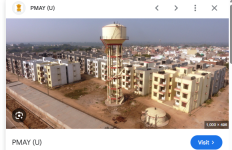
For free or affordable housing in India, the main government program is the Pradhan Mantri Awas Yojana (PMAY), offering financial aid, subsidies, and interest relief for EWS/LIG groups to build or buy homes, with both Urban (PMAY-U) and Rural (PMAY-G) versions, plus options for affordable rentals via Affordable Rental Housing Complexes (ARHCs) for urban poor and migrants. State-specific schemes and lottery systems also exist, like DDA in Delhi or MHADA in Maharashtra, focusing on transparent allotment to eligible families.
How to Apply & Who's Eligible
=>
.
.
=>

 deshgujarat.com
.
=>


 www.jagran.com
.
=>

How to Apply & Who's Eligible
- Eligibility: Primarily Economically Weaker Sections (EWS), Low Income Groups (LIG), and sometimes Middle Income Groups (MIG), with criteria like no existing pucca house.
- Application: Can be done online via the PMAY website or offline at Common Service Centers (CSCs).
=>
.
.
=>
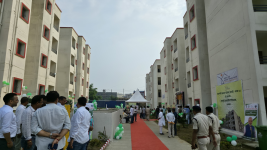
PM Modi to inaugurate 1,449 Houses, 130 Shops under PM Awas Yojana in Ahmedabad - DeshGujarat
Gandhinagar: Prime Minister Narendra Modi will visit Gujarat on August 25 and 26. During this visit, he will inaugurate 1,449 houses and 130 shops built at a
deshgujarat.com
.
=>
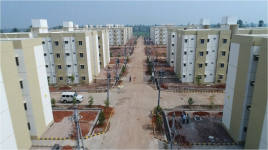
PM Awas Yojana: शहरी गरीबों को घर देने का महाराष्ट्र में बनेगा रिकार्ड, PM Modi अगले माह करेंगे उद्घाटन - PM Awas Yojana PM Modi to inaugurate housing project for economically weak sections in Maharashtra next month
रेहड़ी-पटरी वालों को कारोबार के लिए लोन उपलब्ध कराने वाली पीएम स्वनिधि योजना को विस्तार देने की तैयारी के साथ केंद्र सरकार शहरों में निर्धन आबादी को घर देने वाली प्रधानमंत्री आवास योजना के जरिये गरीब कल्याण के अपने एजेंडे को धार देना चाहती है। आर्थिक रूप से कमजोर वर्ग के लिए यह सबसे बड़ी आवासीय...
.
=>

;
=>
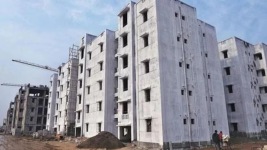
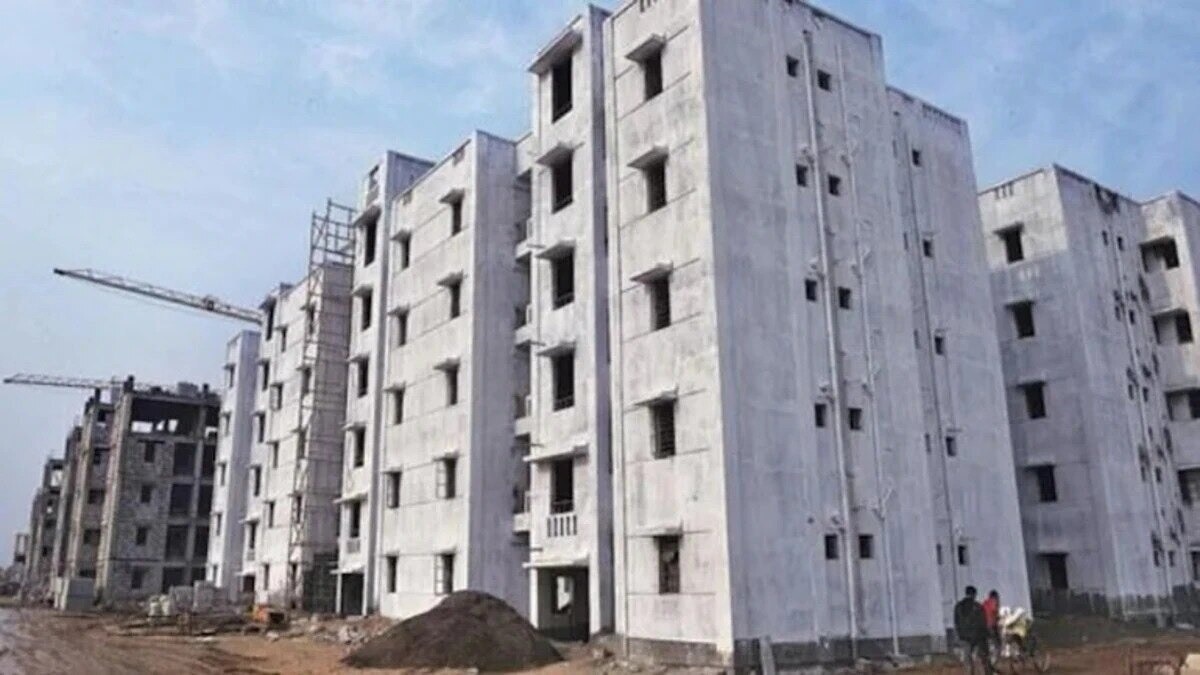
Pradhan Mantri Awas Yojana (PMAY) Urban 2.0 Scheme: Eligibility to apply, beneficiaries, interest subsidy for homebuyers - BusinessToday
The Pradhan Mantri Awas Yojana - Urban 2.0 (PMAY-U 2.0) is a government initiative aimed at providing financial assistance to middle-class and urban impoverished families.
 www.businesstoday.in
.
=>

.
=>
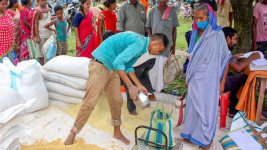
Prime Minister Narendra Modi's policy to ensure "no poor person in the country will remain hungry" is primarily implemented through the Pradhan Mantri Garib Kalyan Anna Yojana (PM-GKAY). This initiative is the world's largest food security program, providing free food grains to over 81 crore (810 million) beneficiaries.
Pradhan Mantri Garib Kalyan Anna Yojana (PM-GKAY)
The PM-GKAY scheme was initially launched in March 2020 as a relief measure during the COVID-19 pandemic and has since been extended. In November 2023, PM Modi announced that the scheme would be extended for another five years starting from January 2024.
Key features of the scheme:
Pradhan Mantri Garib Kalyan Anna Yojana (PM-GKAY)
The PM-GKAY scheme was initially launched in March 2020 as a relief measure during the COVID-19 pandemic and has since been extended. In November 2023, PM Modi announced that the scheme would be extended for another five years starting from January 2024.
Key features of the scheme:
- Benefits: Eligible beneficiaries receive an additional 5 kg of free food grains (wheat or rice) per person per month.

- In addition to Existing Subsidies: This free ration is provided over and above the existing subsidized food grains available under the National Food Security Act (NFSA), where grains are provided at highly subsidized rates of Rs 2-3 per kg.
- Eligibility: The scheme covers families under the Antyodaya Anna Yojana (AAY) and Priority Households (PHH), which include categories like landless agricultural laborers, marginal farmers, slum dwellers, and households headed by widows or disabled persons.
- Implementation: The program is part of the larger Public Distribution System (PDS) and utilizes technology, such as Aadhaar linking and e-PoS devices at fair price shops, to ensure transparent delivery and reduce fraudulent ration cards.

Over 80 crore people to get free ration for one year under Food Security Act | Today News
At present, the beneficiaries of the NFSA Act pay ₹1-3 per kg. Under the Act, foodgrain is allocated at 5 kg per person per month for the priority households category
 www.livemint.com
.
=>

.
=>

CallSignMaverick
Banned
CallSignMaverick
Banned
r3alist
Elite Member


KEY POINTS
Big Tech is doubling down on investing billions in India, drawn by its abundance of resources for building data centers, a large talent and digital user pool, and market opportunity.
- In under 24 hours, India received investments of more than $50 billion from Amazon and Microsoft.
- Google is investing $15 billion, while AI companies like ChatGPT, Google and Perplexity are offering free access to AI tools for millions of Indians.
- India has abundance of resources for data centers, large talent and digital user pool, and market opportunity.
In under 24 hours, Microsoft and Amazon pledged more than $50 billion toward India's cloud and AI infrastructure, while Intel on Monday announced plans to make chips in the country to capitalize on its growing PC demand and speedy AI adoption.
While India trails the U.S. and China in the race to develop a native AI foundational model, and lacks a large domestic AI infrastructure company, it wants to leverage its expertise in the information technology sector to create and deploy AI applications at enterprise level, also offering Big Tech companies a huge opportunity.
Having a model or computing is not enough for any enterprise to use AI effectively, and it requires companies making application layer and a large talent pool to deploy them, S. Krishnan, secretary at India's Ministry of Electronics and Information Technology, told CNBC.
Stanford University ranks India among the top four countries along with the U.S., China and the UK in the global and national AI vibrancy ranking. GitHub, a community of developers, has ranked India at the top with the global share of 24% of all projects.
India's opportunity lies more in "developing applications" which will be used to drive revenues for AI companies, Krishnan said.
On Tuesday, Microsoft announced $17.5 billion in investment in the country, spread over 4 years, aimed at expanding hyperscale infrastructure, embedding AI into national platforms, and advancing workforce readiness.
"This scale of capex gives Microsoft first‑mover advantage in GPU‑rich data centers while making Azure the preferred platform for India's AI workloads, as well as deepening alignment with the government's AI public infrastructure push," said Tarun Pathak, research Director at Counterpoint Research.
Amazon on Wednesday announced plans to invest over $35 billion, on top of the $40 billion it has already invested in the country.
Over the past few months, AI and tech majors such as OpenAI, Google, and Perplexity have offered their tools for free to millions in India, with Google also firming up its plans to invest $15 billion toward building data center capacity for a new AI hub in southern India.
"India combines a huge digital user base, rapidly growing cloud and AI demand, and a high-talent IT ecosystem that can build and consume AI at scale, making it more than just a market for users and instead a core engineering and deployment hub," Pathak said.
Data center opportunity
India has several advantages when it comes to building data centers. Markets such as Japan, Australia, China and Singapore in the Asia Pacific region have matured. Singapore, one of the oldest data center hubs in the region, has limited room to deploy large-scale data centers due to land availability issues.
India has abundant space for large-scale data center developments. When compared with data center hubs in Europe, power costs in India are relatively low. Coupled with India's growing renewable energy capacity — critical for power-hungry data centers — and the economics begin to look compelling.
Local demand, fueled by the rise of e-commerce — a major driver of data center growth in recent years — and potential new rules for storing social media data, strengthens the case.
Put simply: India is entering a sweet spot where global cloud providers, AI players, and domestic digitalization all converge to create one of the world's hottest data center markets.
"India is a pivotal market and one of the fastest‑growing regions for AI spending in Asia Pacific," said Deepika Giri, associate vice president and head of research, big data & AI, at International Data Corporation.
"A major gap, and therefore a significant opportunity, lies in the shortage of suitable compute infrastructure for running AI models," she added. Big Tech is looking to capitalize on the infrastructure opportunity in India by investing heavily in the cloud and data center space.
Global companies are expanding capacities closer to service bases in IT cities such as Bangalore, Hyderabad and Pune from traditional centers like Mumbai and Chennai which are closer to landing cables, as they build data centers in India for the world, Krishnan said.
India is lagging in corporate and other investment, trying to create this investment hot bed narrative is not convincing everyone
You don't have to listen to me, that was stated here
vasanthm
SpeedLimited
India is lagging in corporate and other investment, trying to create this investment hot bed narrative is not convincing everyone
You don't have to listen to me, that was stated here
The amount of effort your kind now needs just to cope is telling.
r3alist
Elite Member
My kind is your kind in this case, did you even listen to the talk, that's your chief economic advisor.The amount of effort your kind now needs just to cope is telling.
There are less willing takers for the Indian economic miracle, advertised headline investment here and investment there is not seemingly happening so extensively, this again from your own chief economic advisor
Users who are viewing this thread
Total: 2 (members: 0, guests: 2)
Pakistan Defence Latest
-
-
 KP govt backs out of counterterrorism commitments during talks: Naqvi (4 Viewers)
- Latest: hydrabadi_arab
-

-

-

Country Watch Latest


Latest Posts
-
 Makkah Defence Alliance: Turkey, Saudi Arabia, and Pakistan, news & updates (44 Viewers)
- Latest: Oldenwisdom...قول بزرگ
-
-
-

-