India Economy Thread

It's a cycle. We live in the AI bubble era. It is bound to burst sooner or later. People will just switch to other alternatives.

People run after government jobs for a reason.

Oracle aims to free up about 10Bn$ usd via corporate restructuring to meet it's 50bn$ AI investment promise.

I know someone who got an on campus placement offer of 65LPA at Oracle dunno if his offer still stands though, will have to ask him about it.

Ai is not a bubble for the tech sector. Ai is here, and here to stay.

I work in IT, and Ai is imbedded into the core workflows of the development of IT systems now. Layoffs will continue to accelerate, the advantage that India no longer matters when you have Ai that can generate "commodity" boilerplate code so easily.
 
Last edited:
Ai is not a bubble for the tech sector. I work in IT, and Ai is imbedded into the core workflows of the development of IT systems.
Al being embedded in core workflows is undeniable. But the bubble I'm referring to isn't the technology, it's the valuation story around it. The tech is real. The dot com internet was real too but it didn't stop the crash.
Layoffs will continue to accelerate, the advantage that India no longer matters when you have Ai that can generate "commodity" code so easily.
Al lowers the floor for the code, sure. But the same tools are available to Indian engineers too. The question is who moves up the value chain faster. And someone still has to deploy, maintain and govern these systems at enterprise scale. That doesn't disappear.
 
Al lowers the floor for the code, sure. But the same tools are available to Indian engineers too. The question is who moves up the value chain faster. And someone still has to deploy, maintain and govern these systems at enterprise scale. That doesn't disappear.

What matters in IT is the domain business knowledge and innovation that tends to with people who work closely with the business locally. Given coding is easier and deployment is easier with cloud computer and hands-off CI/CD deployment pipelines, it means that people in "high cost countries" now have the advantage as they can leverage the advantage of their skills, experience and localisation better than developers thousands of miles away. It now becomes more cost effective to have you IT solutions delivered locally for that reason. Businesses are interested in total cost for their IT needs, not the cost of individuals.
 
What matters in IT is the domain business knowledge and innovation that tends to with people who work closely with the business locally.
True to an extent but domain knowledge isn't geography locked anymore. Remote collaboration tools, embedded product teams, and long term offshore relationships have transferred a lot of that context. It's not as clean a divide as it used to be.
Given coding is easier and deployment is easier with cloud computer and hands-off CI/CD deployment pipelines, it means that people in "high cost countries" now have the advantage as they can leverage the advantage of their skills, experience and localisation better than developers thousands of miles away.
Those same tools are available to offshore teams too. If anything it removed the one remaining barrier that favoured local delivery.
It now becomes more cost effective to have you IT solutions delivered locally for that reason. Businesses are interested in total cost for their IT needs, not the cost of individuals.
Total cost is exactly why offshore scaled so massively in the first place. The productivity gap would have to be enormous to offset a 5-10x salary difference. AI doesn't close that gap, it widens it in offshore's favour by making execution faster I'd say.

Global Capability Centres are exactly the model that disproves this, multinationals like JPMorgan, Goldman, Apple, Google have entire product and innovation teams embedded in India, not just execution.
 
Last edited:
Al being embedded in core workflows is undeniable. But the bubble I'm referring to isn't the technology, it's the valuation story around it. The tech is real. The dot com internet was real too but it didn't stop the crash.


The market cap proportion for the mag 7 is unprecedented, at face value lots to resemble a bubble, a very scary one


Total cost is exactly why offshore scaled so massively in the first place. The productivity gap would have to be enormous to offset a 5-10x salary difference. AI doesn't close that gap, it widens it in offshore's favour by making execution faster I'd say.

Global Capability Centres are exactly the model that disproves this, multinationals like JPMorgan, Goldman, Apple, Google have entire product and innovation teams embedded in India, not just execution.

I think the gcc's have a period to try and establish as much business as possible, in this interim period we have of AI technology dissemination and absorption, I think there is currently a bit of a gap in general.

We hear about so many tech companies and finance institutions using AI however they either are technology companies or technologically strong, like many banks and finance institutions, so they are well placed to absorb the new technology

But that's not the full story for all companies, and in that period many still want to reduce costs
 
"US imposes up to 123% Anti-Dumping Duties on Indian Solar Imports"
To view this content we will need your consent to set third party cookies.
For more detailed information, see our cookies page.
 

India's Advait Greenergy Orders 43MW of Chinese Electrolyser Kits in $5.1M Deal
By Connor Jack Friday 1 day ago


India’s Advait Greenergy has ordered 43MW of Chinese electrolyser assembly kits as it looks to ramp up manufacturing under a government-backed programme.

Chinese OEM Jiangsu Guofu Hydrogen Energy Equipment (Guofuhee) will supply 23 1MW and four 5MW electrolyser assembly kits under the $5.1m purchase order

Advait, which has been selected to build a total 300MW worth of electrolyser manufacturing capacity under India’s Strategic Intervention in Green Hydrogen Transition (SIGHT) programme, will manufacture the Guofuhee equipment at its own facility.

The pair, which jointly produced their first 5MW electrolyser at the plant in March, are eligible for SIGHT incentives for the manufacture of the equipment, as part of India’s push to localise electrolyser manufacturing under its National Green Hydrogen Mission.

It comes as India builds demand through SIGHT-backed tenders, with the Solar Energy Corporation of India (SECI) awarding contracts to fertiliser producers, scaling green ammonia uptake.

Guofuhee says it could also secure the group a “favourable position” in the Indian market as it continues to ramp up overseas supply.

Chinese OEMs have scaled up electrolyser production capacity, displaying low-cost potential unmatched by suppliers in other regions. The country currently hosts 60% of global manufacturing, driven by a policy framework that excels in its production and utilisation ecosystem.
 
To view this content we will need your consent to set third party cookies.
For more detailed information, see our cookies page.
 

Trade deficit with China up 155% in 5 years
During the financial year ended March 2026, India’s imports from China rose to $131.6 billion, up from $65.2 billion in 2020-21.

DHNS Last Updated : 29 April 2026, 04:09 IST

New Delhi: India’s trade relationship with China is becoming increasingly one-sided, with the trade deficit surging by 155% in five years, as imports more than doubled during the period, while exports struggle to recover.

During the financial year ended March 2026, India’s imports from China rose to $131.6 billion, up from $65.2 billion in 2020-21. By contrast, India’s exports to China in 2025-26 stood at $19.5 billion — still below the $21.2 billion in 2020-21.

India’s trade deficit with China widened from $44 billion in 2020-21, to $112.1 billion in the fiscal year ending March 2026, an increase of 155% in five years.

“India’s trade with China is no longer just a deficit story; it is a production-dependence story,” said Global Trade Research Initiative Founder Ajay Srivastava. More worrying is the composition: 98.5% of imports from China are industrial goods, and ...

While China represents about 16% of India’s total imports, its dominance is far-more pronounced in industrial goods, where it supplies 30.8% of India’s needs. The concentration within sectors is even sharper. About 66% of India’s imports from China
— valued at $82.6 billion — are clustered in electronics, machinery, computers, and organic chemicals.

China accounts for 43% of India’s electronics imports, 40% of machinery and computer imports, and 44% of organic chemicals. These are not discretionary purchases, but core inputs that feed directly into India’s manufacturing ecosystem, GTRI said.

“Indian industry relies heavily on Chinese inputs — electronics parts, EV batteries, solar modules, APIs and specialty chemicals — that are hard to replace at scale.
As a result, even as India tries to grow exports, its supply chains remain tied to China,” it said.
 
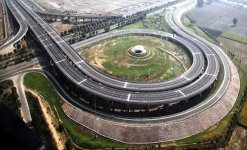
Guys I was reading that modi has earmarked 1.5 trillion dollars on infrastructure to develope roads ports air ports and energy alone ..

This is the largest infrastructure project investment in the world

This is truly modi.s India

Got to keep that anti Indian Rahul Gandhi away at all costs we will go backwards under Congress guaranteed
 

Users who are viewing this thread

Back
Top