Navigation
Install the app
How to install the app on iOS
Follow along with the video below to see how to install our site as a web app on your home screen.
Note: This feature may not be available in some browsers.
More options
Style variation
You are using an out of date browser. It may not display this or other websites correctly.
You should upgrade or use an alternative browser.
You should upgrade or use an alternative browser.
India Economy Thread
- Thread starter indushek
- Start date
More options
Who Replied?
DDG-80
Trusted Member
India's FY24 CAD reduces to 0.7% of GDP from 2% in FY23, records surplus of 0.6% in Q4
 economictimes.indiatimes.com
India's FY24 CAD reduces to 0.7% of GDP from 2% in FY23, records surplus of 0.6% in Q4
India's current account deficit improved significantly to 0.7% of GDP, or $23.2 billion in FY24, down from 2% of GDP, or $67 billion the previous year, attributed to a decrease in merchandise trade deficit, according to the Reserve Bank of India. The country's current account balance showed a...
DDG-80
Trusted Member

DRDO hands over medium range microwave obscurant chaff rocket to Indian Navy - ET Government
Microwave Obscurant Chaff Rocket: Microwave Obscurant Chaff (MOC), a niche technology developed by DRDO’s Defence Laboratory, Jodhpur, obscures radar signals and creates a microwave shield around platforms and assets, thus reducing radar detection.
 www.google.com
Last edited:
DDG-80
Trusted Member
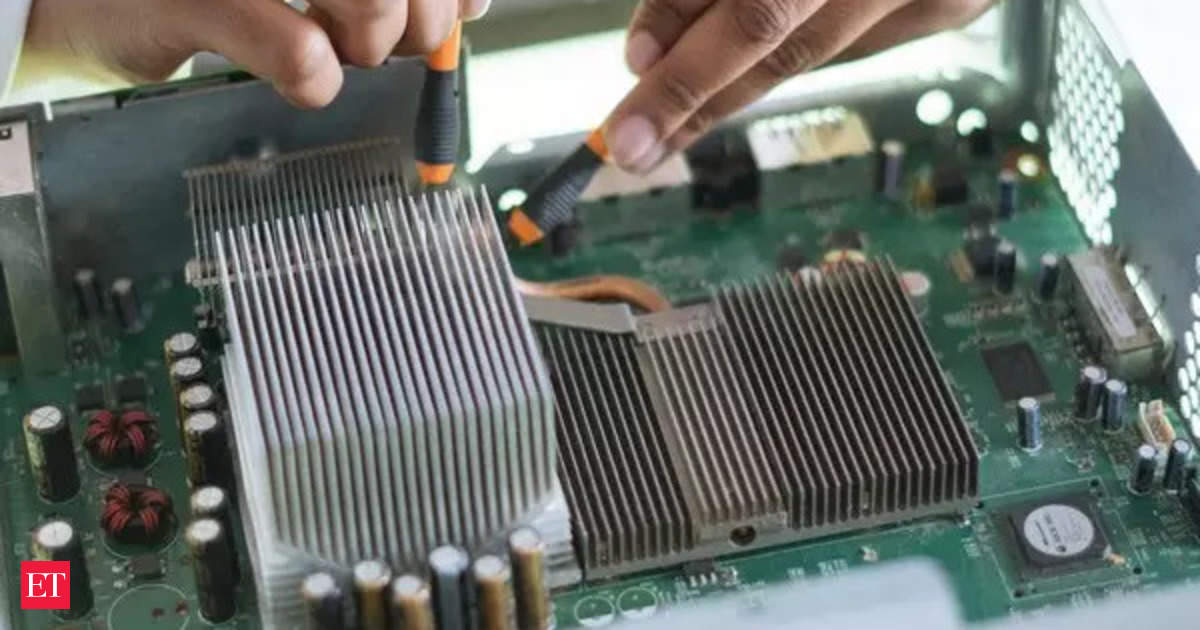
More Taiwanese ICT suppliers may relocate to India in near future, says official
Anticipating the Taiwan Expo 2024, Chend envisions a robust platform for showcasing products and fostering business opportunities to enhance Taiwan-India trade relations, reflecting the significant growth in economic cooperation between the two nations.
DDG-80
Trusted Member
Fifa124
Registered Member
Mobile phone exports: India captures 50% share of fall in shipment from China, Vietnam
With growing smartphone exports, India is rapidly closing the gap with China and Vietnam. According to a report by The Economic Times, mobile exports from China and Vietnam decreased by 2.78 per cent and 17.6 per cent respectively in FY24 compared to the previous year. In contrast, India’s mobile phone exports saw a significant increase of 40.5 per cent.
The report indicated that India has absorbed nearly 50 per cent of the decline in mobile phone exports from China and Vietnam. Although China continues to be the leading exporter of mobile handsets, India is showing notable progress.
Data from the International Trade Centre (ITC) shows that Chinese mobile phone exports fell from $136.3 billion in FY23 to $132.5 billion in FY24, marking a 2.8 per cent decrease, which translates to a $3.8 billion drop, the report noted.
Similarly, Vietnam’s mobile phone exports declined from $31.9 billion in FY23 to $26.27 billion in FY24, a 17.6 per cent decrease, amounting to a $5.6 billion drop. The combined reduction in exports from both countries totaled $9.4 billion.
The ITC, a joint agency of the United Nations and the WTO, has been operational since 1968. It provides trade data for 220 countries and territories, covering 5,300 products.
India’s mobile phone exports rose by over 40 per cent, reaching $15.6 billion in FY24 from $11.1 billion in FY23, a $4.5 billion increase.
In May, Apple again surpassed $1 billion in iPhone exports, mirroring its performance in April.
Under the production-linked incentive (PLI) scheme, the three Apple Inc vendors have a target to achieve a production value of $10.2 billion (including exports) in FY25. They have already reached 25 per cent of this target in just two months.
In FY25 so far, Foxconn Hon Hai, Apple’s leading vendor, contributed 65 per cent of the total exports, Wistron 24 per cent, and Pegatron the remaining 11 per cent. All three vendors are part of the smartphone PLI scheme, which is currently in its fourth year of a five-year plan.
Apple, which operates the world’s largest global value chain (GVC), concluded FY24 in India with a total iPhone production valued at $14 billion free-on-board (FOB). The market value of these iPhones is approximately $22 billion, factoring in logistics and local taxes. In FY24, Apple exported $10 billion worth of iPhones, representing 70 per cent of the year’s FOB production value.
According to Commerce Department data in May, the surge in smartphone exports was driven by a 158 per cent increase in shipments to the US, valued at $5.6 billion, followed by the United Arab Emirates ($2.6 billion), the Netherlands ($1.2 billion), and the UK ($1.1 billion).
The value of mobile devices produced in India for both export and domestic markets in FY24 rose to Rs 4.1 trillion ($49.16 billion), up at least 17 per cent year-on-year, according to preliminary estimates by the Indian Cellular and Electronics Association (ICEA), which represents most of the mobile players in the country.
With growing smartphone exports, India is rapidly closing the gap with China and Vietnam. According to a report by The Economic Times, mobile exports from China and Vietnam decreased by 2.78 per cent and 17.6 per cent respectively in FY24 compared to the previous year. In contrast, India’s mobile phone exports saw a significant increase of 40.5 per cent.
The report indicated that India has absorbed nearly 50 per cent of the decline in mobile phone exports from China and Vietnam. Although China continues to be the leading exporter of mobile handsets, India is showing notable progress.
Data from the International Trade Centre (ITC) shows that Chinese mobile phone exports fell from $136.3 billion in FY23 to $132.5 billion in FY24, marking a 2.8 per cent decrease, which translates to a $3.8 billion drop, the report noted.
Similarly, Vietnam’s mobile phone exports declined from $31.9 billion in FY23 to $26.27 billion in FY24, a 17.6 per cent decrease, amounting to a $5.6 billion drop. The combined reduction in exports from both countries totaled $9.4 billion.
The ITC, a joint agency of the United Nations and the WTO, has been operational since 1968. It provides trade data for 220 countries and territories, covering 5,300 products.
India’s mobile phone exports rose by over 40 per cent, reaching $15.6 billion in FY24 from $11.1 billion in FY23, a $4.5 billion increase.
Apple’s exports exceed $2 billion
Business Standard earlier reported that Apple Inc has significantly increased its iPhone exports from India, exceeding $2 billion in the first two months of FY25. This represents 81 per cent of India's total iPhone production worth $2.6 billion.In May, Apple again surpassed $1 billion in iPhone exports, mirroring its performance in April.
Under the production-linked incentive (PLI) scheme, the three Apple Inc vendors have a target to achieve a production value of $10.2 billion (including exports) in FY25. They have already reached 25 per cent of this target in just two months.
In FY25 so far, Foxconn Hon Hai, Apple’s leading vendor, contributed 65 per cent of the total exports, Wistron 24 per cent, and Pegatron the remaining 11 per cent. All three vendors are part of the smartphone PLI scheme, which is currently in its fourth year of a five-year plan.
Apple, which operates the world’s largest global value chain (GVC), concluded FY24 in India with a total iPhone production valued at $14 billion free-on-board (FOB). The market value of these iPhones is approximately $22 billion, factoring in logistics and local taxes. In FY24, Apple exported $10 billion worth of iPhones, representing 70 per cent of the year’s FOB production value.
Smartphones become fourth-largest export item
Smartphones became the fourth-largest export item from India, with a 42 per cent increase to $15.6 billion in FY24, moving up one spot from the previous year. India began collecting separate data for smartphone exports starting in April 2022. While petroleum products dominate India’s top export items, smartphones have now overtaken motor gasoline to become the fourth-largest exported commodity in FY24.According to Commerce Department data in May, the surge in smartphone exports was driven by a 158 per cent increase in shipments to the US, valued at $5.6 billion, followed by the United Arab Emirates ($2.6 billion), the Netherlands ($1.2 billion), and the UK ($1.1 billion).
The value of mobile devices produced in India for both export and domestic markets in FY24 rose to Rs 4.1 trillion ($49.16 billion), up at least 17 per cent year-on-year, according to preliminary estimates by the Indian Cellular and Electronics Association (ICEA), which represents most of the mobile players in the country.
Fifa124
Registered Member
Apple's ‘big plans’ for India: Resume iPads production, Pune for AirPod cases
Apple may soon start manufacturing its iPads in India again reportedly owing to government's push to bring more supply chains into the country. The tech giant will begin looking for a manufacturing partner after talks with China’s BYD on making iPads in India owing to restrictions amid geopolitical concerns.Citing a senior government official in the know, Moneycontrol reported, “BYD was almost ready to set up the factory for iPad in India but clearance was a problem and the situation has changed significantly now. We are now trying to help (Apple) expand further to grow for the next two to three years. There will be substantial growth."
India also wants Apple to look into making laptops and desktops in India in the coming years, the official said, adding that the company has shared “big plans” for India for the next 2-3 years with the government. The official said as per the outlet, “They want to build an alternate supply chain in India and with that more partners will come to India while existing ones will further deepen their capabilities.”
This comes as Apple shifted its iPad product development focus to Vietnam last year. The company has been focussing on increasing its manufacturing capabilities for iPhones and aims to increase production of components for AirPod wireless charging cases in India. The company also has a plan to start the production of TWS (true wireless stereo), AirPods, in India starting early next year, the report added.
“Once Apple approves it after quality testing, Jabil will ramp up commercial production of wireless charging case parts for AirPods. The ramp-up will also not just serve export requirements but will also address domestic demand once Apple finalises plans to start AirPod production in India,” a person told the outlet.
Apple aims to expand its production base in the country and is targeting to manufacture a quarter of all its iPhones in India over the next 3–4 years, an official told the outlet. This will be up from 14 per cent of their total iPhone production, he said, adding that this effort includes building a network of local vendors to reduce dependence on Chinese suppliers.

Apple's ‘big plans’ for India: Resume iPads production, Pune for AirPod cases
Apple will begin looking for a manufacturing partner after talks with China’s BYD on making iPads in India owing to restrictions amid geopolitical concerns.
Fifa124
Registered Member
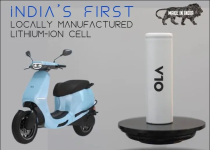
New Delhi: Ola-founder Bhavish Aggarwal said that the company has developed a cutting-edge lithium cell battery named "Bharat cell", which is currently undergoing trials in an advanced stage and can be a gamechanger for the Indian electric mobility ecosystem once it is launched on a full scale.
"This is the 5G of lithium cells, if I can say, it in a very simple way. This is the cutting-edge technology that we have made in India. Globally, only a few companies have this technology capability," Bhavish Aggarwal told in a podcast session.
And for this technology, Ola's founder apprised that it had not done any partnership for its development.
The Bharat Cell reportedly received certification from the Bureau of Indian Standards, which is a mandatory requirement before commercial production starts at its Ola Gigafactory.
India, which largely imports lithium cell batteries, does not make any as of now. Batteries make up a significant part of the cost of manufacturing a unit electric vehicle.
Aggarwal said his electric mobility company Ola Electric's mission statement is to make India the global EV hub.
"...to make India use EVs, we'll have to build the products India wants, two-wheelers, three-wheelers, other products, which is more India-centric. And by extension, Global South will use those products. But not limit ourselves to the product. In the end, what will define success in Ola Electric is whether, and the whole EV game is, whether we can build a lithium technology in India. So we've backward integrated into lithium technology," Aggarwal said, as he showcased the Bharat Cell during the podcast to the viewers.
Currently, the 2170 battery is dominating the market and it is expected that 4680 will soon replace it, particularly because of its added advantages - more energy capacity, fast charging abilities, and low cost (both manufacturing and retail).
"Bharat Cell" will find its use case in vehicles, for energy storage at home, besides going into grid energy storage.
"This (Bharat Cell) is five times more energy than this. And since one unit has five times the energy, the cost is lower. This has better fast charging capability. Charging speed is important in EVs," Aggarwal asserted, holding one such battery on his hands.
"It has less cobalt, so the cost is lower. Energy density is a very important paradigm in cells. Its energy density is 250 Watt hour per kg. This has 275 Watt hour per kg. So that means more energy in the same weight. Cost comes down, performance goes up," he further explained the advantages.
The Bharat Cell will be produced in its 1500-2000 acre size EV hub in Tamil Nadu.
Further, when asked what is the important component of the Bharat cell battery, he explained it is cathode-anode technology.
"So, in this, we make the cathode anode ourselves. But not the material which goes into making the cathode anode. The material comes from outside. Some from Japan, some from Korea, some from China, some from Europe.
"(The material that is imported) is called a cathode active material, anode active material, which itself is a combination of like nickel, cobalt, manganese or anode is graphite. So electrolyte will have different salts. Now India has a very good pharma ecosystem, a pharmaceutical ecosystem, which will be a very good enabler for things like electrolytes. So India's traditional chemical industry, that will actually benefit from cell manufacturing in India ..
So we are looking to work with the Indian ecosystem to localize the supply chain also one by one," Aggarwal outlined.
China is a leader in manufacturing this key material, and Aggarwal believes India will be able to localise it in the next four to five years.
"We've made the anode-cathode, but the anode-cathode material still comes from outside. That also is the midstream where China leads today. So we will have a three, four, five-year journey to localize it step by step," the Ola founder added.
In January 2011, he co-founded Ola Cabs with Ankit Bhati in Bengaluru. Aggarwal was included in Time magazine's 100 Most Influential People of 2018.
Aggarwal received his Bachelor's Degree in Computer Science and Engineering from IIT Bombay, in 2008.
nahtanbob
Elite Member

However, from the perspective of trend, China's trend is upward,
The curve of intellectual property imports began to decline, while the export curve is rising
For example, China's integrated circuit import volume
2021 is $ 439.7 billion
2022 is $ 415.6 billion
2023 is $ 349.3 billion
I have never seen a breakdown on these figures
There is a huge difference between importing chips and putting it on a Dell PC, Apple iPhone and exporting it
as opposed to importing it for Huawei base station
nahtanbob
Elite Member
Apple Explores Indian Partnerships for iPhone Component Production
Apple wants to start making parts of the camera module in India itself
ackodrive.com
Fifa124
Registered Member
India's forex reserves hit an all-time high of $657.16 bn
India's foreign exchange reserves reached a record high of $657.16 billion as of July 5, marking a significant increase of $5.16 billion from the previous week. This surge was driven by a rise in Foreign Currency Assets (FCAs), which grew by $42.29 billion to $577.11 billion. FCAs include...
Users who are viewing this thread
Total: 8 (members: 0, guests: 8)
Pakistan Defence Latest
-
-
 Federal cabinet gives nod to imposition of emergency in KP; summary sent to president (26 Viewers)
- Latest: Mighty_Dragon_Strike
-

-

-
 PTI Murad Saeed in Afghanistan, was 'controlling KP govt' from there: Rana Sanaullah (5 Viewers)
- Latest: Meengla
Country Watch Latest
-

-
Iran - Israel/US War: Israel-US declare war on Iran, Iran responds (301 Viewers)
- Latest: BananaRepublic
-
-

-
Latest Posts
-
-
-
Israel declares all Arab states as Illegitimate Official government declaration (20 Viewers)
- Latest: r3alist
-
Iran - Israel/US War: Israel-US declare war on Iran, Iran responds (301 Viewers)
- Latest: BananaRepublic
-
Federal cabinet gives nod to imposition of emergency in KP; summary sent to president (26 Viewers)
- Latest: Mighty_Dragon_Strike