India Economy Thread

I'd you divide GDP by population. That's the real message of the video.
Hi @clutch
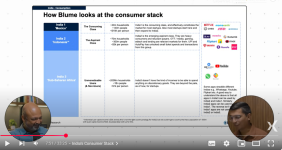
India indeed has a long way to go before it reaches a comfortable upper-middle income level of $8000-12000 per capita. Right now, this figure is close to $2900-3000 (based on the latest Indian economy numbers of $4.2tn in 2025: https://en.wikipedia.org/wiki/Economy_of_India). While this figure in itself isnt too impressive, but what is of real significance is that India's economic might could be divided into 3 categories, the first one is "India 1" which comprises of people whose quality of life is similar to Mexico. They are roughly 8-10% of the population ~140mn people.
1744688555336.png
They roughly have close to $15000 per capita.
Then you have "India 2" which looks a lot like Indonesia in terms of quality of life and they are ~300mn strong. The rest is perhaps what you call "India 3" or poor India.

Now, it is this India 1 and to a lesser extent India 2 that is currently driving the consumer spending and innovation. And as the productivity of the masses in general increase, you will see both India 1 and India 2 becomes larger in size. And to be quite honest, this is going to increase even in the worst-case scenario India will see 6.5-7% growth and If the govt undertakes some degree of fundamental reforms and states liberalize the land acquisition, then you could also see 8% growth figures.
To view this content we will need your consent to set third party cookies.
For more detailed information, see our cookies page.
 
I'd you divide GDP by population. That's the real message of the video.
There are lots of powers that come from sheer size of whole economy rather than just per capita. Like total national budget, defence and infra expenditure, Technological diversity and R&D involved in the economy. How many 3000$ per capita countries have landed a rover on moon, have civil nuclear program, have domestic covid/vaccine program of billions of doses.
 
Last edited by a moderator:
I'd you divide GDP by population. That's the real message of the video.
Even that not exactly true cases.

Example I have 4 kids, yet studying it... You can't count them for calculation.

I only believe if they are adults, yet not getting jobs, and idle.... Based on the ages the real calculation is possible but any case, nothing is solid once to calculate.

So picking one to criticize.... That's something pick and choose
 
I'd you divide GDP by population. That's the real message of the video.
Thing is, GDP is never evenly divided. Meaning while there are 1 billion people living with less than 1500 USD per year in productivity, there will be some 100 million living with 15000 USD in productivity. And that my friend, is a MASSIVE number. Thats like having a 3 Malaysias right into India.
 

The tech giant ramps up iPhone, MacBook, and iPad manufacturing to counter rising costs and meet market demand.​

In a strategic move to counter rising tariffs and bolster its supply chain, Apple is ramping up production of iPhones, MacBooks, and iPads in India and Vietnam. According to a report by Nikkei Asia on April 14, 2025, the tech giant aims to produce at least 50 million iPhones this year, with most of the upcoming models being manufactured in India for the U.S. market. This shift comes as Apple seeks to leverage a temporary 90-day suspension of reciprocal tariffs initiated by the U.S. government.

As part of its diversification strategy, Apple has instructed its main suppliers to increase iPhone production in India while also directing them to move the assembly of MacBooks and iPads destined for the U.S. market to Vietnam. The urgency of this shift is underscored by the recent shipment of approximately 1.5 million iPhones from Indian facilities to the U.S., weighing around 600 tons. This shipment was part of Apple's efforts to mitigate the impact of new tariffs and ensure a steady supply of its popular devices in one of its largest markets

In recent months, the U.S. government has imposed significant tariffs on imports from China, which has had a substantial effect on Apple's supply chain. Under the administration of former President Donald Trump, a staggering 125% tax was levied on Chinese imports, prompting Apple to reassess its manufacturing strategies. As a result, Vietnam has emerged as a crucial production hub for Apple, facilitating the manufacturing of various components and devices.

Analysts warn that shifting a substantial portion of production to the U.S. could dramatically increase costs, potentially raising the price of iPhones to as much as $3,500. This speculation has led to a surge in consumer purchases, with many buyers eager to acquire iPhones and other Apple products before anticipated price hikes take effect. Retailers have reported a spike in demand, with some consumers opting to upgrade their devices sooner than planned.

Data from Counterpoint Research indicates that Apple sells over 220 million iPhones globally each year, with approximately one-fifth of all iPhone imports to the U.S. currently sourced from India. The remaining imports primarily come from China. In addition to Apple, other major U.S. technology firms, including Meta, HP, and Dell, are also urging their suppliers to accelerate production in Vietnam, aiming to stockpile inventory for the U.S. market ahead of the impending expiration of the 90-day tariff suspension.

Foxconn, Apple's principal supplier in India, reported an impressive $1.31 billion in smartphone exports for March 2025, marking the highest monthly figure to date. This amount equals the total shipments made in January and February combined. The exported smartphones included various models, such as the iPhone 13, 14, 16, and 16e. Over the first three months of 2025, Foxconn's total shipments from India to the U.S. reached $5.3 billion.

Another key supplier, Tata Electronics, also contributed to Apple's growing export figures, with $612 million worth of goods, including iPhone 15 and 16 models, shipped in March alone. This figure represents a remarkable increase of over 63% compared to the previous month. Customs data reveals that all of Foxconn's shipments to the U.S. in March were transported by air, departing from Chennai Air Cargo and landing in various locations, including Chicago, Los Angeles, and New York.

To facilitate this surge in production and shipping, Apple has taken proactive measures, including lobbying Indian airport authorities to reduce customs clearance times at Chennai Airport from 30 hours to just 6 hours. This effort is part of Apple's broader strategy to ensure adequate inventory levels in the U.S. market, especially in light of the recent tariff announcements.

On April 2, 2025, President Trump announced a reciprocal tax of 26% on imports from India, along with a range of tariffs affecting numerous countries. However, just a week later, he declared a temporary suspension of these reciprocal tariffs for over 70 countries for a period of 90 days. This suspension has given Apple and other companies a brief reprieve to adjust their supply chains and production strategies.

As Apple navigates these complex challenges, it is clear that the company is committed to diversifying its production capabilities and minimizing its dependence on China. The emphasis on India and Vietnam not only reflects a strategic pivot in response to geopolitical pressures but also highlights the growing importance of these countries in the global tech supply chain.

With the looming expiration of the tariff suspension, the coming months will be critical for Apple and its suppliers as they work to balance production demands, consumer expectations, and the ever-changing landscape of international trade. The decisions made now will undoubtedly shape the future of Apple's manufacturing strategies and its ability to meet the needs of consumers worldwide.
 

iPhone production: Apple is now building iPhones in India at record levels​


Apple moves closer to China despite supply chain shifts

Japan, Taiwan and U.S. supplier numbers dip as iPhone maker expands in Southeast Asia
CHENG TING-FANG and LAULY LI, Nikkei Asia tech correspondentsAPRIL 26, 2024 04:00 JST
APRIL 26, 2024 04:00 JST

微信图片_20240426121708.jpg

TAIPEI -- Apple is deepening its ties with China even as it further expands production in Southeast Asia and India, highlighting the balancing act the iPhone maker is striking between politics and business.

Apple increased its China-headquartered suppliers and Chinese manufacturing sites in 2023 while using fewer suppliers from Taiwan, the U.S., Japan and South Korea, a Nikkei Asia analysis of Apple's latest official list of suppliers shows.


still true ?
 

India Rolls Out Most Powerful Hydrogen Train in Trials


india-rolls-out-most-powerful-hydrogen-train-in-trials-2025-04-01T10%3A40%3A36-05%3A00-image.webp

  • India has commenced trial runs of its first hydrogen-powered train on the Jind-Sonipat route, boasting a world-leading 1,200 horsepower engine and supporting its green transportation drive.
  • Full commercial deployment could be delayed to mid-2025 due to technical adjustments, impacting plans to launch the train on the Kalka-Shimla heritage route.
India’s bid to lead the world in sustainable rail transportation took a bold step forward as its first hydrogen-powered train began trial operations on the 89-kilometer Jind-Sonipat line in Haryana. But despite early progress, technical snags could push full-scale deployment back several months, particularly on high-profile routes like Kalka-Shimla.

A senior official at Indian Railways confirmed that while initial trial runs have been “largely successful,” fine-tuning is required, particularly in maximizing the hydrogen fuel cell’s capacity to ensure optimal load-bearing. An additional 2–3 months of technical work and testing is expected, threatening the December 2024 timeline originally set for the train’s debut on the historic Kalka-Shimla route. Mid-2025 is now the more realistic target.

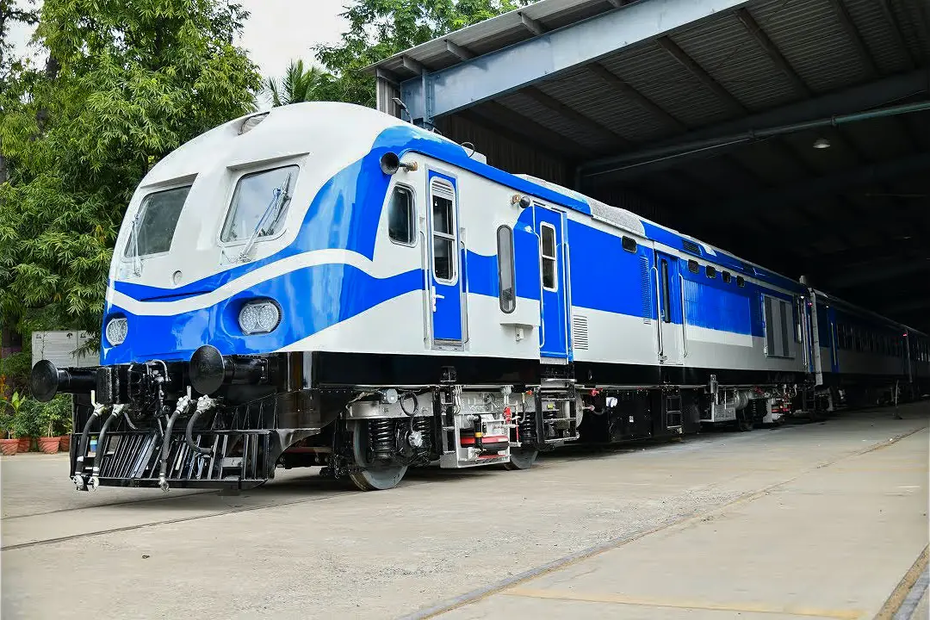
Manufactured by the Integral Coach Factory (ICF) in Chennai, this hydrogen-powered train sets a new global benchmark. Unlike European hydrogen trains capped at around 500–600 horsepower, India’s version hits a record-shattering 1,200 horsepower, making it the most powerful hydrogen train in the world. The train comprises one passenger coach and two coaches for hydrogen storage, operating at speeds of up to 110 km/h and carrying up to 2,638 passengers.

This leap in engine power and capacity is part of India’s wider “Hydrogen for Heritage” program, which aims to green its rail infrastructure while preserving cultural tourism. The Ministry of Railways has committed Rs 2,800 crore [~$336 million] to hydrogen fuel cell-based train development, with 35 trains planned. An additional Rs 600 crore [~$72 million] is earmarked for hydrogen infrastructure along these scenic and often environmentally sensitive routes.

The government intends to deploy these trains across hilly and heritage corridors, not only slashing emissions but also reducing diesel dependency in difficult terrain. The first 8-coach hydrogen train, expected to be the longest hydrogen-powered passenger unit globally, is under development with commercial speeds locked at 110 km/h.

Beyond clean transport rhetoric, India is betting big on hydrogen to hit its net-zero emissions goal by 2030. The hydrogen train initiative underscores the government’s commitment to integrating decarbonization directly into public infrastructure—especially where electrification may be too costly or impractical.

Once commercial service begins, these trains are expected to significantly cut greenhouse gas emissions, supporting India’s pledge to decarbonize its economy while upgrading its rail systems.
Save This Article
 

Interiors, toilet cabins of Vande Bharat Sleeper Express now made in Sri City

10745_15_4_2025_14_2_55_1_IMG_20250415_WA0009.JPG


BFG India, a wholly-owned subsidiary of Bahrain-based BFG International, is making the train cabins at its manufacturing plant in Sri City, established in 2009 to deliver world-class Fibre-Reinforced Plastic (FRP) solutions. The company has been supplying lightweight, durable and fire-resistant FRP products to the rail, marine, wind energy and infrastructure sectors.

10745_15_4_2025_14_3_57_1_IMG_20250415_WA0010.JPG
The interiors of the Vande Bharat Sleeper Express made at BFG India’s manufacturing plant in Sri City of Tirupati district.

The interiors, modular toilet cabins and aerodynamic front ends of the 16-coach Vande Bharat Sleeper Express trains now carry the ‘Made in Sri City’ tag.

Stepping into a new domain recently, BFG India started the ambitious project of designing, manufacturing and installing interiors, modular toilet cabins and aerodynamic front ends for the Vande Bharat Sleeper Express.

The train features 823 berths and 51 toilets, including accessible cabins. BFG is the first to supply EN45545 HL3-compliant FRP panels in India and has delivered advanced front-ends to ensure high fire safety and structural integrity. “The Vande Bharat sleeper project revolutionises railway infrastructure with world-class, lightweight and durable solutions. We are proud to be part of it,” said BFG India vice president K. Premamoorthy.

It may be recalled that the company had supplied interiors, toilet cabins and front ends for the inaugural Vande Bharat Express in a record 10 months, fabricating 329 types of FRP panels in various colours to match design specifications.

Metro projects too​

The company has also played a key role in India’s metro rail projects by making driver cabins, ceilings, sidewalls and partitions for Delhi, Chennai, Mumbai, Lucknow and Kochi Metro. The company provided components like passenger seats, driver consoles and aerodynamic masks for the Mumbai Monorail Project along with Medha Bogies Private Limited.

Ferry-based transport​

Apart from rail projects, the company also contributed to Kochi Water Metro, considered India’s first ferry-based urban transport system. The 25-metre long, 6.5 metre-wide catamaran ferry superstructures were made at Sri City facility using vacuum infusion technology. Each with a carrying capacity of 100 passengers, they were assembled at the Cochin Shipyard.

“It is heartening to see ‘Made @ Sri City’ products used across multiple sectors, including railways and marine transport,” said Sri City founder and managing director Ravindra Sannareddy.
 

Vande Bharat Sleeper Train: Trials of First Prototype Completed, Commissioning Underway; 60 Rakes Provisioned For Production At ICF Chennai

Mar 22, 2025
Vande%20Bharat%20Sleeper.jpg


The Indian Railways has successfully completed field trials for the first 16-car prototype rake of the Vande Bharat Sleeper train, marking a key milestone in the expansion of the Vande Bharat fleet.

The prototype, which has already been manufactured, is currently under commissioning, the government has informed the Parliament.

For the rollout of Vande Bharat Sleeper trains, a total of 10 rakes in a 16-car configuration and 50 rakes in a 24-car configuration have been provisioned for production at the Integral Coach Factory (ICF) in Chennai.

"The first 16-car prototype rake of Vande Bharat Sleeper Train-set has been manufactured. Field trials have been completed and the rake is under commissioning. Total 10 Rakes in 16-Car composition and 50 rakes in 24-Car configuration have been provisioned for manufacture at ICF Chennai," Minister of Railways Ashwini Vaishnaw said in a written reply to a question in the Lok Sabha.

Further, the ministry has also awarded contracts for production of 200 Vande Bharat Sleeper rakes.

"Besides, contracts for Manufacture of 200 Vande Bharat Sleeper rakes in Indian Railway Production Units using Indian Railway Staff through Technology partners have also been placed," he said.

The new sleeper variant of the Vande Bharat train features several advanced safety and technological upgrades.

It is equipped with KAVACH, India’s indigenous automatic train protection system, crashworthy semi-permanent couplers, anti-climbers, and an EN-standard-compliant crashworthy carbody design to enhance passenger safety.

The train also meets EN-45545 HL3 fire safety standards and includes fire barrier doors at the end of each coach.

For improved efficiency, the Vande Bharat Sleeper train incorporates a regenerative braking system, which enhances energy savings, along with higher acceleration and deceleration capabilities for better operational efficiency.

Passenger convenience has also been prioritised, with automatic plug doors, fully sealed wider gangways, and an ergonomically designed ladder for accessing upper berths.

Additionally, the train will feature CCTV surveillance, an emergency talk-back unit for communication with the train manager or loco pilot, and centralised monitoring of passenger amenities such as air conditioning and lighting.
 

Teen Scientists Win Earth Prize for Electricity-Free Refrigerator


If you’ve spent any time around medication – whether in a pharmacy or a hospital – you’re probably aware that some medications need to be kept at very low temperatures. (This was an issue when the COVID-19 vaccines were first being distributed, for instance.) For doctors and relief workers taking medication to remote areas, this provides a challenge — how do you safely transport medicine that needs to be kept cool without a power source around?

67fe6e16a466d2b74ab33004


A trio of teenage scientists — Dhruv Chaudhary, Mridul Jain and Mithran Ladhania — have found one answer, and it’s led to them winning the 2025 Earth Prize. These young scientists are students at the Shishukunj International School in Indore, India, and their project is known as Thermavault.

Thermavault uses salt-based endothermic reactions (which are reusable and sustainable) to create an electricity-free refrigeration unit,” the group explained in a statement on the Earth Prize’s website. “This solves many problems: plastic waste through thermocol, energy inequality, and inefficient cooling, especially for vaccines.”

In a testimonial on Thermavault’s website, Dr. Pritesh Vyas, the medical director of Indore’s V One Hospital, explained why this project matters. He explained that “we struggle a lot” when bringing medication and blood packs to remote locations where electricity isn’t widely available, and that a project like this can help convey temperature-sensitive supplies to areas where the infrastructure may not be complete.
Researchers are taking several approaches to this challenge

As Morgan McFall-Johnsen explained at Business Insider, the trio’s win comes with a prize of $12,500. After testing it in local hospitals, Thermavault’s inventors plan to use the prize to build 200 of the devices, which will be distributed to dozens of hospitals for use.
 

A Tata-Tesla deal has just won India a big strategic edge

A Tata-Tesla deal has just won India a big strategic edge
ET OnlineLast Updated: Apr 16, 2024, 05:03:00 PM IST

Tata's likely deal with Tesla to supply semiconductor chips marks a major milestone for India, enhancing its strategic power globally. As countries invest in semiconductor manufacturing, India's focus on legacy chips positions it as a reliable supplier in the global chip value chain, contributing to its self-reliance and influence.​


By the end of 2026, the first semiconductor chip from the new plant being set up by the Tata Group and Taiwan’s Powerchip Semiconductor Manufacturing Corporation (PSMC) in Gujarat’s Dholera, will be ready to roll out, according to Frank Huang, chairman of PSMC. The central and state governments are together estimated to subsidise up to 70% of the project cost, with the Dholera unit slated to become India’s first commercial semiconductor fab

But much before the first chips are shipped out of the Dholera plant, Tata has won a deal that can put India in the league of big strategic players. Tata Group firm Tata Electronics is understood to have signed a strategic deal with Tesla to procure semiconductor chips for its worldwide operations, ET has reported based on information from sources, though both Tata and Tesla have refused to comment. This is a proud moment for Tata and an important milestone for India. With chips made by an Indian company powering cars Tesla makes globally, India has come of age. Taiwan, China and South Korea have dominated chip supplies to global manufacturers and India will soon join that league. However, even more important is the strategic heft this and similar such deals to come in future will bring to India.
 

Japan to Gift E5 and E3 Shinkansen Trains to India for Bullet Train Project; E10 Series Expected by 2030


1737435196-9265.jpg


In a major boost to India’s ambitious high-speed rail initiative, Japan is set to provide East Japan Railway’s (JR East) E5 and E3 series Shinkansen trains free of charge as inspection vehicles for the Mumbai-Ahmedabad bullet train project. The move is aimed at supporting the launch and operational readiness of India’s first high-speed railway line, which is under construction in the western region of the country.

According to informed sources, one train set each from the E5 and E3 series will be delivered to India in early 2026. These trains will be retrofitted with advanced inspection equipment before shipment. Their primary function will be to monitor track and train performance, particularly in India’s challenging environmental conditions, including high temperatures and dust levels. The data collected will be crucial in tailoring future bullet train models for Indian needs.

Originally, the E5 series was to be used for passenger operations on the 508-kilometer high-speed rail corridor. However, delays and rising costs led India to consider using modified domestically produced semi-high-speed trains instead. To address India’s concerns and revive stalled negotiations, Japan proposed supplying E5 and E3 trains for free and introducing its next-generation E10 series Shinkansen for full operations in the early 2030s.

While the E10 series trains won’t arrive in time for the partial opening of the Mumbai-Ahmedabad line scheduled for August 2027, the E5 and E3 trains will ensure Japanese presence and technology during the early stages of the line’s operation. This symbolic and strategic move reflects Tokyo’s strong commitment to the project, which showcases Japan’s world-renowned Shinkansen technology abroad.

Japan is already financing about 80% of the bullet train project’s estimated ¥1.8 trillion cost through low-interest yen loans. With overall costs expected to rise, both governments are working on establishing a new financial framework to facilitate the eventual deployment of E10 trains.

This cooperation mirrors Japan’s previous assistance to Taiwan’s High-Speed Rail project, where a first-generation 0 series Shinkansen was gifted as a test train. The gesture not only reinforces Indo-Japanese ties but also ensures that India’s bullet train dreams stay on track with state-of-the-art Japanese rail technology.
 

Users who are viewing this thread

Pakistan Defence Latest

Back
Top