uksyl
Registered Member


@Moderators, I would like to pre-emptively request that you keep this thread clean and free of ad hominem personal attacks and low quality troll posts.
@MNZGamerX
The parameters in which Bangladesh operates viz a viz foreign policy are the same regardless of which party is in power and both major parties, the Awami League and BNP operate within those parameters. It is worth noting that both parties are genetically descendants of the Muslim league and represent the majority sentiment amongst east Bengalis/Bangladeshis.
1. We need to have good relations with the USA and west. They rule the world and we export our garments to them. We cannot get into a major conflict with them. The same sort of religious extremists who hate India will not urge conflict with the USA which has killed far more Muslims or invaded and destroyed far more Muslim countries e.g. Iraq, Afghanistan, Gaza than India ever has.
2. We need to have good relations with the GCC due to remittances from there.
3. We need to have good relations with China which supports us militarily as well as economically.
Even Turkey on a nation-to-nation basis is a country which we have good ties irrespective of which major party is in power. So even during the previous Awami League administration we developed ties with them including on the military front.
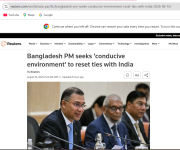
As for India, the Awami League's soft spot for them is known but they had issues with India too e.g. disappointment over Teesta. Our national interests remain the same whether it is Awami League or BNP in power and it is not in our national interest to have either a hot war with India or even a cold war et la Pakistan v India, and the BNP know that, hence they will seek to cultivate ties with our giant western neighbour and this can be evidenced by some of the news articles I have posted here in the past few weeks.
One should not conflate the extreme India-hatred and inflammatory rhetoric from certain dark and unsavoury elements online who can spew India-hatred with impunity with the actual behaviour of the national government who have to deliver economic progress, e.g. jobs to the electorate. If they fail to deliver that they will either be removed electorally or failing that removed by force as Hasina was.
Bangladesh's economic development is dependent on good relations with India.
@MNZGamerX
The parameters in which Bangladesh operates viz a viz foreign policy are the same regardless of which party is in power and both major parties, the Awami League and BNP operate within those parameters. It is worth noting that both parties are genetically descendants of the Muslim league and represent the majority sentiment amongst east Bengalis/Bangladeshis.
1. We need to have good relations with the USA and west. They rule the world and we export our garments to them. We cannot get into a major conflict with them. The same sort of religious extremists who hate India will not urge conflict with the USA which has killed far more Muslims or invaded and destroyed far more Muslim countries e.g. Iraq, Afghanistan, Gaza than India ever has.
2. We need to have good relations with the GCC due to remittances from there.
3. We need to have good relations with China which supports us militarily as well as economically.
Even Turkey on a nation-to-nation basis is a country which we have good ties irrespective of which major party is in power. So even during the previous Awami League administration we developed ties with them including on the military front.
As for India, the Awami League's soft spot for them is known but they had issues with India too e.g. disappointment over Teesta. Our national interests remain the same whether it is Awami League or BNP in power and it is not in our national interest to have either a hot war with India or even a cold war et la Pakistan v India, and the BNP know that, hence they will seek to cultivate ties with our giant western neighbour and this can be evidenced by some of the news articles I have posted here in the past few weeks.
One should not conflate the extreme India-hatred and inflammatory rhetoric from certain dark and unsavoury elements online who can spew India-hatred with impunity with the actual behaviour of the national government who have to deliver economic progress, e.g. jobs to the electorate. If they fail to deliver that they will either be removed electorally or failing that removed by force as Hasina was.
Bangladesh's economic development is dependent on good relations with India.