India - US Tariff and Relations | News + Updates

Trump's demands are indeed unacceptable to the Indian government. Trump's true intention may be to demand compensation from the Indian government in other places, such as purchasing American oil.
Let's not forget founding member of BRICS, he will expect India to disassociate or not participate in a meaningful way
 
Doesn't Russia still dominate Indian military supply
A lot of that is legacy. I do think they are trying to be less dependent on Russia, but when it comes to critical systems, they trust France and Israel more than the US. That does make sense because India wants to maintain strategic autonomy, but then if you want access to the US market and geopolitical support from them, you have to offer them something in return. The US was the one who got India into the NSG as a non NPT nuclear power, yet India is still buying nuclear reactors from Russia and not the USA. Like with all other countries, Trump administration wants India to pay up for what he thinks is the decades of India having taken advantage of the US.
 
A lot of that is legacy. I do think they are trying to be less dependent on Russia, but when it comes to critical systems, they trust France and Israel more than the US. That does make sense because India wants to maintain strategic autonomy, but then if you want access to the US market and geopolitical support from them, you have to offer them something in return. The US was the one who got India into the NSG as a non NPT nuclear power, yet India is still buying nuclear reactors from Russia and not the USA. Like with all other countries, Trump administration wants India to pay up for what he thinks is the decades of India having taken advantage of the US.
Well it was a purposeful strategy of strategic altruism, coined by one of the biggest proponents of India us relationship, this was the first big suggestion that USA will change its stance, it is not just a trump phenomena

However he even came to the conclusion that India will not be particularly useful, and potentially detrimental, so as you allude to above, what we are seeing is the withdrawal of this policy. Per our Indian colleagues, there was never such a thing and indoa remains indispensable to the USA, this merely signifies the complete misalignment between the two perspectives.
 
Actually, if you look at the big-ticket military hardware, the US is mostly absent from the Indian market. Attack aircraft is just one area. There is also missile and missile defence, tanks, artillery, capital ships like aircraft carriers, destroyers, etc. India has mostly avoided American when it comes to critical offensive weapons. Besides weapons, the only other products America can export to India that Trump cares about are agricultural products, nuclear reactors and oil/gas. So, if American exports are to be accommodated, it would have to be mainly in these sectors.
P8I, MQ8, Howitzer, C17, Apache, GE404, GE414 are some items bought from the US. And these are not small ticket items. Some of them have never been sold outside NATO.

Aircraft carrier was never in consideration. They never offered top of the line fighters either. F-16 was offered but found short by India. Air Defence offered by US is too expensive and that was conveyed to them during S400 deal with Russia.

Purchases of exact items are never a sticking point for a trade deal. Trade deal lays the framework and exact items are bought later. India has displayed enough intent in this regard and that is likely to continue.

what is the way forward?

No idea. But India isn’t backing off on this. Deal or no deal.
 
Well it was a purposeful strategy of strategic altruism, coined by one of the biggest proponents of India us relationship, this was the first big suggestion that USA will change its stance, it is not just a trump phenomena

However he even came to the conclusion that India will not be particularly useful, and potentially detrimental, so as you allude to above, what we are seeing is the withdrawal of this policy. Per our Indian colleagues, there was never such a thing and indoa remains indispensable to the USA, this merely signifies the complete misalignment between the two perspectives.
That might be true, but I wouldn't ascribe much credibility to Ashley Tellis. He has been arrested and indicted for spying for China.
 
That might be true, but I wouldn't ascribe much credibility to Ashley Tellis. He has been arrested and indicted for spying for China.
No no, this is a recent event, he was one of the main guys, involved in the nuclear deal, a completey credible voice on India American relations and he is ultimately correct
 

India’s exports to China surge in December while shipments to U.S. decline as Trump tariffs bite​

Published Thu, Jan 15 202610:29 PM ESTUpdated 5 Hours Ago
  • India’s trade deficit for December rose 21.4% year on year to $25 billion.
  • As U.S. tariffs weigh on India, Beijing is emerging as New Delhi’s top merchandise trade partner.
  • India trade with China stood at $110.20 billion between April and December of 2025, compared to $105.31 billion with the U.S.
Exports to China surged 67% in December to $2 billion, in contrast to goods shipped to the U.S. — New Delhi’s biggest export market — that dropped 1.8% to $6.8 billion, according to government data released late Thursday.

The U.S. has slapped 50% tariffs on New Delhi, among the highest on any country and even more than on China, upending both the trade and diplomatic relations between the two countries.

China has emerged as India’s largest goods trading partner, doing business worth $110.20 billion between April and December 2025, upstaging the U.S. at $105.31 billion, data from the India’s commerce ministry shows.

New Delhi runs a trade surplus with Washington, while it’s trade deficit with Beijing has been soaring. During April to December, India’s trade surplus with the U.S. was more than $26 billion, deficit with China stood at $81.7 billion.
 
Interesting .!

----------

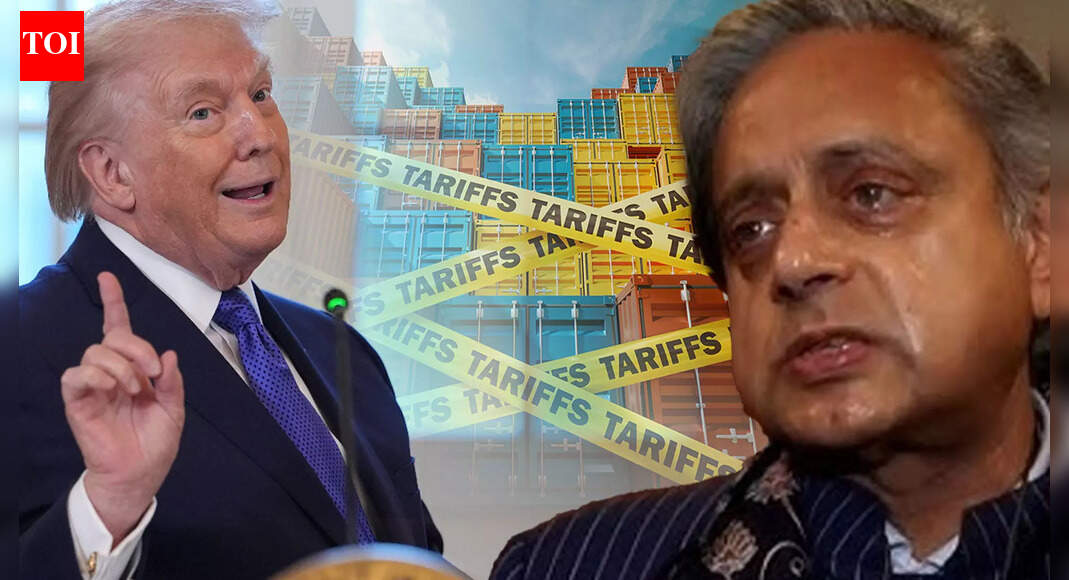
“At 75% Tariff, Partnership Loses Meaning,” Tharoor After Jaishankar–Rubio Talks​

Former Congress MP Shashi Tharoor has called for an early conclusion of the US-India trade deal, saying it should ideally be finalised by the first quarter of 2026. He argued that a 75% tariff makes any agreement unviable and suggested lowering it to around 15%, similar to the US-UK arrangement. Tharoor welcomed the Pax Silica announcement and urged that the Quad Summit not be delayed, noting that strong strategic partnerships depend on fairness, respect and timely decision-making. He said a balanced trade agreement would strengthen economic cooperation and deepen strategic ties between India and the United States.

 
America investing 70billion in form of microsoft and google into India AI system infrastructure. You think this is good but it is actually colonisation. The money invested is essentially made to destroy the local indian talent/entreprenership/independence tech and rely heavily on google and microsoft. India becomes essentially a data provider and customer instead of a partner. Whats worse is that India becomes completely reliant on western tech and can be sanctioned to destruction at any time.
 

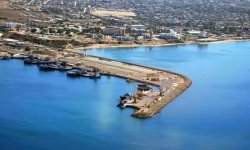
India liquidates Chabahar stakes over Trump’s tariff threat

Our Correspondent
Published January 16, 2026
1768588746221.jpeg

NEW DELHI: Responding to renewed US sanctions, India transferred approximately $120 million to Iran to fully liquidate its financial commitment for developing Chabahar port, a key gateway to landlocked Afghanistan, The Economic Times said on Friday.

A government source stated that India now has “no liability” in its commitment and that Iran is free to use the funds independently.


In October last year, India was granted a six-month exemption from US sanctions on the port. New Delhi and Tehran signed a contract to develop and equip the long-stalled Chabahar project in 2024, giving India 10 years of access.

Following the reimposition of sanctions, the state-owned entity India Ports Global Ltd (IPGL) effectively exited the project.

Government directors resigned en masse, and its website was taken down to “insulate everybody associated with the port from potential sanctions”. A government source concluded, “India has no choice but to exit the Chabahar port”.

The collapse followed US President Donald Trump’s January 12, 2026, warning that any country doing business with Iran would face a 25 per cent tariff on all business with the United States.

The decision, say officials, was driven by a stark cost-benefit analysis under immense US pressure. Combined with existing punitive tariffs, this could have raised total duties on Indian exports to the US to as high as 75pc.

The value of protecting Chabahar (with bilateral India-Iran trade at about $1.68 billion) paled in comparison to the risk of losing access to the US market.

The US had already crippled the project by reimposing sanctions on the port effective September 29, 2025. India’s transfer of funds and operational wind-down were designed to secure a temporary six-month sanctions exemption from the US Office of Foreign Assets Control (OFAC). This was a tactical move to avoid secondary sanctions on Indian entities.

Indian officials sought to downplay the direct trade impact, noting that Iran is not among India’s top 50 trading partners, accounting for only about 0.15pc of India’s overall trade.

This made the strategic project easier to sacrifice in the face of a broader US trade confrontation.

Sources said that with the Taliban’s rise in Afghanistan diminishing Chabahar’s primary utility as a gateway, and with Iran facing internal unrest, the project’s strategic returns appeared increasingly uncertain.

The decision reflects a pragmatic, if reluctant, prioritisation of immediate economic security with the US over long-term regional connectivity goals.

With the surrender, India loses a critical gateway to Afghanistan and Central Asia that allowed it to bypass Pakistan, undermining years of diplomatic and financial investment aimed at expanding regional influence.

The episode also starkly reveals the limits of India’s “multi-alignment” policy. When confronted with a direct clash between US demands and its partnership with Iran, India chose to capitulate to Washington, potentially damaging its credibility as a reliable, independent strategic partner, analysts say.

There’s a view that India’s withdrawal creates a vacuum in Chabahar’s development that China, with its deeper pockets and greater willingness to defy US sanctions, is well-positioned to fill. This could further expand China’s influence in the Indian Ocean region.


While the overall trade volume with Iran is small, specific sectors like basmati rice exports (where Iran is India’s largest market) face immediate disruption due to payment delays and shipment uncertainties, reports said.

India’s business sources say the apparent “flip-flop” on Chabahar is not a capricious policy change but a forced retreat.

It underscores a painful reality: when confronted with a binary choice between safeguarding its vital economic ties with the United States and preserving a strategically important but economically secondary project with Iran, New Delhi will prioritise the former.

The move secures short-term economic relief but at the cost of a long-term strategic vision, highlighting the persistent vulnerability of middle powers in an increasingly polarised world order.
 
Last edited:

Users who are viewing this thread

Country Watch Latest

Back
Top