India faces turbulent future as US tariffs escalate
Ankur Singh
Published: 26 September 2025
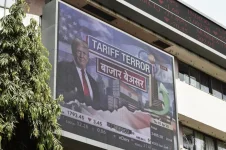
In a move that could severely undermine India’s manufacturing ambitions and slow its economic growth, US President Donald Trump imposed
steep tariffs reaching
50 per cent on Indian imports in early August 2025. Citing continued purchases of Russian oil, the administration imposed an additional 25 per cent levy on 6 August, bringing the total tariff far higher than those on other countries in the Asia Pacific.
Foreign portfolio investors sold off US$900 million in Indian equities in the first week of August alone. This followed US$2 billion worth of outflows in July. As benchmark indices fell,
Moody’s Ratings warned that real GDP growth may slow by around 0.3 percentage points in the fiscal year — transforming Trump’s increasingly turbulent rhetoric on the US–India relationship into economic reality.
For exporters in textiles, jewellery, footwear, machinery and transport goods, the impact was immediate. The move disrupted defence procurement talks and unsettled exporters, challenging any initial assumptions of business-as-usual protectionism. India should recognise that the impetus for these tariffs stems from Washington’s domestic political considerations — serving as instruments of electoral strategy rather than to correct trade imbalances. This deployment of politicised trade to signal toughness at home has squarely targeted India.
The headline numbers are severe. Conservative estimates suggest that
US$30–35 billion of exports are directly exposed, with broader tallies up to
US$64 billion once indirect effects are included. Beyond the balance sheets, industry associations warn that
200,000–300,000 jobs are vulnerable in exposed clusters. For small manufacturers dependent on a single order book, the disruption is not an abstract statistic but an immediate threat to survival.
The macro-level damage appears less pronounced, since bilateral goods trade with the United States equals roughly
2.5 per cent of India’s GDP. That surface-level stability belies concentrated pain. Electronics exports to the United States were around
US$14.4 billion, pharmaceuticals
US$10.9 billion and cut and polished diamonds
US$4.8 billion — segments now most exposed if orders fade. With US import demand already soft, the shock lands on those least able to absorb it.
Two significant buffers have helped soften the blow. The Reserve Bank of India has assisted currency markets in offering brief relief through the rupee’s controlled depreciation — sliding from Rs 85.64 to Rs 87.89 per US dollar between early July and 4 August 2025, before settling around Rs 87.02 by 21 August. This trimmed dollar prices at the margin without triggering destabilising outflows. More importantly, India’s services sector remains largely insulated. With exports worth
US$32.1 billion in June 2025 and software services at
US$205.2 billion in FY2024, this sector continues to buy India valuable policy space.
While India’s economic buffers can absorb the immediate hit, the deeper challenge is strategic. The significance of this episode lies not in the immediate economic cost but in the strategic clarity it provides. Washington’s actions confirm that they see trade as a primary instrument of political coercion. For India, this reality demands economic statecraft built on deliberate pillars of resilience.
A central pillar of this new strategy must be an accelerated pivot to deeper intra-Asian integration. With goods exports to the United States totalling nearly
US$79.4 billion in 2024, over-reliance on Western markets has become a demonstrated vulnerability. Aggressive economic diplomacy is needed — such as fast-tracking the proposed Comprehensive Economic Partnership Agreement with the Gulf Cooperation Council and
deepening supply chain integration with ASEAN partners like Vietnam and Indonesia. By making itself an indispensable node in a thriving Asian network, India can diversify both its opportunities and risks.
Alongside regional integration, New Delhi must forge greater financial autonomy to reduce its
dependence on the US dollar. Washington’s ability to inflict economic pain is amplified by the global dominance of the US dollar — so scaling up successful pilot programs, such as the India–UAE deal to trade directly in
rupees and dirhams, must be treated as a strategic imperative. Each such agreement creates a small but crucial building block in an alternative financial architecture, insulating India from politically motivated shocks and reducing settlement risk.
Washington’s tariffs fundamentally represent a structural test of India’s resilience. The most durable defence against external pressure is radical domestic competitiveness. Internal reforms should be treated as a matter of national security. Full implementation of the National Logistics Policy and the PM Gati Shakti National Master Plan would help cut notoriously high logistics costs that erode export margins.
Accelerating the digitisation of small enterprises through platforms like the Open Network for Digital Commerce (ONDC) is another transformative act that directly boosts the global viability of Indian producers. The choice before New Delhi is clear: adapt its economic strategy for a harsher global order or risk being caught flat-footed whenever US politics turns protectionist.
Trump’s tariffs have given India’s economy a sharp shock, forcing it to confront its vulnerabilities and accelerate integration and reform.

eastasiaforum.org





