
Navigation
Install the app
How to install the app on iOS
Follow along with the video below to see how to install our site as a web app on your home screen.
Note: This feature may not be available in some browsers.
More options
Style variation
You are using an out of date browser. It may not display this or other websites correctly.
You should upgrade or use an alternative browser.
You should upgrade or use an alternative browser.
Indian Air Force News and Discussions ll
- Thread starter Fatman17
- Start date
More options
Who Replied?

Shui
Registered Member


Congrats to all Indian members.India’s £30bn military pivot to US and France

Vkdindian1
Registered Member

Telegraph’s assessment is flawed and seems to sensationalise it.
There is no pivot here. India is buying what it needs based on what meets its requirement.
Each item being purchased has no direct competitor from Russia. Rafales & P8Is are the main items that are the main items of this tranche. Both are already in service with India and more numbers of these types is operationally better. It is nothing to do with a pivot.
India is likely to purchase more batteries of S400 from Russia or may go for S500s too.
There is no pivot here. India is buying what it needs based on what meets its requirement.
Each item being purchased has no direct competitor from Russia. Rafales & P8Is are the main items that are the main items of this tranche. Both are already in service with India and more numbers of these types is operationally better. It is nothing to do with a pivot.
India is likely to purchase more batteries of S400 from Russia or may go for S500s too.

CallSignMaverick
Banned
Should've bought 10 P8i instead along with more Chinooks.

Rational Philosopher
Trusted Member


Which loss is #5 referring to?Damning report on SU-30MKI exercise in France in AFM
1) SU-30MKIs not allowed to fly alone and over French urban areas, in fact on take off from base had to turn sharply to avoid villages, rule French placed on them
2) Limited to 3 hours flying a day during daylight
3) SU-30MKIs not equipped for night time/bad weather ops to NATO standards
4) No training missiles were allowed to be carried by the SU-30MKIs
5) Confirmed SU-30MKI loss was from number 15 Sqd
Vkdindian1
Registered Member
Combining exercise report with the loss in May 25. SU-30 loss could be correct for May 25 events.Which loss is #5 referring to?
But, rest all is blatant lies. SU-30s weren’t allowed this and that.
Last edited:

hasssanali8998
Elite Member
Which loss is #5 referring to?
this one in may
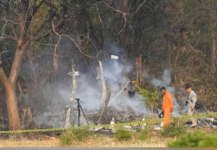
but pls dont argue here about this go to the may thread

retaxis
Trusted Member

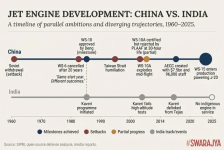
1984 - China and India both decide to make indigenous jet engine
what went wrong with India?
i know it took blood sweat and tears and the metallurgy mastery require thousands of engines to be destroyed for trial but still, india seems to have given up?

Beijingwalker
VIP Member
The long wait for indigenous engines
We must acquire or purchase arcane technologies from wherever available, regardless of cost
ADMIRAL ARUN PRAKASH RETD
Updated At : 02:59 AM Feb 16, 2026 ISTA major dampener on India’s enthusiastic claims of Atmanirbharta (self-reliance) has been the persistent absence of domestically designed and manufactured “prime movers” — the engines that power major military platforms. Whether installed on Indian-built fighters, destroyers, submarines or tanks, none of these critical power plants — gas turbines, diesel engines or electric motors — are fully indigenous.
A long-awaited breakthrough has been the DRDO’s recent development, in collaboration with Bharat Earthmovers Ltd, of a 1,500-horsepower diesel engine. While this may pave the way for India’s future tanks and armoured vehicles to be powered by an indigenous engine, the failure to develop families of aviation and marine gas turbine engines will severely limit its military aviation and naval capabilities. The consequences are serious: heavy dependence on foreign suppliers and heightened operational vulnerability during times of conflict.
All aircraft in the IAF’s current inventory — fighters, transports or helicopters — are powered by aero-engines that are either imported or built/assembled by Hindustan Aeronautics Ltd under foreign licences. Of greater concern is the fact that all versions of the indigenous Tejas fighter as well as future projects like the Advanced Medium Combat Aircraft (AMCA) are currently tethered to US-built engines.
In the Indian Navy (IN), smaller warships and submarines are driven by diesel engines, but all frontline destroyers, frigates and (one) aircraft carrier are now powered by gas turbines. While marine diesel engines are built in India under French, German and US licences, all gas turbine engines are imported from just two sources; Ukraine and the US. Since Ukraine’s reliability as a supplier has been seriously diminished by the ongoing conflict with Russia, the US may become the sole source of gas turbines for future IN warships.
This abject reliance on foreign sources represents a critical Achilles’ heel for India’s strategic autonomy. In the context of indigenous R&D, a brief review of the DRDO’s Kaveri aero-engine project should serve as a sobering case study.
In 1986, the DRDO’s Gas Turbine Research Establishment (GTRE) was tasked to initiate the GTX-35VS Kaveri aero-engine project, meant to power the Tejas Light Combat Aircraft (LCA). Full-scale development began in 1989 with 17 prototype engines budgeted at $55 million. The first engine was tested in 1996, but a 2004 airborne trial on a Russian flying testbed yielded disappointing results — a thrust shortfall as well as overheating issues.
While the GTRE was still struggling with Kaveri’s design and engineering challenges, the prototype Tejas urgently needed an engine, and the choice fell in 2004 on the US-made General Electric F-404 turbofan. As this engine was duly installed and successfully flown on the Tejas in 2008, the project became inexorably committed to the US F-404 engine family.
Reports in 2014-15 indicated that the DRDO, having spent over Rs 2,100 crore without attaining performance targets, had decided to close the Kaveri project. All this while, reports had been circulating about the GTRE’s opaque and unsuccessful quest for obtaining technical consultancy from French and British engine manufacturers. Talks reportedly collapsed over costs and quantum of technology transfer being sought/offered. The MoD and service HQs remained silent observers throughout.
At one point, the IN had proposed a marine derivative of the Kaveri to power its future warships. After a brief consideration, this proposal was rejected, and in 2016, the DRDO decided to revive the project in the form of a less powerful version for powering the indigenous Ghatak unmanned aerial vehicle. A glimmer of hope has emerged from recent reports that the IN has revived a project for the design and development of a marine gas turbine engine, to be taken up by a consortium of DRDO laboratories and private sector firms. While this vital initiative is unlikely to deliver results in less than a decade, it would be a case of “better late than never”.
The failed Kaveri project bears an interesting comparison with China’s achievements in the field of aero-engines. Recognising their pivotal role in military aviation, Chairman Deng Xiaoping initiated a jet engine project in 1986. China managed to transform its military-industrial complex (from a 1950s industrial baseline, akin to India’s) through a long-term, visionary campaign, encompassing a reverse engineering programme, unhampered by regard for intellectual property rights.
After spending billions and encountering many failures, China’s WS-10 aero-engine project, based on the licence-produced French-American CFM-56 engine, was crowned with success. The WS-10 and subsequent versions now power the bulk of the People’s Liberation Army Air Force’s current fighter fleet, and more powerful types are on the way.
So, what lessons should India learn from the dismal Kaveri saga, especially when placed alongside China’s reported success? In my opinion, this unhappy situation can be attributed to a number of institutional shortcomings that need to be addressed on priority.
Firstly, there has been insufficient appreciation at the political level of the vital importance of R&D as well as the long gestational periods involved and heavy funding demanded by military-industrial projects. This is manifest in political indifference towards vital projects like Tejas, Kaveri and the Arjun battle tank, which were allowed to drift for decades. Secondly, there has been failure on the part of DRDO scientists to show long-term vision and pursue, with resolve, engine-related R&D for military platform projects like fighters, ships, submarines and tanks. Thirdly, the military’s leadership has consistently failed to take “ownership” of such projects and impart necessary impetus to their urgent pursuit.
Fourthly, as a nation, we need to face the fact that arcane technologies are hard to come by, and it may be more cost-effective, in national interest, to acquire or purchase them from wherever available — regardless of cost — rather than to struggle ineffectively, wasting time. Finally, it is time to shed our embedded bias against the private sector, and force R&D out of the “silo” of DRDO labs and into a collaborative model with private industry in the larger national interest.
Without mastering the technology of military “prime movers”, India’s claims of self-reliance will remain hollow, rendering its strategic autonomy hostage to foreign powers.
The long wait for indigenous engines - The Tribune
The dismal Kaveri saga can be attributed to institutional shortcomings that need to be addressed on priority.

BonPlan
Registered Member

I think China spent far more money in this field than india, and begun in copying russian designs. Scientific bases of China also are vastly superior.View attachment 179184
1984 - China and India both decide to make indigenous jet engine
what went wrong with India?
i know it took blood sweat and tears and the metallurgy mastery require thousands of engines to be destroyed for trial but still, india seems to have given up?
on the other side India made a wrong decision with Kaveri (and Tejas) : trying to developp nearly from scatch the smaller jet of the world and simultaneously the engine was a double failure.
CallSignMaverick
Banned
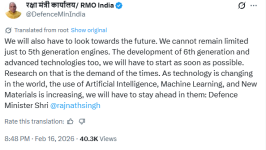
I fear he's indicating joning FCAS.
r3alist
Elite Member
View attachment 179184
1984 - China and India both decide to make indigenous jet engine
what went wrong with India?
i know it took blood sweat and tears and the metallurgy mastery require thousands of engines to be destroyed for trial but still, india seems to have given up?
This is a really sensitive issue for Indians......turkey has raced ahead....imagine that!
Lack of resources, bureaucracy etc really are not mitigating circumstances
There comes a point where bad decision making is a reflection of capability.
retaxis
Trusted Member
In the 80s when china and India were equal everyone and their granny said india which is a democracy, English speaking and hard-working will allow them to pull far ahead of china in coming years. How wrong they all were....they didn't know the levels of Incompetence that Indians can possess.This is a really sensitive issue for Indians......turkey has raced ahead....imagine that!
Lack of resources, bureaucracy etc really are not mitigating circumstances
There comes a point where bad decision making is a reflection of capability.
Users who are viewing this thread
Total: 5 (members: 0, guests: 5)
Pakistan Defence Latest
-
-

-
 Federal cabinet gives nod to imposition of emergency in KP; summary sent to president (20 Viewers)
- Latest: Forsvaret
-

-

Country Watch Latest

Latest Posts
-
Australians to march against Immigration, Indian migrants focussed on (26 Viewers)
- Latest: Lulldapull
-

-

-
-