Why India is turning to retired jets to sustain its depleted air force
Analysts say a large defence budget will not ‘automatically’ resolve combat aircraft gaps that are affecting India’s overall air power
3-MIN READ
Junaid Kathju
Published: 6:30pm, 10 Jul 2026Updated: 6:48pm, 10 Jul 2026
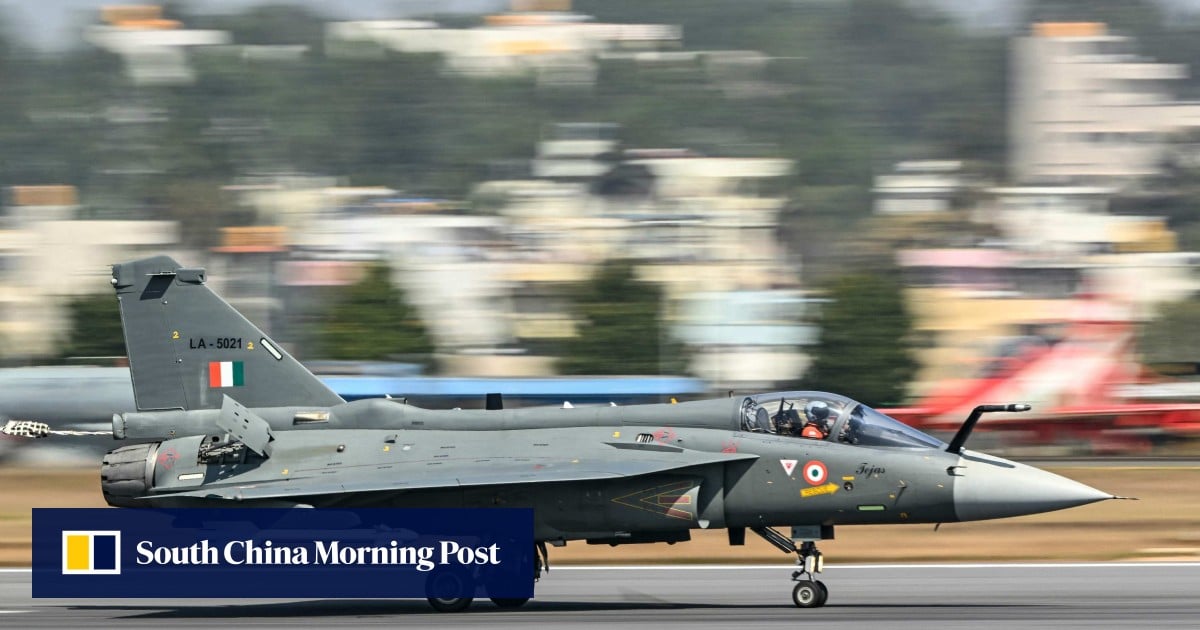
India’s struggle to replenish its depleted fighter fleet has led one of the world’s largest defence spenders to seek spare parts from decommissioned aircraft.
New Delhi recently secured nine retired British-built Jaguar ground-attack jets, which will not enter service with the Indian Air Force (IAF) but will be dismantled to help sustain its six operational Jaguar strike squadrons of about 120 aircraft.
Analysts said the acquisition was a practical stopgap but also exposed a deeper weakness in India’s air power: dependence on foreign components and an inability to induct replacement aircraft quickly enough have left the IAF operating well below the fleet size approved by the government.
It currently has only 29 fighter squadrons against an authorised strength of 42, leaving it nearly one-third short of the force level considered necessary for potential two-front contingencies involving China and
Pakistan.
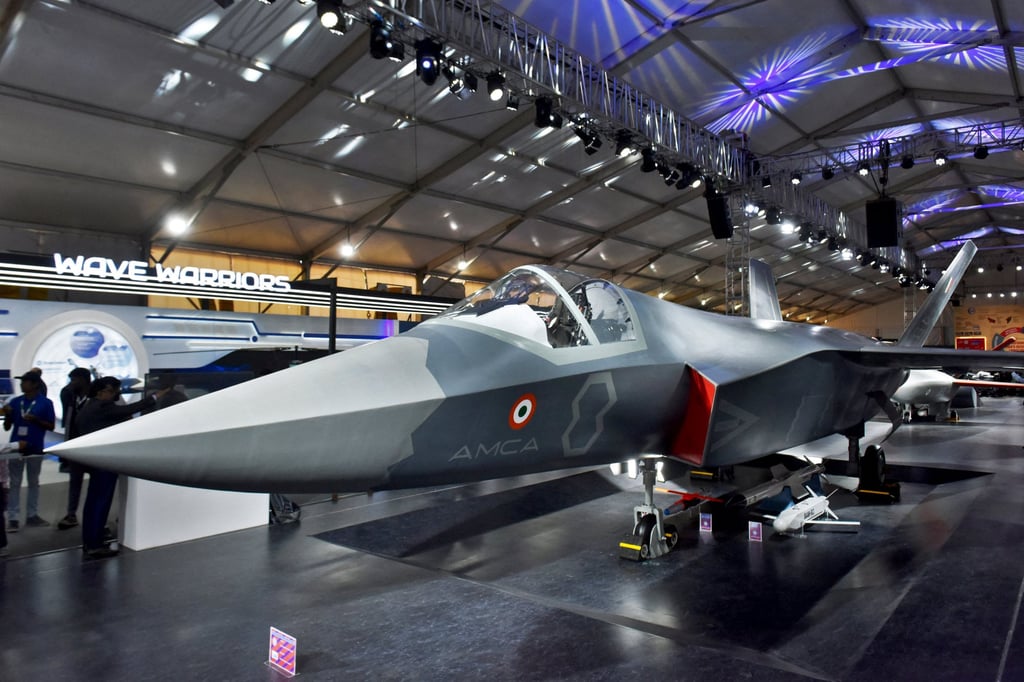
Visitors stand next to a prototype of the Advanced Medium Combat Aircraft at the “Aero India 2025” air show in Bengaluru, India, in February 2025. Photo: Reuters
Kapil Kak, a former Indian air vice-marshal, attributed the decline in the country’s aircraft fleet to slow indigenous production, a shortage of skilled manpower and a lack of commitment to fulfilling contracts and obligations.
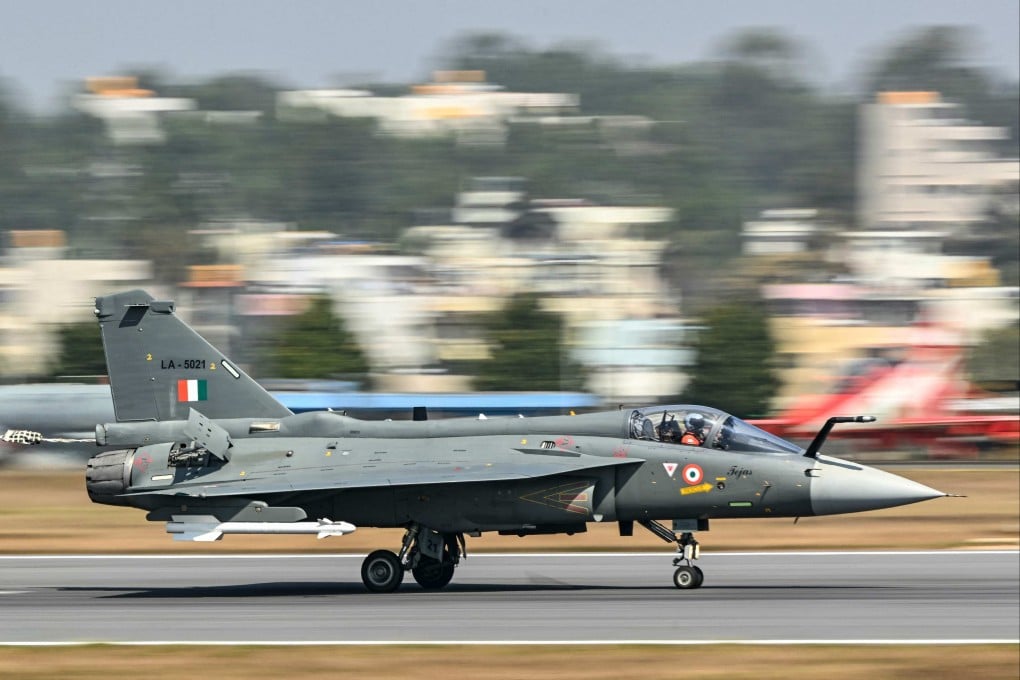
India also depended on foreign suppliers for key components, including the GE F404 and F414 engines for the Tejas Mk1, Tejas Mk2 and Advanced Medium Combat Aircraft (AMCA), which Kak said were often delayed or denied.
According to the latest report by the Stockholm International Peace Research Institute, India was the world’s fifth-biggest military spender in 2025 after the United States, China, Russia and Germany.
Defence accounts for about 14.67 per cent, or US$82 billion, of India’s budget for the 2026-27 financial year, making it the largest allocation among all ministries.
But Kak disagreed that India splurged on defence.
“India’s spending of US$82 billion in the defence sector is only 2 per cent of the country’s GDP. So, India, for its size and potential and the challenges it faces, is not a high spender at all. In fact, it is a very moderate spender on defence,” he said.
The shortage, however, could affect India’s preparedness for a potential conflict involving both China and Pakistan, Kak warned.
“Our challenge is not Pakistan but China. Even if it won’t be a two-front war, it is a one-front war with two countries,” he said, citing last year’s India-Pakistan conflict, during which he said Beijing provided on-site technical support to Islamabad.
Pakistan says India will ‘bear the repercussions’ as death toll from strikes climbs
India spends nearly eight times more on defence than its arch-rival Pakistan, whose total defence allocation is about US$11 billion, while China has an estimated defence budget of US$260 billion.
Recent government data shows about 70 per cent of India’s defence budget goes towards salaries, pensions and operating costs, leaving the rest for capital acquisition and modernisation.
Kak, however, remains optimistic about the future. He points to initiatives such as the India-France partnership to co-develop a 120kN engine for the AMCA as positive steps towards the country’s 2047 defence vision that prioritises joint operations, indigenous aerospace manufacturing and integration of emerging warfighting domains into the IAF.
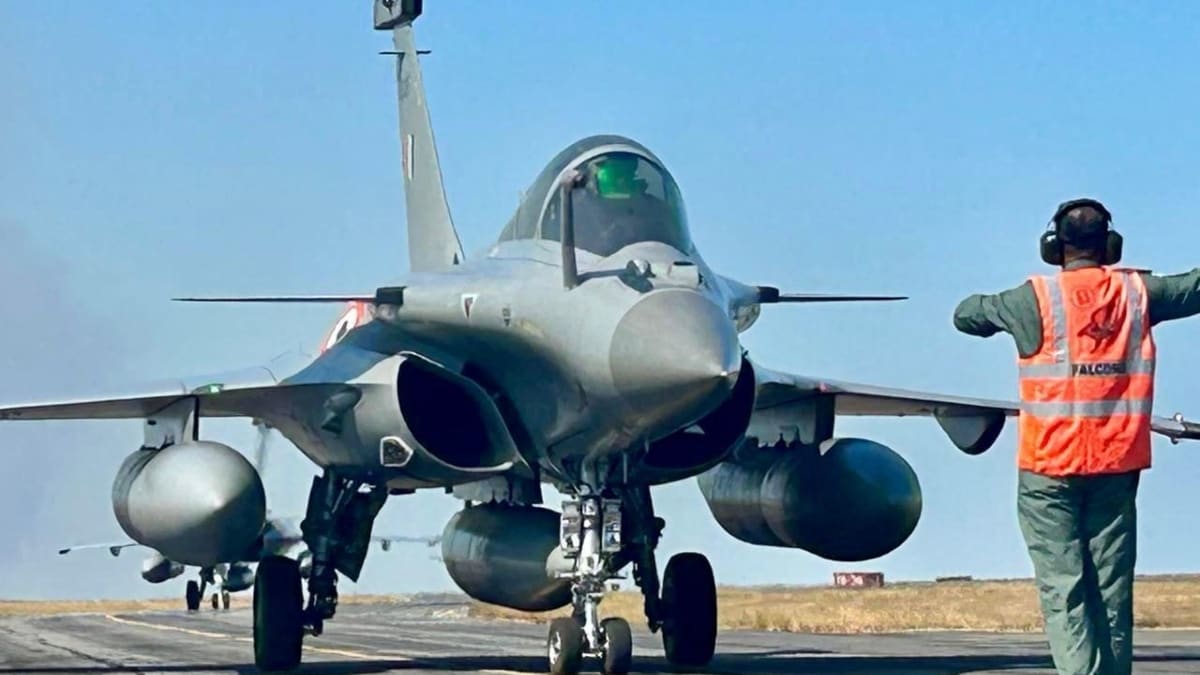
“The procurement of 114 Rafale fighter jets, of which 96 are planned to be manufactured in India, will also add to our fleet,” Kak said, noting that buying spare parts from decommissioned jets was standard practice for maintaining the current fleet.
India’s reliance on retired Jaguars is not new. After inducting the aircraft in the 1980s, Delhi received 31 retired French Jaguars in 2018 and signed a deal with Oman earlier this year for over 20 more retired jets, primarily for spares.
C. Uday Bhaskar, a former Indian naval officer and director of the Society for Policy Studies think tank, said a larger defence budget “does not automatically deliver new hi-tech aerial platforms quickly”.
“Delays occur due to elaborate procurement procedures, and the slow pace of indigenous production is now further exacerbated by aero-engine supply bottlenecks with the US,” Bhaskar said.
India’s talks with US defence giant General Electric over the F414 fighter jet engine have hit a hurdle after costs reportedly surged, raising concerns for its AMCA programme.
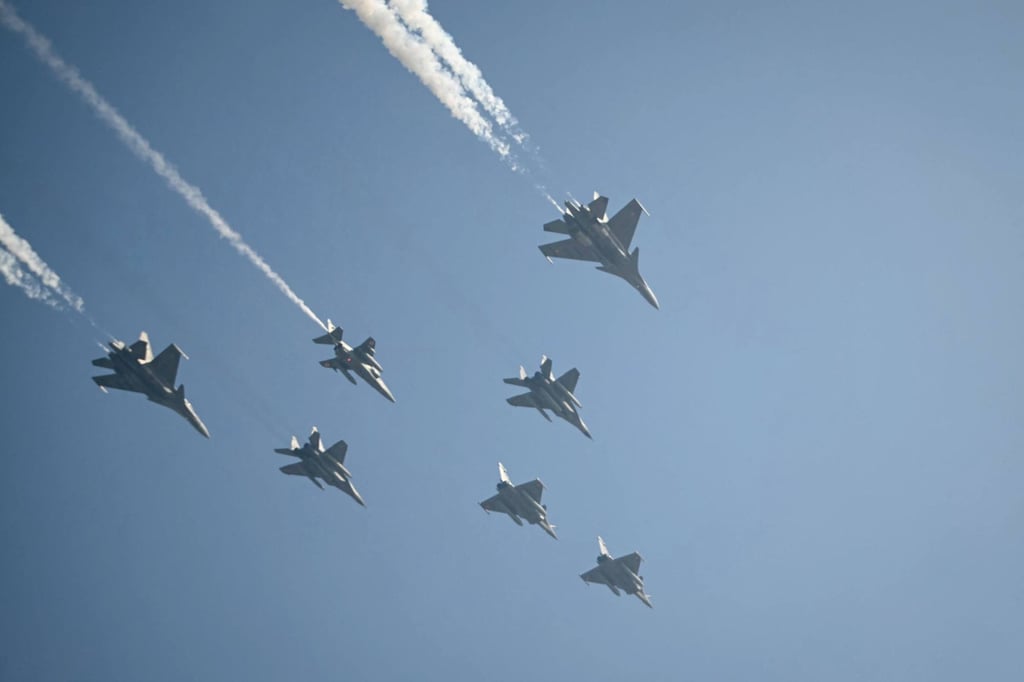
Indian Air Force’s Rafale jets fly during the country’s Republic Day parade in New Delhi on January 26. Photo: AFP
Bhaskar said the sharp rise in fighter aircraft prices was another factor limiting India’s procurement of combat aircraft.
“The Su-30 [Sukhoi] acquired in 1996 was about US$30 million per aircraft. The price for the Rafale in 2016 was almost US$100 million. Further, the rupee weakened progressively in relation to the dollar – thereby reducing the actual buying capacity in forex.”
Bhaskar warned that combat aircraft gaps would adversely affect India’s overall aerial power.
“A two-front conflict [China and Pakistan] will be very challenging with depleted air power. The current acquisitions and domestic manufacturing remain below the desired level,” he said.
Pakistan is planning to upgrade its air force through further
acquisitions of Chengdu J-10C fighters and substantial upgrades to the JF-17s co-produced by Beijing and Islamabad. The two allies have also signed an “initial collaborative agreement” to buy the fifth-generation Shenyang J-35 stealth fighter.
Christopher Clay, an associate professor at the University at Albany and a non-resident fellow at the Stimson Centre think tank in Washington, described India’s air force as undersized.
“The force is too small and in many cases too old to deal with simultaneous threats from China and Pakistan,” he said.
“India’s desire for co-production of foreign airframes and a greater share of indigenous acquisitions has often led to long delays in the induction of new aircraft into the Indian Air Force.”
He welcomed India’s acquisition of a variety of aircraft such as British Jaguars, French Rafales and Russian MiGs, saying that a diverse fleet protected the country from the pressures of any one supplier, but warned that “it [also] creates acquisition and maintenance headaches”.
Analysts say a large defence budget will not ‘automatically’ resolve combat aircraft gaps that are affecting India’s overall air power.

www.scmp.com