Navigation
Install the app
How to install the app on iOS
Follow along with the video below to see how to install our site as a web app on your home screen.
Note: This feature may not be available in some browsers.
More options
Style variation
You are using an out of date browser. It may not display this or other websites correctly.
You should upgrade or use an alternative browser.
You should upgrade or use an alternative browser.
Indian Air Force News and Discussions ll
- Thread starter Fatman17
- Start date
More options
Who Replied?
NeptunesVortex
Banned


NeptunesVortex
Banned
Rookie IAF pilots to train on indigenous aircraft again as HAL delivers first HTT-40

Rookie IAF pilots to train on indigenous aircraft again as HAL delivers first HTT-40
NEW DELHI: Seventeen years after the IAF grounded its entire fleet of Hindustan Aeronautics Limited-built HPT-32 ‘Deepak’ basic trainers following a series of f
www.newindianexpress.com

Yasser76
Elite Member


If you are a PAF fan, brew a nice tea or coffee, sit back and read what one of India's most respected defence journos states that we already knew.
I posted about this a few months ago on here. Issue is no longer just replacing the MIG-21s that IAF failed to do, issue now is also the Jaguars and MIG-29s, the situation is much worse then is being let on....
As i mentioned, now even Rafale order is looking tio be so delayed that latest version simply will not cut it.
Reality comes to the IAF with a big strap on and no lube....

Rahul Bedi
7 hours ago
5 min read


What deserves serious attention is how amateurishly and unimaginatively the world’s fourth-largest and combat-hardened force, blooded in several regional wars, is attempting to make good this numerical and capability deficit.
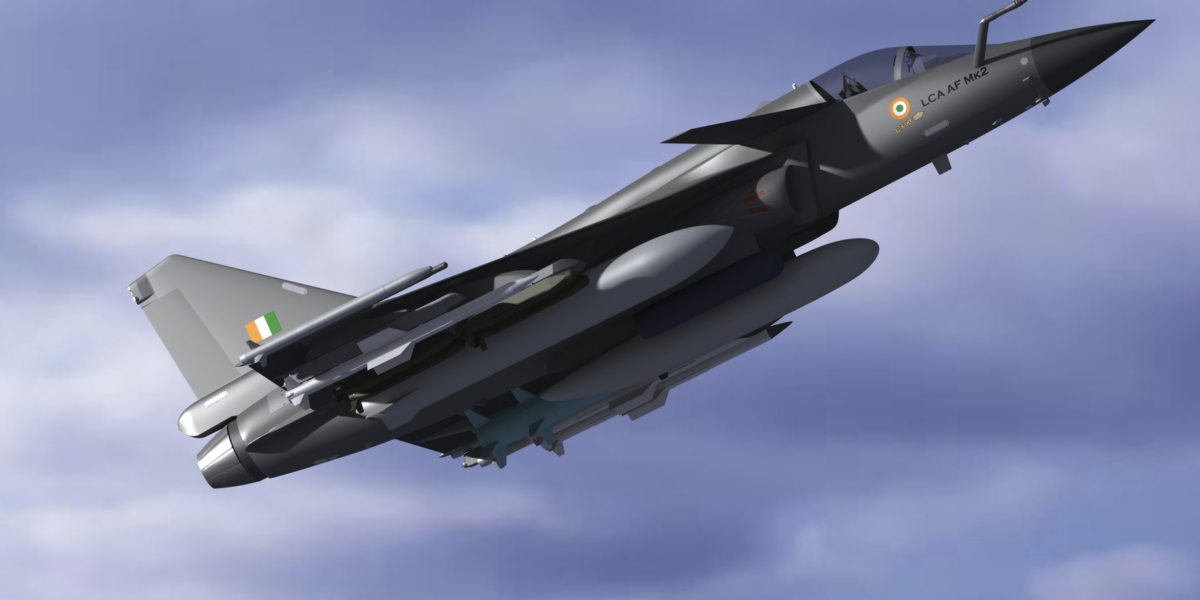
Tejas Mk2. Photo: X/@DRDO_India.
Chandigarh: No detailed analysis or elaborate think-tank evaluation is needed to see that the Indian Air Force (IAF) presently faces a grave and increasingly intractable crisis in fighter numbers and operational capability. Even a cursory, back-of-the-envelope evaluation indicates that its predicament is far more serious than the repeatedly cited shortfall suggests.
The IAF’s enduring dearth of fighter squadrons – currently 29, comprising around 560 aircraft, against a sanctioned strength of 42 squadrons, or roughly 850 platforms – has been iterated so often, that it is hardly news anymore. Nor is the prospect of these depleted numbers shrinking further, as six squadrons of 120-odd legacy SEPECAT Anglo-French Jaguars, dating back to the 1970s, and three upgraded MiG-29 squadrons of around 65 aircraft from the late 1980’s were up for imminent retirement
But what deserves serious attention is how amateurishly and unimaginatively the world’s fourth-largest and combat-hardened force, blooded in several regional wars, is attempting to make good this numerical and capability deficit. Rather than pursuing a coherent, time-bound plan to arrest the decline in fighter numbers and narrow, or even eclipse, the widening technological gap with its two neighbouring adversaries, its response is little more than a patchwork of long-delayed indigenous programmes and hugely expensive foreign acquisitions.
Inbuilt into this is an extraordinary and increasingly problematic dependence on overseas propulsion for the atmanirbhar, or indigenous, fighters that are slated to constitute the backbone of the IAF’s future combat fleet. More troublingly, the competence of some of these aircraft has itself been questioned by senior IAF officers, especially that of the proposed 4.5-generation Tejas Mk2.
It is precisely such a prospect of an inadequate indigenous fighter arriving late that makes the IAF’s predicament, viewed in its entirety, particularly alarming. Hence, the issue no longer remains simply whether the IAF can field enough aircraft, but whether these will remain relevant to possible wars on both its western and northern fronts.
Advertisement
China’s People’s Liberation Army Air Force (PLAAF) presently fields some 350-odd J-20 5th-generation fighters and limited numbers of the smaller, but analogous J-35As. Open-source satellite imagery revealed in July 2026 at least 12 J-20s deployed at two bases in Tibet-facing India. Alongside, China is also developing and flight-testing two sixth-generation fighter prototypes-the larger Chengdu J-36 and the smaller Shenyang design widely referred to by analysts as the J-50 or J-XD-underlining the rapid pace at which the PLAAF is progressing.
The Pakistan Air Force (PAF), for its part, currently operates around 20 Chinese J-10CE 4.5-generation fighters, with a further 16 on order, giving it a planned fleet of 36 such aircraft. Armed with the long-range PL-15 air-to-air missiles, these provide the PAF with a significant beyond-visual-range combat capability that effectively manifested itself during Operation Sindoor last year. The PAF is also preparing to induct up to 40 J-35AEs, the export version of this Chinese stealth fighter, with its pilots currently undergoing instruction on it in China. According to Western military analysts, the first J-35AEs are expected to begin arriving in Pakistan by the year-end.
It was against such a combined threat, posed by these two collusive adversaries, and the prospect of having to fight them simultaneously, that the IAF’s 42-squadron requirement took shape sometime in the 1980s, though its hazy and somewhat nebulous origins date back further. But this number has remained essentially frozen, repeatedly echoed by officials, analysts and the media, even as the fundamental character of air warfare has changed dramatically in recent years.
“The 42-squadron figure has remained almost sacrosanct despite the revolution in military affairs, especially the advent of unmanned aerial systems “ said Amit Cowshish, a former Ministry of Defence (MoD) financial adviser on acquisitions, reflecting what he described as a lack of imagination within the IAF in rethinking its future requirements. For decades, he maintained, the debate has centred on how many squadrons the IAF needs, without asking what kind of air force would be needed to execute future wars.
But the palpable drawback for Indian military planners is that many of the measures intended to restore some level of operational parity with the PLAAF and PAF remain, at best, largely notional, awaiting bureaucratic conversion into deployable combat capability. Furthermore, this becomes particularly troubling when the basic arithmetic of the IAF’s chosen route out of its fighter shortfall and capability development, is scrutinised.
The adverse consequences of such reliance are already evident in the Tejas Mk1A programme, where delays in the supply of its F404 engine have seriously disrupted this fighter’s induction. Under the Rs 48,000-crore contract signed with Hindustan Aeronautics Limited (HAL) in February 2021 for 83 Mk1As, the first three aircraft were due for IAF delivery in early 2024, followed by 16 annually.
To process this tender HAL ordered 99 F404-IN20 engines from GE in August 2021 for Rs 5,375-crore, but the first powerpack arrived only in March-April 2025, nearly two years after the originally envisaged schedule, as GE had to restart its production line that had lain dormant for around five years and kickstart its global supply chain. By August 2026, GE had supplied just 10 of the 99 engines.
Even as this order was floundering due to engine delays, a further 97 Mk1A order, worth Rs 62,370 crore, was placed with HAL in September 2025, taking the IAF’s total commitment to this fighter type to 180 aircraft. And though deliveries under this follow-on are not officially scheduled to begin until 2027-28, the Mk1A programme record so far offers little grounds for confidence that the aircraft will be delivered anywhere close to schedule.
Consequently, the knock-on concerns for the IAF have been severe, as not a single Mk 1A fighter has, so far, been handed over to it. “Aircraft can be designed, built and even rolled out”, said a military aviation industry official in Bangalore” but without an engine they are little more than expensive airframes waiting to fly”. For the IAF, he added, declining to be named, the delay is particularly damaging, as the Mk1A’s were expected to significantly make up fighter squadron numbers promptly.
Meanwhile, in an interview with The Tribune newspaper, published on Friday (September 18), HAL Chairman and Managing Director Ravi K said the first Mk1A deliveries were now expected within “a couple of months”, as final integration of missiles and radars was awaiting completion. He did not provide a precise delivery timetable, but acknowledged that “we (HAL) are yet to achieve the last five per cent of specifications” demanded by the IAF.
If the F404 experience exposed the vulnerability of relying on an overseas engine, the more powerful F414 poses an even bigger and more complex hazard.
This powerplant remains critical not only to the twin-engine Tejas Mk2 – envisaged as a more capable successor to the IAF’s Mirage 2000s, MiG-29s and Jaguars – but also to the Indian Navy’s Twin-Engine Deck-Based Fighter Aircraft (TEDBF) and, initially, the AMCA. For the Mk2, HAL is believed to have committed to 99 F414 engines, with the initial batch supplied by GE and subsequent ones manufactured locally under the June 2023 GE-HAL memorandum of understanding (MoU) covering the powerpacks’ local production via a technology transfer.
More than three years later, that much-publicised MoU remains mired in disputes over the quantum of engine know-how provided, intellectual property rights concerning the powerpack and its pricing. Besides, what at the time was presented as a “landmark” step towards Indian fighter-engine “self-reliance” and deeper defence-industrial cooperation between Delhi and Washington has, in recent months, become little more than a protracted tussle over how much control GE will retain over the domestically built F414’s technology and at what cost.
This impasse has further complicated the twin-engine AMCA programme, whose prototypes, limited-series aircraft and first two, if not more, operational squadrons are configured around the F414. Separately from HAL’s negotiations with GE to manufacture the engine in India, the DRDO-ADA combine is talking directly with GE to procure around 15 F414’s for the AMCA’s development and pre-series manufacture phase. Those talks have reportedly also hit a roadblock after GE sought to nearly triple the price of each engine, from around Rs 70-80 crore to roughly Rs 200 crore apiece, putting the bill for the initial powerpack batch at around Rs 2,800-3,000 crore.
This impasse has further complicated the twin-engine AMCA, whose prototypes, limited-series aircraft and first two, if not more, operational squadrons are configured around the F414. Separately from HAL’s negotiations with GE to manufacture the engine in India, the DRDO-ADA combine is negotiating directly with GE for around 15 F414’s for the AMCA’s development and pre-series phase. Those talks too have reportedly hit a roadblock after GE sought to nearly triple each engine’s price from around Rs 70-80 crore to roughly Rs 200 crore apiece, putting the bill for the initial batch of powerpacks at around Rs 3,000 crore.
Adding to the overall confusion are competing possibilities for an alternative AMCA engine.
Reliance Industries and UK’s Rolls-Royce recently announced their intent to jointly develop a new 120-kN fighter engine locally with complete transfer of technology, while France’s Safran has separately proposed developing an equally high-thrust powerpack with the DRDO’s Gas Turbine Research Establishment (GTRE), under an analogous contractual arrangement. Both are offering a replacement for the troublesome F414, but re-engineering the AMCA around either of these two engines would entail substantial redesign, integration issues and ground and flight-testing, adding both expense and years to an air force struggling with boosting both its assets and capability.
But even if the F414 issue is somehow resolved – an increasingly uncertain prospect amid the latest friction in US-India relations over Delhi’s continuing purchase of Russian oil and other contentious trade issues – the official target of operationalising the AMCA around 2035 would leave the IAF waiting well into the next decade for a fighter intended to restore its lost combat and technological edge.
That ever-present operational gap helps explain why a fighter that had dropped out of the IAF’s immediate procurement calculations has suddenly resurfaced: Russia’s fifth-generation Sukhoi Su-57. President Vladimir Putin discussed its sale and possible joint production with Prime Minister Narendra Modi during his September 11 visit to New Delhi for the BRICS summit.
Russia has reportedly offered India both off-the-shelf aircraft and joint production, including technology transfer for at least two Su-57 squadrons of around 40 aircraft, as a bridge until the AMCA becomes available. HAL too has signalled its readiness to locally build the Su-57, with Ravi K saying in his aforementioned Tribune interview that, having licence-built the Su-30MKI, of which the IAF operates around 265 units, the public sector company has the capability to manufacture this latest Russian fighter.
Nor is the Su-57 the only foreign fighter option being pursued. The IAF aims to make up its fighter shortfall by acquiring 114 additional Dassault Rafales from France under the Multi Role Fighter Aircraft (MRFA) programme for an estimated US$36–40 billion. In February 2026, the MoD’s Defence Acquisition Council approved this acquisition and the formal Letter of Request for the 114 fighters was dispatched to Paris in May, under which 96 F4 Rafale variants would be manufactured locally via a transfer of technology, and the remaining 18 supplied in fly-away condition.
Even then, the Rafales will not arrive quickly enough to address the IAF’s immediate numerical deficit. Official sources indicated that the first lot of French fighters could begin arriving only 36-42 months after the fighter contract was signed, putting the earliest deliveries around 2029-30, with the bulk of the locally manufactured aircraft delivered over subsequent years, well into the late 2030s.
The protracted timeline reflects Dassault’s heavily committed order book, with Rafales being supplied not only to France itself, but also to the United Arab Emirates, Egypt, Qatar, Indonesia and Greece, among other customers. At the end of 2025, Dassault had 220 Rafales in its order backlog, including 175 for export, while delivering just 26 aircraft during the year.
But even when the Rafales do arrive, there is another uncomfortable operational qualification concerning the French fighters, which few in the IAF are willing to countenance. For while these are highly capable 4.5-generation fighters, they are not 5th-generation stealth platforms, comparable to those employed by both the PLAAF and PAF. Their Active Electronically Scanned Array (AESA) radar, electronic-warfare suite, sensor fusion and weapons like the long-range Meteor air-to-air missile and others give them considerable combat capability, but their low observability was a ‘significant’ shortcoming in an increasingly stealth-dominated aerial environment.
“The Rafales will most definitely help arrest the decline in the IAF’s fighter numbers,” said a two-star IAF fighter-pilot veteran, “but they will not close the technological gap in the emerging regional aerial battlefield.” The Rafales will, no doubt, buy the IAF some breathing space, he added, requesting anonymity, but will not resolve the emerging operational disparities.
Thus, joining these disparate dots paints a distinctly worrisome picture for the IAF that is retiring fighters faster than it can replace them. Its indigenous programmes, dependent on foreign engines, are slipping, and even the expensive French fighters under acquisition will take long to arrive, even as its collusive adversaries speedily amass distinctly more advanced combat aircraft into their inventories.
Ironically, there is reportedly already a classified government blueprint for addressing the IAF’s predicament. In December 2024, Defence Minister Rajnath Singh ordered a six-member empowered committee, headed by Defence Secretary Rajesh Kumar Singh and including the Vice Chief of Air Staff, Secretary Defence Production, DRDO chief, Director General (Acquisition) to examine the IAF’s capability gaps and draw up a comprehensive roadmap for addressing them.
The committee is believed to have presented its report to the Defence Minister two months later in March 2025, identifying short, medium and long-term measures to enhance the force’s capabilities but more than 18 months on, little is publicly known about what has become of its recommendations or how far they have been implemented.
In light of the delays, shortfalls and procurement muddle outlined above, the lack of clarity in the IAFs modernisation is revealing. This also shows that time is not on the IAF’s side, for in a prospective air war, opportunities lost in preparation cannot be recovered once an adversary has used the intervening years to build an advantage. And, can they be compensated by promises of capability that may arrive sometime in the future.
 thewire.in
I posted about this a few months ago on here. Issue is no longer just replacing the MIG-21s that IAF failed to do, issue now is also the Jaguars and MIG-29s, the situation is much worse then is being let on....
As i mentioned, now even Rafale order is looking tio be so delayed that latest version simply will not cut it.
Reality comes to the IAF with a big strap on and no lube....
The IAF is Short of Fighters, Still Long on Promises
Rahul Bedi
7 hours ago
5 min read
What deserves serious attention is how amateurishly and unimaginatively the world’s fourth-largest and combat-hardened force, blooded in several regional wars, is attempting to make good this numerical and capability deficit.
Tejas Mk2. Photo: X/@DRDO_India.
Chandigarh: No detailed analysis or elaborate think-tank evaluation is needed to see that the Indian Air Force (IAF) presently faces a grave and increasingly intractable crisis in fighter numbers and operational capability. Even a cursory, back-of-the-envelope evaluation indicates that its predicament is far more serious than the repeatedly cited shortfall suggests.
The IAF’s enduring dearth of fighter squadrons – currently 29, comprising around 560 aircraft, against a sanctioned strength of 42 squadrons, or roughly 850 platforms – has been iterated so often, that it is hardly news anymore. Nor is the prospect of these depleted numbers shrinking further, as six squadrons of 120-odd legacy SEPECAT Anglo-French Jaguars, dating back to the 1970s, and three upgraded MiG-29 squadrons of around 65 aircraft from the late 1980’s were up for imminent retirement
But what deserves serious attention is how amateurishly and unimaginatively the world’s fourth-largest and combat-hardened force, blooded in several regional wars, is attempting to make good this numerical and capability deficit. Rather than pursuing a coherent, time-bound plan to arrest the decline in fighter numbers and narrow, or even eclipse, the widening technological gap with its two neighbouring adversaries, its response is little more than a patchwork of long-delayed indigenous programmes and hugely expensive foreign acquisitions.
Inbuilt into this is an extraordinary and increasingly problematic dependence on overseas propulsion for the atmanirbhar, or indigenous, fighters that are slated to constitute the backbone of the IAF’s future combat fleet. More troublingly, the competence of some of these aircraft has itself been questioned by senior IAF officers, especially that of the proposed 4.5-generation Tejas Mk2.
‘Operationally unsuitable’
Air Marshal Nagesh Kapoor, the IAF’s recently retired Vice Chief of Staff, declared in an NDTV interview late last month that the MK2 fighter would be “operationally” unsuitable by the time it entered service in significant numbers, in the mid-2030s. He subsequently qualified his remarks, saying the Mk2 could still perform a “non-cutting-edge role”, but was unlikely to provide the IAF with the frontline capability required against adversaries fielding fifth-generation fighters.It is precisely such a prospect of an inadequate indigenous fighter arriving late that makes the IAF’s predicament, viewed in its entirety, particularly alarming. Hence, the issue no longer remains simply whether the IAF can field enough aircraft, but whether these will remain relevant to possible wars on both its western and northern fronts.
Advertisement
China’s People’s Liberation Army Air Force (PLAAF) presently fields some 350-odd J-20 5th-generation fighters and limited numbers of the smaller, but analogous J-35As. Open-source satellite imagery revealed in July 2026 at least 12 J-20s deployed at two bases in Tibet-facing India. Alongside, China is also developing and flight-testing two sixth-generation fighter prototypes-the larger Chengdu J-36 and the smaller Shenyang design widely referred to by analysts as the J-50 or J-XD-underlining the rapid pace at which the PLAAF is progressing.
The Pakistan Air Force (PAF), for its part, currently operates around 20 Chinese J-10CE 4.5-generation fighters, with a further 16 on order, giving it a planned fleet of 36 such aircraft. Armed with the long-range PL-15 air-to-air missiles, these provide the PAF with a significant beyond-visual-range combat capability that effectively manifested itself during Operation Sindoor last year. The PAF is also preparing to induct up to 40 J-35AEs, the export version of this Chinese stealth fighter, with its pilots currently undergoing instruction on it in China. According to Western military analysts, the first J-35AEs are expected to begin arriving in Pakistan by the year-end.
It was against such a combined threat, posed by these two collusive adversaries, and the prospect of having to fight them simultaneously, that the IAF’s 42-squadron requirement took shape sometime in the 1980s, though its hazy and somewhat nebulous origins date back further. But this number has remained essentially frozen, repeatedly echoed by officials, analysts and the media, even as the fundamental character of air warfare has changed dramatically in recent years.
“The 42-squadron figure has remained almost sacrosanct despite the revolution in military affairs, especially the advent of unmanned aerial systems “ said Amit Cowshish, a former Ministry of Defence (MoD) financial adviser on acquisitions, reflecting what he described as a lack of imagination within the IAF in rethinking its future requirements. For decades, he maintained, the debate has centred on how many squadrons the IAF needs, without asking what kind of air force would be needed to execute future wars.
But the palpable drawback for Indian military planners is that many of the measures intended to restore some level of operational parity with the PLAAF and PAF remain, at best, largely notional, awaiting bureaucratic conversion into deployable combat capability. Furthermore, this becomes particularly troubling when the basic arithmetic of the IAF’s chosen route out of its fighter shortfall and capability development, is scrutinised.
Much of the IAF’s future combat fleet rests on a triad of atmanirbhar programmes: the Tejas Mk1A and Mk2 and the much-vaunted Advanced Multirole Combat Aircraft (AMCA), all three of which are entirely dependent on imported US-origin General Electric engines. The Mk1A is powered by the 84-kN (kilonewton) GE F404-IN20 afterburning engine, while both the Mk2 and AMCA are configured around the considerably more powerful 98-kN GE F414 powerpack.The adverse consequences of such reliance are already evident in the Tejas Mk1A programme, where delays in the supply of its F404 engine have seriously disrupted this fighter’s induction. Under the Rs 48,000-crore contract signed with Hindustan Aeronautics Limited (HAL) in February 2021 for 83 Mk1As, the first three aircraft were due for IAF delivery in early 2024, followed by 16 annually.
To process this tender HAL ordered 99 F404-IN20 engines from GE in August 2021 for Rs 5,375-crore, but the first powerpack arrived only in March-April 2025, nearly two years after the originally envisaged schedule, as GE had to restart its production line that had lain dormant for around five years and kickstart its global supply chain. By August 2026, GE had supplied just 10 of the 99 engines.
Even as this order was floundering due to engine delays, a further 97 Mk1A order, worth Rs 62,370 crore, was placed with HAL in September 2025, taking the IAF’s total commitment to this fighter type to 180 aircraft. And though deliveries under this follow-on are not officially scheduled to begin until 2027-28, the Mk1A programme record so far offers little grounds for confidence that the aircraft will be delivered anywhere close to schedule.
Consequently, the knock-on concerns for the IAF have been severe, as not a single Mk 1A fighter has, so far, been handed over to it. “Aircraft can be designed, built and even rolled out”, said a military aviation industry official in Bangalore” but without an engine they are little more than expensive airframes waiting to fly”. For the IAF, he added, declining to be named, the delay is particularly damaging, as the Mk1A’s were expected to significantly make up fighter squadron numbers promptly.
Meanwhile, in an interview with The Tribune newspaper, published on Friday (September 18), HAL Chairman and Managing Director Ravi K said the first Mk1A deliveries were now expected within “a couple of months”, as final integration of missiles and radars was awaiting completion. He did not provide a precise delivery timetable, but acknowledged that “we (HAL) are yet to achieve the last five per cent of specifications” demanded by the IAF.
If the F404 experience exposed the vulnerability of relying on an overseas engine, the more powerful F414 poses an even bigger and more complex hazard.
This powerplant remains critical not only to the twin-engine Tejas Mk2 – envisaged as a more capable successor to the IAF’s Mirage 2000s, MiG-29s and Jaguars – but also to the Indian Navy’s Twin-Engine Deck-Based Fighter Aircraft (TEDBF) and, initially, the AMCA. For the Mk2, HAL is believed to have committed to 99 F414 engines, with the initial batch supplied by GE and subsequent ones manufactured locally under the June 2023 GE-HAL memorandum of understanding (MoU) covering the powerpacks’ local production via a technology transfer.
More than three years later, that much-publicised MoU remains mired in disputes over the quantum of engine know-how provided, intellectual property rights concerning the powerpack and its pricing. Besides, what at the time was presented as a “landmark” step towards Indian fighter-engine “self-reliance” and deeper defence-industrial cooperation between Delhi and Washington has, in recent months, become little more than a protracted tussle over how much control GE will retain over the domestically built F414’s technology and at what cost.
This impasse has further complicated the twin-engine AMCA programme, whose prototypes, limited-series aircraft and first two, if not more, operational squadrons are configured around the F414. Separately from HAL’s negotiations with GE to manufacture the engine in India, the DRDO-ADA combine is talking directly with GE to procure around 15 F414’s for the AMCA’s development and pre-series manufacture phase. Those talks have reportedly also hit a roadblock after GE sought to nearly triple the price of each engine, from around Rs 70-80 crore to roughly Rs 200 crore apiece, putting the bill for the initial powerpack batch at around Rs 2,800-3,000 crore.
This impasse has further complicated the twin-engine AMCA, whose prototypes, limited-series aircraft and first two, if not more, operational squadrons are configured around the F414. Separately from HAL’s negotiations with GE to manufacture the engine in India, the DRDO-ADA combine is negotiating directly with GE for around 15 F414’s for the AMCA’s development and pre-series phase. Those talks too have reportedly hit a roadblock after GE sought to nearly triple each engine’s price from around Rs 70-80 crore to roughly Rs 200 crore apiece, putting the bill for the initial batch of powerpacks at around Rs 3,000 crore.
Adding to the overall confusion are competing possibilities for an alternative AMCA engine.
Reliance Industries and UK’s Rolls-Royce recently announced their intent to jointly develop a new 120-kN fighter engine locally with complete transfer of technology, while France’s Safran has separately proposed developing an equally high-thrust powerpack with the DRDO’s Gas Turbine Research Establishment (GTRE), under an analogous contractual arrangement. Both are offering a replacement for the troublesome F414, but re-engineering the AMCA around either of these two engines would entail substantial redesign, integration issues and ground and flight-testing, adding both expense and years to an air force struggling with boosting both its assets and capability.
But even if the F414 issue is somehow resolved – an increasingly uncertain prospect amid the latest friction in US-India relations over Delhi’s continuing purchase of Russian oil and other contentious trade issues – the official target of operationalising the AMCA around 2035 would leave the IAF waiting well into the next decade for a fighter intended to restore its lost combat and technological edge.
That ever-present operational gap helps explain why a fighter that had dropped out of the IAF’s immediate procurement calculations has suddenly resurfaced: Russia’s fifth-generation Sukhoi Su-57. President Vladimir Putin discussed its sale and possible joint production with Prime Minister Narendra Modi during his September 11 visit to New Delhi for the BRICS summit.
Russia has reportedly offered India both off-the-shelf aircraft and joint production, including technology transfer for at least two Su-57 squadrons of around 40 aircraft, as a bridge until the AMCA becomes available. HAL too has signalled its readiness to locally build the Su-57, with Ravi K saying in his aforementioned Tribune interview that, having licence-built the Su-30MKI, of which the IAF operates around 265 units, the public sector company has the capability to manufacture this latest Russian fighter.
Su-57s and Rafales
Meanwhile, the IAF too is quietly lobbying to acquire Su-57s, which it views as an available and ready-made, ‘near-term’ capability to counter the emerging fifth-generation threat from the PLAAF and PAF. But, understandably it has reservations over Moscow’s ability to deliver reliably on its Su-57 promises, as Russia’s continuing war in Ukraine and the demands it places on the country’s defence-industrial base could constrain matters, adding yet another uncertainty to the IAF’s calculations, should it opt for this platform.Nor is the Su-57 the only foreign fighter option being pursued. The IAF aims to make up its fighter shortfall by acquiring 114 additional Dassault Rafales from France under the Multi Role Fighter Aircraft (MRFA) programme for an estimated US$36–40 billion. In February 2026, the MoD’s Defence Acquisition Council approved this acquisition and the formal Letter of Request for the 114 fighters was dispatched to Paris in May, under which 96 F4 Rafale variants would be manufactured locally via a transfer of technology, and the remaining 18 supplied in fly-away condition.
Even then, the Rafales will not arrive quickly enough to address the IAF’s immediate numerical deficit. Official sources indicated that the first lot of French fighters could begin arriving only 36-42 months after the fighter contract was signed, putting the earliest deliveries around 2029-30, with the bulk of the locally manufactured aircraft delivered over subsequent years, well into the late 2030s.
The protracted timeline reflects Dassault’s heavily committed order book, with Rafales being supplied not only to France itself, but also to the United Arab Emirates, Egypt, Qatar, Indonesia and Greece, among other customers. At the end of 2025, Dassault had 220 Rafales in its order backlog, including 175 for export, while delivering just 26 aircraft during the year.
But even when the Rafales do arrive, there is another uncomfortable operational qualification concerning the French fighters, which few in the IAF are willing to countenance. For while these are highly capable 4.5-generation fighters, they are not 5th-generation stealth platforms, comparable to those employed by both the PLAAF and PAF. Their Active Electronically Scanned Array (AESA) radar, electronic-warfare suite, sensor fusion and weapons like the long-range Meteor air-to-air missile and others give them considerable combat capability, but their low observability was a ‘significant’ shortcoming in an increasingly stealth-dominated aerial environment.
“The Rafales will most definitely help arrest the decline in the IAF’s fighter numbers,” said a two-star IAF fighter-pilot veteran, “but they will not close the technological gap in the emerging regional aerial battlefield.” The Rafales will, no doubt, buy the IAF some breathing space, he added, requesting anonymity, but will not resolve the emerging operational disparities.
Thus, joining these disparate dots paints a distinctly worrisome picture for the IAF that is retiring fighters faster than it can replace them. Its indigenous programmes, dependent on foreign engines, are slipping, and even the expensive French fighters under acquisition will take long to arrive, even as its collusive adversaries speedily amass distinctly more advanced combat aircraft into their inventories.
Ironically, there is reportedly already a classified government blueprint for addressing the IAF’s predicament. In December 2024, Defence Minister Rajnath Singh ordered a six-member empowered committee, headed by Defence Secretary Rajesh Kumar Singh and including the Vice Chief of Air Staff, Secretary Defence Production, DRDO chief, Director General (Acquisition) to examine the IAF’s capability gaps and draw up a comprehensive roadmap for addressing them.
The committee is believed to have presented its report to the Defence Minister two months later in March 2025, identifying short, medium and long-term measures to enhance the force’s capabilities but more than 18 months on, little is publicly known about what has become of its recommendations or how far they have been implemented.
In light of the delays, shortfalls and procurement muddle outlined above, the lack of clarity in the IAFs modernisation is revealing. This also shows that time is not on the IAF’s side, for in a prospective air war, opportunities lost in preparation cannot be recovered once an adversary has used the intervening years to build an advantage. And, can they be compensated by promises of capability that may arrive sometime in the future.
The IAF is Short of Fighters, Still Long on Promises
What deserves serious attention is how amateurishly and unimaginatively the world’s fourth-largest and combat-hardened force, blooded in several regional wars, is attempting to make good this numerical and capability deficit.
thewire.in

TAC
Registered Member
Shameless & Besharam nation, can’t fight to save their lives but a Supa Powa when it comes to lying. To save their blushes, even gave him a medal for a kill he never even claimed. Downside of living Bollywood world, u think you can create your own reality. Read this & come back to actual reality….Here it is:
Now comes the satellite pics of the F`16 crash site. This is 27th Feb 2019 pic, only one which is available. This image is not processed. On right side of the black dot, you can see the yellow cloud type thing.
We than proceeded this image. It shows the depth of this F16 crash site. We compare it before and after pics of the area.
Here is before, on and after satellite pics of the area. Check it out. On 28th Feb, they tried to hide the debri.
Google Earth too has updated part of satellite pic, we are showing before and after pic, it shows...
- TejaswithUttam
- Replies: 9
- Forum: Indian Defence Forum






Attachments
Yasser76
Elite Member
Shameless & Besharam nation, can’t fight to save their lives but a Supa Powa when it comes to lying. To save their blushes, even gave him a medal for a kill he never even claimed. Downside of living Bollywood world, u think you can create your own reality. Read this & come back to actual reality….
Credit to the IAF Officer here. Never once claimed the fake kill, as a result he has come out of this looking like a man of integrity. Even after he got back to India he could have made up some shit under pressure from Indian Gov about being treated badly and he did not.
I actually wish him a long and prosperous life. It is a blessing for PAF that IAF does not have many officers liked him
White Privilege
Registered Member


NeptunesVortex
Banned
In a first, Japanese F-2A fighters operate from Indian soil; IAF chief hails joint air exercise

In a first, Japanese F-2A fighters operate from Indian soil; IAF chief hails joint air exercise
Japanese fighter aircraft operating from Indian soil for the first time marks a major milestone in defence cooperation between India and Japan, Air Chief Marsha
www.newindianexpress.com

CallSignMaverick
Banned

onlinpunit
Trusted Member
onlinpunit
Trusted Member
Ok. Yeah ! Whatever !!
Users who are viewing this thread
Total: 12 (members: 1, guests: 11)
Pakistan Defence Latest


Country Watch Latest
-
Iran - Israel/US War: Israel-US declare war on Iran, Iran responds (127 Viewers)
- Latest: White Privilege
-

-
-
-
Latest Posts
-
 Trump talks to Putin, then announces diesel deal with Russia, in sharp reversal of US policy (24 Viewers)
- Latest: Ali_Baba
-

-
-
Iran - Israel/US War: Israel-US declare war on Iran, Iran responds (127 Viewers)
- Latest: White Privilege
-
