Indian false flag and current Indo-Pak stand-off updates

Status
Not open for further replies.
most likely presenting details on targets and attack plan
its good, we will know it via ajit doval, he is our asset, he is the one who called us just after the meeting regarding missile option chosen in Meeting on the evening of 27-Feb-2019.

may be its Muridke
 
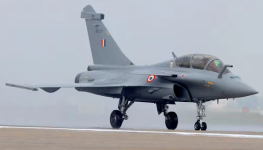
Despite modern Rafale aircraft, Indian attempt to advance towards Pakistan failed again
Indian fighters make emergency landing in Srinagar after Pakistan blocked their radars, on-board sensors
1746346057274.png
  • Rafale equipped with 200-km range weapons came close to border.
  • Pakistan blocked IAF jets' onboard sensors, communication, radar.
  • PAF's J-10C fighters equipped with 230-km range PL-15 missiles.

Since the Pahalgam incident, India has been trying to provoke Pakistan with its warmongering and aggressive actions near the border, but Pakistan has been showing restraint and has prevented India from any kind of aggression with timely defensive measures.

Due to effective defensive measures, the Pakistan Air Force (PAF) once again timely foiled India's attempt to advance towards Pakistan a few days ago, forcing India's modern Rafale aircraft to retreat.


The PAF thwarted India's advance on the night between April 29 and April 30. According to relevant sources, the PAF took this action the same night when Federal Information Minister Attaullah Tarar expressed the fear that India could attack Pakistan in the following 24 to 36 hours.

The sources said four Indian Rafale aircraft took off from the Ambala air base in the Indian state of Haryana and moved towards Pakistan at a ground speed of 1,200 kilometres. The Indian aircraft came very close to the Pakistani airspace, but at no time did they cross it.

However, since these aircraft were equipped with modern Spice 2000 air-to-ground missiles, which have a range of 200 kilometres, this action of the Indian Air Force (IAF) was a hostile act because the Indian aircraft could have carried out ground operations in Pakistan while remaining in their own airspace.

These planes were flying at an altitude of 40,000 feet when Pakistan's Air Defence System through its Electronic Warfare Assets jammed the Rafale aircraft's onboard sensors and communication and radar systems, due to which these planes lost contact with each other and with the ground.

According to sources, at the same time, J-10C planes of the PAF were also in the air to confront the Indian planes and prevent any kind of aggression. Due to this situation, the Indian planes had to make an emergency landing in Srinagar instead of returning to Ambala.

It is pertinent to mention here that the Rafale planes were equipped with missiles with a range of 200km that night, but the J-10C planes of the Pakistan Air Force were equipped with PL-15 missiles with beyond visual range of 230km. This means that the Pakistani aircraft were also in a position to target the Indian aircraft while remaining within their own territory.

Relevant sources say that if our air defence system had not jammed the communication and radar systems of Rafale aircraft that night, Indian aircraft could have taken some action in the Pakistani territory.

Another interesting point to note is the fact that the Pakistan Air Force dealt with the four Rafale aircraft on the night between April 29 and 30 in the same manner that blocked the radar and communication systems of Indian pilot Abhinandan in 2019. However, at that time the Indian pilot was flying an old aircraft, but this time the Pakistan Air Force faced the modern 4.5 generation Rafale aircraft.

According to relevant sources, after facing failure on the night between April 29 and April 30, the IAF planned to take action in Pakistan on Friday.

But as soon as the intelligence of this matter was received, Pakistan immediately had 40 to 50 aircraft airborne, including F16, J-10C and JF-17. This action of Pakistan forced the IAF to abandon its plan.

This means India has once again faced a setback similar to 2019.

According to relevant sources, the multi-domain capabilities of the armed forces, especially the PAF, play an important role in thwarting Indian ambitions. Relevant sources say that the PAF is always one step ahead of India in the fields of electronic, cyber and space warfare. And in the last four or five days, Pakistan made full use of these modern capabilities and took such proactive actions.

Pakistan has thwarted India's most advanced Rafale aircraft. India had pinned many hopes on the Rafale aircraft in 2019. After the 2019 setback, Indian Prime Minister Narendra Modi had himself admitted his defeat and said that if India had Rafale at that time, the outcome would have been different.

Now India does have Rafale aircraft, but due to the effective operations and modern technology of the PAF, India was not able to achieve its objectives.
 
Last minute preps on

To view this content we will need your consent to set third party cookies.
For more detailed information, see our cookies page.

Yesterday Modi had a detailed meeting with naval chief as well..... I'm in goa right now and fighter jets sorties have become too frequent compared to past....
 
@Signalian check this one out.
Don't get me wrong.
This type of robot dog is not an advanced weapon in China. It belongs to PAP rather than PLA. You can understand that PAP is the second-line reserve force of PLA.
PLA generally does not have robot dogs. PLA's special operations brigade is equipped with more advanced robot wolf.

But, this kind of robot dog. China's production volume is too high and the price is very cheap. So, PAP buys some for city combat.
 
Don't get me wrong.
This type of robot dog is not an advanced weapon in China. It belongs to PAP rather than PLA. You can understand that PAP is the second-line reserve force of PLA.
PLA generally does not have robot dogs. PLA's special operations brigade is equipped with more advanced robot wolf.

But, this kind of robot dog. China's production volume is too high and the price is very cheap. So, PAP buys some for city combat.
It most definitely has a role in urban combat.
 
I could share stories about PTI and how it's not as pure as snow as people believe, partly due to IKs inner circle (who abandoned him after misguiding him) but that's for another time.

And just want to lay it out here, after APS a leading Pakistani consultant offered to work with KP govt for free but IK's team PTI elected the former UK prime minister to come and make a security plan for KPK Schools.😂

Like I said this is a discussion for another day, but really pathetic.
No kidding 😂...... did the UK former Pm get paid for consultancy?
 
Something will happen

Rafales moved to Sri Nagar'

PM meeting IAF cheief over 3 times in last week

Navy chief met yesterday


Despite modern Rafale aircraft, Indian attempt to advance towards Pakistan failed again
Indian fighters make emergency landing in Srinagar after Pakistan blocked their radars, on-board sensors
View attachment 116578
  • Rafale equipped with 200-km range weapons came close to border.
  • Pakistan blocked IAF jets' onboard sensors, communication, radar.
  • PAF's J-10C fighters equipped with 230-km range PL-15 missiles.

Since the Pahalgam incident, India has been trying to provoke Pakistan with its warmongering and aggressive actions near the border, but Pakistan has been showing restraint and has prevented India from any kind of aggression with timely defensive measures.

Due to effective defensive measures, the Pakistan Air Force (PAF) once again timely foiled India's attempt to advance towards Pakistan a few days ago, forcing India's modern Rafale aircraft to retreat.


The PAF thwarted India's advance on the night between April 29 and April 30. According to relevant sources, the PAF took this action the same night when Federal Information Minister Attaullah Tarar expressed the fear that India could attack Pakistan in the following 24 to 36 hours.

The sources said four Indian Rafale aircraft took off from the Ambala air base in the Indian state of Haryana and moved towards Pakistan at a ground speed of 1,200 kilometres. The Indian aircraft came very close to the Pakistani airspace, but at no time did they cross it.

However, since these aircraft were equipped with modern Spice 2000 air-to-ground missiles, which have a range of 200 kilometres, this action of the Indian Air Force (IAF) was a hostile act because the Indian aircraft could have carried out ground operations in Pakistan while remaining in their own airspace.

These planes were flying at an altitude of 40,000 feet when Pakistan's Air Defence System through its Electronic Warfare Assets jammed the Rafale aircraft's onboard sensors and communication and radar systems, due to which these planes lost contact with each other and with the ground.

According to sources, at the same time, J-10C planes of the PAF were also in the air to confront the Indian planes and prevent any kind of aggression. Due to this situation, the Indian planes had to make an emergency landing in Srinagar instead of returning to Ambala.

It is pertinent to mention here that the Rafale planes were equipped with missiles with a range of 200km that night, but the J-10C planes of the Pakistan Air Force were equipped with PL-15 missiles with beyond visual range of 230km. This means that the Pakistani aircraft were also in a position to target the Indian aircraft while remaining within their own territory.

Relevant sources say that if our air defence system had not jammed the communication and radar systems of Rafale aircraft that night, Indian aircraft could have taken some action in the Pakistani territory.

Another interesting point to note is the fact that the Pakistan Air Force dealt with the four Rafale aircraft on the night between April 29 and 30 in the same manner that blocked the radar and communication systems of Indian pilot Abhinandan in 2019. However, at that time the Indian pilot was flying an old aircraft, but this time the Pakistan Air Force faced the modern 4.5 generation Rafale aircraft.

According to relevant sources, after facing failure on the night between April 29 and April 30, the IAF planned to take action in Pakistan on Friday.

But as soon as the intelligence of this matter was received, Pakistan immediately had 40 to 50 aircraft airborne, including F16, J-10C and JF-17. This action of Pakistan forced the IAF to abandon its plan.

This means India has once again faced a setback similar to 2019.

According to relevant sources, the multi-domain capabilities of the armed forces, especially the PAF, play an important role in thwarting Indian ambitions. Relevant sources say that the PAF is always one step ahead of India in the fields of electronic, cyber and space warfare. And in the last four or five days, Pakistan made full use of these modern capabilities and took such proactive actions.

Pakistan has thwarted India's most advanced Rafale aircraft. India had pinned many hopes on the Rafale aircraft in 2019. After the 2019 setback, Indian Prime Minister Narendra Modi had himself admitted his defeat and said that if India had Rafale at that time, the outcome would have been different.

Now India does have Rafale aircraft, but due to the effective operations and modern technology of the PAF, India was not able to achieve its objectives.
Source Geo TV

Need I say more?
 
Despite modern Rafale aircraft, Indian attempt to advance towards Pakistan failed again
Indian fighters make emergency landing in Srinagar after Pakistan blocked their radars, on-board sensors
View attachment 116578
  • Rafale equipped with 200-km range weapons came close to border.
  • Pakistan blocked IAF jets' onboard sensors, communication, radar.
  • PAF's J-10C fighters equipped with 230-km range PL-15 missiles.

Since the Pahalgam incident, India has been trying to provoke Pakistan with its warmongering and aggressive actions near the border, but Pakistan has been showing restraint and has prevented India from any kind of aggression with timely defensive measures.

Due to effective defensive measures, the Pakistan Air Force (PAF) once again timely foiled India's attempt to advance towards Pakistan a few days ago, forcing India's modern Rafale aircraft to retreat.


The PAF thwarted India's advance on the night between April 29 and April 30. According to relevant sources, the PAF took this action the same night when Federal Information Minister Attaullah Tarar expressed the fear that India could attack Pakistan in the following 24 to 36 hours.

The sources said four Indian Rafale aircraft took off from the Ambala air base in the Indian state of Haryana and moved towards Pakistan at a ground speed of 1,200 kilometres. The Indian aircraft came very close to the Pakistani airspace, but at no time did they cross it.

However, since these aircraft were equipped with modern Spice 2000 air-to-ground missiles, which have a range of 200 kilometres, this action of the Indian Air Force (IAF) was a hostile act because the Indian aircraft could have carried out ground operations in Pakistan while remaining in their own airspace.

These planes were flying at an altitude of 40,000 feet when Pakistan's Air Defence System through its Electronic Warfare Assets jammed the Rafale aircraft's onboard sensors and communication and radar systems, due to which these planes lost contact with each other and with the ground.

According to sources, at the same time, J-10C planes of the PAF were also in the air to confront the Indian planes and prevent any kind of aggression. Due to this situation, the Indian planes had to make an emergency landing in Srinagar instead of returning to Ambala.

It is pertinent to mention here that the Rafale planes were equipped with missiles with a range of 200km that night, but the J-10C planes of the Pakistan Air Force were equipped with PL-15 missiles with beyond visual range of 230km. This means that the Pakistani aircraft were also in a position to target the Indian aircraft while remaining within their own territory.

Relevant sources say that if our air defence system had not jammed the communication and radar systems of Rafale aircraft that night, Indian aircraft could have taken some action in the Pakistani territory.

Another interesting point to note is the fact that the Pakistan Air Force dealt with the four Rafale aircraft on the night between April 29 and 30 in the same manner that blocked the radar and communication systems of Indian pilot Abhinandan in 2019. However, at that time the Indian pilot was flying an old aircraft, but this time the Pakistan Air Force faced the modern 4.5 generation Rafale aircraft.

According to relevant sources, after facing failure on the night between April 29 and April 30, the IAF planned to take action in Pakistan on Friday.

But as soon as the intelligence of this matter was received, Pakistan immediately had 40 to 50 aircraft airborne, including F16, J-10C and JF-17. This action of Pakistan forced the IAF to abandon its plan.

This means India has once again faced a setback similar to 2019.

According to relevant sources, the multi-domain capabilities of the armed forces, especially the PAF, play an important role in thwarting Indian ambitions. Relevant sources say that the PAF is always one step ahead of India in the fields of electronic, cyber and space warfare. And in the last four or five days, Pakistan made full use of these modern capabilities and took such proactive actions.

Pakistan has thwarted India's most advanced Rafale aircraft. India had pinned many hopes on the Rafale aircraft in 2019. After the 2019 setback, Indian Prime Minister Narendra Modi had himself admitted his defeat and said that if India had Rafale at that time, the outcome would have been different.

Now India does have Rafale aircraft, but due to the effective operations and modern technology of the PAF, India was not able to achieve its objectives.

Obvious recce to check response times and offensive capabiltiies.
 
Some Indian News channels are freaking out
To view this content we will need your consent to set third party cookies.
For more detailed information, see our cookies page.
 
Status
Not open for further replies.

Users who are viewing this thread

Pakistan Defence Latest

Back
Top