I recently read the Quwa+ article on Indian IBGs and while I understand the premise, I would like to offer an alternate opinion.
The Indian Integrated Battle groups are a larger counterpart, conceptually, to the Russian Battalion Tactical groups i.e. high readiness forces of a Reinforced battalion size w/ integrated Electronic warfare, armor and fire support that can act as the basic maneuver formation capable of operating independently w/o additional outside support but still being able to work w/ other BTGs for larger objectives.
The issue that the Russian military discovered in Ukraine was that the BTGs were simply too small to achieve significant objectives and did not have enough organic logistics to support heavy operations past 48-72 hours. Additionally, due to the structure of these BTGs, once a BTG was "spent", it was a time consuming and intensive process to regenerate these forces because the personnel manning non-infantry roles required years of training that could not be easily replaced. This is still taking into consideration the fact that the Russian military had considerable surprise in the initial days of its invasion of Ukraine.Once these BTGs ran into Ukrainian brigades piecemeal, they were defeated in detail rather than being able to aggregate combat mass and effects. Furthermore, since the BTGs were meant to operate independently, they could not easily call on the "heavier" assets that would usually rely at high echelons of the force structure. The Russian General staff could certainly have utilized the BTGs more effectively but the structure of these forces was also not conducive to sustained combat operations. The proof here is the fact that the Russian ground forces have now switched to the traditional Corps and Division structure.
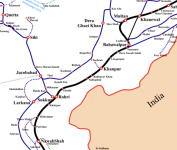
The challenge on the subcontinent is that India and Pakistan have largely had a stationary border on the eastern front. Both militaries have substantial arsenals and have considerable knowledge of any avenues of approach that the attacker would take i.e. most approaches already have pre-planned fires dedicated to them w/ those assets already in position. Additionally, due to the nature of its geography, Pakistan's highest readiness assets are able to deploy within the 72 hour timeframe that Indian IBGs would try to exploit.These IBGs are likely to be able to make initial gains. However, once the initial surprise is over, the inherent weakness of the force structure is likely to show itself. While the Indian IBG is larger than the Russian BTG, the reality remains that ~5k troops is not enough to get into sustained combat operations that taking and holding chunks of strategically significant territory would require. This is even more important as the premise of the Indian IBG is to force Pakistani concessions by holding such territory.
That still leaves the Intellectual question of whether Pakistan should try to match India in the deployment of high readiness forces that can be activated quickly. Here, Pakistan should try to focus on limited objectives that it wants to achieve once hostilities have been initiated. These are likely to be the desire to create favorable territorial outcomes and secure its water resources. Both of these objectives can be achieved through tighter integration between the ARFC, PAF and Ground forces rather than raising entirely new assets that Pakistan would have to balance against its limited resources and fiscal capacity. Pakistan should focus on magazine depth for critical munitions, regular integrated and realistic training, competent staff work and its high-refresh ISR stack (Things that it is already focusing on).
The Indian Integrated Battle groups are a larger counterpart, conceptually, to the Russian Battalion Tactical groups i.e. high readiness forces of a Reinforced battalion size w/ integrated Electronic warfare, armor and fire support that can act as the basic maneuver formation capable of operating independently w/o additional outside support but still being able to work w/ other BTGs for larger objectives.
The issue that the Russian military discovered in Ukraine was that the BTGs were simply too small to achieve significant objectives and did not have enough organic logistics to support heavy operations past 48-72 hours. Additionally, due to the structure of these BTGs, once a BTG was "spent", it was a time consuming and intensive process to regenerate these forces because the personnel manning non-infantry roles required years of training that could not be easily replaced. This is still taking into consideration the fact that the Russian military had considerable surprise in the initial days of its invasion of Ukraine.Once these BTGs ran into Ukrainian brigades piecemeal, they were defeated in detail rather than being able to aggregate combat mass and effects. Furthermore, since the BTGs were meant to operate independently, they could not easily call on the "heavier" assets that would usually rely at high echelons of the force structure. The Russian General staff could certainly have utilized the BTGs more effectively but the structure of these forces was also not conducive to sustained combat operations. The proof here is the fact that the Russian ground forces have now switched to the traditional Corps and Division structure.
The challenge on the subcontinent is that India and Pakistan have largely had a stationary border on the eastern front. Both militaries have substantial arsenals and have considerable knowledge of any avenues of approach that the attacker would take i.e. most approaches already have pre-planned fires dedicated to them w/ those assets already in position. Additionally, due to the nature of its geography, Pakistan's highest readiness assets are able to deploy within the 72 hour timeframe that Indian IBGs would try to exploit.These IBGs are likely to be able to make initial gains. However, once the initial surprise is over, the inherent weakness of the force structure is likely to show itself. While the Indian IBG is larger than the Russian BTG, the reality remains that ~5k troops is not enough to get into sustained combat operations that taking and holding chunks of strategically significant territory would require. This is even more important as the premise of the Indian IBG is to force Pakistani concessions by holding such territory.
That still leaves the Intellectual question of whether Pakistan should try to match India in the deployment of high readiness forces that can be activated quickly. Here, Pakistan should try to focus on limited objectives that it wants to achieve once hostilities have been initiated. These are likely to be the desire to create favorable territorial outcomes and secure its water resources. Both of these objectives can be achieved through tighter integration between the ARFC, PAF and Ground forces rather than raising entirely new assets that Pakistan would have to balance against its limited resources and fiscal capacity. Pakistan should focus on magazine depth for critical munitions, regular integrated and realistic training, competent staff work and its high-refresh ISR stack (Things that it is already focusing on).