Indian Politics and Internal News

Scamming an elderly couple has to be the lowest of the low. How could they live with themselves?
Sad…..
 
Scamming an elderly couple has to be the lowest of the low. How could they live with themselves?
Sad…..

They just look like two normal middle class people who lived their life doing some office work and retired. They almost made it- a few years they would have passed away in dignity and peace. These @$$holes just cut their life short violently. They deserve to the death penalty.
 

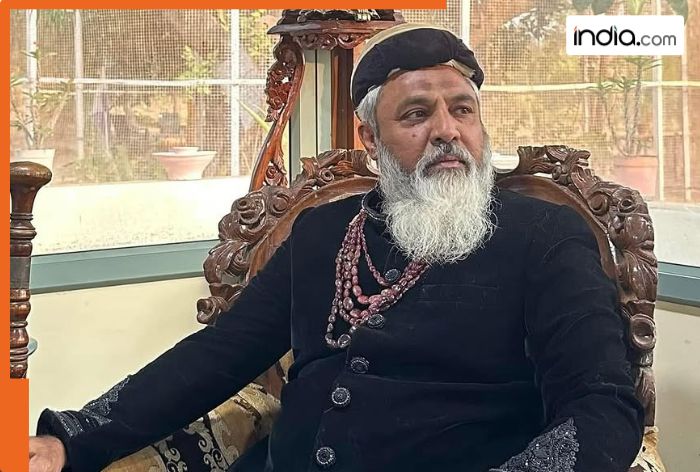
his name is…​


This man calls himself to be the descendant of Mughal emperor and often makes it to the headlines.​


Untitled-design-2025-03-27T104212.328.jpg


Royal lineages rules India until Independence. As India became a republic with democracy helming the country, monarchy system got abolished. However, the royal descendants continue to live in India, lay claims to the properties made by the ancestors. Maharani Rajikaraje Gaekwad, or the Princess Diya Kumari from Rajasthan are among the several other royals living in the subcontinent.

One man claims to be a descendant of the Mughals. So much so, he has often challenged the ownership of Taj Mahal, the Ram Mandir row etc. His name is Prince Yakub Habeebuddin Tucy.

Claims Over Taj Mahal, Ayodhya Ram Mandir​


Prince Yakub Habeebuddin Tucy claims to be the descendant of Mughal emperor Bahadur Shah Zafar. He claims to be the sixth generation. This establishes his connection with Aurangzeb, Shah Jahan, Akbar and other Mughal emperors. Currently he lives in Hyderabad and is the Mutawalli & Caretaker of Aurangzeb’s Grave. Amid the recent vandalisms of the tomb of Aurangzeb in Maharashtra, the Prince filed a petition: ” sends Representation to Hon’ble President of India requesting her to pass the orders to Government of India or State Government for the protection of Monument/ Grave of Aurangzeb Alamgeer RH.”

He came to limelight after he laid claims as ‘owner’ of the Taj Mahal, India’s iconic white marble mausoleum years ago. While there were several controversies surrounding it, he also presented his DNA report that was accepted by the court of Hyderabad.

In 2019, he challenged Princess Diya Kumari of Rajasthan who claimed to have documents for Taj Mahal. The Prince had confronted her saying, ” If you do have the documents kept in your pothikhana, show them. If you have even a drop of Rajput blood within, show those documents.”

Scrolling through his feed, one can find that the Mughal descendant’s fashion style is regal. He tends to don long royal robes, cap like that of the Mughal emperor.

When the Ram Mandir row was on going, Tucy had called out at the Wakf council and said, “We have issued an order to Wakf board, that it is not their property. It is a property issue and if turns out to be Babur’s property, then we are the owners of it. And, as the owner of the property, we don’t have any issue with the Ram temple being built there.” Showing his uspoort he even offered a golden brick. “Not only will I present a golden brick, I will also hand over the entire land for construction of the temple,” he said speaking with Times of India in an old interview.

 
Give it time, we'll have a political party in the name. A great grift these days.
 
Give it time, we'll have a political party in the name. A great grift these days.

Why not
Let's call it Mughal Aadmi Party

We have plenty of Babarsons in India who will vote willingly for such an outfit

Launch the party in Agra, In front of the Taj Mahal , in time for UP elections.

Yogi will be delighted
Since this will guarantee a BJP win with Muslim votes getting split
 
vakaf board drama live

To view this content we will need your consent to set third party cookies.
For more detailed information, see our cookies page.
 

Indian parliament's lower house passes controversial bill on Muslim properties​

3 hours ago
Share
Save
Neyaz Farooquee
BBC News, Delhi
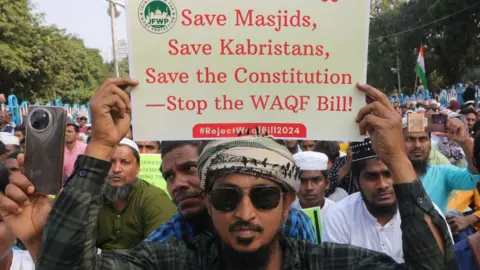
Getty Images A man holds up a placard opposing the new Waqf bill, surrounded by more protesters
Getty Images
The government claims the bill brings transparency but critics see it as an infringement on the rights of Muslims
The lower house of India's parliament has passed a controversial bill that seeks to change how properties worth billions of dollars donated by Indian Muslims over centuries are governed.

The Waqf (Amendment) Bill, 2024 - which brings in dozens of amendments to an existing law - was passed late on Wednesday night after a heated debate that went on for over 12 hours.

The government says the bill will introduce transparency into the management of waqf, as the properties are called.

But opposition parties and Muslim groups have called it an attempt to weaken the constitutional rights of India's largest religious minority.
In the Lok Sabha, as the lower house is called, the bill was passed with 288 MPs voting in favour of it, and 232 against (the halfway mark is 272).

It has now been sent to the Rajya Sabha, or upper house, for discussion and passage.

If it is passed by the Rajya Sabha, it will be sent to President Droupadi Murmu for her assent before it becomes law.

The bill was first tabled in parliament in August last year but was sent to a joint parliamentary committee (JPC) after an outcry from opposition members. The version that has been passed incorporates several changes suggested by the sharply divided committee. Opposition members who were on the panel have alleged that the JPC accepted the changes suggested by the BJP and its allies while rejecting all amendments they proposed.

Mallikarjun Kharge, Congress MP and leader of the opposition in the Rajya Sabha, said the opposition was united and would work to defeat "the unconstitutional and divisive agenda of the Modi government on the Waqf Amendment Bill". But the numbers may not be in the opposition's favour.

Muslim groups have argued that the bill "aims to weaken the waqf laws and pave the way for the seizure and destruction of waqf properties".

Speaking in the Lok Sabha, Congress leader Gaurav Gogoi said the bill would "dilute the Constitution, defame minority communities, divide Indian society and disenfranchise minorities".

Federal Home Minister Amit Shah defended the bill, saying that the opposition was scaring minorities by creating "an illusion that this bill would interfere in the religious activities of Muslim brothers and in their donated property".

What is the bill about?​

The waqf properties, which include mosques, madrassas, shelter homes and thousands of acres of land donated by Muslims, are managed by boards. Some of these properties are vacant while others have been encroached upon.

In Islamic tradition, a waqf is a charitable or religious donation made by Muslims for the benefit of the community. Such properties cannot be sold or used for any other purpose - which implies that waqf properties belong to God.

The government says that the waqf boards are among India's largest landholders. There are at least 872,351 waqf properties across India, spanning more than 940,000 acres, with an estimated value of 1.2 trillion rupees ($14.22bn; £11.26bn).

A major criticism from opponents of the bill is that it grants the government undue power to regulate the management of these endowments and determine whether a property qualifies as "waqf".

The bill also proposes the induction of two non-Muslim members on the waqf boards which oversee these properties. Critics have opposed this provision, arguing that most religious institutions run by non-Muslims do not permit followers of other faiths in their administration.
 
The bill has been watered down by the NDA allies.

Retrospective affect of the bill was required to retrieve captured properties by the Waqf.

Its still a forward looking step, further amendments are required.
 

Users who are viewing this thread

Pakistan Defence Latest

Country Watch Latest

Back
Top