Pakistan needs to watch this development closely as it is related to the future security and existence of Pakistan. Any hopes Pakistan has of a "moderate " government coming to power in India and initiating a dialogue to resolve any bilateral issues is false.
It an interesting state of affairs. Just control of 4 states , UP, Bihar, Rajasthan and Madhya Pradesh will give the current ruling BJP party control over India literally forever. The ruling regime will change the constitution and bring in a theocracy that is far more openly aggressive.
De-Limitation: Will North India's gain be South India's loss ?
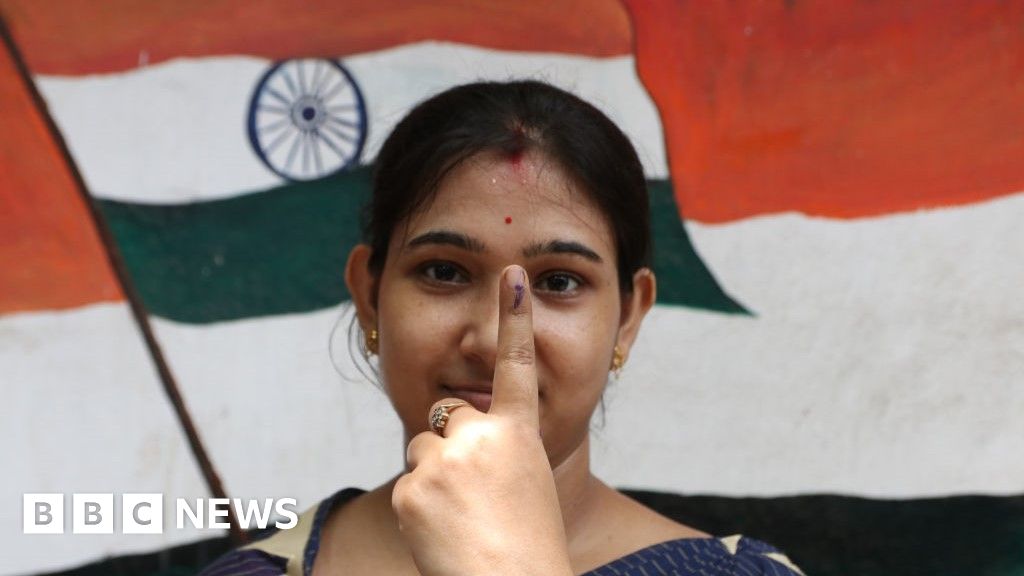
Southern leaders urge mass mobilisation over concerns about redrawing electoral boundaries.

www.bbc.com
A political storm is brewing in India, with the first waves already hitting the southern part of the country.
Leaders there are calling for mass mobilisation to protect the region's political interests amid a heated controversy over the redrawing of electoral seats to reflect changes in population over time.
In a high-stakes push, they are urging citizens to
"have more children", using
meetings and media campaigns to amplify their message: that the process of delimitation could shift the balance of power.
"Delimitation is a Damocles' sword hanging over southern India," says MK Stalin, chief minister of Tamil Nadu, one of India's five southern states, and an arch rival of Prime Minister Narendra Modi's ruling Bharatiya Janata Party (BJP). (The other four are Andhra Pradesh, Karnataka, Kerala and Telangana.)
These five states account for 20% of India's 1.4 billion people. They also
outperform the rest of the country in health, education and economic prospects. A child is less likely to be born here than in the north, due to lower population growth rates.
Their leaders are worried that the more prosperous south may lose parliamentary seats in the future, a "punishment" for having fewer children and generating more wealth. Wealthier southern states have always contributed more to federal revenue, with poorer, highly populated states in the north receiving larger shares based on need.
India's Constitution mandates that seats be allocated to each state based on its population, with constituencies of roughly equal size. It also requires reallocation of seats after each census, reflecting updated population figures.
So India redrew parliamentary seats three times based on the decennial census in 1951, 1961 and 1971. Since then, governments of all stripes have paused the exercise, fearing an imbalance of representation due to varying fertility rates across states.
The next delimitation exercise is set for 2026, but uncertainty looms as
India hasn't conducted a census since 2011, with no clear timeline for when it will take place.
This has set the stage for a potential crisis. "Tamil Nadu is leading the charge and India is on the brink of a
federal deadlock," says Yamini Aiyar, a senior fellow at Brown University
The number of seats in the Lok Sabha - the lower house of parliament representing directly elected MPs - has risen from 494 to 543 and has remained constant since then. The freeze means that despite India's growing population since 1971, the number of Lok Sabha seats per state has stayed the same, with no new seats added.
In 1951, each MP represented just over 700,000 people. Today, that number has surged to an average of 2.5 million per MP - more than three times the population represented by a member of the US House of Representatives. In comparison, a UK MP represents around 120,000 people.
Experts say all Indians are underrepresented – though not equally so – because constituencies are too large. (The original Constitution capped the ratio at one MP for 750,000 people)
That's not all. Using census data and population projections, economist Shruti Rajagopalan of George Mason University has
highlighted the "severe malapportionment" - unequal distribution of political representation - in India.
Consider this. In Uttar Pradesh (UP), India's most populous state with over 240 million people, each MP represents about three million citizens.
Meanwhile, in Kerala, where fertility rates are similar to many European countries, an MP represents roughly 1.75 million.
This means the average voter in Kerala in the south has 1.7 times more influence in choosing an MP than a voter in UP in the north.
Ms Rajagopalan also notes that Tamil Nadu and Kerala now have nine and six seats more than their population share, while populous, poorer states like Bihar and UP have nine and 12 seats fewer than their proportion. (Stalin warns that Tamil Nadu could lose eight seats if delimitation occurs in 2026, based on projected population figures.)
By 2031, the problem will intensify: UP and Bihar will fall a dozen seats short of their population proportion, while Tamil Nadu will likely have 11 seats more than its proportion, with other states falling "somewhere in between," according to Ms Rajagopalan.
"Consequently," she says, "India is no longer living up to its fundamental constitutional principle of 'one-person, one vote'." To make this principle meaningful, constituency sizes must be roughly equal.
Experts have proposed several solutions, many of which will require strong bipartisan consensus.
One option is to increase the number of seats in the lower house.
In other words, India should revert to the original constitutional ratio of one MP for every 750,000 people, which would expand the Lok Sabha to 1,872 seats. (The new parliament building has the capacity for 880 seats, so it would need a major upgrade.)
The other option is for the total number of seats in Lok Sabha to increase to the extent that no state loses its current number of electoral seats – to achieve this the number of seats in the Lok Sabha would need to be 848, by several estimates
Accompanying this move, experts like Ms Rajagopalan advocate for a more decentralised fiscal system.
In this model, states would have greater revenue-raising powers and retain most or all of their revenue. Federal funds would then be allocated based on development needs. Currently, states receive less than 40% of the total revenue but spend about 60% of it, while the rest is raised and spent by the central government.
A third solution is to reform the composition of the upper house of the parliament. The Rajya Sabha represents states' interests, with seats allocated proportionally to population and capped at 250.
Rajya Sabha members are elected by state legislatures, not directly by the public. Milan Vaishnav of Carnegie Endowment for Peace suggests a radical approach would be to
fix the number of seats per state in the upper house, similar to the US Senate.
"Transforming the upper house into a real venue for debate of states' interests could potentially soften the opposition to a reallocation of seats in the lower house," he argues.
Then there are other proposals like splitting big states - India's top five states have more than 45% share of total seats.
Miheer Karandikar of Takshashila Institution, a Bangalore-based think-tank, cites
UP as an example of how big states skew things. UP's share of total votes cast in India is around 14% currently. He estimates this would likely increase to 16% after delimitation, "which allows it to retain its status as the most significant state politically and in terms of legislative influence". Splitting a state like UP could help matters.
For now, the anxious southern leaders - whose rhetoric is partly political with Tamil Nadu elections looming next summer - have been joined by
counterparts in Punjab to urge the government to maintain current seats and freeze electoral boundaries for the next 30 years, beyond 2026. In other words, it's a call for more of the same, preserving the status quo.
The Bharatiya Janata Party (BJP) has made little significant statement so far. Home Minister Amit Shah claimed southern states would not lose "even a single seat" in the upcoming delimitation, though the meaning remains unclear. Meanwhile, the federal government's decision to withhold education funds and label Tamil Nadu's leadership as "undemocratic and uncivilised" over a
contentious education policy has deepened divisions.
Political scientist Suhas Palshikar warns that the north-south divide threatens India's federal structure. "The north-south prism is only likely to persuade people and parties of the north to push for a delimitation that would give them an advantage. Such a counter-mobilisation in the north can make it impossible to arrive at any negotiated settlement, Mr Palshikar noted.
He believes that expanding the size of the Lok Sabha and ensuring that no state loses its current strength is not only
"politically prudent step", but something which will "enrich the idea of democracy in the Indian context." Balancing representation will be the key to preserving India's strained federal spirit.
https://www.bbc.com/news/world-asia-india-64936519