
Beijingwalker
VIP Member

India's metro and tunnel projects may face a new hurdle as China tightens export rules
China's new licensing rules cover tunnel boring machines and other specialised equipment used in major infrastructure projects, raising questions about India's dependence on imported machinery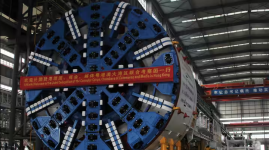
A tunnel boring machine (TBM) of China Tunnel Construction Group is pictured during a government-organised tour to the Guangdong-Hong Kong-Macao Greater Bay Area, in Foshan, Guangdong province, China. File/Reuters
Oct 20, 2026, 12:13:01 IST
China announced new export controls on tunnel boring machines and other specialised construction equipment, raising concerns over supplies for India's metro rail networks, high-speed rail lines and tunnels. The new rules will take effect on November 18 and require exporters of the covered equipment to obtain licences from Chinese authorities.
The restrictions could add uncertainty for India, which depends on imported tunnel boring machines for several major infrastructure projects. China is one of the key suppliers of machinery used to build underground metro corridors, road tunnels and other large infrastructure projects. Reuters reported that China exported about $793 million worth of self-propelled coal or rock cutters and tunnelling machinery in 2025.
China's Ministry of Commerce said the measures were intended to safeguard national security and interests. The announcement covers tunnel boring machines and specified components, along with other specialised equipment used in difficult terrain and dredging operations.
Why tunnel boring machines matter for India
Tunnel boring machines, or TBMs, are used to excavate underground passages through soil and rock. They are important for building underground metro lines, railway tunnels and road links through hills and mountains.Any difficulty in obtaining these machines could complicate procurement and project planning for infrastructure developers. The impact would depend on which equipment is covered, whether export licences are granted and how quickly alternative suppliers can meet demand.
India has already faced difficulties securing some tunnel boring machines manufactured in China. In 2024, Commerce Minister Piyush Goyal told Germany's then Vice Chancellor Robert Habeck that Beijing was not allowing a German company manufacturing the machines in China to export them to India.
What other equipment will face restrictions?
The new controls extend beyond tunnel boring machines.They cover certain walking excavators, which are designed to operate on uneven and difficult terrain, and plateau-type wet shotcrete machines used to spray concrete or similar materials onto surfaces at high altitudes.
These machines can be used in challenging construction conditions, including mountainous areas where specialised equipment is needed to build tunnels and other infrastructure.
China has also revised controls on specified dredging equipment and components, including slurry pumps, dragheads and cutterheads that meet technical thresholds.
Dredging equipment is used to remove sand, silt and other material from riverbeds, harbours and waterways. The restrictions could therefore have implications for projects that depend on the covered equipment, although the actual impact will depend on the products and shipments involved.
How will China's new export rules work?
Under the new rules, exporters must apply for licences in accordance with China's export control laws and regulations governing dual-use items. These are goods or technologies that can have civilian applications as well as potential military uses.Exporters must also identify controlled items accurately and declare the relevant export control codes in customs documents.
If an item is not covered by the controls but has similar technical specifications or performance, exporters may have to provide detailed technical information to support their declarations.
Chinese customs authorities can seek further verification if they have doubts about the accuracy or completeness of the information. Shipments will not be released while such verification is under way, according to the ministry's announcement.
The new measures do not amount to a blanket ban on all exports of the equipment. However, the licensing process and additional checks could create uncertainty for buyers that rely on supplies from China.
India's dependence on imported machinery
The restrictions bring renewed attention to India's efforts to develop domestic manufacturing capacity for specialised construction equipment.India is expanding its metro networks, highways and railway infrastructure, creating demand for machinery that can carry out complex excavation work. Dependence on a limited pool of overseas suppliers can leave projects exposed to export restrictions, customs delays and changes in trade policy.
Developing domestic manufacturing and diversifying suppliers could help reduce these risks over time. But replacing specialised imported equipment may require investment, technical expertise and time.


