Indonesia Consumer Behavior Thread (Consumption Side of GDP)

Not Government Spending: Purbaya Reveals the Real Engine of Indonesia's Economic Growth


By Chandra Dwi Pranata


To view this content we will need your consent to set third party cookies.
For more detailed information, see our cookies page.

Purbaya Yudhi Sadewa


Jakarta, CNBC Indonesia
– Finance Minister Purbaya Yudhi Sadewa has explained what is truly driving Indonesia's economic growth, emphasizing that government spending is not the country's primary growth engine.

According to Purbaya, government expenditure contributes only around 7.7% to the Indonesian economy, while the vast majority of economic activity is driven by the private sector.

"If we look at it, the government's contribution to the economy through spending is only about 7.7%. The rest comes from the private sector. So if the private sector is not moving, it is almost impossible for us to achieve 5.61% economic growth in the first quarter of 2026," Purbaya said during CNBC Indonesia's Economic Update 2026, as quoted on Tuesday (June 23, 2026).

Government and Household Spending Growing Together​

Purbaya said President Prabowo Subianto's economic strategy is to ensure that both government spending and household spending expand simultaneously.

"This shows that the President's strategy to strengthen the economy through both the government and the private sector is working well. Government spending is increasing, and household spending is also growing significantly."
He explained that household consumption makes by far the largest contribution to Indonesia's economic growth.

"If we multiply each component by its share of the economy, household consumption—which accounts for more than 55% of GDP—contributes about 2.9 percentage points to the overall 5.6% growth figure. Investment contributes 1.9 percentage points, while government spending contributes only 1.34 percentage points."

Two Key Indicators Remain Strong​

Purbaya said two important indicators suggest that Indonesia's economy remains resilient:

  • Automobile sales
  • Cement sales
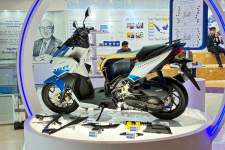
Car sales have increased by 55%, while motorcycle sales have grown 28.1%.

Meanwhile, fuel consumption for both transportation and industry also recorded strong growth during March:

  • Retail fuel consumption: +11.9%
  • Industrial fuel consumption: +17%
  • Total fuel consumption: +13%

Electricity Demand Also Rising​

Purbaya added that electricity sales have continued to increase sharply, indicating stronger consumption by households, businesses, and industries as economic activity expands.

Overall electricity sales grew by 19%.

Cement Consumption Surges​

Domestic cement consumption—which supports infrastructure and construction projects—also recorded exceptionally strong growth.

According to Purbaya, cement consumption increased by 35.6% in April 2026.

"The figures are indeed higher than before, but that doesn't mean this is the only engine of growth. Overall, the data still indicate that household purchasing power remains quite strong."
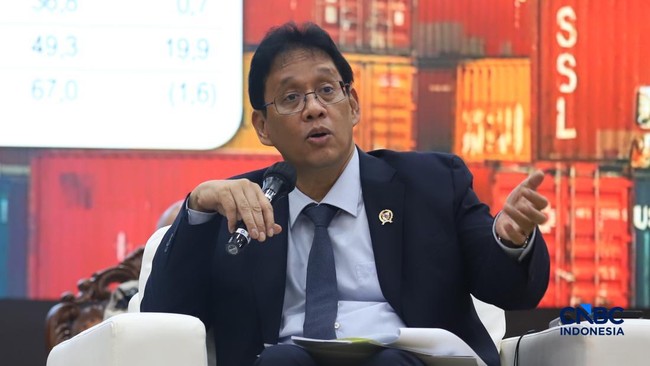
He concluded that the available indicators suggest Indonesia's domestic demand continues to support solid economic growth, with the private sector and household consumption remaining the principal drivers, while government spending plays a relatively smaller role.


LPS Chairman Says Indonesians Are No Longer Drawing Down Savings​


Senin, 27 Jul 2026


To view this content we will need your consent to set third party cookies.
For more detailed information, see our cookies page.


JAKARTALembaga Penjamin Simpanan (LPS) Chairman Anggito Abimanyu said bank deposits across all customer segments continue to grow, indicating that Indonesians are no longer relying on their savings to support day-to-day consumption.

Speaking at the Presidential Palace in Jakarta on Monday (July 27, 2026), Anggito said deposits have increased across all account size categories, from balances below IDR 100 million to those exceeding IDR 5 billion.

"All deposit categories continue to grow, from accounts below IDR 100 million to those above IDR 5 billion. Every segment is showing positive growth," Anggito said.
According to Anggito, the trend suggests that household purchasing power has begun to recover, allowing people to resume saving rather than drawing down their bank deposits.

"This shows that funds flowing into the banking system are supporting economic activity, particularly in the real sector," he said.
Earlier, LPS reported that deposits of less than IDR 100 million increased 4.95% year-on-year as of May 2026, accelerating from 3.43% growth recorded at the end of December 2025.

Doddy Zulverdi, LPS Commissioner for Deposit Insurance Programs and Bank Resolution, said the data do not support claims that Indonesians are depleting their savings.

"Based on these figures, we do not see evidence of people drawing down their savings. Deposits below IDR 100 million continue to grow, and growth has actually improved compared with the end of 2025," Doddy said during a virtual press conference on June 25, 2026.
LPS also reported that Indonesia's banking sector remained resilient.

As of May 2026, third-party funds (DPK) in the banking system increased 13.47% year-on-year, supported by positive growth across all deposit categories.

Deposits exceeding IDR 5 billion also continued to expand at a double-digit pace, rising 21.45% year-on-year through May 2026, compared with 22.76% growth at the end of December 2025.

"The key takeaway is that every deposit segment—from balances below IDR 100 million, between IDR 100 million and IDR 1 billion, IDR 1 billion to IDR 2 billion, IDR 2 billion to IDR 5 billion, and above IDR 5 billion—continues to record positive growth," Doddy said.


Excellent Results! Unilever Indonesia Reports Rp16.9 Trillion in Net Sales in the First Half of 2026


Khoirul Anam
28 July 2026


To view this content we will need your consent to set third party cookies.
For more detailed information, see our cookies page.

Shopping Mall in South Jakarta

Jakarta, CNBC Indonesia
PT Unilever Indonesia Tbk (UNVR) recorded positive growth during the first half of 2026. This marks the company's fourth consecutive quarter of growth, reflecting solid progress in strengthening its business fundamentals while advancing its long-term growth objectives.

During the first half of 2026, Unilever Indonesia recorded 7.1% growth in domestic sales, driven by strong underlying volume growth of 7.3%. Net sales from continuing operations reached Rp16.9 trillion, representing 7.1% year-on-year growth.

Meanwhile, net profit from continuing operations (excluding the SariWangi tea business) increased 10.2% year-on-year to Rp2.1 trillion.

The company posted a gross margin from continuing operations of 46.6%, down 168 basis points compared with the previous year. Excluding transformation costs, the gross margin stood at 47.7%.

Meanwhile, the pre-tax profit margin from continuing operations remained stable at 15.7%. Excluding transformation costs, the pre-tax profit margin increased by 45 basis points to 16.7% compared with the previous year.

President Director of Unilever Indonesia, Benjie Yap, said that the company's first-half 2026 performance reflects the positive results of its efforts to strengthen business fundamentals.

"We achieved positive growth in both sales and profit, supported by strong volume growth, reflecting improved execution in the marketplace. These results further reinforce our confidence that our strategy is delivering tangible outcomes and that the business continues to move in the right direction," he said in a written statement on Tuesday (July 28, 2026).
He added:

"Amid a dynamic business environment and our continued investments to transform the business and strengthen long-term competitiveness, we remain focused on delivering consistent, high-quality growth while creating sustainable value for all stakeholders."
Benjie explained that the company is executing its strategic priorities through three main pillars—Categories, Sales Channels, and Costs—which reinforce one another to drive high-quality long-term growth.


Three Strategic Priorities of Unilever Indonesia​

1. Categories: Building Consumer Demand at Scale Through Strong Brands and Innovation​

Unilever Indonesia continues to strengthen its competitiveness through superior innovation and social-first demand creation, aiming to increase consumer preference across its entire brand portfolio.

Guided by its "Desire at Scale" approach, the company enhances brand strength through differentiation based on science, aesthetics, and sensory experiences.

"At the same time, we are accelerating consumer engagement through creator collaborations and culturally relevant partnerships, increasing brand visibility and relevance, particularly among younger consumers," Benjie explained.
These efforts resulted in broad-based growth across the business, with 18 of the company's 24 brands recording growth during the first half of 2026.

More importantly, the company's core businesses that had previously faced challenges have now returned to growth, while high-growth segments continue to deliver strong double-digit growth.

"Overall, these results further strengthen our confidence that the business recovery continues to gain positive momentum across more parts of our portfolio. With our core businesses returning to growth and high-growth segments continuing to expand, we are building stronger and more balanced growth momentum," he added.

2. Sales Channels: Strong Execution at Every Consumer Touchpoint​

Unilever Indonesia also continued strengthening its route-to-market capabilities and execution across its various sales channels, contributing to 7.1% domestic sales growth during the first half of 2026.

This performance was supported by growth across all major channels, reflecting improved execution, better product availability, and stronger shopper engagement.

In the General Trade channel, growth was driven by continued progress under the company's "More Stores" and "Better Stores" initiatives, which expanded market reach, improved product availability, and strengthened execution at points of sale.

Meanwhile, the Modern Trade channel delivered strong performance through better execution and effective category activation, increasing shopper engagement, in-store visibility, and conversion.

The Health & Beauty and eCommerce channels also continued to show positive momentum, supported by a differentiated product portfolio, social-first demand creation strategies, and increasingly robust end-to-end capabilities.

"Most importantly, these results demonstrate that all of our growth drivers are working consistently across every sales channel. By strengthening our route-to-market capabilities, creating demand more effectively, and managing our portfolio more precisely, we continue to build broader, higher-quality, and more sustainable growth," he said.

3. Costs: Driving Growth Through Discipline and Productivity​

On the cost side, Unilever Indonesia continued improving productivity and strengthening cost discipline across the business, enabling continued investment to support growth while maintaining profitability.

Through a combination of measured pricing adjustments, productivity initiatives, and disciplined cost management, the company maintained business resilience despite ongoing cost pressures while continuing to improve margins.

"At the same time, we remain focused on ensuring that every investment delivers optimal impact by allocating resources more effectively. This is achieved through continued investment in priority brands and accelerated development of digital capabilities, strengthening brand equity, improving execution effectiveness, and supporting sustainable long-term growth," Benjie explained.
Looking ahead, he emphasized that Unilever Indonesia remains committed to driving competitive growth through disciplined execution of its Category, Sales Channel, and Cost strategies.

Despite continued market uncertainty, the company remains optimistic that it can further strengthen business performance through increasingly solid fundamentals, a strong brand portfolio, more effective market execution, and an ongoing focus on productivity.

"Supported by our Hungry to Win culture, we believe we can further strengthen our competitiveness, accelerate high-quality growth, and create long-term value for both our shareholders and all stakeholders," Benjie concluded.


Users who are viewing this thread

Back
Top