Indonesia Digital Economy

Indonesia hit by 5.5 billion cyberattacks in 2025, tightens security​


June 2, 2026 20:04 GMT+700

1780533876427.png

Jakarta (ANTARA) - Indonesia continues to strengthen its national cybersecurity system in response to a staggering 714 percent explosion in cyberattacks last year, compared to the annual average for the 2020-2024 period.

According to newly released data from the National Cyber and Crypto Agency (BSSN), the archipelago was bombarded by 5.5 billion cyberattacks in 2025—a massive spike compared to the annual average over the previous four years.

Presidential Chief of Staff Dudung Abdurachman in his statement on Tuesday, confirmed that the attacks were specifically targeting government infrastructure, economy and national security.

The digital onslaught has shown no signs of slowing down. In the first three and a half months of this year alone (January 1 to April 15), BSSN tracked another 1.52 billion attacks, signaling that the crisis is rapidly intensifying.

According to Dudung, the methods used range from highly sophisticated system hacking and personal data theft to digital disruption tactics such as online fraud, radical propaganda, and the coordinated spread of hoaxes aimed at undermining public trust.

In response, he said the government cannot confront this digital threat in isolation and called for a unified mobilization of state resources and public awareness.

“The Presidential Staff Office is pushing for stronger cross-sector coordination so that cyber threat management can be carried out quickly, measurably, and in an integrated manner,” he said.

As the digital space becomes increasingly integrated into daily life, Dudung warned that personal data protection is now a matter of collective security.

“We must be wiser in using social media, maintain the confidentiality of personal data, and improve digital literacy so we are not easily influenced by false information and digital fraud,” he said.

He also called on all elements of society to work together to protect Indonesia’s digital space, ensuring it remains safe, healthy, and productive.

Dudung emphasized that technology should serve as a tool for national unity and progress, not a vehicle for crime or division.


Firmus to Build Nvidia AI Data Center Campus in Indonesia​


To view this content we will need your consent to set third party cookies.
For more detailed information, see our cookies page.


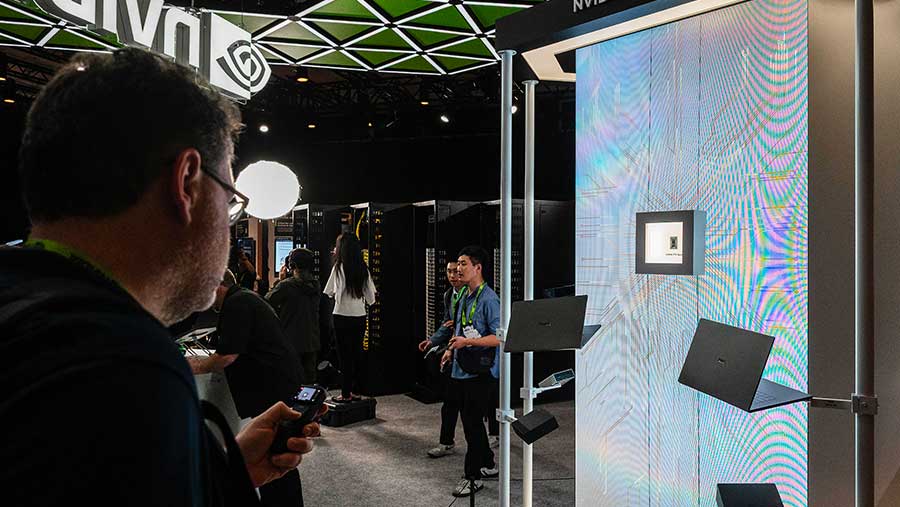
BATAM, Indonesia — Australian AI infrastructure company Firmus Technologies will establish its first data center project in Indonesia through a strategic partnership with Nvidia, a collaboration expected to generate US$25–30 billion in purchase agreements during the first six years of operation.

The project will be developed jointly by Firmus and Singapore-based DayOne, which will construct a 360-megawatt Nvidia DSX AI Factory campus in Batam under an eight-year partnership with Nvidia.

Unlike Firmus' Australian facilities, which primarily serve hyperscale cloud providers, the Batam campus will operate as a multi-tenant AI data center, serving a broader range of artificial intelligence-focused customers.

According to Firmus Co-Chief Executive Officer Tim Rosenfield, construction is being carried out by DayOne, with commercial operations scheduled to begin in the first quarter of 2027.

Access to Up to 170,000 Nvidia AI Chips​

Under the partnership, Firmus will gain access to Nvidia's AI computing infrastructure through a revenue-sharing arrangement and credit support program.

The agreement includes access to up to 170,000 Nvidia AI accelerator chips during 2027 and 2028, providing substantial computing capacity for customers deploying large-scale artificial intelligence workloads.

Firmus estimates that the partnership will generate US$25 billion to US$30 billion in contracted purchases over its first six years.

Growing AI Infrastructure Business​

The Indonesia project follows Firmus' rapid expansion across the Asia-Pacific region.

Originally established as a Bitcoin mining operation in Tasmania in 2019, the company has evolved into a major AI infrastructure developer amid surging demand for high-performance computing.

In 2025, Firmus was valued at approximately US$5.5 billion during a funding round led by Coatue Management, with participation from Nvidia.

Although reports suggest the company may pursue an initial public offering (IPO) this year, Rosenfield declined to comment on potential listing plans.

Expanding Regional Data Center Capacity​

The Batam AI campus adds to Firmus' growing portfolio of AI infrastructure projects across Australia and Singapore.

Last year, the company also signed an agreement with CDC Data Centres to develop up to 1.6 gigawatts of Nvidia-powered data center capacity across Australia by 2028.

According to Rosenfield, Firmus continues to build its business based on confirmed customer demand rather than short-term market sentiment surrounding AI-related stocks.

"We build our business based on the demand we see from customers and the contracts we secure. Funding and capital remain very strong at this point."
The Batam project further strengthens Indonesia's position as an emerging regional hub for AI infrastructure and advanced data center investment, leveraging its strategic location near Singapore and growing digital economy.

Source: Bloomberg News
 

UAE Investor to Build Data Centers in Indonesia, Investment Expected to Reach Billions of US Dollars​


3 Juli 2026

1783152559580.png

JAKARTA — Indonesia's Coordinating Ministry for Economic Affairs has revealed that DAMAC Digital, a technology company from the United Arab Emirates (UAE), plans to develop large-scale data centers in Indonesia with a combined capacity of approximately 1.2–1.3 gigawatts (GW).

Secretary of the Coordinating Ministry for Economic Affairs, Susiwijono Moegiarso, said the planned capacity is roughly twice Indonesia's current total data center capacity, which stands at around 600 megawatts (MW) or 0.6 GW.

"A very large investment is coming from the UAE through the DAMAC Group. Their planned pipeline alone is around 1.2 to 1.3 GW. By comparison, Indonesia's total national data center capacity is currently only about 600 MW. This will be a massive investment in data centers," Susiwijono said.

Three Planned Locations​

According to Susiwijono, the investment will be developed in three locations across Indonesia.

While he did not disclose the specific sites, he confirmed that the facilities will not be located at the Nongsa Digital Park Special Economic Zone in Batam.

"The investment will be carried out in several phases across three locations. It is not in Nongsa; that is a separate project."

Investment Worth Billions of Dollars​

Although the government has not announced the exact investment value, Susiwijono estimated that the project would require billions of US dollars, given the enormous scale of the planned facilities.

"Building data centers requires several million US dollars for every megawatt of capacity. Therefore, a project of 1.2 GW will certainly require investment worth billions of US dollars."

Supporting Indonesia's Digital Economy​

The Indonesian government views the data center industry as one of the country's key strategic investment sectors, driven by rapidly growing demand for cloud computing, digital services, and artificial intelligence (AI).

However, Susiwijono also noted that hyperscale data centers present significant infrastructure challenges because they require substantial supplies of electricity and water.

"This is one of our major challenges. As investment in data centers continues to grow rapidly, we must ensure that sufficient electricity supply is available."
To support future expansion, the government plans to encourage data center development in several Special Economic Zones (SEZs).

Indonesia already hosts the Nongsa Digital Park in Batam, which is home to more than 10 data center operators, including China's GDS Holdings and U.S.-based Equinix.


RANS Raises $23.8 Million in IPO, Bringing Indonesia's Creator Economy to the Stock Market​


Muhammad Ghafur Fadillah
July 10, 2026 | 10:54 am

1783667013998.png
Raffi Ahmad, the presidential special envoy for youth and art workers, addresses fellow social media influencers during a meeting in Jakarta on Feb. 19, 2025. (Antara Photo/Bayu Pratama S)


Jakarta. RANS Entertainment Indonesia made its trading debut on the Indonesia Stock Exchange on Friday, becoming one of Indonesia's first major creator economy companies to go public after raising Rp 429.25 billion ($23.8 million) through an initial public offering.

The company issued 2.525 billion new shares at Rp 170 each, representing 20.02% of its enlarged share capital.

Investor demand was strong, with the IPO heavily oversubscribed as nearly one million investors participated in the share offering, underscoring growing interest in Indonesia's digital and creative industries.

Chief Executive Nagita Slavina said the listing demonstrates that businesses built on the creator economy can evolve into professionally managed, sustainable enterprises.

"Indonesia has extraordinary creative talent. The next challenge is turning that creativity into valuable intellectual property, professionally managed companies, and ultimately sustainable jobs and long-term economic value. We hope RANS' journey shows that this is not only possible, but achievable," Nagita said in a statement.

RANS plans to use the IPO proceeds to accelerate long-term expansion across entertainment, intellectual property and technology businesses.

About 37.6% of the proceeds, or Rp 161.5 billion ($9 million), will fund concert production. Another Rp 85 billion ($4.7 million) will be used to acquire a 51% stake in Rans Kosmetika Indonesia, while Rp 80 billion ($4.4 million) will finance the expansion of Cipungland, the company's educational and family entertainment park.


The company will also invest Rp 35 billion ($1.9 million) in an artificial intelligence joint venture with Feedloop Global Teknologi, allocate nearly Rp 30 billion ($1.7 million) to partially repay investment loans, and inject approximately Rp 37.8 billion ($2.1 million) into the working capital of subsidiary PT Rans Nikmat Sejahtera.


Founded in 2016 in a home garage, RANS began as a digital content channel documenting the daily lives of the family of Raffi Ahmad, one of Indonesia's best-known entertainers. In less than a decade, it has grown into a creator-driven business that monetizes content, intellectual property, and fan engagement across multiple platforms.


Today, RANS operates a broad ecosystem spanning digital entertainment, IP development, consumer products, advertising services, and AI-based technology, working with more than 300 brands and employing hundreds of professionals.

Founder Raffi Ahmad said becoming a publicly listed company marks the beginning of a new chapter focused on stronger corporate governance.

"Today is not the end of our journey but the beginning. By becoming a public company, we are choosing to grow with higher standards, greater transparency, and stronger accountability to our shareholders and the Indonesian public. Public trust is a responsibility that we will continue to uphold through good governance and sustainable growth," Raffi said.


Indonesia to start e-commerce income tax collection on Aug. 1​


July 1, 2026 16:07 GMT+700


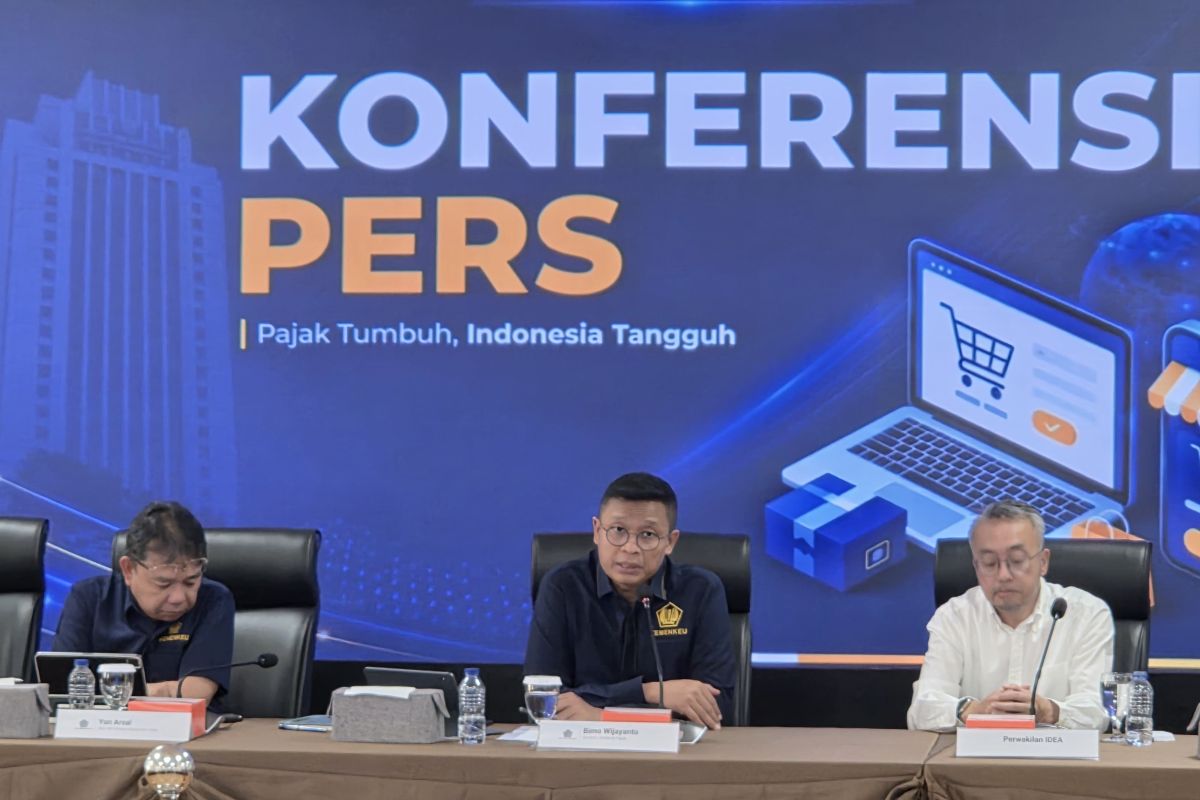
Jakarta (ANTARA) - Indonesia will begin collecting income tax through designated e-commerce platforms from August 1, 2026, the Finance Ministry's Directorate General of Taxes (DJP) said on Wednesday.

Director General of Taxes Bimo Wijayanto said the government has granted a one-month transition period for four designated marketplace operators to adjust their systems before they begin collecting tax from sellers. The four marketplaces are Tokopedia, Shopee, Lazada and Blibli.

“This is not a new tax. It is an income tax on business activities conducted through marketplaces. The only change is the collection mechanism, from sellers paying the tax themselves to designated marketplaces collecting it on the government's behalf,” Wijayanto told a press conference in Jakarta.

The policy is stipulated under Finance Ministry Regulation No. 37/2025, which designates electronic commerce platform operators as collectors of Article 22 income tax.

Wijayanto said the government selected the platforms based on factors including system readiness, transaction volume, administrative capacity, the use of escrow accounts and their ability to collect and report taxes electronically.

Under the scheme, marketplaces will collect Article 22 income tax at a rate of 0.5% of a seller's gross turnover, excluding value-added tax (VAT) and luxury goods sales tax.

Consumers will continue to make payments through the marketplace, which will deduct the tax from sellers' income, issue invoices, remit the proceeds to the state treasury and report the collections through a monthly tax return.

Wijayanto said the requirement applies only to sellers with annual gross turnover exceeding Rp500 million (about US$27.800).

He said the regulation does not introduce a new tax but changes the administrative mechanism for collecting existing income tax through marketplace operators.

“We want to reiterate that Finance Ministry Regulation No. 37/2025 is not intended to hamper the digital economy. Rather, it is aimed at ensuring that the digital economy grows under a sound, fair and level governance framework,” he said.

At the same press conference, Indonesian E-Commerce Association (iDEA) Chairman Budi Primawan said the industry was focused on ensuring the policy is implemented effectively while providing legal certainty and minimizing operational disruption for marketplaces and sellers.

"We received the designation letters on July 1, 2026. That gives us one month to adjust our systems, test our business processes and communicate with sellers before tax collection begins on Aug. 1, 2026," he said.


Indonesia in the Global AI Race​


Setiawan Budi Utomo, CNBC Indonesia
19 July 2026 09:54

To view this content we will need your consent to set third party cookies.
For more detailed information, see our cookies page.


No country becomes an artificial intelligence (AI) powerhouse simply by building data centers. Nations emerge as AI leaders when they successfully integrate infrastructure, talent, innovation, energy, and governance into a coherent national strategy.

Amid the global AI race, Indonesia has gained two strategic advantages that few developing countries possess: the development of the NVIDIA DSX AI Factory in Batam and its participation as a founding member of the World Artificial Intelligence Cooperation Organization (WAICO) alongside 29 other countries.

Together, these developments mark an important shift. Indonesia is no longer viewed merely as Southeast Asia's largest digital market, but is increasingly being recognized as part of the global AI ecosystem. The question is no longer whether Indonesia can attract AI investment, but whether it can transform this momentum into technological sovereignty.

The scale of the opportunity is significant. The Batam AI Factory is designed with a planned capacity of approximately 360 megawatts (MW) and aims to deploy up to 170,000 next-generation NVIDIA GPUs in phases beginning in 2027. Based on publicly announced customer commitments, the project is expected to generate US$25–30 billion in revenue during its first six years.

At the same time, the Indonesian government estimates that AI could expand the country's digital economy from approximately US$13 billion today to US$300 billion over the coming decades. AI is therefore no longer simply a technology—it is becoming a new economic infrastructure.

Batam on Asia's AI Infrastructure Map​

Economist Carlota Perez argues that every technological revolution is built upon strategic infrastructure that underpins economic growth. Just as railways, electricity, and the internet powered previous industrial transformations, the AI era is being driven by GPUs, data centers, cloud computing, fiber-optic networks, and energy infrastructure. Computing has become a new factor of production, as essential as capital and labor.

Within this context, Batam occupies a unique strategic position. Located directly across from Singapore and connected to international submarine cable networks, Batam sits at the center of Southeast Asia's digital economy.

As Singapore faces land and energy constraints on further data center expansion, Malaysia is developing Johor as an AI corridor through the NVIDIA–YTL partnership, while Vietnam is accelerating investment in AI talent and semiconductor manufacturing.

Indonesia possesses a combination of advantages that is difficult to replicate: ASEAN's largest digital market, a population exceeding 280 million, abundant energy resources, and extensive industrial zones.

Drawing on Alfred Marshall's theory of agglomeration economies, the combination of geographic proximity and interconnected industrial ecosystems can create new engines of economic growth. Batam therefore has the potential to become more than a data center location—it could evolve into a regional AI hub.

AI Requires Energy and Governance​

Success in the AI race depends not only on developing advanced algorithms but also on securing reliable energy supplies.

The International Energy Agency (IEA) projects that global electricity demand from data centers will rise sharply by the end of this decade as generative AI continues to expand. Ultimately, AI competitiveness rests on three pillars: computing capacity, energy availability, and digital connectivity.

For that reason, the Batam AI Factory should be viewed as part of a broader national strategy that integrates digital transformation with the energy transition. Indonesia will require reliable electricity supplies, stronger transmission infrastructure, and expanded low-carbon energy generation to remain an attractive long-term destination for AI investment.

Infrastructure alone, however, will not be sufficient.

Indonesia's decision to become a founding member of WAICO adds another strategic dimension. For the first time, Indonesia has a greater opportunity to contribute to shaping a global AI governance framework that is inclusive, human-centric, ethically grounded, and respectful of data sovereignty.

If Batam strengthens Indonesia's computing capacity, WAICO provides a platform for expanding Indonesia's role in global AI governance.

Digital Downstream Industrialization as a National Strategy​

Indonesia's success in downstream mineral processing has demonstrated that the country can increase the value added of its natural resources. The same strategic approach should now be applied to the digital economy through digital downstream industrialization.

If mineral downstream processing transforms nickel into batteries, digital downstream industrialization transforms data into computing, computing into AI models, AI models into innovation, and innovation into economic productivity. This value chain will define national competitiveness in the twenty-first century.

Economist Joseph Schumpeter described this process as creative destruction, while Michael Porter argued that competitive advantage is created through innovation and productivity rather than natural resource endowments alone.

Accordingly, Indonesia's success should not be measured solely by the size of AI investments or the number of GPUs deployed, but by the emergence of AI talent, research centers, semiconductor industries, domestic technology companies, and sustained productivity gains across the broader economy.

This momentum should be supported by consistent national policies, including the development of a National AI Compute Infrastructure, acceleration of AI Centers of Excellence, stronger research and higher education institutions, expansion of the semiconductor industry, and the use of Danantara as a source of patient capital to finance strategic digital infrastructure.

Consistent with the ideas of Mariana Mazzucato, the state should act not only as a regulator but also as a catalyst for investment in future technologies.

From User to Rule Maker​

History shows that every technological revolution reshapes the global balance of economic power. The steam revolution elevated Britain, the manufacturing revolution strengthened the United States, and the digital revolution created today's global technology giants. The AI revolution will determine the next generation of economic leaders.

Indonesia now has an opportunity unlike any in its history. Batam provides the country's computing foundation, while WAICO opens new avenues for international AI diplomacy and governance. The challenge is to ensure that these two initiatives do not evolve independently but become integral parts of a unified national strategy.

If downstream mineral processing has become Indonesia's strategy for capturing greater value from natural resources, digital downstream industrialization should become its strategy for capturing value across the AI economy.

The ultimate objective is not simply to build more data centers or attract foreign investment, but to achieve technological sovereignty founded on innovation, talent, energy security, and effective governance.

The twentieth century was defined by those who controlled oil. The twenty-first century will be defined by those who command computing power while helping shape responsible AI governance. If Indonesia successfully capitalizes on the momentum created by Batam and WAICO, it has the potential not only to become Southeast Asia's largest AI market, but also to emerge as one of the architects of the global AI ecosystem. That is the strategic significance of today's AI race in realizing Indonesia Emas 2045.


Users who are viewing this thread

Pakistan Defence Latest

Country Watch Latest

Back
Top