Indonesia Semi Conductor Sector

Indos

INT'L MOD
Joined
Jul 25, 2013
Messages
31,928
Reaction score
26,270
Reputation
3,295.1
Country of Origin
Country of Residence

Indonesia Has a Semiconductor Industry Covering an Area of 11 Football Fields, This is the Location​


Aug. 30, 2022, 11:30 a.m.


Liputan6.com, Jakarta In an effort to accelerate digital transformation, the semiconductor industry plays an essential role and has become the lifeblood.

Along with the development of the industrial era 4.0, the world's need for semiconductor chips also continues to grow with global demand increasing by about three times the needs before the pandemic.

With the rapid development of telecommunications and automotive devices including electric vehicles (electrical vehicles), as well as digitalization in many sectors, it is also increasingly opening up opportunities for the growth of the semiconductor industry.

In the continuation of a working visit in Batam city, Secretary of the Coordinating Ministry for Economic Affairs Susiwijono Moegiarso together with a group of the Coordinating Ministry for Economic Affairs and a number of Editors-in-Chief of the national mass media visited the first semiconductor company in Indonesia, namely PT Infineon Technologies Batam, last Sunday (28/8/2022).

PT Infineon Technologies Batam is an industrial company from Germany engaged in semiconductors. The company, which has absorbed approximately 2,000 workers, has been operating since March 6, 1996 and is a world leader in semiconductor solutions that make life easier, safer, and greener.

Through the vision of We make life easier, safer, and greener, PT Infineon Technologies Batam puts forward solutions for efficient energy management, smart mobility, and safe and smooth communication, as well as connecting the real world and the digital world.

Standing on an area of 83,000 m2 which is equivalent to 11 football fields, PT Infineon Technologies Batam is located in the Batamindo Industrial Park area, Batam, and is part of the Indonesia-Singapore-Malaysia economic growth triangle

 
US–Indonesia Companies Partner to Develop Semiconductor Industry
in Batam Worth Rp 82 Trillion


DetikFinance, February 19, 2026
1771648462517.png


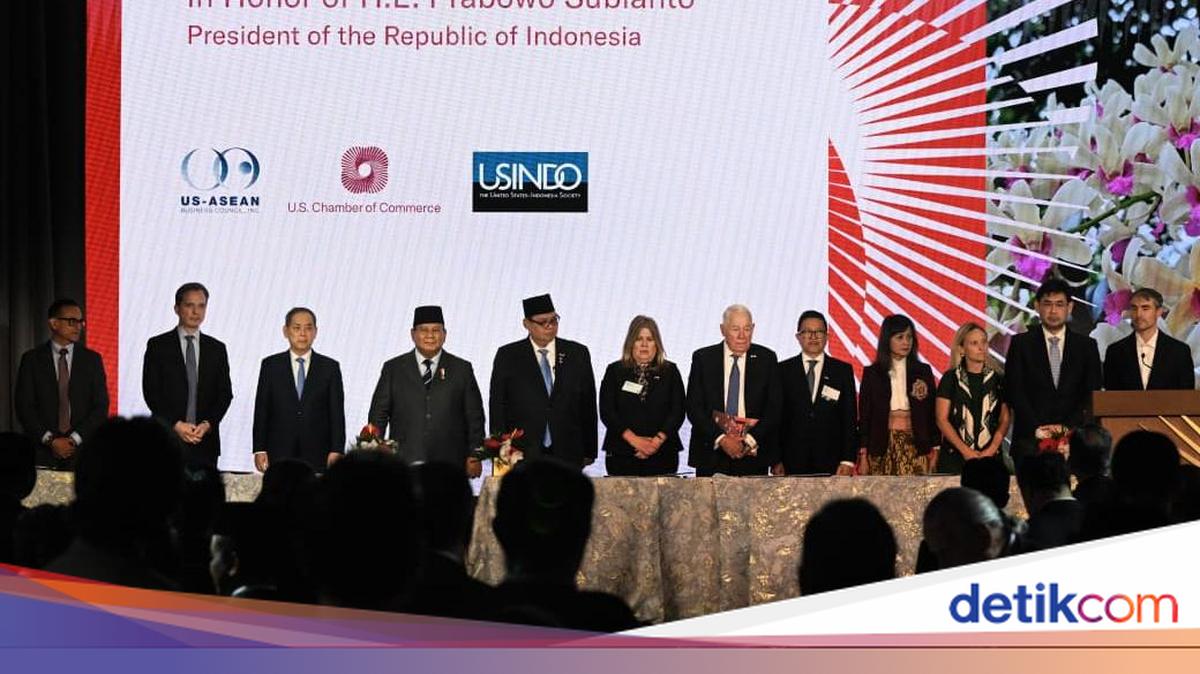
PT Galang Bumi Industri, the developer of the National Strategic Project (PSN) Wiraraja Green Renewable Energy & Smart Eco-Industrial Park (GESEIP) in Galang, Batam, has signed a business agreement with several United States companies, including Essence Global Group and Tynergy Technology Corporation USA. The signing was directly witnessed by President Prabowo Subianto in the United States.

President Director of Galang Bumi Industri, Ahmad Maruf Maulana, stated that this cooperation marks a step forward in downstream industrial development based on green energy and semiconductor technology in Indonesia.

In the initial phase, the investment value amounts to US$4.9 billion, or approximately Rp 82.8 trillion (assuming an exchange rate of Rp 16,898).

“The ecosystem being developed within the PSN Wiraraja GESEIP includes the downstream processing of silica quartz into high value-added products, ranging from glass raw material purification to polysilicon production for semiconductor and solar cell needs,” he said in a written statement on Thursday (February 19, 2026).

Through the Tynergy Group of Companies, the downstream ecosystem development includes silica quartz purification for the glass industry by PT Quantum Luminous Indonesia. Meanwhile, polysilicon purification will be carried out through PT Essence Global Indonesia.

If the initial phase proceeds smoothly, Maruf explained, there will be additional investment of US$26.7 billion, or approximately Rp 451.17 trillion, to produce ingot wafers, wafer slicing, and complementary fabrication facilities to establish an integrated semiconductor production cycle in Indonesia.

The agreement also includes cooperation in investment and manufacturing infrastructure development in Galang. It further covers renewable energy project expansion, workforce development, and research and technology development initiatives.

Tynergy Technology Corp is set to invest US$250 million, or approximately Rp 4.2 trillion, in the initial phase of building manufacturing facilities in Galang. This investment is projected to create 2,500 skilled jobs.

Tynergy Group will also establish PT Energy Tech Indonesia to build a sodium-ion-based energy storage facility with a capacity of up to 150 MW of sustainable energy to support industrial zone operations.

For semiconductor and solar cell technology transfer, the company will also establish a development partnership between two free economic zones: PSN Wiraraja GESEIP in Galang and Solanna Akimel 7 Technopark in the Phoenix metropolitan area, Arizona.

This transnational cooperation commitment is formalized in a Transnational Special Economic Zone Friendship Pact between the two regions. The collaboration is expected to strengthen Indonesia’s position in the global semiconductor and renewable energy supply chain, while supporting the development of AI-based data centers and sustainable energy transition agendas in both countries.

 
Prabowo Witnesses Danantara–Arm Cooperation in London for the Semiconductor Industry

By Zamachsyari Chawarazmi

1771931158180.png


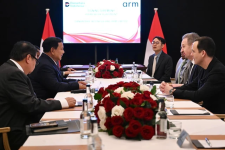
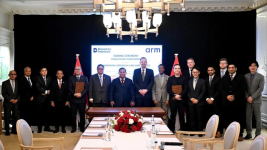
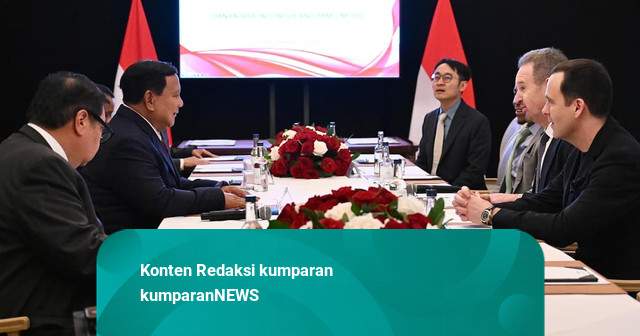
President of the Republic of Indonesia, Prabowo Subianto, witnessed the signing of a framework agreement between the Danantara Indonesia Investment Management Agency (BPI Danantara) and Arm Limited in London, United Kingdom, on Monday (February 23).

Coordinating Minister for Economic Affairs, Airlangga Hartarto, stated that the cooperation aims to accelerate semiconductor technology development in Indonesia.

“This cooperation enables Indonesia to master semiconductor technology, and Arm is one of the companies that dominates the semiconductor market, particularly in terms of design. This is the most upstream part of the semiconductor industry itself,” Airlangga said in an official statement from the Presidential Secretariat’s Press, Media, and Information Bureau on Tuesday (February 23).

1771931261640.png

According to Airlangga, Arm controls approximately 96 percent of chip technology for the global automotive sector and nearly 94 percent of chip designs for data centers and artificial intelligence.

“With this cooperation, it is expected that Indonesia can train 15,000 of our engineers within the Arm ecosystem, so they can master chip design technology. The cooperation plan will also extend to the next generation of semiconductors or chips, so that Indonesia will have capabilities in the semiconductor and design sectors,” he explained.

Meanwhile, Minister of Investment and Downstream Industry / Head of BPI Danantara, Rosan Perkasa Roeslani, stated that six industries will be selected for chip development.

“There will indeed be six industries chosen for the development of these chips, and as conveyed by the Coordinating Minister, 15,000 of our engineers will be trained by Arm, either by sending them here or by having Arm’s instructors come to Indonesia with their modules,” Rosan said.

Furthermore, Airlangga explained that the six national chip design developments will focus on strategic intellectual property (IP).

“These six are IPs—intellectual property—that we can select, whether one for automotive technology, second for the Internet of Things, third related to data centers, and also possibly home appliances. The remaining two could be futuristic fields, particularly autonomous vehicles and quantum computing, among others. All of this will still be discussed with Danantara, so that the IP will be held by Indonesia,” Airlangga concluded.


Indonesia, UK-Based Arm in Talks for $200 Million Project​


Jayanty Nada Shofa
March 5, 2026 | 1:25 pm


Jakarta. Indonesia and the UK-based semiconductor giant Arm are in talks for a $200 million project, according to a senior minister; however, the government still wishes to keep the timeline and technical details a secret.


Sovereign wealth fund Danantara and Arm recently agreed to train 15,000 Indonesian engineers in chip design.


Chief Economic Affairs Minister Airlangga Hartarto revealed on Thursday that Arm was keen on moving to the “next phase”. Negotiations are now underway for a new “special project” that will be separate from the earlier human capital development.

“We are still negotiating [with Arm]. That’s why we can’t disclose it,” Airlangga told reporters in Jakarta.

The cooperation is worth "around $200 million”.


The Jakarta Globe asked Airlangga whether this meant Arm sought to help establish a foundry or semiconductor product manufacturing in Indonesia, something that the minister denied.


Airlangga described Arm as “the brain that mainly deals with the software side” of semiconductor production. Arm licenses its architecture to other companies for chip development. His response hinted that the upcoming cooperation would be on the design aspect.


Even so, Indonesia had just secured US business deals on foundries, Airlangga said. The economic tsar was alluding to the multi-billion-dollar deals secured by Galang Bumi Industri, which operates an eco-industrial park in the Batam island. The agreements — involving the US-based Tynergy and Essence — revolve around the semiconductor manufacturing processes. Investments related to ingot wafer, wafer slicing, and fabrication are in the pipeline.


Developing a homegrown comprehensive semiconductor ecosystem has long been on Indonesia’s wishlist.


US semiconductor firm Fairchild used to run an assembly, testing, and packaging facility in Indonesia decades ago. The company decided to relocate to close neighbor Malaysia in the 1980s following Jakarta’s ban on automation to protect labor. Indonesia at the time lacked the domestic capacity to sustain its foothold in the semiconductor industry after Fairchild’s exit, Airlangga said.


250 Indonesian Coal-Fired Power Plants Could Hold a ‘Treasure Trove’ for the World’s Future​


Firda Dwi Muliawati
11 September 2026

1789297220643.png

Jakarta, CNBC Indonesia – The Mineral Industry Agency (BIM) has identified the potential for a “treasure trove” of rare earth elements (REEs) contained in combustion residues from more than 250 coal-fired power plants (PLTUs) across Indonesia. The potential sources of REEs include monazite, xenotime, ion-adsorbed clay (IAC), as well as fly ash and bottom ash (FABA).

Rare earth elements are widely used as essential materials in various advanced technologies, including smartphones, electric vehicle batteries, superconductors, wind turbines, and missiles.

Yogi Wibisono Budhi, BIM Deputy for Research and Technology Development, said secondary sources generated by coal-fired power plant operations have become one of the areas of focus in mapping Indonesia’s strategic mineral resources.

“We have, for example, monazite, xenotime, and IAC in the Mamuju area. Then there is also red mud, as well as fly ash and bottom ash at a number of coal-fired power plants. We have more than 250 coal-fired power plants spread across Indonesia, and these contain various rare earth elements that present a challenge in terms of how we can utilize them,” he said at an event organized by the Indonesian Mining Experts Association (Perhapi), as quoted on Friday (September 11, 2026).

Rare earth elements can be obtained from three types of sources: primary, secondary, and tertiary sources. Utilizing mining and industrial residues is considered increasingly important as demand for minerals, including REEs, for future technologies continues to grow.

Based on International Energy Agency (IEA) data cited by BIM, mineral requirements for electric vehicles are six times higher, while mineral requirements for onshore wind power are nine times higher compared with gas-fired power generation systems.

“Going forward, the shift toward resources containing minerals that can be processed into rare earth elements will become an important strategic strength that needs to be taken into consideration,” he said.

Rare earths consist of 17 metallic elements belonging to a closely related group on the periodic table, making their separation into individual elements technically challenging. Elements such as neodymium (Nd), praseodymium (Pr), dysprosium (Dy), terbium (Tb), and yttrium (Y) are needed as raw materials for permanent magnets used in electric vehicle motors and wind turbines, while scandium is used in aluminum alloys.

Indonesia is exploring ways to increase the utilization of its domestic REE potential as countries around the world are also developing these strategic resources.

“As a result, global competition has shifted from simply possessing reserves—even if those reserves are substantial—toward how these supply chains can be developed,” he explained.

Meanwhile, exporting raw materials only to import them again in the form of finished products could potentially result in thousands of trillions of rupiah in lost economic value for Indonesia due to the loss of value added.

To address this issue, BIM plans to coordinate cooperation among ministries, government agencies, the National Research and Innovation Agency (BRIN), universities, and the mining industry to accelerate domestic research into extraction and refining technologies.

“Therefore, BIM’s role here is to bridge that gap. We want to connect research conducted by universities and research institutions such as BRIN with the actual needs of industry,” he concluded.

(pgr/pgr)
 

Users who are viewing this thread

Pakistan Defence Latest

Back
Top