Indonesia state owned enterprise super-holding will be started with asset at 1 trillion USD (2024)

Status
Not open for further replies.
Danantara Showcases More Than 40 Major Projects, From AI to National E-Commerce​


Novina Putri Bestari, CNBC Indonesia
26 October 2026


Jakarta, CNBC Indonesia – Indonesia's sovereign investment management agency, Danantara, is undertaking more than 40 projects across several industrial sectors, including energy, food, healthcare, agriculture, telecommunications, defense, maritime industries, and materials.

In the energy sector, Danantara is developing projects ranging from 100 gigawatts (GW) of solar power capacity to coal conversion.

“We have numerous projects in the energy sector, including the development of 100 gigawatts of solar power capacity and the conversion of coal into dimethyl ether (DME) to reduce dependence on liquefied petroleum gas (LPG), which has long required substantial government subsidies,” said Danantara Chief Technology Officer (CTO) Sigit Puji Santosa at the Danantara Technology Innovation Investment Forum 2026 in Jakarta on Monday, October 26, 2026.

Other initiatives include nuclear power generation, which is expected to introduce clean energy and advanced technologies, as well as refinery development, electric vehicle batteries, and waste-to-energy processing.

Projects in the food and healthcare sectors include biopharmaceutical products, vaccines, and pharmaceutical raw materials.

Meanwhile, the telecommunications sector includes the development of data centers with a capacity of 1 gigawatt (GW).

“In the telecommunications industry, we are developing sovereign national artificial intelligence (AI), a national e-commerce platform, a national cloud infrastructure, 1-gigawatt data centers, a national blockchain, and trust systems for digital technologies,” Sigit explained.


Danantara is also pursuing projects in the defense, maritime, and aerospace sectors, including advanced maritime systems and improvements in defense capabilities.

Within the advanced materials cluster, the agency is developing projects involving rare earth elements, copper, rubber-resistant steel, steel plates, and various other advanced materials.

Finally, the other industries cluster focuses on semiconductors, including chip development and computing devices.

(dem/dem)

 
1/ Danantara Indonesia is holding the Danantara Technology Innovation Investment Forum (DTIIF) 2026 on October 26–28, 2026, at Fairmont Jakarta.

Well, in this exhibition, PT Len Industri is showcasing the ADAS AI chip and semiconductor wafer.

2/ Chip AI ADAS is a processor chip specifically designed to implement ADAS (Advanced Driver-Assistance Systems) functions in the automotive field.


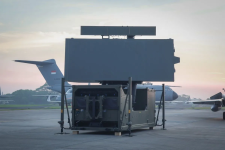
LEN’s facilities include testing and integration facilities, as well as a possible management building for the GCI GM-403 radar factory.

1793071699016.png
1793071722858.png
1793071740314.png
 

Indonesia Needs 320 Ethanol Plants to Support 50% Gasoline Blending Target​


Antara
October 26, 2026 | 10:31 pm


Jakarta.
Indonesia would need to build 320 ethanol production plants to support a proposed nationwide program to blend gasoline with 50% ethanol, known as E50, Higher Education, Science and Technology Minister Brian Yuliarto said Monday.

The proposed E50 program would represent a major expansion of Indonesia's biofuel ambitions, complementing its efforts to increase the use of palm oil-based biodiesel as a substitute for conventional diesel fuel.

Earlier this year, the government launched the B50 program, which mandates a blend of 50% palm oil-derived biodiesel and 50% petroleum diesel.

"To meet the requirements of E50, we need to establish 320 ethanol plants, each with a production capacity of 60,000 kiloliters," Brian said at the Danantara Technology & Innovation Investment Forum (DTIIF) in Jakarta.

The proposed facilities would have a combined production capacity of 19.2 million kiloliters of ethanol, assuming the stated capacity refers to annual output.


Brian said developing a domestic ethanol industry would create opportunities to redirect spending on imported energy toward investment in Indonesian manufacturing and agricultural processing.

Indonesia currently spends an estimated $30 billion to $50 billion on energy imports, he said.

He argued that expanding ethanol production and increasing the use of biodiesel could strengthen energy security while accelerating industrial development.

The minister emphasized that the initiative would require cooperation among the government, universities and private businesses.

Higher education institutions could contribute through research, technological development and workforce training to meet the industry's growing demand for specialized skills, he said.


Indonesia Faces Major Ethanol Production Gap
Indonesia has begun introducing ethanol-blended gasoline on a limited scale, with plans to expand the ethanol content to 10% under the E10 program next year.

State-owned energy company Pertamina has marketed an ethanol-blended gasoline product, Pertamax Green 95, since June 2023.

Domestic ethanol production currently relies primarily on sugarcane and cassava, although the government is exploring alternative feedstocks that are more affordable and readily available.

Indonesia currently has five major bioethanol production facilities located across East Java, Lampung, Central Java and Yogyakarta, with combined effective production capacity of approximately 70,500 kiloliters per year.

That capacity remains well below the estimated 500,000 kiloliters of ethanol required for the planned E10 program in 2027.

 
Danantara-Affiliated Companies Hold Toll Road Portfolios Equivalent to Around 85% of Indonesia's Operational Network​


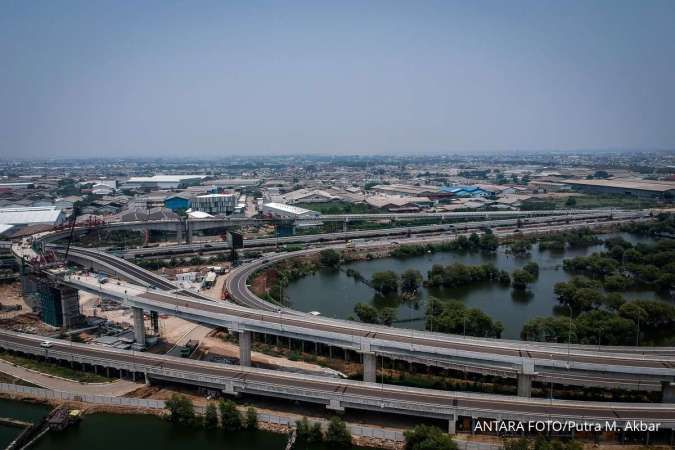
Toll road development in Central Java


Indonesia's toll road industry is dominated by state-owned enterprises affiliated with Danantara, particularly Jasa Marga, Hutama Karya, and Waskita Karya through its subsidiary Waskita Toll Road.

Together, these three companies have reported toll road operations and investment portfolios totaling approximately 2,643 kilometers, equivalent to 85.3% of Indonesia's 3,100-kilometer operational toll road network on a gross basis.

Jasa Marga operates approximately 1,318 kilometers, while Hutama Karya manages another 872.5 kilometers. Waskita Toll Road's estimated remaining investment portfolio covers approximately 453 kilometers.

Indonesia's toll road network comprises 76 operational sections, supported by cumulative investments of Rp779 trillion.

The government also plans to develop another 2,461 kilometers of toll roads through 2029, potentially strengthening the role of Danantara-affiliated companies in Indonesia's transportation infrastructure development.

 
Government Reviews Preparations for Single-Channel Exports Through PT DSI in 2027: Here Are the Results​


Robertus Andrianto
03 November 2026


Jakarta, CNBC Indonesia – Several ministers and heads of government agencies attended a limited coordination meeting at the Office of the Coordinating Ministry for Economic Affairs in Jakarta on Tuesday, November 3, 2026.

The meeting evaluated preparations for implementing a single-channel export system through the state-owned export enterprise PT Danantara Sumberdaya Indonesia (DSI), scheduled to begin on January 1, 2027.

The system will cover three strategic natural resource commodities: coal, crude palm oil (CPO), and ferroalloys.

According to CNBC Indonesia's observations, the meeting was attended by Coordinating Minister for Economic Affairs Airlangga Hartarto, Trade Minister Budi Santoso, Deputy Finance Minister Nurkholisoh Ibnu Aman, Deputy Head of the State-Owned Enterprises Regulatory Agency (BP BUMN) Aminuddin Ma'ruf, and Head of the National Single Window Agency (LNSW) Oza Olavia.

Trade Minister Budi Santoso, commonly known as Busan, explained that the meeting discussed preparations for the transition to the single-channel export system, which runs until December 31, 2026, as stipulated in Government Regulation (PP) No. 24 of 2026.

“Under the government regulation, DSI will begin operating on January 1. We are currently in the transition period, which runs until December 31. So we are evaluating preparations and other matters. There will be another meeting,” Budi told reporters.

He explained that the evaluation aims to ensure a smooth transition so the new system can operate as expected when implementation begins.

Deputy Head of BP BUMN Aminuddin Ma'ruf added that the meeting also discussed the Indonesian government's 1% Series A Dwiwarna share in PT DSI, commonly referred to as a golden share, which carries special rights.

“The President's mandate is for PT DSI to operate as a state-owned enterprise. We discussed the 1% golden share,” Aminuddin told reporters.

Aminuddin emphasized that PT DSI will not take ownership or physical control of the commodities being exported.

Instead, its role will be to verify contracts and other export procedures through a centralized system.

He explained that export data for the three strategic natural resource commodities will be processed through PT DSI's single-channel system, which will be integrated with the Directorate General of Customs and Excise's Customs Excise Information System and Automation (CEISA).

“DSI's data will be integrated with Customs and Excise specifically for these three commodities,” he added.

Regulations Governing Exports Through DSI​

Minister of Trade Regulation (Permendag) No. 15 of 2026 is an implementing regulation of Government Regulation (PP) No. 24 of 2026 concerning the Governance of Strategic Natural Resource Commodity Exports.

The new ministerial regulation consists of 13 articles. It was signed by Trade Minister Budi Santoso on May 29, 2026, and officially took effect on June 1, 2026.

The government has established a dedicated state-owned export enterprise, PT Danantara Sumberdaya Indonesia (PT DSI).

Under the new framework, exports of strategic natural resource commodities, including coal, crude palm oil, and ferroalloys, will be conducted through DSI.

Specific technical provisions governing coal exports through the state-owned export enterprise are stipulated in Article 11 of Minister of Trade Regulation No. 15 of 2026.

Article 11: Transitional Provisions for Coal Exports​

Upon the entry into force of this Ministerial Regulation, the following provisions apply:

a. Validity of existing registered coal exporter licenses

Business licenses issued in the form of Registered Coal Exporter permits before the regulation took effect shall remain valid:

  • Until December 31, 2026; or
  • Until their original expiration date, if that date falls before December 31, 2026.
b. Use of existing export documentation during the transition

Business operators may continue using Registered Coal Exporter permits referred to in paragraph (a), together with Surveyor Reports, as supplementary customs documents for exporting strategic natural resource commodities through the state-owned export enterprise until December 31, 2026.

Compliance must be demonstrated through the registration number and date of the Export Customs Declaration issued by the customs office.

c. Export reporting and documentation requirements

Coal exports through the state-owned export enterprise, as referred to in paragraph (b), shall be conducted by business operators through:

  1. Reporting and submitting export documents, sales contracts, and other relevant documents to the state-owned export enterprise; and/or
  2. Providing additional data and information required by the state-owned export enterprise through an integrated system, which may operate automatically.
d. Early implementation of the centralized export system

If responsibility for exporting strategic coal commodities has been fully transferred to the state-owned export enterprise before December 31, 2026, such exports may only be conducted by the state-owned export enterprise.

e. Mandatory implementation after the transition period

Exports of strategic coal commodities conducted after December 31, 2026, may only be carried out by the state-owned export enterprise.

f. Treatment of previously registered export declarations

Coal exports that obtained an Export Customs Declaration registration number and date from the customs office before this Ministerial Regulation took effect may continue to receive export processing services from the Directorate General of Customs and Excise under the Ministry of Finance.

g. Continued recognition of appointed surveyors

Surveyors previously appointed to conduct verification or technical inspection of coal exports under regulations in force before this Ministerial Regulation took effect may continue performing their duties, provided their activities do not conflict with the provisions of the new regulation.

 
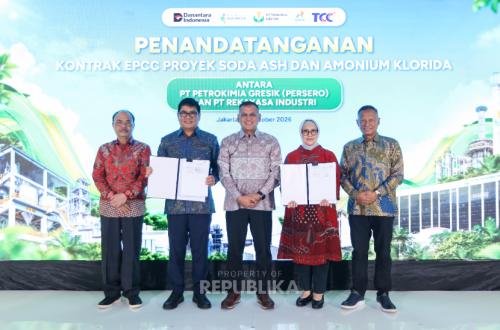
Petrokimia Gresik to Build Soda Ash and Ammonium Chloride Plant with Combined Capacity of 600,000 Tons

Friska Yolandha


JAKARTA – PT Petrokimia Gresik, together with PT Rekayasa Industri (Rekind), is developing a soda ash and ammonium chloride production facility with a combined annual capacity of 600,000 tons in Gresik, East Java.

The project aims to strengthen domestic chemical supplies while reducing Indonesia's dependence on imported products.

Construction of the new facility was marked by the signing of an Engineering, Procurement, Construction, and Commissioning (EPCC) contract between Petrokimia Gresik and Rekind in Jakarta on Friday, October 30, 2026.


The project is expected to be completed within 34 months.

The plant is designed to produce 300,000 tons of soda ash and 300,000 tons of ammonium chloride annually.

As part of its production process, the facility will utilize carbon dioxide (CO₂) from Petrokimia Gresik's existing operations as a raw material for soda ash production.

President Director of PT Pupuk Indonesia (Persero), Rahmad Pribadi, said the project aligns with efforts to strengthen food security, promote downstream industrial development, and increase national industrial self-sufficiency.

According to Rahmad, the project will support the diversification of nitrogen sources for NPK fertilizer production while expanding domestic chemical feedstock production.


“This is a project that supports the green transition. It incorporates carbon capture while also diversifying nitrogen sources for our NPK fertilizer production,” Rahmad said.

Soda ash is a basic industrial chemical widely used in glass manufacturing, detergents, paper production, textiles, and water treatment.

Meanwhile, ammonium chloride can be used as a nitrogen source in NPK fertilizer production and for other industrial applications.


Petrokimia Gresik President Director Daconi Khotob said the signing of the EPCC contract represents an important milestone following a series of project preparations and discussions.

“For Petrokimia Gresik, this is extremely important. It is not only about the business aspect but also the environmental aspect, because the project will absorb a significant amount of CO₂,” Daconi said.

Utilizing CO₂ from Petrokimia Gresik's existing facilities is expected to generate additional economic value by converting the gas into an industrial feedstock.

This integration is also part of the company's efforts to reduce carbon emissions from industrial activities.

Beyond CO₂ utilization, the plant's location within the Gresik industrial area is considered strategically advantageous because of its proximity to several industries that use its products.

This proximity could improve distribution efficiency and strengthen the competitiveness of the products in the domestic market.


Daconi emphasized that the project's success would require close coordination between Petrokimia Gresik as the project owner and Rekind as the EPCC contractor.

“For us, the success of this project is not simply about building a new production facility, but also ensuring that every stage proceeds according to plan. Therefore, cooperation among all parties is essential to ensure the project is completed on schedule, within budget, and in accordance with established quality standards,” Daconi said.

Rekind President Director Triyani Utaminingsih said the company would handle all stages of the project, from engineering and procurement to construction and commissioning.

The project will also involve technology partners to support the implementation of soda ash production technology.

The facility will use HOU technology and is scheduled for completion within 34 months.

Rekind said it would prioritize quality, safety, timely completion, and the reliability of the finished facility.

“We are committed to ensuring that the project is implemented optimally by prioritizing quality, safety, timely completion, and the reliability of the completed facility,” Triyani said.

Through the development of this facility, Petrokimia Gresik and Pupuk Indonesia aim to strengthen Indonesia's domestic chemical supply chain, expand the production of value-added products, and promote the sustainable utilization of industrial resources.

 
Status
Not open for further replies.

Users who are viewing this thread

Back
Top