Indonesian Energy sector

Indonesia to Convert 9 Million Tons of Coal into Gas, Targeting 237 BBTUD Capacity​


Verda Nano Setiawan
15 April 2026


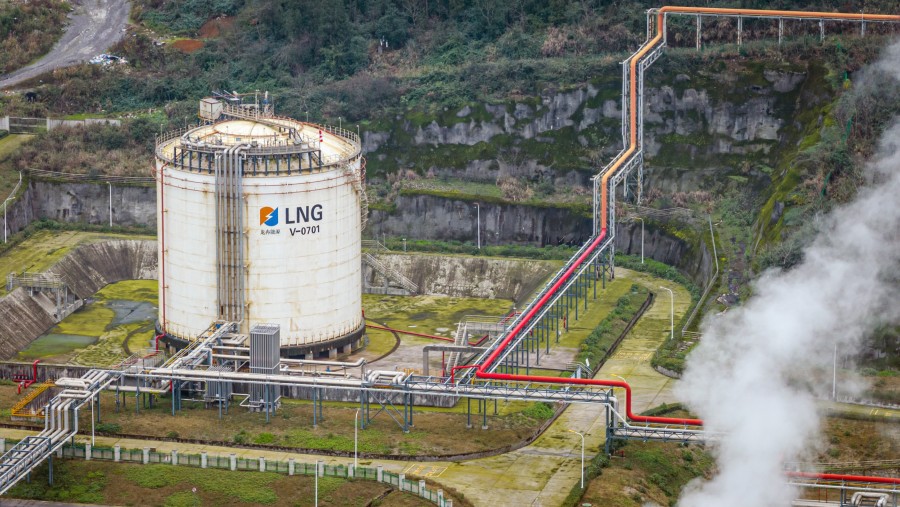
JAKARTA, CNBC Indonesia — Indonesia is accelerating its coal downstreaming strategy by converting coal into higher value-added energy products, as currently being developed by PT Bukit Asam Tbk (PTBA).

The state-owned coal company plans to process approximately 9 million tons of coal as feedstock for one of its key projects: coal-to-Synthetic Natural Gas (SNG).


⚡ SNG Project Capacity​

President Director of PTBA, Arsal Ismail, stated that the project is designed to:

  • Provide an alternative gas supply
  • Serve regions from South Sumatra to West Java
The project is expected to generate:

237 BBTUD (Billion British Thermal Units per Day) of syngas

🤝 Strategic Partnership​

Under the development scheme:

  • PTBA will form a joint venture with PT Perusahaan Gas Negara Tbk (PGN)
  • PGN will act as the 100% offtaker of the SNG produced

🔄 Additional Downstream Project: DME​

In addition to SNG, PTBA is also developing:

Coal-to-Dimethyl Ether (DME)​

  • Target capacity: 1.4 million tons
  • Purpose: Substitute imported LPG
  • Value addition: up to 4.3 times higher
In this project:

  • PTBA → Operator + coal supplier
  • Pertamina → Full offtaker

🏗️ Project Status​

The project is still under development and is being coordinated with Danantara, with expectations that improved economic feasibility will strengthen PTBA’s performance.

“We are still in process, working with Danantara. Hopefully, the project’s economics will further improve PTBA’s outlook,” said Arsal.

🔎 Strategic Insight (for your system)​

This article reflects:

  • Indonesia’s push toward energy downstreaming
  • Efforts to reduce LPG imports
  • Expansion of coal-based alternative energy

🧠 Clean analytical sentence​

The project will convert 9 million tons of coal annually into synthetic natural gas, producing 237 BBTUD, positioning it as a key component of Indonesia’s energy diversification strategy.


KUFPEC to Invest $1.5 Billion in Indonesia, Natuna D-Alpha Back in Focus​


Godang
April 10, 2026


1776442729729.png


JAKARTA — Positive developments are emerging from Indonesia’s upstream oil and gas sector, as Kuwait Foreign Petroleum Exploration Company (KUFPEC) plans a major investment of:

$1.5 billion USD during 2025–2026

💰 Investment Plan​

According to SKK Migas Head Djoko Siswanto, the investment is expected to begin realization in:

  • May 2026
The plan involves:

  • Acquisition of a major participating interest (PI)
  • In a strategic oil and gas block in Indonesia
“Indonesia’s upstream oil and gas investment climate continues to perform well. We hope this major plan will be realized as expected,” Djoko stated on April 10, 2026.

🌊 Natuna D-Alpha Back in Focus​

Beyond the investment itself, attention is once again shifting to:

Natuna D-Alpha gas field

  • One of the largest gas reserves in Southeast Asia
  • Discovered decades ago
  • Yet still undeveloped due to technical and economic challenges

⚙️ Key Challenge: High CO₂ Content​

The main obstacle in developing Natuna D-Alpha has been:

  • Very high CO₂ content
👉 Making extraction:

  • Technically complex
  • Economically challenging

🤝 KUFPEC’s Strategic Role​

KUFPEC currently serves as:

  • Operator of the Natuna D-Alpha block
With the new investment:

There is renewed optimism to accelerate development of this massive gas field

🔎 Strategic Importance​

The project is expected to:

  • Strengthen Indonesia’s energy security
  • Unlock strategic gas reserves
  • Enhance Indonesia’s attractiveness for global energy investment

🧠 Clean analytical sentence​

KUFPEC’s planned $1.5 billion investment signals renewed momentum in developing the Natuna D-Alpha gas field, potentially unlocking one of Southeast Asia’s largest but most technically challenging gas reserves.


Mahakam Block Adds 20 Million Cubic Feet per Day of Gas Production​


Heri Purnomo
Jumat, 17 Apr 2026

To view this content we will need your consent to set third party cookies.
For more detailed information, see our cookies page.


JAKARTAPT Pertamina (Persero) continues to strengthen Indonesia’s energy security by optimizing domestic oil and gas production, marked by an increase in gas output from the Mahakam Working Area (WK Mahakam).

The company has added:

20 million standard cubic feet per day (MMSCFD) of gas production
This increase comes from the Sisi Nubi Area of Interest 1-3-5 (SNB AOI 1-3-5) Project.


⚡ Production Details​

According to Pertamina’s Vice President of Corporate Communication, Muhammad Baron, this production increase represents a concrete step to maintain national energy supply stability amid global uncertainty, including geopolitical tensions in the Middle East.

“Pertamina consistently drives domestic oil and gas production as the foundation of national energy security,” Baron stated on April 17, 2026.

🛢️ Source of Additional Production​

The additional gas output was achieved by Pertamina Hulu Mahakam (PHM) through:

  • Operation of WPN-7 platform
  • Wells:
    • NB-7019.8 MMSCFD (since March 25, 2026)
    • NB-70212.5 MMSCFD (since March 26, 2026)
👉 Combined output will be optimized to reach a sustained 20 MMSCFD target


🏗️ Project Progress​

  • WPN-7 → 3rd active platform
  • Total planned platforms → 6 platforms
Previous milestones:

  • WPS-4 → operational since December 4, 2025
  • WPS-5 → operational since February 23, 2026
This indicates:

Consistent, integrated, and on-schedule field development

🔎 Strategic Importance​

The project highlights:

  • Strengthening domestic gas supply
  • Reducing reliance on external energy sources
  • Enhancing operational resilience amid global disruptions

🧠 Clean analytical sentence​

The Mahakam Block has increased gas production by 20 MMSCFD, reinforcing Indonesia’s domestic energy supply amid global geopolitical uncertainty.

⚠️ Clarification (important)​

  • 20 MMSCFD → Daily additional production
  • This is an incremental increase, not total field production


SKK Migas Urges Contractors to Partner with Community Wells as Production Targets Come Under Pressure​


Godang
July 26, 2025


To view this content we will need your consent to set third party cookies.
For more detailed information, see our cookies page.

Pertamina JTB gas field, East Java


JAKARTA — Indonesia’s upstream oil and gas regulator, SKK Migas, is urging Production Sharing Contract Contractors (KKKS) to immediately formalize Operational Cooperation Agreements (KSO) with operators of community-managed oil wells within their respective working areas.

“From our side, the KSO should be formalized as soon as possible. The cooperation model can be agreed upon later,” said Hudi D. Suryodipuro, Head of Program and Communications Division at SKK Migas, on July 25, 2025.

🛢️ Integrating Community Wells into National Production​

This move is considered critical because:

  • Output from community wells will be counted as part of KKKS production
  • It directly affects:
    • National oil production levels
    • KKKS Work Program & Budget (WP&B) targets
“If cooperation does not materialize and production from community wells is not recorded, KKKS production targets may not be achieved,” Hudi emphasized.

⏱️ Immediate Timeline​

SKK Migas targets that:

  • By August 1, KKKS should begin:
    • Purchasing oil from community wells
Currently:

  • Community well operators are completing:
    • Documentation
    • Administrative requirements

🔥 Domestic Gas Priority Policy​

SKK Migas also reaffirmed its policy to prioritize domestic gas supply:

  • ~70% of national gas supply (pipeline + LNG) → allocated for domestic use
  • ~30% → exported under existing contracts
“Supply is prioritized for domestic needs. Nearly 70% of national gas is allocated domestically,” Hudi stated.

⚡ Priority for Power Sector​

Gas demand from PT PLN Energi Primer Indonesia (PLN EPI) is classified as:

  • Domestic priority demand
“PLN EPI’s needs fall under domestic allocation and will be prioritized,” Hudi added.

🔎 Investor Insight​

This policy signals two key developments:

1. Oil Production Upside (Short Term)​

  • Integration of community wells
  • Potential increase in non-conventional oil output
  • More flexible achievement of WP&B targets

2. Gas Market Opportunity (Medium Term)​

  • Strong domestic allocation (70%)
  • Expanding opportunities in:
    • Gas infrastructure
    • Downstream investment
    • Power generation

🧠 Clean analytical sentence​

SKK Migas is accelerating integration between contractors and community wells to boost national oil production, while maintaining a strong domestic gas allocation policy of approximately 70%.

⚠️ Clarifications​

  • Community wells → Small-scale, locally managed oil wells (often informal or semi-formal)
  • KSO (Operational Cooperation Agreement) → Partnership structure to formalize production
  • 70% gas allocation → Policy-based distribution, not fixed production level


How does the Middle East conflict affect Asia​


Asia Investment Strategy Group

1776576696883.png


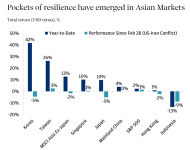
The escalation of the U.S.-Iran conflict and the resulting closure of the Strait of Hormuz have sent shockwaves through global energy markets. As one of the world's most energy-import-dependent regions, Asia faces a uniquely challenging set of economic and financial consequences — from surging fuel costs and rising inflation to weakening growth and mounting fiscal pressures. Yet the impact is far from uniform, as evident from the diverging performance of Asian equity markets.
1776576885130.png

The diversity of Asia's economies — spanning commodity exporters and importers, manufacturing powerhouses and services-oriented hubs — means the conflict's effects vary dramatically across economies and asset classes, especially when considering their varying sensitivities to oil and gas prices.

This paper examines the macro and market implications through various scenarios for oil prices and traces their consequences across the region's major economies, equity markets, and credit complexes. Our base case assumes the conflict resolves within months, but we also consider outcomes under more adverse scenarios to help investors position for a range of possibilities.

China: insulated but not immune​

Despite being the world's largest destination for oil and liquefied natural gas transiting the Strait of Hormuz, China's economy appears relatively insulated. Its energy mix remains structurally less oil- and gas-intensive, with coal, nuclear, and renewables accounting for roughly three-quarters of total supply. Even within oil and gas imports, dependence on the Middle East is modest at approximately 35%, containing the direct growth impact from higher energy prices.

That said, a prolonged conflict that meaningfully slows global growth would weigh on China through weaker external demand — particularly as exports have emerged as the single most important growth engine amid soft domestic momentum.

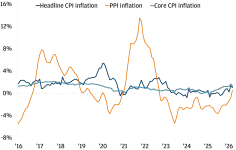
The inflation implications need to be assessed against China’s entrenched deflationary backdrop. War-related commodity price shocks drove a turnaround in headline producer prices in March, with PPI rising 0.5% year-on-year — the first positive print after 41 consecutive months of deflation. However, this rebound was almost entirely imported in nature, reflecting higher prices for oil and energy-related inputs. Consumer-facing producer prices remained firmly in deflation at -1.3% year-on-year, underscoring weak pass-through from upstream to downstream amid subdued domestic demand. CPI remains similarly muted, with gains largely offset by falling food prices and softer tourism-related services. We expect CPI to stay well anchored, particularly given ongoing domestic price controls that limit the transmission of higher fuel costs to households.
Comparisons with Japan's post-Ukraine reflationary episode — when imported inflation helped break a prolonged deflationary cycle — only go so far. We do not view this as a durable end to China’s PPI deflation. Persistent industrial overcapacity and a structural supply-demand imbalance remain at the core of China's deflation challenge, conditions that an external commodity shock alone is unlikely to resolve.

China’s producer price index turned positive after 41 months of deflation, but don’t call it a turning point yet​


China inflation (%)​

1776577300320.png


In Chinese equities, investors have refocused on fundamentals including AI developments, macro data, and belated fourth-quarter earnings. Reaction to earnings has been mixed, with internet platform giants prioritizing reinvestment into AI data center capacity, agentic AI, and e-commerce market share over near-term profit growth. Encouragingly, agentic AI adoption is accelerating — exemplified by the rapid uptake of autonomous AI agent OpenClaw — which could drive greater token usage and adoption of Chinese large language models. With earnings now largely reset, profit growth expected to accelerate, and valuations below ten-year averages, the risk-reward skews positively for offshore Chinese equities. We view the impact of oil prices on earnings as manageable, even if sustained at $100 per barrel.

Japan: walking a stagflationary tightrope​

Japan is among the most exposed markets to the Iran conflict. The economy's energy self-sufficiency ratio stands at just 13% — among the lowest for major developed markets and compared to China’s 76% — and it sees more than 90% of its crude oil imports transit the Strait of Hormuz. Domestic refinery infrastructure is largely configured to process Middle Eastern crude, making Japan particularly vulnerable to both supply disruptions and sustained price increases.
This exposure creates an especially challenging growth-inflation trade-off. Higher energy prices tend to slow output meaningfully while pushing core inflation higher, complicating the Bank of Japan's (BoJ) policy normalization path. Although the government has deployed gasoline subsidies to cushion the shock, the fiscal cost is substantial — estimated at roughly ¥500 billion per month — adding strain to an already vulnerable fiscal position and pointing to their role as a temporary buffer rather than a lasting solution.

The BoJ faces a difficult dilemma. In the near-term, it may need to accelerate rate hikes to stem imported inflation and anchor expectations. However, if the conflict is prolonged and demand destruction becomes more pronounced, the tightening bias could ultimately give way to renewed easing. Should oil prices plateau around $100 per barrel for three to six months, Japan's real GDP growth in 2026 could slow toward zero. Meanwhile, yen depreciation risks would rise. Authorities appear determined to defend USD/JPY around 160–162, but the credibility of this stance would be increasingly tested under a prolonged energy shock, as deteriorating terms of trade and mounting fiscal pressures could overwhelm the yen's traditional safe-haven status.

For equities, the industrials sector — by far the largest in Japan — is highly sensitive to U.S. and global growth. The near-term impact of higher energy prices, if contained to a few months, would have a modest negative effect on earnings, partially cushioned by a weaker yen. With just modest upside to our TOPIX outlook, we reiterate a neutral view, with select opportunities in banking, industrial, and technology sectors offering alpha potential.

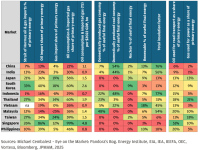
Asia’s sensitivity to energy prices varies significantly​

Asia oil & gas sensitivity heat map

1776577163604.png

Southeast Asia: the sharp end of the energy shock​

ASEAN economies are among the most exposed to the conflict given their heavy reliance on Middle Eastern energy imports — roughly half of Asia's crude and over a third of its gas imports transit through the Strait of Hormuz. The impact of the conflict has been immediate and severe: the Philippines declared a national energy emergency after gasoline prices more than doubled, Indonesia and Vietnam introduced energy rationing, and Thailand's fisheries sector began shutting down due to a surge in marine fuel costs.

The macro consequences may be acute if oil prices remain sustained at $100 or higher for several months. Higher energy prices feed directly into food inflation — which accounts for 25–35% of ASEAN CPI baskets — compressing household purchasing power and weighing on consumption. Central banks face a classic stagflationary bind: tightening into weakening growth to contain inflation, with limited fiscal buffers to cushion the blow. The Philippines, with only approximately 45 days of crude stockpile buffers, faces sustained fiscal and currency pressure. Indonesia's fuel subsidy costs are mounting, and Thailand's tourism and fisheries sectors could face prolonged disruption. Critically, Asian importers pay a premium for oil in their region, which largely trades on Dubai prices, which has a spread over Brent prices. This implies roughly 30% higher effective crude costs than the headline suggests.

The conflict is accelerating structural shifts toward energy diversification and supply chain resilience across the region. Malaysia offers relative safety as a net energy exporter, while Singapore — though a net importer of energy — is better equipped than most ASEAN peers to manage the shock given its strong fiscal position and role as a refining and trading hub, which has also led to a relatively stable equity market and currency amid regional demand for safe haven assets.

Asia credit: a patchwork of resiliency​

There is a growing view suggesting that Asia credit could be negatively impacted by higher oil prices — a fair observation, particularly for net importers such as India, Korea, and the Philippines. However, the picture is more nuanced than headlines suggest.

Sensitivity varies meaningfully across the region: India, as one of the world's largest oil importers, is directly exposed; Hong Kong has limited direct linkage given its services-oriented economy; and Indonesia carries a partial natural hedge through its own energy exports, though higher oil prices can still strain its fiscal balance given domestic fuel subsidy obligations.

Importantly, many issuers carry strong buffers to absorb losses, and the high-quality composition of the index — 87% investment grade versus approximately 50% for broader emerging market debt — provides a meaningful layer of resilience. Our bottom-up analysis suggests this year's Asia high-yield default rate is likely to be among the lowest in five years at approximately 2.5%, reflecting cleaner balance sheets post-default cycle and a limited near-term maturity wall. While geopolitical developments may continue to pressure sentiment and drive further spread widening, meaningful value is emerging given the significant repricing in rates.

Investment implications​

The Iran conflict has laid bare the vulnerabilities running through Asia's economies and markets, but it has also created opportunities for disciplined investors. Our base case — a resolution within months — points to a manageable impact on earnings and a compelling entry point across several markets, with compressed valuations offering attractive risk-reward.

For long-term investors, the key takeaway is the importance of diversification across geographies, asset classes, and structural themes. In equities, AI-driven earnings momentum in Korea and Taiwan provides a powerful secular tailwind, while China's reset valuations and accelerating AI adoption offer potential upside. In credit, Asia's investment-grade-heavy composition and declining default rates provide a resilient foundation, with repriced spreads creating selective value. Across Southeast Asia, the divergence between economies underscores the need for granular country selection, with Singapore emerging as an oasis of relative stability. Over the long-term, there could also be opportunities for these economies to undertake energy transition and diversification to reduce their reliance on oil and gas from the Middle East.

The duration and severity of the energy disruption would ultimately determine macro and market outcomes. But across scenarios, the investors well-positioned to navigate this environment are those who resist the temptation to retreat from the region and instead lean into the beneficiaries of structural growth stories — focusing on AI and global fragmentation.


Eni eyes third production hub after latest giant discovery in Indonesia’s prolific Kutei basin​


Updated 10 minutes ago


Preliminary estimates indicate Geliga-1 has 5 trillion cubic feet of in-place gas resources that could underpin fast-track project

1776671580238.png
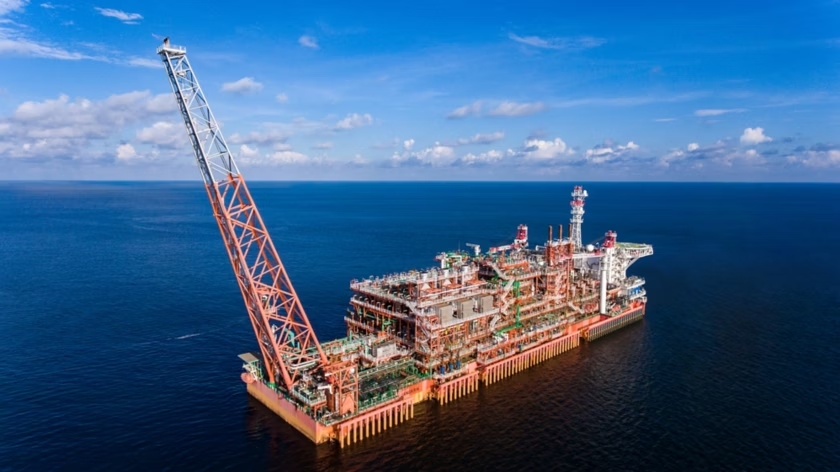
Eni's Jangkrik floating production unit offshore Indonesia.
Photo: ENI

Eni has drilled its fourth successful well in six months offshore Indonesia, where its latest wildcat, Geliga-1, has made another giant gas discovery that could underpin its third production hub in the prolific Kutei basin.


Italy's Eni makes giant Indonesian offshore gas discovery​


MILAN, April 20 : Eni has made a giant gas discovery in the Ganal block offshore Indonesia, the Italian oil and gas group said on Monday in a statement.

• Preliminary estimates indicate in-place resources of approximately 5 trillion cubic feet (Tcf) of gas and 300 million barrels of condensate.

The discovery was made by the Geliga-1 exploration well at a total depth of around 5,100 metres in a water depth of about 2,000 metres, Eni said in the statement.

• Analyses are ongoing to evaluate accelerated development options, considering the proximity to existing and planned infrastructure, which offers potential synergies in time-to-market and cost optimisation, it said.

• Eni has been present in Indonesia since 2001 and holds a diversified upstream portfolio across exploration, development and production activities.

Source: Reuters


Indonesia To Stop Diesel Imports From July 1, As Palm Oil B50 Shift Takes Effect​


By Editor
April 19, 2026

Indonesia said it will stop importing diesel fuel starting July 1, 2026, in line with the implementation of B50, a biofuel blend consisting of 50 percent diesel and 50 percent crude palm oil (CPO).

“We will no longer import diesel. Per July 1, 2026, we will stop (diesel import), as B50 comes into effect,” Minister of Agriculture Andi Amran Sulaiman stated at the Sepuluh Nopember Institute of Technology (ITS) here on Sunday.

According to him, the move is part of the government’s efforts to strengthen national energy independence by utilizing palm oil as an alternative fuel.

He explained that palm oil can be processed not only into diesel but also into gasoline and ethanol, whose development is currently being accelerated.“This is Indonesia’s future energy, as it is sourced from palm oil. Palm oil can become diesel, and it can also become gasoline,” he said.

In addition, the government is also preparing cooperation with state-owned plantation firm PTPN IV to develop palm oil-based gasoline on a small scale before expanding it into a large-scale industry.

“If this succeeds, we will expand it on a large scale. Indonesia’s future is bright,” he said.


--------------

Indonesia to End Diesel Imports in 2026 as Balikpapan Refinery Comes Online​


Fuad Iqbal Abdullah, Celvin Moniaga Sipahutar
January 12, 2026 | 9:30 pm


1776673544227.png
The newly inaugurated Pertamina Balikpapan Refinery operates in Balikpapan, East Kalimantan, on Monday, Jan. 12, 2026. (Beritasatu.com/Fuad Iqbal)


Balikpapan, E. Kalimantan. Indonesia will stop importing diesel fuel in 2026 as output from the newly upgraded Balikpapan refinery pushes domestic supply into surplus, Energy and Mineral Resources Minister Bahlil Lahadalia said during the refinery inauguration on Monday.

Bahlil said state oil and gas company Pertamina's Balikpapan Refinery in East Kalimantan will generate a diesel surplus of 3 million to 4 million kiloliters a year, allowing the country to fully rely on domestic production.

“We will no longer import diesel,” Bahlil said during a visit to Pertamina’s Refinery Unit V in Balikpapan.


He added that the government will no longer issue permits to import diesel starting this year, including for private fuel retailers, such as Shell and BP. Any diesel cargoes that still arrive in January or February 2026, he said, will be part of import contracts approved in 2025.


“Starting this year, I will no longer issue diesel import permits. There will be no new diesel import licenses,” Bahlil said. “If there are still shipments early next year, those are simply the realization of permits issued last year.”

The Balikpapan project, valued at $7.4 billion or around Rp 123 trillion, is the largest refinery revitalization project in Indonesia’s history. Covering more than 80 hectares, it is a cornerstone of the government’s strategy to modernize downstream energy infrastructure and reduce dependence on fuel imports.

The upgrade lifts the refinery’s processing capacity from about 260,000 barrels per day to 360,000 barrels per day — equivalent to roughly a quarter of Indonesia’s total fuel demand. The increase is expected to sharply reduce imports, particularly diesel, which has been a major drag on the country’s trade balance.

According to the Energy Ministry, the Balikpapan refinery could save Indonesia up to Rp 68 trillion annually in fuel import costs. Its broader economic impact is projected to reach Rp 514 trillion in cumulative contributions to gross domestic product.

Beyond higher volumes, the refinery will also produce higher-quality fuels. The upgraded facility is capable of producing diesel, gasoline, jet fuel, and liquefied petroleum gas (LPG), with specifications improved from Euro II to Euro V standards, making the fuels cleaner and more environmentally friendly.

“With this refinery, we are not just increasing capacity,” Bahlil said. “We are strengthening Indonesia’s energy independence.”


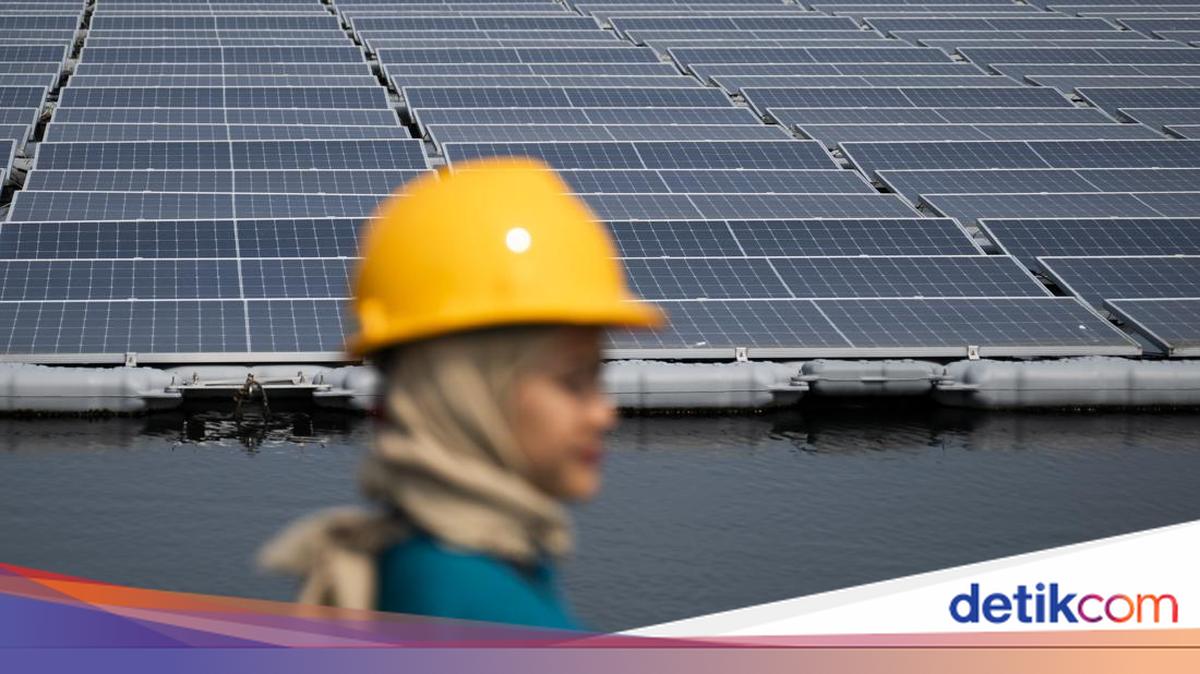
Indonesia Plans to Use Dams for Solar Power, Potential Addition of 15 GW​


Heri Purnomo
21 Apr 2026

To view this content we will need your consent to set third party cookies.
For more detailed information, see our cookies page.

Karian Dam, Banten Province, Java Island


JAKARTA — Indonesia’s Ministry of Energy and Mineral Resources (ESDM), in coordination with the Ministry of Public Works (PU), is mapping dams for the development of solar power plants (PLTS).

Director General of New and Renewable Energy Eniya Listiani Dewi stated that:

Around 20% of dams built by the Ministry of Public Works could be utilized for solar power generation.
This initiative is estimated to add:

More than 15 gigawatts (GW) of additional solar capacity

⚡ Supporting National Solar Targets​

The mapping effort is part of a broader strategy to accelerate Indonesia’s solar energy capacity, with a target of:

100 GW of installed solar capacity by 2029
According to Eniya:

  • The goal is not only to increase capacity
  • But also to create demand to support the domestic solar industry

📊 Current Solar Capacity​

Indonesia’s current solar power capacity stands at:

  • ~1.5 GW total installed capacity
  • 895 MW from rooftop solar systems

🌱 Expansion Strategy​

The government is promoting multiple solar deployment models:

  • Ground-mounted solar
  • Rooftop solar
  • Floating solar (on water bodies such as dams)

🧠 Clean analytical sentence​

Utilizing dams for solar power could add over 15 GW of capacity, significantly accelerating Indonesia’s progress toward its 100 GW solar target by 2029.


Indonesia Offers 116 New Oil And Gas Blocks To International Investors​


By Editor
April 25, 2026

1777509770567.png

The Indonesian government has launched an ambitious global investment drive, offering 116 new oil and gas blocks to international investors as it moves to safeguard national energy sovereignty amid escalating tensions in the Middle East.

The announcement, made by the Ministry of Energy and Mineral Resources (ESDM) on Friday (April 24), comes as Indonesia implements emergency mitigation strategies following the closure of the Strait of Hormuz, a critical maritime artery that typically supplies 20 percent of the nation’s crude oil.

As outlined in the 2026 State Budget, Indonesia has set an oil production target of 610,000 barrels per day (bpd). ESDM Director General of Oil and Gas, Laode Sulaeman, emphasised that achieving this goal hinges on both new exploration and the optimisation of existing assets.

A focal point of this strategy is the recent major discovery at the Geliga Well in the Ganal Block, offshore East Kalimantan. The site is estimated to hold a massive potential of 5 trillion cubic feet (TCF) of gas and 300 million barrels of condensate (MMbbl), which Laode described as “crucial” for the nation’s energy roadmap.

With the Strait of Hormuz blockade threatening global supply chains, Indonesia is moving to insulate its economy from energy shocks.

To entice global players back to its upstream sector, the Ministry has introduced ESDM Ministerial Regulation No. 14 of 2025, which facilitates technological and operational collaboration in existing working areas.

Furthermore, the government is offering unprecedented contract flexibility. Investors can now freely choose or switch between Gross Split and Cost Recovery schemes. Financial incentives have also been adjusted to better reflect the risk profiles of individual fields, ensuring that project economics remain viable for foreign firms.


Giant Southeast Asian gas discovery passes test with flying colors​


Home Fossil Energy Giant Southeast Asian gas discovery passes test with flying colors
May 7, 2026, by Melisa Cavcic

Italy’s energy giant Eni has revealed the results of a drill stem test (DST) that was carried out for its recent natural gas discovery off the coast of Indonesia, which confirmed reservoir productivity, strengthening the case for a third Kutei Basin hub in the Southeast Asian country.

Jangkrik-01; Source: Eni


Eni unveiled its gas discovery at the Geliga‑1 exploration well in April 2026. This gas find is located within the Ganal block in the Kutei Basin offshore Indonesia, approximately 70 kilometers from the East Kalimantan coast, with preliminary estimates indicating in-place resources of approximately 5 trillion cubic feet (tcf) of gas and 300 million barrels of condensate in the encountered interval.

The Italian energy giant has now disclosed that the discovery was tested, with DST results demonstrating high deliverability, further fortifying the strategic potential of Indonesia’s Kutei Basin and supporting accelerated development options leveraging existing and planned infrastructure.

The reservoir flowed at rates of up to 60 million standard cubic feet per day (scfd) during the test, constrained by the rig facilities, and with very limited pressure drawdown, said to confirm excellent deliverability. As a result, the Geliga‑1 well is estimated to produce a sustainable rate of approximately 200 million scfd of gas and about 10,000 barrels per day (bpd) of condensate.

Drilled in approximately 2,000 meters of water, the well reached a total depth of about 5,100 meters and intersected a substantial gas column in the targeted Miocene interval, characterized by excellent petrophysical properties.

The well test results are perceived to further back the preliminary assessment of around 5 trillion cubic feet of gas and 300 million barrels of condensate in‑place within the encountered interval. This discovery is situated next to the undeveloped Gula gas discovery, estimated at approximately 2 tcf of gas in place and 75 million barrels of condensate.

According to Eni, early evaluations indicate that the combined Geliga and Gula discoveries could underpin incremental production of around 1 billion scfd of gas and 80,000 bpd of condensate. A plan of development (POD) is currently being prepared and is expected to be submitted to the government of Indonesia in the coming weeks.

The POD aims to enable the fast‑track development of a third production hub in the prolific Kutei Basin, alongside the Gendalo and Gandang gas project (South Hub) and the Geng North and Gehem fields (North Hub), by leveraging the development concept currently being implemented for the North Hub project.

Studies are also underway to assess liquefaction capacity at the Bontang plant beyond that already included in the North Hub POD, potentially enabling the reactivation of up to two additional LNG trains currently out of service. The Geliga‑1 discovery is located in the Ganal PSC, operated by Eni with an 82% interest, while Sinopec holds the remaining 18%.

The Ganal PSC is included in a portfolio of 19 blocks, encompassing 14 in Indonesia and 5 in Malaysia, that will be transferred to Searah, the Eni–Petronas jointly controlled company announced in November 2025. The new firm will combine assets, technical know‑how, and financial capacity to support growth and reinforce its presence in Southeast Asia.

The company’s business plan includes the development of approximately 3 billion barrels of oil equivalent (boe) of discovered resources, alongside the unlocking of significant exploration potential. Transition and set‑up activities are perceived to be progressing smoothly, with no critical issues currently anticipated.

The transaction closing remains confirmed for Q2 2026. The valorization to a third party of a 10% stake in the Eni Indonesia portfolio withheld from the Searah transaction is underway and expected to be concluded in 2026. The Geliga discovery is interpreted to add to the value of this sale.

Eni is actively working to augment its oil and gas arsenal around the globe, as demonstrated by a recent natural gas discovery off the coast of Egypt.


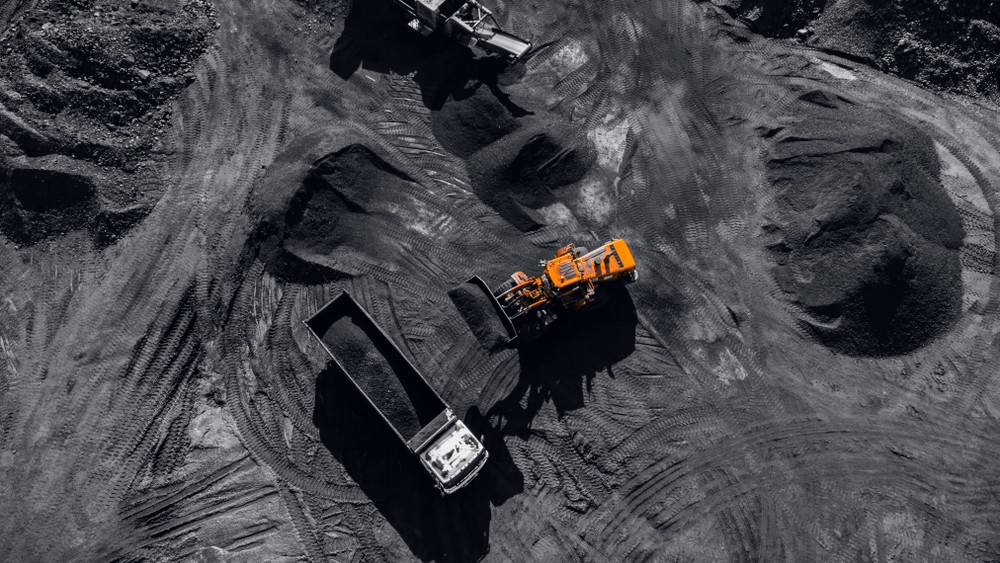
Global Coal Demand Surges as Middle East Energy Crisis Deepens​

By Tsvetana Paraskova - May 11, 2026, 4:20 AM CDT

1778568880427.png

Global coal shipments and imports surged in March and April as buyers scrambled for fuel amid massively disrupted oil and gas supply from the Middle East.

The trend has been accelerating in recent weeks, and global coal imports are on track to reach their third-highest monthly level on record, according to estimates by analytics platform Kpler cited by the Financial Times.

In the wake of the worst oil and gas supply disruption in history, coal is back in demand, so much so that even countries and regions that believed coal use was in an irreversible terminal decline have boosted imports.

For example, last month coal shipments to South Korea, Japan, and the European Union surged by 27% from a year earlier, data from BIMCO, the world’s biggest shipowners’ association, said last week.

The Asian importers and the European bloc are scrambling for alternatives to gas supply from the Middle East, currently trapped behind the Strait of Hormuz or not produced at all in Qatar, which halted LNG production as early as on March 2 and two weeks later sustained damages to the world’s largest LNG complex, Ras Laffan, from Iranian missile strikes.

“The closure of the Strait of Hormuz has disrupted LNG shipments out of the Persian Gulf and has contributed to an 8% y/y drop in global seaborne LNG shipments in April,” BIMCO said.

South Korea has pushed back the retirement of coal-fired power generation capacity amid the oil and gas shock caused by the Middle East war.

Europe, for its part, is currently losing the competition with Asia for spot LNG supply, at a time when it needs to fill gas storage sites ahead of the next winter.

Energy security concerns are shifting policy responses, accelerating coal usage across key Asian and European markets, and delaying coal plant retirements, analysts at Wood Mackenzie say.

By Tsvetana Paraskova for Oilprice.com


ADRO net profit jumps 67% by end-March 2026​


Ramdhani Pratama, Zetta Hannany

To view this content we will need your consent to set third party cookies.
For more detailed information, see our cookies page.


Surging coal prices in March sharply boosted ADRO’s earnings in the first quarter of 2026.

ADRO - PT. Alamtri Resources Indonesia Tbk


+70 (+2,86%)

JAKARTA – PT Alamtri Resources Indonesia Tbk (ADRO) posted a 67.07% year-on-year increase in net profit by the end of March 2026 to USD 128.14 million, while earnings per share (EPS) rose to USD 0.00445.


Based on the company’s latest financial statements, ADRO’s revenue grew 23.40% to USD 470.91 million in the first quarter of 2026.


The increase in revenue was supported by a surge in mining segment performance, which rose 33.97% to USD 266.46 million. Exports contributed 53.2% of total revenue from the segment, equivalent to around USD 141.48 million.


This was in line with coal price trends, which jumped around 20% throughout March 2026 following the outbreak of conflict in the Middle East at the end of February 2026.


Meanwhile, revenue from the mining services segment also increased 15.30% to USD 229.46 million.


On the other hand, cost of revenue rose only 7.77% to USD 292.35 million in the first quarter of 2026, allowing profit growth to accelerate significantly.


ADRO also recorded a share of profit from investments in joint ventures, which surged 10.4 times to USD 25.25 million during the period.


ADRO has four joint ventures operating in power generation, electricity transmission, hydropower and investment businesses.


The four entities are PT Bhimasena Power Indonesia (BPI), PT Tanjung Power Indonesia (TPI), PT Kayan Hydropower Nusantara (KHN), and PT Bayu Energi Listrik Lestari and its subsidiaries (BELL).


As of the end of March 2026, ADRO recorded total assets of USD 7.19 billion, with total liabilities of USD 1.76 billion and total equity of USD 5.42 billion.


According to an IDX disclosure, ADRO is scheduled to distribute a final cash dividend for the 2025 financial year amounting to IDR 3.40 trillion, or IDR 118.26 per share, today, Friday, 8 May 2026.


The dividend value is based on Bank Indonesia’s middle exchange rate as of 29 April 2026 at IDR 17,245 per US dollar. (DH/ZH)


Giant Andaman Gas Discoveries to Be Connected to Dusem Pipeline Starting in 2028​


Sabrina Mulia Rhamadanty
21 Mei 2026


JAKARTA — The Aceh Oil and Gas Management Agency (BPMA) has announced that natural gas from the giant Andaman Block discoveries offshore Aceh will be transported through the Dumai–Sei Mangkei (Dusem) gas transmission pipeline beginning in 2028.

The pipeline infrastructure is being developed to allow gas from the Andaman fields to be distributed across Sumatra and eventually connected to Java through Indonesia’s integrated gas network.

According to BPMA Head Nasri Djalal, the Dusem pipeline is expected to be completed by 2028, enabling Andaman gas production to enter the national transmission system.

“Mr. Laode [Director General of Oil and Gas] said the Dusem pipeline will be completed in 2028. Once it is finished, the gas can be connected. Mubadala is targeting production to start in 2028, and by 2029 we expect to have surplus gas supplies,” Nasri said during IPA Convex 2026 at ICE BSD on May 21, 2026.
Nasri explained that an existing gas pipeline already connects Arun and Belawan through the Arun–Belawan (Arbel) Pipeline, while a control-line network extends from Arun to Medan. The remaining key link is the Dumai–Sei Mangkei connection.

“Once that connection is completed, the pipeline network from Aceh all the way to Java will be connected,” he said.
The project faces several technical challenges because gas must be transported from offshore fields through subsea pipeline infrastructure. Offshore gas transmission requires complex undersea engineering, operations in harsh environmental conditions, and strict safety management.

According to Nasri, the offshore pipeline project will be financed through the state budget using a multi-year contract scheme.

The Andaman gas development is also expected to help address domestic gas supply needs, particularly for PT Pupuk Iskandar Muda, which currently depends on gas supplies from BP.

“Mubadala’s production is estimated at around 300 MMSCFD. We expect around 100 to 150 MMSCFD to be processed locally, and we hope this gas can reduce PT Pupuk Iskandar Muda’s dependence on BP’s supplies,” Nasri said.
As a reminder, Mubadala Energy operates five offshore working areas in the Andaman Sea. The company estimates total discovered gas resources of approximately 11 trillion cubic feet (TCF).

The first phase of development in the South Andaman Block is expected to produce 312 million standard cubic feet per day (MMSCFD), with first gas targeted before the end of 2028.

Meanwhile, construction of the Dusem (Dumai–Sei Mangkei) gas transmission pipeline is scheduled for completion by the end of 2027, with full gas transportation operations expected to begin in 2028.

Source: Bloomberg Technoz
 

Pertamina Identifies 11 Billion Barrels of Unconventional Oil Resources​


Firda Dwi Muliawati


1779516820621.png

Pertamina Vice President Director Oki Muraza


BANTENPT Pertamina (Persero) has identified significant unconventional oil and gas resources in Indonesia, with an estimated 11 billion barrels of oil in place.

The discovery involves unconventional hydrocarbons, often referred to as resources that cannot be produced economically through conventional drilling methods and typically require advanced extraction technologies.

Pertamina Vice President Director Oki Muraza said the company is currently working to build the necessary ecosystem and industry support to unlock these substantial resources and bring them into production.

“The good news is that we recently identified 11 billion barrels of oil in place in unconventional resources,” Oki said during the IPA Convex 2026 conference at ICE BSD on May 20, 2026.
According to Oki, developing unconventional oil and gas resources will require attractive fiscal policies from the government to encourage investment.

Pertamina is also seeking collaboration with global oilfield service companies to replicate the success of major unconventional resource developments such as the Permian Basin in the United States.

“Our current challenge is how to work with the government on fiscal incentives while inviting service company partners to help create the necessary ecosystem,” he said.
In addition to pursuing unconventional resources, Pertamina continues to focus on enhancing production from mature oil fields through advanced recovery technologies.

One of its key targets is the giant Minas Oil Field, which still contains substantial remaining resources that could potentially be recovered through enhanced oil recovery (EOR) methods.

“We still have around 4 billion barrels in a single field at Minas. That is another major challenge we are working on,” Oki said.
The 11 billion barrels cited by Pertamina represent oil in place rather than proven recoverable reserves. The actual amount that can eventually be produced will depend on factors such as technology, economics, regulatory support, and recovery rates.

If successfully developed, the resource could become one of Indonesia’s most significant unconventional oil opportunities and contribute to strengthening the country’s long-term energy security.

Source: CNBC Indonesia (ven)
 
Household electricity tariffs in ASEAN show quite significant differences between countries. Singapore is in the highest position with Rp 4,002 per kWh, while Myanmar is the lowest.

Indonesia is in the middle, with a tariff of around Rp 1,445 per kWh, still lower than Thailand, Cambodia, the Philippines, and Singapore, but above Vietnam, Malaysia, Laos, and Myanmar.

This data represents the average for the period 2023–2026, which already includes energy costs, distribution, transmission, up to taxes in each country.

Domestically, electricity tariffs are maintained steady during the April–June 2026 period as part of the policy to maintain energy cost stability. This step is also aimed at preserving people's purchasing power and providing certainty for household needs as well as business activities.

To view this content we will need your consent to set third party cookies.
For more detailed information, see our cookies page.
 

Users who are viewing this thread

Pakistan Defence Latest

Country Watch Latest

Latest Posts

Back
Top