Indonesian International Commercial Trade Thread

Indonesia’s Trade Surplus Shrinks to $3.36 Billion​


Jayanty Nada Shofa
November 2, 2026 | 12:33 pm


1793602012015.png
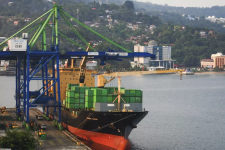
Loading activities as seen at Papua's Jayapura Port on Oct. 20, 2026. (Antara Photo/Gusti Tanati)

Jakarta. Indonesia’s trade surplus shrank from $3.55 billion in August to $3.36 billion the following month, according to the latest data from the central statistics bureau BPS.

Indonesia had swung from a six-year surplus to its first-ever deficit in May 2026. The country eventually returned to the black in July, and has kept the position since then. The latest $3.36 billion positive trade balance, however, is still much smaller than the $4.20 billion seen in September 2025.

“Our September 2026 exports rose 11.87% year-on-year [yoy] to $27.59 billion. … Our imports also went up 18.41% yoy to $24.23 billion,” BPS deputy Ateng Hartono told a press briefing in Jakarta.

Non-oil exports soared 12.39% yoy that month. A double-digit hike of 23.94% yoy occurred in oil and gas imports, according to BPS. The cumulative surplus in January-September dropped by almost half from $33.54 billion in 2025 to $10.61 billion the following year.

China consistently fuels Indonesia’s deficits, widening them by around $21.20 billion in January-September 2026. The US — despite its worries over yawning imbalances — remains the indisputable top driver of Jakarta’s surplus, data showed. US trade was largely in Indonesia’s favor, with a $14.26 billion surplus over the same nine-month period.

Indonesian economists had previously projected that Jakarta would keep its surplus momentum, but many had predicted a major drop down to the $1 billion mark in September.

 
Production of 80-Km Subsea Pipeline Begins in Batam, Mako Gas Project Groundbreaking Targeted for December 2026​


Rio Indrawan
Senin, 2/11/2026


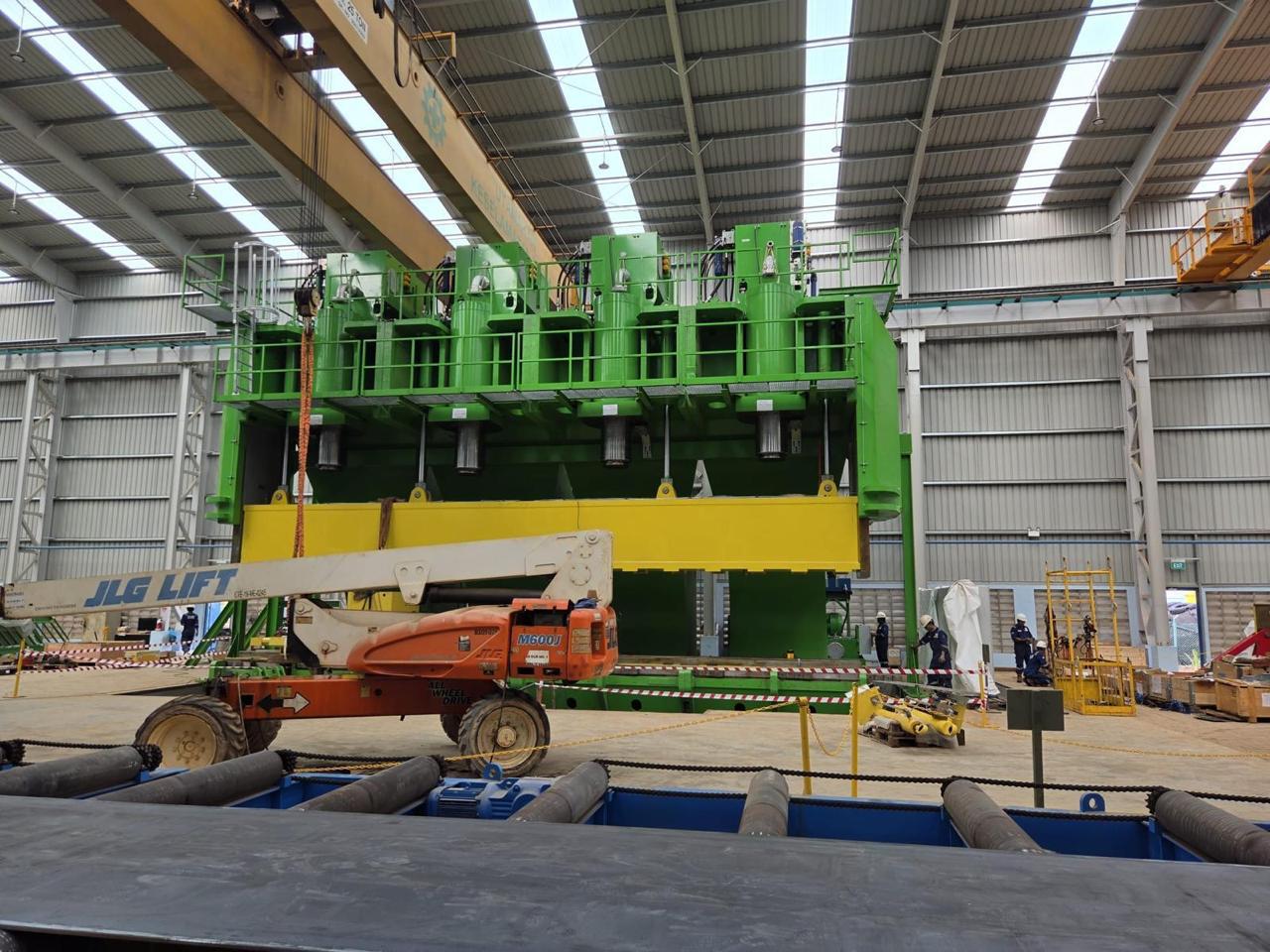
BATAM – Development of the Mako Gas Field in the Duyung Working Area, offshore Natuna, is expected to enter the construction phase in December 2026, with the project's subsea pipeline being manufactured in Batam. The project requires a total of 80 kilometers of pipeline.

Djoko Siswanto, Head of Indonesia's Special Task Force for Upstream Oil and Gas Business Activities (SKK Migas), said pipeline production had already begun, while construction of the Mako project was targeted to commence next month.

“Domestic production of the 80-kilometer pipeline for the offshore Mako Gas Field development project in the Duyung Working Area, Natuna, begins today in Batam. God willing, the groundbreaking ceremony will be held next month by the Coordinating Minister or the Minister of Energy and Mineral Resources,” Djoko said in a statement on Sunday, November 1, 2026.

The Mako Gas Project is being developed by the West Natuna Exploration Ltd. (WNEL) production-sharing contractor consortium, comprising Conrad with a 25% ownership stake and PT Nation Natuna Barat with 75%.

1793686833306.png
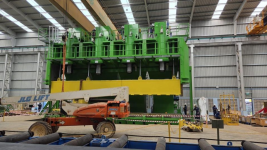
Pipe line fabrication, Batam

In addition to pipeline construction, the development of the Mako Field includes the construction of production facilities in Indonesia, specifically at PT PAL Indonesia's facilities in Surabaya and fabrication yards in Batam.


According to Djoko, the overall development program includes offshore drilling in Natuna, construction of production facilities, and installation of an 80-kilometer subsea pipeline.

All development activities are scheduled to be completed within the next two years.

Once operational, the Mako Field is expected to produce 111 million standard cubic feet of natural gas per day (MMSCFD).

Djoko explained that gas produced from the Mako Field had originally been intended for export to Singapore.

This plan was largely due to limited gas pipeline infrastructure from Natuna, which previously had only one transmission route connecting the area to Singapore.

However, the completion of the West Natuna Transmission System (WNTS) pipeline connection to Pemping Island, Batam, has created an opportunity for Natuna's natural gas to be utilized domestically.

With the new infrastructure in place and following approval from the Minister of Energy and Mineral Resources, the government ultimately decided that 100% of the Mako Field's gas production would be allocated to the domestic market.

“Initially, the gas was intended to be supplied to Singapore because there was only one pipeline connecting Natuna to Singapore. However, following the completion of the WNTS–Pemping Island–Batam pipeline and with the approval of the Minister of Energy and Mineral Resources, all of the gas—100%—will now be supplied to the domestic market, particularly for electricity generation in Batam and surrounding areas,” Djoko explained.

He acknowledged that natural gas commands a higher commercial selling price in Singapore.

Nevertheless, the Indonesian government has decided to prioritize meeting domestic energy demand.

(RI)


Indonesia Receives First Russian Crude Shipment Under April Supply Deal​


By Charles Kennedy - Jul 09, 2026, 10:30 AM CDT


Indonesia has recently welcomed the first cargo of Russian crude oil under a deal Southeast Asia's biggest economy struck with Moscow in April.

About 770,000 barrels of Russian crude oil was delivered to Indonesia's port of Balikpapan at the end of June, per customs data by Big Trade Data cited by Bloomberg.

This was the first shipment of crude oil from Russia to Indonesia since the two countries agreed in April, at peak Hormuz crisis, on a regular supply deal.

Indonesia produces some 600,000 barrels of crude oil per day (bpd), but its consumption is far above that, at around 1.6 million barrels daily.

A lot of Indonesia's imports of crude oil have typically come from the Middle East. But the Iran war and the Strait of Hormuz disruption forced the biggest economy in Southeast Asia to look for alternative supply, including such from Russia.

"Indonesia's strategy to diversify its crude import basket with imports from Russia is backed by supply economics, refinery compatibility and medium-term energy security logic, not just opportunism around the Middle East crisis," Rystad Energy analyst Prateek Panday told the Business Times in April.

Around the same time, Indonesia's Deputy Minister of Energy, Yuliot Tanjung, said that the country would import 150 million barrels of crude from Russia this year.

The Indonesian Government has secured a strategic cooperation agreement with Russia to strengthen national energy resilience, particularly through crude oil supplies and the development of energy infrastructure, Bahlil Lahadalia, the Minister of Energy and Mineral Resources, said in April.


The follow-up cooperation covers long-term partnerships in the energy sector, including fulfilling national oil needs, the minister added.

"For crude oil, supplies are secure for one year from this month until December, so there's no need to worry. What we need to do now is boost our refinery production," he said.

By Charles Kennedy for Oilprice.com

 
Coal Prices Surpass US$154 per Ton, Bahlil Opens Door to Higher Production Quotas in 2027​


Chelsea Anastasia
Senin, 02 November 2026


1793688812733.png
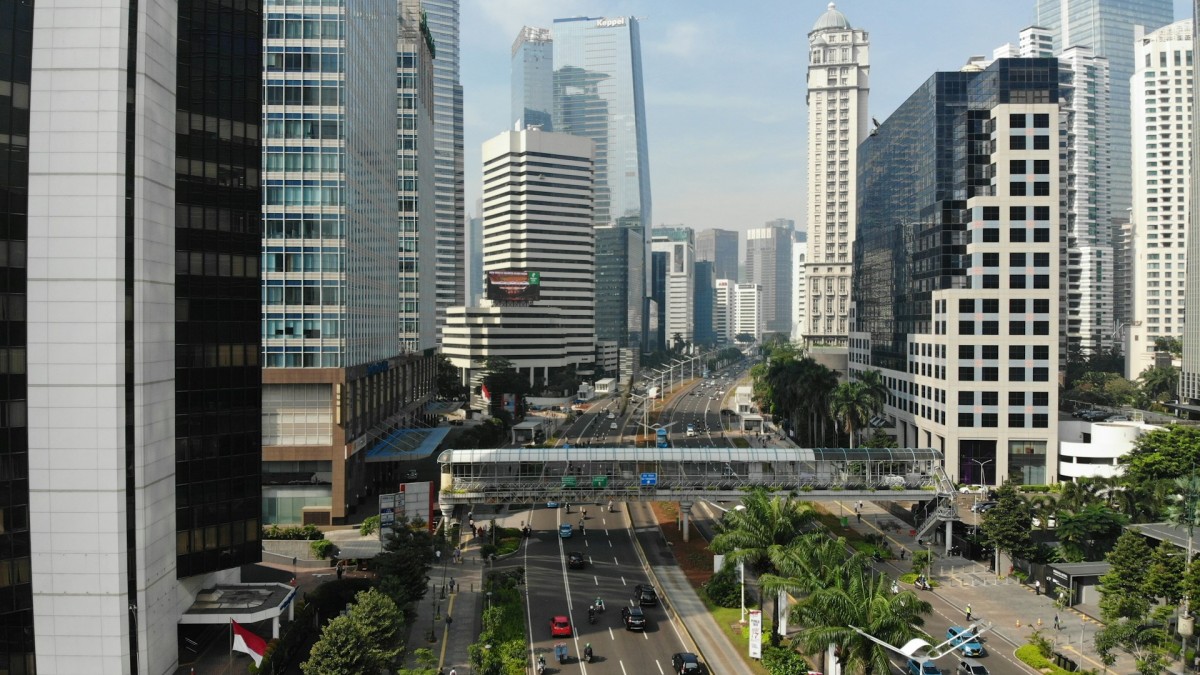
Illustration: Bahlil signals the possibility of increasing coal production quotas in 2027 as prices exceed US$154 per ton. (KONTAN/Muradi)

Editor: Handoyo

KONTAN.CO.ID, JAKARTA – The Indonesian government is considering increasing national coal production quotas again in 2027, following an improvement in global coal prices that could create room for higher output.

Coordinating Minister for Downstream Industrialization and Energy Transition and Minister of Energy and Mineral Resources (ESDM) Bahlil Lahadalia said coal prices had risen above US$154 per ton.

The price increase is among the factors the government is considering as it prepares the 2027 Work Plan and Budget (RKAB) for the mining sector.

“Coal prices are now at favorable levels. Ideally, when prices are good, production should also be high. We already have a framework for managing coal production,” Bahlil said on the sidelines of the opening ceremony of Minerba Convex 2026 at JIExpo Jakarta on Monday, November 2, 2026.

Bahlil emphasized that the government would not determine production quotas for mining commodities, including coal and nickel, based solely on price movements.

It would also consider the balance between supply and demand in global markets.

“As I have said, for 2027, we will continue to take supply and demand into account,” he added.

To illustrate Indonesia's position in the international coal market, Bahlil said the country supplied approximately 540 million tons of coal to global markets in 2025.

That volume represented around 43% of total global coal trade, which amounted to approximately 1.3 billion tons annually.

Meanwhile, global coal consumption stood at approximately 8.9 billion tons per year.


Indonesia's substantial contribution to international coal supplies was considered one of the factors influencing coal price movements throughout 2025.

According to Bahlil, Indonesia's high production and export volumes in 2025 contributed to downward pressure on coal prices.

As a result, mining companies were unable to maximize their profits, while government revenue from the sector also fell short of its potential.

“In 2025, Indonesia contributed 540 million tons to global coal trade. What happened was that coal prices fell to their lowest levels that year. Corporate profits were relatively limited, government revenue was not maximized, and we aggressively opened up vast areas of land, only to end up selling our coal cheaply,” Bahlil explained.

In response, the government introduced supply-control measures by reducing coal production quotas under the RKAB framework.


The policy aims to regulate Indonesia's coal supply to international markets and prevent oversupply that could lead to further price declines.

Bahlil argued that managing production volumes is essential to ensure Indonesia does not simply pursue higher output and export quantities without considering the economic value generated for both mining companies and the government.

Consequently, any increase in production quotas in 2027 will remain dependent on global market conditions.

Improving coal prices provide an opportunity for production adjustments, but the final decision will depend on the balance between supply and demand.

According to data from the Ministry of Energy and Mineral Resources, Indonesia's coal production has reached 566.74 million tons so far in 2026, equivalent to approximately 77% of the annual production target.

Meanwhile, Indonesia's coal export value reached US$23.49 billion as of September 2026.

The export value of processed nickel products, meanwhile, reached US$25.96 billion as of August 2026.

 
Saudi Aramco Orders Two More Indonesian-Made Offshore Oil and Gas Support Vessels

​
Jumat (6/11/2026).

1794137418536.png


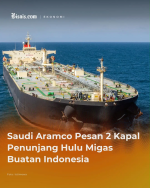
Saudi Aramco has placed another order for Indonesian-made vessels designed to support upstream oil and gas operations, strengthening its operational capabilities in Saudi Arabia.

The order was placed on the sidelines of the Abu Dhabi International Petroleum Exhibition and Conference (ADIPEC) in Abu Dhabi, United Arab Emirates (UAE), this week.

Head of Indonesia's Special Task Force for Upstream Oil and Gas Business Activities (SKK Migas), Djoko Siswanto, said the additional order followed Saudi Aramco's earlier deployment of two vessels of the same type.

The Saudi energy company has now ordered two additional vessels, citing their ability to reduce fuel consumption by up to 50%.

“Several agreements were also signed at the Indonesian Pavilion. One particularly encouraging achievement was the opportunity to increase sales of Indonesian-made upstream oil and gas support vessels ordered by Saudi Aramco,” Djoko said in a statement on Friday, November 6, 2026.

Article by M. Ryan Hidayatullah
 
Oman Offers to Supply Crude Oil, Fuel, and LPG to Indonesia​

Rio Indrawan
Jumat, 13/11/2026


1794642530612.png

Jakarta – Indonesia's energy security is receiving additional support as opportunities to secure oil and other energy supplies from several countries continue to expand. Following a recent meeting between the United Arab Emirates (UAE) Ambassador and Indonesia's Minister of Energy and Mineral Resources (ESDM), the Omani Ambassador has now also offered to supply energy products to Indonesia.

Djoko Siswanto, Head of the Special Task Force for Upstream Oil and Gas Business Activities (SKK Migas), accompanied Energy and Mineral Resources Minister Bahlil Lahadalia during a meeting with Oman's Ambassador to Indonesia to discuss the proposed agreement.

According to Djoko, the offer covers not only crude oil but also refined petroleum products, particularly gasoline, as well as liquefied petroleum gas (LPG).

"After the Abu Dhabi Ambassador previously met with the Minister, the Omani Ambassador has now come forward with an offer covering not only crude oil but also gasoline and LPG," Djoko said in a statement on Thursday evening, November 12, 2026.

This development highlights Indonesia's expanding options for securing alternative energy supplies amid geopolitical developments and volatility in global energy markets.

Diversifying energy suppliers is considered an important measure to maintain the continuity of domestic energy supplies.

Previously, the UAE Ambassador also met with the Minister of Energy and Mineral Resources. During those discussions, the UAE expressed its commitment to supporting Indonesia's crude oil requirements, with potential supplies of up to 30 million barrels.

Oman's offer further expands opportunities for energy supply cooperation, particularly because the proposed commodities include crude oil, gasoline, and LPG.

The offer presents an opportunity for Indonesia to strengthen its energy security through bilateral cooperation and expand its network of supplier countries.

Moreover, amid global uncertainty, securing energy supplies through competitive cooperation arrangements remains an important factor in maintaining national energy security.

 
Deputy Trade Minister: Indonesia-EU CEPA to Be Signed on November 28, 2026​

Robertus Andrianto

1794642703925.png
Photo: Indonesian Deputy Trade Minister Dyah Roro Esti at the event “The Future of Beauty: Driving Innovation, Safety, and Growth” at CNBC Indonesia Studio in Jakarta on Wednesday, October 28, 2026. (CNBC Indonesia/Tri Susilo)


Jakarta, CNBC Indonesia – The Indonesian government expects the signing of the Indonesia-European Union Comprehensive Economic Partnership Agreement (IEU-CEPA) to be completed by the end of November 2026.

Deputy Trade Minister Dyah Roro Esti estimated that the IEU-CEPA agreement would be finalized on November 28, 2026.

"We are proceeding with the ratification process, and an Indonesian delegation will subsequently visit Brussels. As mentioned earlier, the signing is scheduled for the end of November, on the 28th, if I'm not mistaken," she told reporters at the Coordinating Ministry for Economic Affairs office in Jakarta on Monday, November 9, 2026.

Meanwhile, Coordinating Minister for Economic Affairs Airlangga Hartarto explained that before the final signing stage, both parties would reach an agreement in the third week of November. The agreement would then proceed to the ratification stage in their respective parliaments.

"The plan is for it to be signed on November 21, followed by submission to the European Parliament on November 23," he told reporters on Monday, November 9, 2026.

Airlangga expressed hope that the IEU-CEPA would enter into force on January 1, 2027, serving as a game changer in strengthening trade, investment, supply chain diversification, and bilateral economic resilience in the ASEAN and Indo-Pacific regions.

Previously, Airlangga explained that if the IEU-CEPA were implemented early next year, Indonesia would gain greater market access, with 90.4% of tariff lines immediately reduced to zero and another 8.37% gradually reduced.

These tariff reductions are expected to expand Indonesian exports of palm oil, footwear, coffee, furniture, agricultural and fishery products, and telecommunications products.

At the same time, Indonesia expects the agreement to unlock new investment opportunities.

The government is encouraging European Union investment in high-value-added sectors, including advanced manufacturing, renewable energy, electric vehicles (EVs), digital technology, and pharmaceuticals, to support technology transfer and the transformation of Indonesia's domestic industries.

For its part, the European Union would gain broader access to the Indonesian market for European industries and consumers, along with more competitively priced products.

Airlangga also emphasized the urgency of implementing the IEU-CEPA by January 1, 2027, because the European Union's preferential tariff facility under the Generalised Scheme of Preferences (GSP) for Indonesia is scheduled to expire on that date.

"We must move quickly on the EU-CEPA agreement. If it is not signed by January 1, our GSP facility will expire because the GSP is granted to low-income countries," Airlangga said during the Kearney 100 Years of Impact event, themed "Jakarta Towards 500: Shaping the Next Global City Together," in Jakarta, as quoted on Monday, November 9, 2026.

"That is why the solution is to sign the CEPA, if possible, by the end of this week, proceed to the European Parliament in early November, and complete ratification in Indonesia so that it can take effect in January. We would be ahead of Canada," he added.

The GSP facility has provided preferential import tariffs for Indonesian products exported to the European Union.

Indonesia may become ineligible for the scheme beginning January 1, 2027, after maintaining its status as an upper-middle-income country for three consecutive years.

In September, Airlangga said the IEU-CEPA process had entered the stage of preparing and completing the necessary documentation in English.

The completed documents would subsequently be submitted to the European Parliament. Indonesia would then proceed with ratification through its applicable domestic procedures.


Users who are viewing this thread

Back
Top