Navigation
Install the app
How to install the app on iOS
Follow along with the video below to see how to install our site as a web app on your home screen.
Note: This feature may not be available in some browsers.
More options
Style variation
You are using an out of date browser. It may not display this or other websites correctly.
You should upgrade or use an alternative browser.
You should upgrade or use an alternative browser.
Indonesian International Commercial Trade Thread
- Thread starter Indos
- Start date
More options
Who Replied?

Indos
INT'L MOD
- Thread starter
- #17
Indonesia Sets $294.5 Billion Export Target for 2025
Jayanty Nada Shofa
January 6, 2025 | 2:16 pm
Jakarta. Indonesia is aiming to record nearly $294.5 billion in exports this year to catapult the country’s economy towards 8 percent growth as targeted by President Prabowo Subianto.
Prabowo is upbeat that the Indonesian economy can expand 8 percent within his first term, topping the country’s 5-percent natural growth rate. This ambitious goal translates into yearly export target increases. The resource-rich Indonesia is eyeing $294.5 billion in exports in 2025, up by 7.1 percent year-on-year (yoy) from the $274.9 billion yearly export baseline in 2024.
“We are taking into account the global and national gross domestic product (GDP), rupiah-dollar exchange rate, and the world commodity prices when coming up with the 2025 export target,” Trade Minister Budi Santoso told the press in Jakarta on Monday.
Southeast Asia’s largest economy plans to raise the export target by almost 7.1 percent yoy again in 2026, totaling $315.3 billion. The target will soar 7.9 percent to $340.2 billion in 2027, and up by almost 8.8 percent to $370 billion the following year. The current Prabowo government also intends to wrap up its final year in office with a $405.7 billion export in 2029, marking a 9.6 percent yoy growth compared to the 2028 target.
Indonesia also wants to have more of its micro, small and medium enterprises (MSMEs) -- which make up about 61 percent of the national GDP -- penetrate into the international market. In 2025, Indonesia has set an export target of $19.3 billion to its MSMEs. By 2029, these small businesses should post approximately $35.3 billion in exports that year, according to Budi.
Government data shows Indonesian exports totaled about $241.3 billion in the 11 months of 2024. The latest data only included the overall export figures up to November. Indonesia's non-oil and gas sector contributed $226.9 billion with mineral fuels making up 15.9 percent of the exported goods. China remained Indonesia's top destination for non-oil and gas exports, reaching $54.4 billion over the said period.
At present, Indonesia has 19 bilateral and multilateral free trade deals. These pacts have provided Indonesia with better market access to ASEAN, China, Australia, and Japan, among others.

Indonesia Sets $294.5 Billion Export Target for 2025
Trade Minister Budi Santoso says that the government will gradually increase the export target to accomodate Prabowo's 8-percent dream.
jakartaglobe.id
Indos
INT'L MOD
- Thread starter
- #19
BRICS – new key export market of Indonesia
Indonesia’s non-oil and gas exports to the five major BRICS nations reached 84.37 billion USD in 2024, accounting for nearly 34% of the country’s total non-oil and gas export value, according to the country’s Central Statistics Agency (BPS).
January 17, 2025 at 03:43:46

A screenshot of President Prabowo Subianto (left) at the Indonesia-Brazil business forum in Rio de Janeiro, Brazil, on November 17.
Jakarta (VNA) – Indonesia’s non-oil and gas exports to the five major BRICS nations reached 84.37 billion USD in 2024, accounting for nearly 34% of the country’s total non-oil and gas export value, according to the country’s Central Statistics Agency (BPS).
According to acting head of BPS Amalia Adininggar Widyasanti, Indonesia's expanding trade relations with BRICS nations present a significant economic opportunity following its recent entry into the bloc.
Exports to the five BRICS nations including China, India, South Africa, Brazil and Russia contributed 33.9% to Indonesia’s overall non-oil and gas exports in 2024.
China remains the top destination for Indonesian exports, with 24.2% of the total, mainly driven by iron and steel exports. India follows as the second-largest market, accounting for 8.17% with key exports including coal and crude palm oil.
Indonesia’s main exports to Brazil, Russia, and South Africa include animal and vegetable fats and oils.
The country sees potential for increasing exports to South Africa, where it currently has the smallest share of trade among the BRICS nations. Exports to South Africa amounted to 0.78 billion USD in 2024.
Meanwhile, exports to Brazil and Russia stood at 1.7 billion USD and 1.31 billion USD, respectively.
According to BPS, Indonesia’s trade balance for 2024 showed a surplus of 31.04 billion USD, down 5.84 billion USD from 2023. The non-oil and gas trade balance posted a surplus of 51.44 billion USD, while the oil and gas sector recorded a 20.4 billion USD deficit, though this was a slight improvement from the previous year.
Experts forecast that the BRICS nations will continue to strategic partners in supporting the growth of Indonesia's non-oil and gas exports this year./.

BRICS – new key export market of Indonesia
Indonesia’s non-oil and gas exports to the five major BRICS nations reached 84.37 billion USD in 2024, accounting for nearly 34% of the country’s total non-oil and gas export value, according to the country’s Central Statistics Agency (BPS).
 en.vietnamplus.vn
Indos
INT'L MOD
- Thread starter
- #20
Indonesia Retains Trade Surplus Run for 57th Consecutive Month
Jayanty Nada Shofa
February 17, 2025 | 12:25 pm
Jakarta. Indonesia has maintained a trade surplus for the 57th consecutive month since May 2020 as the country’s exports surpassed its imports by $3.45 billion in January, according to the Central Statistics Agency (BPS) on Monday.
The latest figures were larger than the $2.24 billion surplus that Indonesia had logged the previous month. The overall surplus had also jumped $1.45 billion year-on-year compared to January 2024, BPS announced.

Indonesia Retains Trade Surplus Run for 57th Consecutive Month
Indonesia's trade surplus amounted to $3.45 billion in January, according to the Central Statistics Agency (BPS).
jakartaglobe.id
Indos
INT'L MOD
- Thread starter
- #21
Located mostly in Southeast Asia but extending to some territories in the Oceania continent across from Australia, the Republic of Indonesia shipped US$264.7 billion worth of exported products around the world in 2024.
That dollar amount results from a 62.1% advance since five years earlier in 2020 when Indonesian exports totaled $163.3 billion.
Year over year, the overall value of Indonesian exports rose 2.3% compared to $258.8 billion in 2023.
From a continental perspective, 73.9% of Indonesia’s exports by value was delivered to fellow Asian countries while 11.4% was sold to importers in North America. Indonesia shipped another 8.4% worth of goods to buyers in Europe.
Smaller percentages went to customers in Africa (2.4%), Oceania (2.3%) led by Australia, and Latin America (1.6%) excluding Mexico but including the Caribbean.
Given Indonesia’s population of 281.6 million people, its total $264.7 billion in 2024 exports translates to roughly $940 for every resident in the Asian nation. That dollar metric outpaces the average $930 per capita one year earlier for 2023.
Overall, Indonesia generated a US$31 billion trade surplus for 2024, declining by -16.2% from $37.1 billion in black ink one year earlier in 2023.
 www.worldstopexports.com
That dollar amount results from a 62.1% advance since five years earlier in 2020 when Indonesian exports totaled $163.3 billion.
Year over year, the overall value of Indonesian exports rose 2.3% compared to $258.8 billion in 2023.
Major Customers for Indonesian Exported Products
The latest available country-specific data shows that 77.2% of products exported from Indonesia was bought by importers in: mainland China (23.6% of the Indonesian total), United States of America (10%), Japan (7.8%), India (7.7%), Singapore (4.6%), Malaysia (4.5%), South Korea (4.1%), Philippines (also 4.1%), Vietnam (3.6%), Thailand (2.9%), Taiwan (2.5%) and Australia (1.9%).From a continental perspective, 73.9% of Indonesia’s exports by value was delivered to fellow Asian countries while 11.4% was sold to importers in North America. Indonesia shipped another 8.4% worth of goods to buyers in Europe.
Smaller percentages went to customers in Africa (2.4%), Oceania (2.3%) led by Australia, and Latin America (1.6%) excluding Mexico but including the Caribbean.
Given Indonesia’s population of 281.6 million people, its total $264.7 billion in 2024 exports translates to roughly $940 for every resident in the Asian nation. That dollar metric outpaces the average $930 per capita one year earlier for 2023.
Indonesia’s Top 10 Exports
The following export product groups represent the highest dollar value in Indonesian global shipments during 2024. Also shown is the percentage share each export category represents in terms of overall exports from Indonesia.- Mineral fuels including oil: US$55.5 billion (21% of total exports)
- Animal/vegetable fats, oils, waxes: $26.8 billion (10.1%)
- Iron, steel: $25.8 billion (9.7%)
- Electrical machinery, equipment: $15.1 billion (5.7%)
- Vehicles: $11 billion (4.2%)
- Gems, precious metals: $8.9 billion (3.4%)
- Ores, slag, ash: $8.2 billion (3.1%)
- Nickel: $8 billion (3%)
- Footwear: $7.1 billion (2.7%)
- Machinery including computers: $6.9 billion (2.6%)
Overall, Indonesia generated a US$31 billion trade surplus for 2024, declining by -16.2% from $37.1 billion in black ink one year earlier in 2023.
Indonesia’s Top Exports 2025
Indonesia’s top exports in 2025 a searchable database of 100 most valuable Indonesian exported goods plus trade balances by major products
www.worldstopexports.com
Indos
INT'L MOD
- Thread starter
- #22
Indonesia posts wider-than-expected trade surplus on palm oil exports surge
By Stefanno Sulaiman and Gayatri SuroyoMarch 17, 2025
1:53 PM GMT+7
Updated 8 hours ago
- Feb surplus of $3.12 bln bigger than $2.45 bln in poll
- Exports +14.1% y/y, vs +9.1% seen in poll
- Imports +2.3% y/y, vs +0.6% in poll
- Palm oil exports up almost 90% to $2.3 bln in Feb
JAKARTA, March 17 (Reuters) - Indonesia's trade surplus was bigger than expected in February as a surge in palm oil shipments bolstered exports, data showed on Monday, extending a strong start to the year even as the spectre of tariff wars dimmed the outlook for global trade.
On top of the uncertainty created by U.S. tariffs, changes to Indonesia's domestic policy settings could also hurt mining shipments in the months ahead, some economists warned.The February surplus of $3.12 billion was larger than the $2.45 billion forecast by analysts in a Reuters poll, and followed an upwardly revised $3.49 billion surplus in January, the statistics department said.
Exports rose 14.05% in February from a year earlier to $21.98 billion, quicker than the 9.10% rise expected by analysts in the poll.
The value of crude and refined palm oil exports jumped nearly 90% in February from a year earlier to $2.27 billion. Prices of the edible oil have risen in recent months on expectations of tight supply. In volume terms, shipments rose by an annual 45% to 2.06 million metric tons.
Exports of precious metals, jewellery and nickel metals also rose, helping offset a drop of nearly 20% in coal exports, which the statistics bureau said was due to both lower prices and volumes, as well as a 6% decline in oil and gas shipments.
By value, February coal exports were worth $2.08 billion, the lowest in three years.
Imports by Southeast Asia's largest economy were $18.86 billion in February, up 2.30% on a yearly basis, compared with a 0.6% increase expected in the poll, supported by a 24% surge in vehicles and spare parts imports.
Hosianna Situmorang, an economist with Bank Danamon, said the trade data outlook would be coloured by Jakarta's proposal to hike royalty rates across commodities like coal, nickel, copper, gold and tin, which came as some commodity prices were declining.
"These measures add financial strain to the mining sector ... potentially weakening Indonesia's trade surplus and deterring investment," she said.
Exports of coal and nickel metals made up nearly 20% of total shipments last month.
Bank Permata's economist Josua Pardede said imports would likely rise further due to the government's pro-growth policy, while exports would struggle amid escalating trade war tensions.
The trade data will be among a host of economic indicators the central bank considers in its monthly review of monetary policy later this week. Bank Indonesia is likely to keep rates unchanged to focus on currency stability, a separate Reuters poll showed.
Indos
INT'L MOD
- Thread starter
- #23
Global Coal Power Fleet Continues to Grow
By Tsvetana Paraskova - Apr 03, 2025, 6:30 AM CDT
The world added last year the smallest coal power capacity in 20 years, but the global fleet of coal-fired plants continued to grow despite the surge of renewables, data from Global Energy Monitor’s annual survey showed on Thursday.
A total of 44.1 gigawatts (GW) of coal power capacity was commissioned, while 25.2 GW was retired in 2024, resulting in a net increase of 18.8 GW, according to data from the Global Energy Monitor’s Global Coal Plant Tracker.
The capacity commissioned was almost 30 GW below the annual average for 2004 to 2024, which was 72 GW. While that’s a sign of the continued slowdown in global coal construction, new coal capacity in China and India more than offset coal retirements in many developed nations.
Global coal capacity rose to 2,175 GW in 2024. This is a 259-GW increase since the Paris Agreement was signed in 2015.
Most of the growth in the past decade and last year came from China, which commissioned 30.5 GW of coal power capacity in 2024. This capacity accounted for 70% of the global total last year. China also saw 94.5 GW in new construction starts, the highest in nearly a decade, according to the Global Coal Plant Tracker.
Meanwhile, India saw a record high level of new coal proposals, totaling 38.4 GW.
“Outside of China and India, new proposals fell to just 8.8 GW — the lowest level since 2015 — highlighting a continued contraction of the coal project pipeline across most of the world,” GEM said.
Just 10 countries – led by China and India – account for 96% of the ongoing global coal plant development, and these are mostly in Southeast Asia plus Russia, Kazakhstan, and Zimbabwe.
Developed economies have been reducing their use of coal in recent years, but the world isn’t ready to kick its coal addiction, not yet. Developing markets in Asia are boosting their coal-fired power generation to meet surging electricity demand.
By Tsvetana Paraskova for Oilprice.com

Global Coal Power Fleet Continues to Grow | OilPrice.com
Despite a 20-year low in new coal power capacity additions globally, the world's total coal-fired plant capacity continued to grow in 2024, driven primarily by expansions in China and India.
 oilprice.com
Indos
INT'L MOD
- Thread starter
- #25
Before the Trump tariff, Indonesia tariff to US product in average only at 4%, while USA give 5% tariff to Indonesian products which want to enter US market.
My advice : Dont play Nice, look Vietnam investing in US for many billions USD from Vinfast and other companies and still dont work
Trump wants to get manufacturing back to USA, this tariff is just an excuse, so dont back down. Play hard.
My advice : Dont play Nice, look Vietnam investing in US for many billions USD from Vinfast and other companies and still dont work
Trump wants to get manufacturing back to USA, this tariff is just an excuse, so dont back down. Play hard.
Indos
INT'L MOD
- Thread starter
- #27
Chatib Basri, Economic advisor for President Prabowo Subianto
One of his points :
Indonesia exposure to global trade is 25 % to GDP which is relatively small, so the effect to Indonesian economy is less severe compared to countries that relies too much on global trade.
One of his points :
Indonesia exposure to global trade is 25 % to GDP which is relatively small, so the effect to Indonesian economy is less severe compared to countries that relies too much on global trade.
Indos
INT'L MOD
- Thread starter
- #29
Indonesia Eyes $10B Boost in U.S. Crude, LPG Imports to Ease Trade Tensions
Wednesday, April 16, 2025 1:44 AM UTC
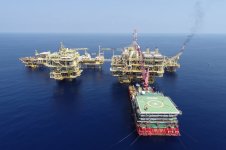
Indonesia plans to increase crude oil and liquefied petroleum gas (LPG) imports from the United States by around $10 billion, aiming to reduce its trade surplus and avoid potential U.S. tariffs. Energy Minister Bahlil Lahadalia announced the move ahead of a delegation’s trip to Washington for trade negotiations, where Indonesia hopes to sidestep a proposed 32% tariff on its exports by committing to $18–$19 billion in U.S. purchases.
The proposal includes expanding Indonesia’s LPG import quota from the U.S., which would require cutting imports from other countries. According to Putra Adhiguna of the Energy Shift Institute, Indonesia could reduce non-U.S. LPG imports by 20% to 30%, depending on contractual obligations.
Kpler data reveals Indonesia imported 217,000 barrels per day (bpd) of LPG in 2024, with about 124,000 bpd sourced from the U.S. Qatar supplied 23,000 bpd, while the UAE and Saudi Arabia contributed 20,000 bpd each. For crude oil, Indonesia imported 306,000 bpd, primarily from Nigeria, Saudi Arabia, and Angola. Only 13,000 bpd came from the U.S.
State-owned Pertamina, Indonesia’s largest LPG distributor, said it is currently reviewing its import strategy and awaiting further direction from the government.
This strategic shift in energy imports is part of Indonesia’s broader efforts to maintain favorable trade relations with the U.S. and support domestic energy needs. By strengthening energy ties with Washington, Indonesia aims to secure trade advantages and diversify its energy supply chain. The outcome of the negotiations may play a crucial role in shaping Indonesia’s trade policy and energy sourcing in the near future.

Indonesia Eyes $10B Boost in U.S. Crude, LPG Imports to Ease Trade Tensions - EconoTimes
Indonesia plans to increase crude oil and liquefied petroleum gas (LPG) imports from the United States by around $10 billion, aiming to reduce its trade surplus and avoid potential U.S. tariffs. Energy Minister Bahlil...
 econotimes.com
Indos
INT'L MOD
- Thread starter
- #30
Raising Domestic Gas Supply, Gas Exports to Singapore to Be Reduced
Firda Dwi Muliawati, CNBC Indonesia
09 April 2025 18:50
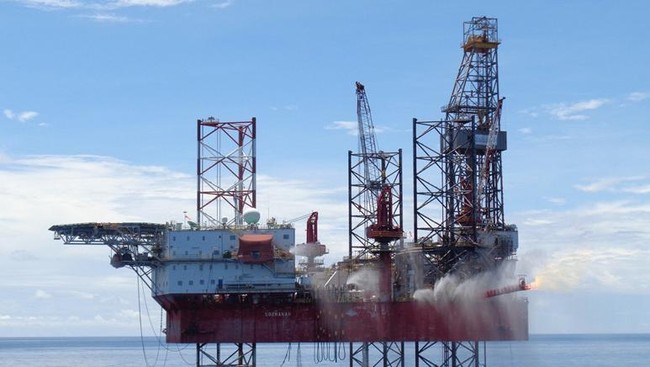
Jakarta, CNBC Indonesia - Special Working Unit for Upstream Oil and Gas Business Activities (SKK Migas) revealed that the allocation of gas exports from Indonesia to Singapore will be reduced.
Head of SKK Migas Djoko Siswanto said the reduction of pipeline gas exports to Singapore was to meet the needs of natural gas for the industry in the country. However, he said it will try to optimize the gas from Natuna to be sent to Singapore.
"We will maximize the export of pipeline gas from Natuna, from Sumatra we reduce those to Singapore, for domestic needs, the fulfillment of Singapore we maximize from Natuna," he explained when met after the Launching OLNG FEED Masela event in Jakarta, Wednesday (09/04/2025).
He said about 30 million standard cubic feet per day (MMSCFD) of gas exports to Singapore will be reduced from June 2025. However, it will try to optimize the export of gas from Natuna. But, he did not mention how much was transferred from Natuna to Singapore.
"For a while the target is 30 MMSCFD. 3 cargo. (Target) June (2025)," he said.
He asserted, at this time the government is still trying to meet the needs of domestic gas from oil and gas field sources in the country. While the import option according to him has not been decided.
"Until now we are not yet imported yes, if it is needed later we see that it is being evaluated, while we are still trying to fulfill the LNG from within the country," he added.
Previously, Vice Chairman of the Earth Gas User Industry Forum (FIPGB) Achmad Widjaja said that the condition of natural gas supply is currently still safe even though the Supply of Natural Gas Price Policy (HGBT) makes the gas allocation uneven.
Achmad also admitted that the gas supply in the South Sumatra-West Java gas transmission pipeline (SSWJ) has decreased since 3-5 years ago.
Of the 7 sectors that got gas at the "cheap" price, according to him the ceramic and steel industry has experienced a gas shortage.
Based on the exposure material of the Ministry of Energy and Mineral Resources, the utilization of natural gas for domestic needs in 2024 was recorded at 3,881 billion British thermal units per day (bbtud). This number fell 4.76% when compared to 2023 which was recorded at 4,075 bbtud.
Meanwhile, the utilization of natural gas for exports was recorded at 1,905 bulbers. This figure is up 6.19% compared to the 2023 which was recorded at 1,794 bbtud.
“Well 2024, our domestic is like this now. So, between exports and domestic is now more for domestic, "said Bahlil in the Press Conference on the Performance of the ESDM Sector in 2024, Monday (3/2/2025).
Although gas uptake is currently lower than the previous year, Bahlil plans to stop gas exporting pipelines to Singapore and divert it for domestic needs. This follows the projected domestic gas needs that will experience growth in the next few years.
“This is what’s going to Singapore, isn’t it? This is what we tend to switch to Batam huh? It's exporting to Singapore," Bahlil said.
Here are the details of domestic gas uptake in 2024:
1,473 bbtud (40%) for industrial needs
- 707 bbtud (19%) for electricity
- 695 bbtud (19%) for domestic LNG
- 690 bbtud (19%) for fertilizer
- 77 bbtud (a%) for domestic LPG
15.48 bbtud for urban gas (1%), and 3.95 bbtud for gas fuel.
Naikkan Pasokan Gas Domestik, Ekspor Gas ke Singapura Akan Dikurangi
SKK Migas mengungkapkan alokasi ekspor gas dari Indonesia ke Singapura akan dikurangi.
 www.cnbcindonesia.com
Users who are viewing this thread
Total: 1 (members: 0, guests: 1)
Pakistan Defence Latest
-
 PTI Murad Saeed in Afghanistan, was 'controlling KP govt' from there: Rana Sanaullah (7 Viewers)
- Latest: El Sidd
-

-

-

Country Watch Latest

Latest Posts
-
 Boeing's largest 737 MAX jet wins FAA certification, clearing way for deliveries of 1,555 ordered planes (1 Viewer)
- Latest: Hamartia Antidote
-
-
-
-