Indonesia's Manufacturing Sector

Chinese Steel Company Investment in RI, Krakatau Steel Prepares Land in Cilegon

1749801396183.jpeg

Amanda Christabel - detikFinance
Monday, June 09 2025 20:30 WIB


PT Krakatau Steel (Persero) Tbk and Group (Krakatau Steel Group) prepare land more than 500 hectares (ha) in Krakatau Industrial Estate, Cilegon, Banten. The provision of this land is intended to facilitate a major investment plan from Delong Steel Group, the world's 11th and 7th ranked steel producer in China, along with its subsidiary PT Dexin Steel Indonesia.

The main focus of this cooperation is the construction of an integrated steel plant with a production capacity of 3 million tons per year.

"This proactive step was started in May 2025 when the Krakatau Steel representative team paid a visit to Delong Steel Group in China to sign raw material procurement cooperation and potential cooperation and paid a visit to its factory facilities. The provision of more than 500 hectares of land through our subsidiaries, PT Krakatau Sarana Infrastruktur (KSI), is a concrete form of our support. Collaboration with Delong Steel will not only optimize the land assets we have, but also bring the transfer of technology and very valuable knowledge," explained Krakatau Steel President Director, Akbar Djohan, in an official statement on Monday (9/6/2025).


Delong Steel Group, as one of the giants of the Chinese steel industry, assesses Cilegon as a very strategic location to become their new steel industry hub. Delong Steel management stated, Delong Steel is conducting an in-depth study and looking at Cilegon, especially the industrial area managed by Krakatau Steel, as a very strategic location and has an established facility.

Land prepared by Krakatau Steel Group is considered very feasible to support the construction of a new Delong Steel plant. The plant is planned not only to produce high quality steel, but also has the potential to develop green steel or quality steel that is environmentally friendly.

"Our main vision is to revitalize the national steel industry and make Cilegon a barometer of the steel industry in Southeast Asia that is environmentally friendly," he stressed.

Negotiations between the two sides are now in intensive. This investment is expected to absorb thousands of local workers, has a double positive impact on the national economy, increasing the added value of industrial products, to strengthen the trade balance.

"We not only build factories, but we aim to build a stronger and more global competitive national steel industry ecosystem so that in the future the steel industry in Indonesia is able to support the fulfillment of the needs of the National Strategic Project," Akbar concluded.

 
New Daimler Truck production factory in Cikarang, West Java, is inagurated

To view this content we will need your consent to set third party cookies.
For more detailed information, see our cookies page.


-----------

To view this content we will need your consent to set third party cookies.
For more detailed information, see our cookies page.
 

Indonesia's Danantara, INA, and Chandra Asri Invest $800M in Chemical Plant​


To view this content we will need your consent to set third party cookies.
For more detailed information, see our cookies page.


Martin Bagya Kertiyasa
June 17, 2025 | 11:52 am


Jakarta. Indonesia’s sovereign wealth funds, Daya Anagata Nusantara (Danantara) and the Indonesia Investment Authority (INA), have teamed up with leading petrochemical company Chandra Asri Pacific (IDX: TPIA) to invest $800 million (Rp 13 trillion) in the development of a new chlor-alkali and ethylene dichloride (CA-EDC) plant.

The investment is aimed at strengthening Indonesia’s industrial resilience and reducing its reliance on chemical imports. The new plant will be managed by Chandra Asri Alkali (CAA), a subsidiary of the Chandra Asri Group, and marks the first phase of a larger strategy to boost domestic chemical production capacity.

“This project is a major milestone in our efforts to support national industrial resilience and economic growth,” Chandra Asri President Director Erwin Ciputra said in a statement on Tuesday. “The involvement of Danantara and INA reflects strong investor confidence in Indonesia’s chemical industry potential.”

The CA-EDC facility will have an annual production capacity of 400,000 tons of solid caustic soda, equivalent to 827,000 tons in liquid form, and 500,000 tons of ethylene dichloride. A portion of the ethylene dichloride output will be exported, potentially generating up to Rp 5 trillion in foreign exchange per year.

The plant is also expected to significantly cut Indonesia’s dependency on imported caustic soda, with projected savings of up to Rp 4.9 trillion annually. Caustic soda is a critical input across multiple industries, including water treatment, soap and detergent manufacturing, alumina refining, and nickel processing.

Danantara’s Chief Investment Officer Pandu Sjahrir said the investment aligns with Indonesia’s national development priorities, particularly in sectors critical to energy transition and advanced manufacturing.

“This strategic partnership enhances national resilience by reducing import dependency on key chemical inputs like caustic soda and ethylene dichloride,” Pandu said. “At Danantara, we welcome global partners who share our vision to build a strong, high-value industrial ecosystem amid Asia’s evolving economic landscape.”

The plant is currently in its first construction phase, with long-term plans likely to include expanded production capacity and further downstream integration.

The move highlights a broader push by Indonesia to localize key industrial inputs, particularly in sectors linked to its energy transition goals, such as nickel processing and alumina refining, both of which rely heavily on chemical materials like those to be produced at the new CA-EDC plant.

 
Indonesia rolls out first locally made radiopharmaceutical to boost cancer diagnostics

Creative Desk (The Jakarta Post)
Jakarta
Thu, June 19, 2025

1750347780187.jpeg
Courtesy of Bio Farma


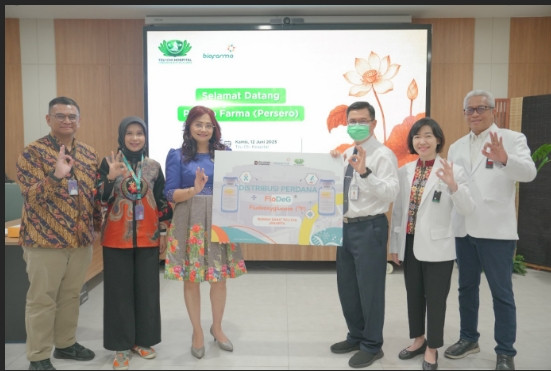
As part of President Prabowo Subianto’s Asta Cita agenda to build a resilient national healthcare system, Indonesia has officially begun distributing its first domestically produced radiopharmaceutical to support advanced cancer diagnostics.

The product, Fluorodeoxyglucose F‑18 (FDG), branded as FloDeg, is now being used at the Tzu Chi PIK Hospital in Jakarta, the Mitra Plumbon Hospital in Cirebon and the Mandaya Royal Puri Hospital in Tangerang, marking a new chapter in the country’s medical independence.

The rollout was made possible through the efforts of state-owned pharmaceutical company Bio Farma, which developed and manufactured FloDeg at its newly built cyclotron facility in Cikarang, West Java.

The facility, inaugurated in 2024 by Health Minister Budi Gunadi Sadikin, has met national standards for pharmaceutical production (CPOB) and radiation safety protocols from BAPETEN.


Supported by France & Indonesia, Schneider Electric Expansion Symbol of Strategic Collaboration​


Tuesday, June 24, 2025 / 21:49 WIB

1750833975825.jpeg
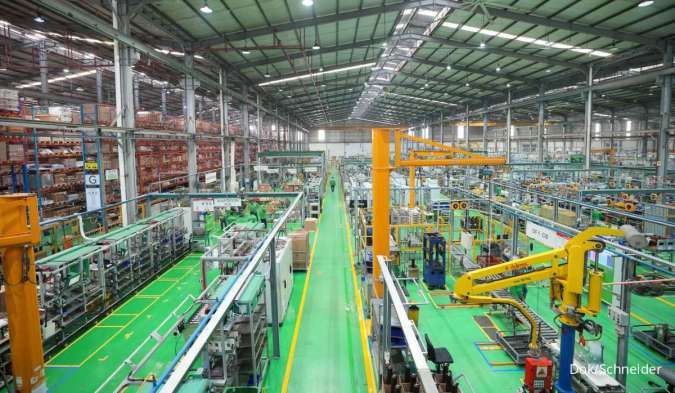
Smart factory or smart factory Schneider Electric in Cikarang, Bekasi, West Java.

Reporter: Muhammad Alief Andri | Editor: Ignatia Maria Sri Sayekti


KONTAN.CO.ID - JAKARTA. The expansion of the Schneider Electric smart factory in Cikarang not only reflects the steps of corporate expansion, but also a symbol of strategic collaboration between Indonesia and France. On Tuesday (24/6), the expansion of this factory received an honorary visit from the French Ambassador to Indonesia, East Timor, and ASEAN Fabien Penone, as well as Director of the Indonesian Ministry of Industry and Agricultural Machinery and Machinery Equipment, Solehan. Both expressed their full support for the investment and transformation of Schneider Electric in Indonesia.


Fabien Penone said that Schneider Electric is a concrete example of the results of strategic partnerships between the two countries. “This company has shown a long-term commitment to sustainable industrial development in Indonesia. The expansion of this plant not only expands production capacity, but also creates quality jobs and accelerates national energy transformation," he said in an official statement on Tuesday (24/6).


Also Read: Schneider Electric Expands Cikarang Plant, Ready To Absorb 1,500 Labor Up To 2029


Meanwhile, Solehan underlined that Schneider Electric's move was in line with the government's vision in strengthening the national manufacturing structure, especially to the Indonesia Gold 2045 target.


"With TKDN 40% and high export orientation, Schneider shows that Indonesia is able to produce high-value and competitive industrial products on the global scene," he said.


Martin Setiawan stated that this expansion is not just a physical expansion, but a tangible form of Schneider's participation in the journey of Indonesia's economic transformation. “Our smart factory expansion in Cikarang is a reflection of Schneider Electric’s long-term commitment to support the national industrial transformation and resilience agenda. This initiative also reflects the shared spirit of Indonesia and France in encouraging innovation and accelerating green technology.”


Also Read: Encourage Digital Transformation, Schneider Electric Inaugurates Innovation Hub


The Cikarang plant is a representation of the company’s sustainability vision. In addition to AI systems and digitization, the plant also carries out initiatives such as LED lighting retrofits, water efficiency, waste management, and roadmapoperational emissions reduction roadmaps until 2025. This move strengthens the position of Schneider as a global technology company that is not only reliable technically, but also consistently carries out the principles of ESG (Environmental, Social, Governance).
 

Indonesia Secures $528 Million Japanese Loan for Patimban Port​


Jayanty Nada Shofa

January 13, 2025 | 8:39 am


1751011635534.jpeg
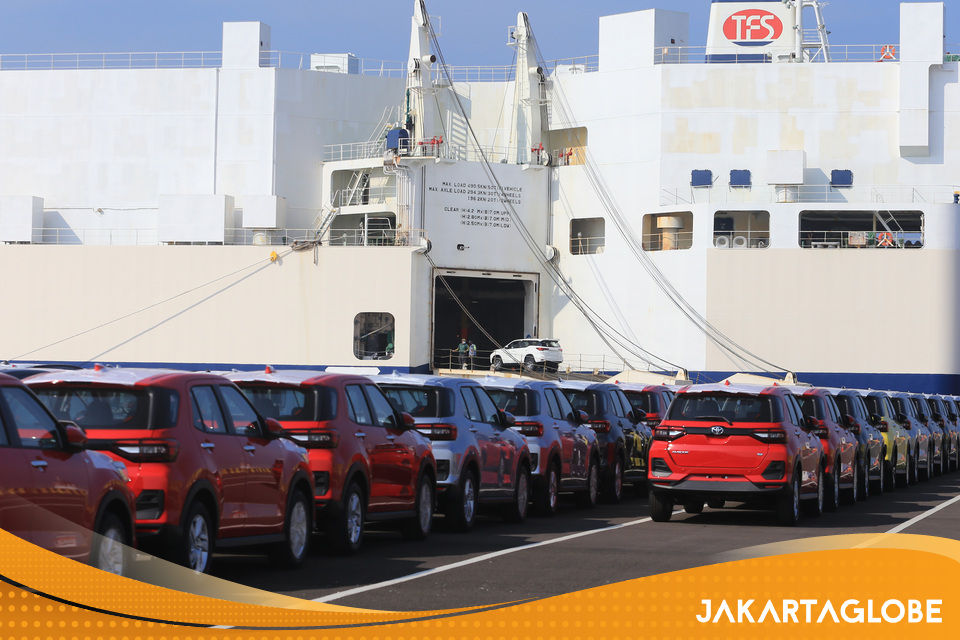
Vehicles await shipment at Patimban Port in Subang, West Java, on December 17, 2021. The newly-built port marked its first major export shipment with the delivery of over 1,200 vehicles, including Toyota cars, to the Philippines. (Antara Photo/Dedhez Anggara)


Jakarta. Indonesia recently secured another Japanese loan worth 83.4 billion yen or approximately $528.4 million for the Patimban Port expansion.


In 2017, Tokyo greenligt a 118.9 billion yen loan for the construction of the port in West Java and lent another 70.2 billion yen to expand the Patimban Port in 2022.


The freshly announced 83.4 billion yen funding will go into constructing a new port that will include container terminals, according to the Japan International Cooperation Agency (JICA), which is in charge of disbursing the funds. Other facilities will include a 13.7-hectare car terminal, access roads, and a one-kilometer bridge, to name a few.


To view this content we will need your consent to set third party cookies.
For more detailed information, see our cookies page.


The 83.4 billion yen loan adopts a tied loan scheme under the so-called Special Term Economic Partnership (STEP). In other words, Indonesia has to procure Japanese goods and expertise, including the technology needed for the quay wall or seawall construction and reclamation, to name a few. This is unlike the general untied loans that let Indonesia as the borrower procure goods and services from any country.

The project has a 0.3 percent annual interest rate. The interest rate for the consulting services portion stands at 0.2 percent each year. Indonesia has 40 years to pay off those debts. Japan has granted a 10-year grace period for this financing. Indonesia is planning to have the new facilities to operate by 2028, according to JICA data.


According to the Japanese Embassy in Indonesia, the port’s car export capacity is expected to increase to 600,000 units once the project is completed.

To view this content we will need your consent to set third party cookies.
For more detailed information, see our cookies page.

Access Road as 2020. This area is still large and with industrial complex is already started being built as of now

To view this content we will need your consent to set third party cookies.
For more detailed information, see our cookies page.


In late 2021, the government appointed the Indonesian consortium Pelabuhan Patimban International as the port’s operator. Toyota Tsusho Corporation, the trading arm of the Toyota Group, also took over the car terminal operations that year through its operating company Patimban International Car Terminal.

1751011552224.webp
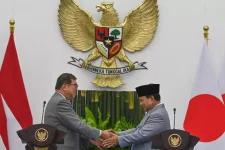
President Prabowo Subianto shakes hands with Japanese Prime Minister Shigeru Ishiba (left) after holding bilateral talks in Bogor Palace on Jan. 11, 2025. (Antara Photo/Aditya Pradana Putra)

The loan signing took place ahead of Japanese Prime Minister Shigeru Ishiba’s recent meeting with President Prabowo Subianto in Bogor. In his joint press statement, Prabowo said that both leaders had a “very friendly and intensive discussion”.


“We are committed to continue our partnership in economy and infrastructure,” Prabowo said.

 
Proving Ground Bekasi Meets International Standard


Kompas.com - 25/06/2025, 13:00 WIB


To view this content we will need your consent to set third party cookies.
For more detailed information, see our cookies page.

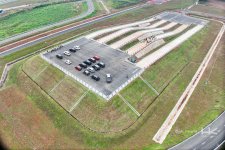
Proving Ground Bekasi (Indonesia kind of Detroit), West Java. One month ago.


JAKARTA, KOMPAS.com - PT Hutama Karya (Persero) has completed the test track work in the construction of the vehicle test facility (Proving Ground) Road Training Center and Motor Vehicle Certification (BPLJSKB) Bekasi with PT Indonesia International Automotive Proving Ground (IIAPG) on schedule.

The entire main facility of motor vehicle testing has been built and meets international standards based on the results of testing and validation by a leading global consultant, Applus IDIADA from Spain.

Executive Vice President (EVP) Secretary Hutama Karya Adjib Al Hakim said, this modern facility will provide great benefits for the safety of driving and the national automotive industry.

"This is the largest international standard motor vehicle testing facility in Indonesia, even in the ASEAN region that we work on and is concrete evidence of the company's commitment to support the progress of national strategic infrastructure," Adjib said in a press release on Wednesday (25/6/2025).

1751081137295.jpeg
PT Hutama Karya (Persero) (Hutama Karya) as a service provider successfully completed the test track work in the construction of the vehicle test facility (Proving Ground) Road Appropriational Testing and Motor Vehicle Certification (BPLJSKB) Bekasi with PT. Indonesia International Automotive Proving Ground (IAPG) on schedule. The entire main facility of motor vehicle testing has been built and meets international standards based on the results of testing and validation by a leading global consultant, Applus IDIADA from Spain. Doc. PT Hutama Karya (Persero))


IPADA Applus Certification

Adjib added that Hutama Karya has completed the main physical construction work of Proving Ground BPLJSKB Bekasi in late April 2025, and is now entering the finalization and test commissioning stage before commercial operations scheduled to begin in August 2025.

The certification process by Applus IDIADA has been carried out with the results of meeting the minimum requirement (requirements) to the required UN Regulation (UNR) standard.

"The main facilities that have been completed include the High-Speed Oval Track capable of testing vehicles up to 250 kilometers per hour, Test with five different slope levels for braking testing, a Dynamic Area of more than 6 hectares for dynamic testing of vehicles, to noise test areas (noise emissions)," he added.


West Java’s Upcoming Battery Plant to Power 300,000 EVs Annually​

June 29, 2025 | 10:56 pm

1751266662859.webp
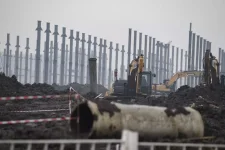
Workers operate excavators at the construction site of an integrated EV battery production facility in Karawang, West Java, Sunday, June 29, 2025. (Antara Photo/Muhammad Adimaja)


Karawang. A new battery manufacturing plant, whose construction officially began on Sunday, will have the capacity to supply batteries for up to 300,000 electric vehicles (EVs) per year, Energy and Mineral Resources Minister Bahlil Lahadalia said at the groundbreaking ceremony in Karawang, West Java.


The project is a joint venture between Indonesia’s state-owned mining company Aneka Tambang (Antam), the Indonesia Battery Corporation (IBC), and a consortium led by China’s Contemporary Amperex Technology Co. Limited (CATL), along with Brunp Recycling and Lygend Resources.


Bahlil accompanied President Prabowo Subianto, who officially launched the project, which carries a total investment value of $5.9 billion.


Once operational, the plant will have a production capacity of 15 gigawatt-hours (GWh).

“If converted into EV batteries, this capacity can supply between 250,000 and 300,000 electric vehicles per year,” Bahlil said.

To view this content we will need your consent to set third party cookies.
For more detailed information, see our cookies page.

An Industrial Complex in Karawang, West Java


Read More:​

Indonesia Begins Construction of $5.9 Billion Mega EV Battery Hub With China’s CATL Consortium


In addition to producing EV batteries, the facility will also serve as a battery energy storage system (BESS), capable of storing electricity generated from solar power, he added.


The minister noted that boosting domestic battery production is expected to significantly accelerate EV manufacturing in Indonesia and reduce the country’s fuel imports by approximately 300 million liters per year.


The Karawang plant will be fully integrated with five supporting facilities and upstream mining operations located in East Halmahera, North Maluku, in line with the government’s goal of developing a complete EV battery supply chain -- from mining to manufacturing.


Situated on a 3,000-hectare site, the project is expected to generate up to 8,000 jobs once operational. It will also support the development of 18 key infrastructure projects, including the construction of a multipurpose port, further enhancing the region’s industrial ecosystem.


Indonesia's Steel Industry Meets the Needs of Warships and Oil & Gas Platforms

To view this content we will need your consent to set third party cookies.
For more detailed information, see our cookies page.


Rabu, 02 Jul 2025 11:51 WIB


Indonesia's Industry Meets Specific Steel Needs for Warship Construction and Offshore Structures (including national strategic projects and international exports), with the involvement of the Indonesia-Korea joint venture Krakatau Posco in the Frigate Combatant project, which is the first 140 meter frigate class warship designed and built domestically by PT PAL Indonesia.


Krakatau Posco management explained that this ship steel uses LR Higher Strength Marine Steel Grade, which has high tensile strength and good weldability, making it ideal for the main hull structure. This marks a significant step toward self-sufficiency in the maritime defense industry.


Additionally, Krakatau Posco’s marine grade steel products are used in the construction of logistics ships such as the SEJAHTERA 35 built by PT Bandar Victory Shipyard, as well as export projects for 115,000 DWT class tankers produced by Hyundai Vietnam Shipbuilding.


"This proves that the quality of Indonesian-made steel can compete in the global market," management said in a written statement on Monday (June 30, 2025).


Krakatau Posco also produces offshore structure plates that meet international standards, including API 2W Grade 50, EN S355MLO, and other custom standards according to client specifications for offshore structures such as oil and gas drilling platforms and production platforms.


Management said the steel production process uses Thermomechanical Controlled Processing (TMCP) technology with accelerated cooling facilities, resulting in steel with finer grain size, high strength, and excellent toughness.


"This makes it suitable for use in offshore energy projects," they added.


Moreover, Krakatau Posco’s marine grade steel can also be used in the development of CCS/CCUS (Carbon Capture, Utilization, and Storage) projects, which are key pillars in the energy transition toward Indonesia’s Net Zero Emission 2060 target. Subsea structures for carbon storage require high-strength steel with toughness at low temperatures (down to -40°C), specifications that Krakatau Posco products can fully meet.


Strategic Projects Using Krakatau Posco Offshore Steel:


  • Bukit Tua Phase 2 / Petronas – EN-S355G series (MLO) – 2020
  • Malong-Belida Field / MEDCO E&P NATUNA – API 2W Grade 50 – 2021
  • West Belut Define Project / MEDCO E&P NATUNA – API 2W Grade 50 – 2022
  • Manpatu Project / Pertamina Hulu Mahakam – S355K series – 2024
  • Hidayah Field / Petronas – EN-S355G series (MLO) – 2024


ITS Makes Dog-Shaped Robot, Can Be Used for Disaster Mitigation

1752057623950.webp
ESPOS.ID – The four-legged dog-shaped robot developed by the ITS Robotics Team in collaboration with Ezra Robotics was created to meet the needs of industry and society.


The Sepuluh Nopember Institute of Technology (ITS) Surabaya has developed a four-legged dog-shaped robot equipped with sensor systems, navigation, and artificial intelligence (AI). This robot can be used to support industrial operations and disaster mitigation.


The coordinator of the ITS Robotics Team, Muhtadin, said on Wednesday (7/5/2025) that the robot is the result of a collaboration between the Information and Communication Technology (ICT) Cluster and ITS Robotics, through the Artificial Intelligence for Healthcare and Society Center of Excellence (PUI), the ITS Department of Computer Engineering, and the technology company Ezra Robotics. It is focused on serving as an autonomous patrol unit. “This robot is capable of mapping its environment, detecting excessive temperatures, and recognizing anomalies in industrial areas such as electrical substations,” he said.


This intelligent robot is capable of moving autonomously, inspecting industrial areas, and receiving voice commands. The robot is also equipped with infrared temperature sensors, acoustic sensors, and navigation based on Lidar and the global positioning system (GPS). Deep learning-based artificial intelligence technology has also been embedded to automatically recognize thermal and color images.


“This feature allows the robot to patrol routinely every three hours and send monitoring data to the control center,” he said.


In terms of mobility, this four-legged robot is able to adapt to various surfaces, including rocky terrain and stairs, and is equipped with a manual control mode for specific needs.


In addition to the industrial sector, the robot is also being developed for disaster response and household use.


With support from Google Gemini’s Large Language Model (LLM), the robot is able to understand and carry out commands given in natural language. “We also designed this robot so that it can interact naturally to assist with daily activities,” said Muhtadin.


The robot consists of two small units, each 45 centimeters tall, and one large unit, which is 71 centimeters tall. The small robots are intended for domestic use, while the larger version is for industrial purposes.


ITS aims to commercialize the robot to support other sectors such as mining and oil and gas, and will continue conducting field tests to further improve its performance. “This innovation is part of ITS’s contribution to supporting sustainable development, or the SDGs, especially goals 9 and 11, by creating technological solutions that strengthen the resilience of industry and communities,” said Muhtadin.

 
PT Handal Indonesia Motor: Center for Chinese Car Assembly in Indonesia

1752385392157.jpeg


JAKARTA, KOMPAS.com
– The surge in Chinese car brands entering Indonesia over the past two years has led to growing demand for local vehicle assembly services.


One company that has been flooded with orders is PT Handal Indonesia Motor (HIM), which has now become a key partner for various automotive brands. Currently, HIM handles assembly for nine brands: Chery, Neta, Geely, BAIC, Jetour, Jaecoo, Aletra, Polytron, and Xpeng.


Xpeng Indonesia has officially started producing the X9 as a completely knocked down (CKD) unit at the PT Handal Indonesia Motor (HIM) facility in Purwakarta, West Java. The company also serves as a facilitator for the assembly of the Maung MV3 tactical vehicle owned by Pindad.

To view this content we will need your consent to set third party cookies.
For more detailed information, see our cookies page.


HIM Chief Executive Officer, Denny Siregar, said that partnerships with these brands have been ongoing for the past three to four years. Several of them are now consistently producing vehicles every month at Handal’s factory located in Pondok Ungu, Bekasi, West Java.


“We started about three to four years ago with Neta and Chery. Now there are nine brands, and the factory in Pondok Ungu, Bekasi, is operating optimally,” Denny told Kompas.com on Tuesday (8/7/2025).


In addition to Bekasi, Handal is also expanding its facilities and production capacity by opening a new factory in Purwakarta, West Java. Although not yet officially inaugurated, the new plant has already started its initial operations with a projected capacity of 32,000 units per year in a single shift.


On the same occasion, Denny explained that the duration of assembly contracts varies depending on the strategy and production scale of each brand. However, on average, contracts last between three and five years.


“These contracts are not all the same, as they depend on the brand’s initiative. For example, Chery already has many products, so their investment returns more quickly, which usually means a shorter contract. If the production volume is small, the contract duration tends to be longer,” Denny explained.


“On average, it’s three to five years, but it still depends on the considerations of each brand,” he continued.


To ensure that cooperation runs according to the agreement, each contract outlines the rights and obligations of both parties, production targets, and even penalties if production or other matters do not meet the agreed commitments.

1752385439836.jpeg

“As with most businesses, the contract regulates rights and obligations, production volume. If the volume or other aspects don’t match the agreement, of course there are consequences,” said Denny.


In addition, the brand holders also invest in specific assembly features, while Handal is responsible for providing investment for general production facilities.


“They (the brand holders) invest in special features themselves. Meanwhile, Handal invests in general facilities. Everything is stipulated in the contract,” said Denny.


Unfortunately, on that occasion, he could not disclose in detail the duration of the assembly contracts for each brand under Handal’s management.


“At the end of the day, the benefit goes to consumers. I see a lot of new technology, more options, and increasingly competitive prices,” he said.


Chinese textile company invest in Brebes, Central Java.
Investment (FDI) : more than 48 million USD
Factory : 8 hectares
Worker absorbent : 8000 workers

To view this content we will need your consent to set third party cookies.
For more detailed information, see our cookies page.
 
To view this content we will need your consent to set third party cookies.
For more detailed information, see our cookies page.
 
To view this content we will need your consent to set third party cookies.
For more detailed information, see our cookies page.


To view this content we will need your consent to set third party cookies.
For more detailed information, see our cookies page.
 

Building a Smelter, INCO Needs 5 to 10 Years to Break Even​


To view this content we will need your consent to set third party cookies.
For more detailed information, see our cookies page.

Pomalaa project


Artha Adventy — July 20, 2025, 14:00

Bloomberg Technoz, Jakarta – Mining issuer PT Vale Indonesia Tbk (INCO) estimates that the investment for its ongoing smelter project will require five to ten years to break even.


This time frame also takes into account the current pressure on global nickel prices.


INCO's Head of Corporate Finance and Investor Relations, Andaru Brahmono Adi, explained that the correction in nickel prices has a direct impact on estimated returns at the downstream level, especially for High Pressure Acid Leaching (HPAL) smelters.


When asked about how long it will take for INCO's smelter projects to start generating profits, Andaru said the estimate has not changed much from the original plan.


“It's more or less the same as two or three years ago. Still quite economical, around five to ten years, closer to five years,” he said, as quoted on Sunday (20/7/2025).


To maintain the economic viability of the project, INCO and strategic partners such as Huayou and GEM have agreed to pursue technological development and cost efficiency so that capital expenditure (Capex) requirements can be minimized.


"Improvements are being made so that the Capex we spend on the smelter can be lower in value. That way, the economic aspect will increase," said Andaru.


INCO is currently developing three major mines located in Bahodopi, Pomalaa, and Sorowako, combined with the construction of HPAL facilities as part of Indonesia's downstream strategy.


These three jumbo projects have a total investment value of US$8.5 billion.


The Bahodopi project is the most ready to begin operations in the near future, with production targeted to start this year.


After that, the Pomalaa project is scheduled to follow in the second quarter of 2026, while Sorowako will be the final phase of Vale Indonesia's expansion series. All three mines are wholly owned by the company.


In downstream development, Vale partners with several global players to build HPAL facilities.


For the Pomalaa project, Vale has partnered with Huayou and Ford in the construction of the smelter. For Bahodopi, the project is being carried out with GEM, while in Sorowako, Vale is again collaborating with Huayou.


Users who are viewing this thread

Pakistan Defence Latest

Back
Top