Indonesia's Manufacturing Sector


Indonesia's US$10.2 Billion Industrial Push: 11 Projects and Weda Bay's First EV Battery Export​


1795066221619.png

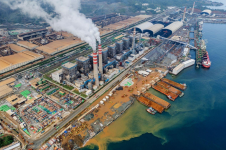
On October 8, 2026, President Prabowo Subianto marked the first export of electric vehicle (EV) batteries from the Indonesia Weda Bay Industrial Park (IWIP) in North Maluku.

The industrial park covers approximately 30 square kilometers, nearly the size of the entire city of Yogyakarta.

The event also marked progress on 11 industrial projects worth a combined US$10.2 billion. Four projects reached commercial or export milestones, while construction began on seven others.

Four Projects Reach Commercial or Export Milestones — US$3.4 Billion​

  1. REPT Battero Indonesia: Battery manufacturing facility with an initial design capacity of 8 gigawatt-hours (GWh) annually. REPT Battero Energy holds a 60% indirect ownership stake.
  2. Blue Sparking Energy: Production capacity of 67,000 metric tons of mixed hydroxide precipitate (MHP) annually, an intermediate material used in battery production.
  3. Pioneer Aluminium Industries: Electrolytic aluminum production facility with an annual capacity of 300,000 metric tons.
  4. XCMG Indonesia Manufacturing: Manufacturing facility with an annual production capacity of 700 electric heavy equipment units.

Seven Projects Break Ground — US$6.8 Billion​

  1. Guang Ching Nickel Cobalt: Production of nickel-based battery materials.
  2. Inno Prima Material: Manufacturing of battery separators.
  3. Tinci Materials Indonesia: Production of battery electrolytes.
  4. Weda Bay Aluminium: Aluminum smelting facility.
  5. Bintang Karya Aluminium: Aluminum smelting facility.
  6. Foton Guangqing Motor Indonesia: Manufacturing of electric dump trucks.
  7. Flat Solar Energy Indonesia: Production of glass for solar panels.

From Nickel Processing to an Integrated Industrial Ecosystem​

Indonesia banned raw nickel ore exports in 2020 to encourage domestic processing and increase the value added to its mineral resources.

What makes Weda Bay particularly significant today is its ambition to develop multiple stages of industrial production within a single industrial complex.

Nickel processing operations are already established. The next phase involves expanding into battery cells, separators, electrolytes, and electric trucks, strengthening the integration of upstream mineral processing with downstream manufacturing.

These developments illustrate Indonesia's efforts to move beyond raw material exports toward a more diversified, higher-value industrial manufacturing ecosystem.

Sources: Vanity Fair Italia (Garry Lotulung), Indonesia Weda Bay Industrial Park (IWIP), and The Jakarta Post (@jakpost).
 

Merdeka Battery Materials (MBMA) Net Profit Surges 477.72% in the First Nine Months of 2026​


By I Putu Gede Rama Paramahamsa | Bisnis.com
21 November 2026

1795423235596.png

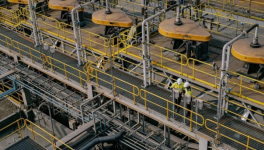
PT ESG New Energy Material's plant, a joint venture between PT Merdeka Battery Materials Tbk. (MBMA) and GEM Co., Ltd., at the Indonesia Morowali Industrial Park. / Photo courtesy of MBMA.


JAKARTA — PT Merdeka Battery Materials Tbk. (MBMA) recorded strong financial performance during the January–September 2026 period, with net profit surging 477.72% year-on-year (YoY).

According to the company's financial statements, MBMA recorded total revenue of US$1.78 billion, an increase of 90.37% YoY. At an exchange rate of Rp17,857 per US dollar, the company's total revenue reached Rp31.78 trillion.

Meanwhile, profit attributable to owners of the parent company, or net profit, reached US$146.19 million, equivalent to Rp2.61 trillion, representing an increase of 477.72% YoY.

Merdeka Battery Materials President Director Teddy Nuryanto Oetomo explained that the company's performance throughout the year reflected MBMA's development into an increasingly mature business in operational terms.

The stronger performance was primarily supported by nickel ore production and improved mining margins at the Sulawesi Cahaya Mineral (SCM) mine, driven by higher heavy-equipment utilization, expanded transportation capacity, and infrastructure development.

At the same time, increased contributions from sulfuric acid and stable nickel-processing operations enabled profitability in MBMA's upstream business to offset margin pressures in certain processing operations.

"Since commencing commercial operations, we have continued investing in mining activities, processing, and downstream infrastructure. These investments are now increasingly reflected in the company's production scale, margins, and earnings performance," Teddy said in an official statement on Friday (November 20, 2026).

Nickel Ore Production Rises 91%​

In detail, MBMA's nickel mining operations recorded positive quarterly performance, with SCM producing 12.3 million wet metric tonnes (wmt) of nickel ore in the period ending September 2026.

As a result, total nickel ore mined during the first nine months of the year reached 27.6 million wmt, an increase of 91% YoY.

Meanwhile, sulfuric acid production increased 13% quarter-on-quarter (QoQ) to approximately 291,000 tonnes, while revenue rose 18% to around US$98 million, supported by higher production volumes and more favorable pricing conditions.

In addition, PT ESG New Energy Material produced 19,767 tonnes of contained nickel in Mixed Hydroxide Precipitate (MHP) during the first nine months of 2026, with capacity utilization reaching 96% in September.

Meanwhile, PT Sulawesi Nickel Cobalt (SLNC) completed the commissioning of its MHP facility, which has an annual production capacity of 90,000 tonnes, and received its first nickel ore supply in the third quarter of 2026.

MBMA currently operates mining infrastructure with a total installed capacity of 60 million wmt per year, supporting the expansion of SCM's operations while strengthening integration with downstream processing facilities.

"Although operational and financial momentum remains strong, MBMA will continue to closely monitor various factors that could affect performance, including nickel and sulfuric acid price movements, benchmark pricing mechanisms, energy and fuel costs, exchange-rate fluctuations, weather conditions, regulatory developments, and the ramp-up process of new facilities," Teddy emphasized.


Users who are viewing this thread

Back
Top