Intel Corporation- News and Discussions

Hamartia Antidote

Elite Member
Joined
Nov 17, 2013
Messages
47,054
Reaction score
26,890
Reputation
619.1
Country of Origin
Country of Residence
intel-logo-3.jpg


is an American multinational corporation and technology company headquartered in Santa Clara, California, and incorporated in Delaware.[3] Intel designs, manufactures, and sells computer components such as CPUs and related products for business and consumer markets. It is considered one of the world's largest semiconductor chip manufacturers by revenue[4][5] and ranked in the Fortune 500 list of the largest United States corporations by revenue for nearly a decade
 

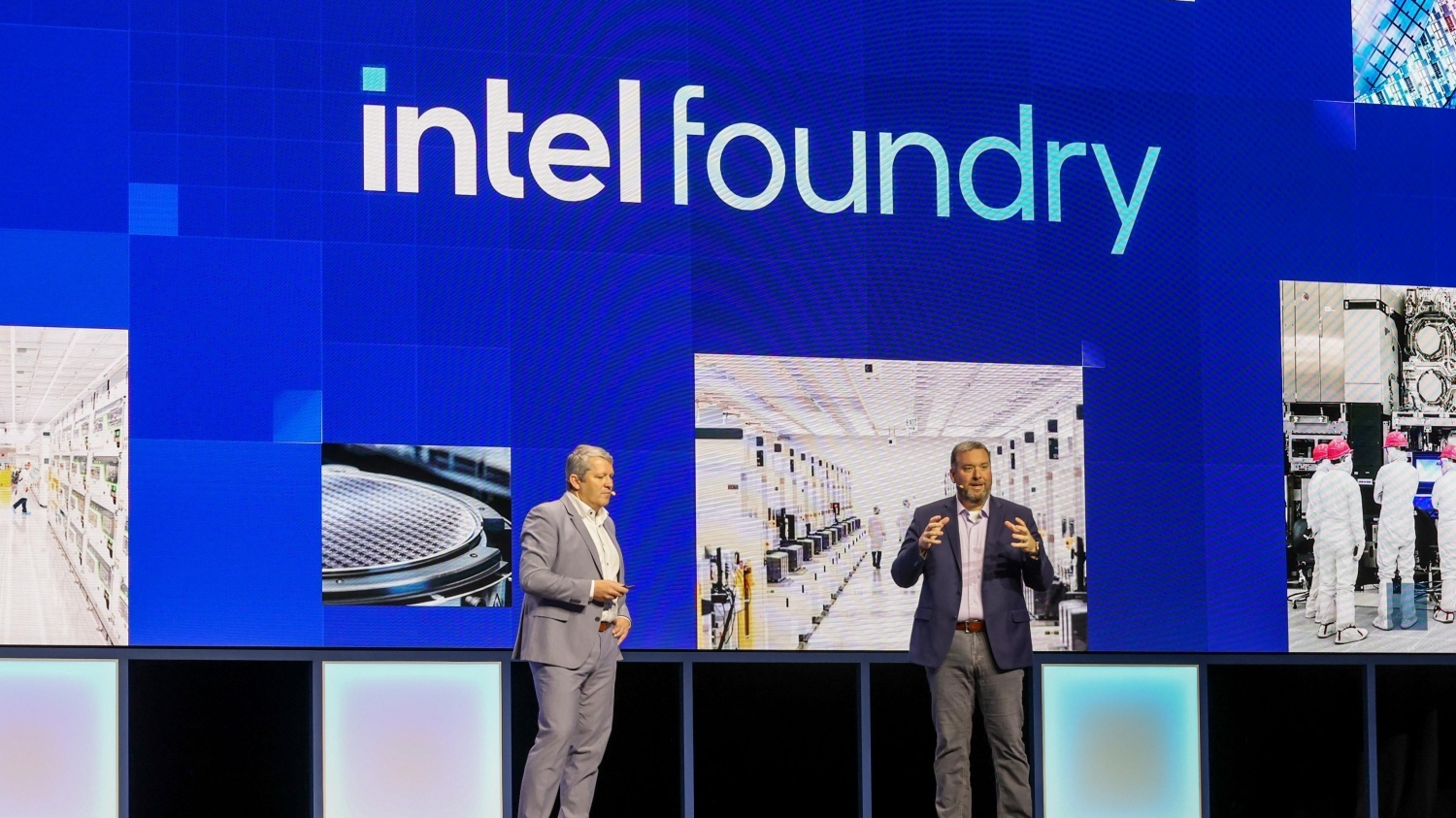
Intel announces its cutting-edge 18A process node has entered 'risk production'

Intel announces its bleeding-edge, in-house Intel 18A process node has entered 'risk production' with the first chips fabbed on 18A to be Panther Lake.

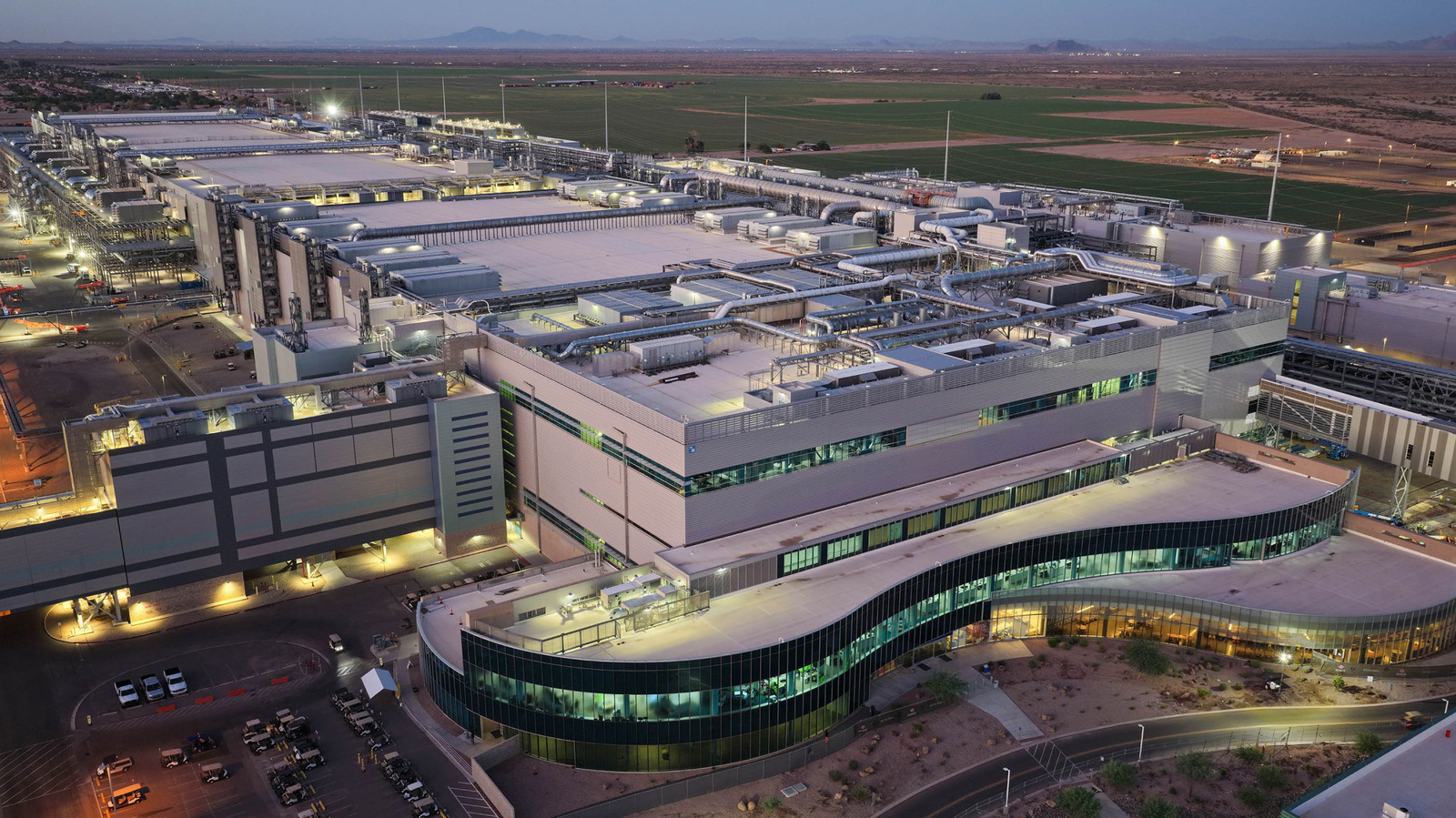
TL;DR: Intel's new Arizona facility is testing 18A (1.8nm-class) wafers, marking a significant milestone for U.S. manufacturing. Kevin O'Buckley, Senior VP of Foundry Services, explains that "risk production" involves scaling manufacturing from hundreds to hundreds of thousands of units, ensuring both technological and production capabilities.

To view this content we will need your consent to set third party cookies.
For more detailed information, see our cookies page.


To view this content we will need your consent to set third party cookies.
For more detailed information, see our cookies page.

Intel 18A Process Technology Simply Explained​

 
Last edited:
I have used Intel processors for more than 30 years.

I switched to AMD just a couple of years ago.

Seeing Intel today, it's unbelievable.

20-30 years ago, no one would have thought Intel could be defeated.
 
They tried entering the GPU market with their Arc series cards too, what's up with that now ?
 

Broadcom reportedly concluded that Intel's 18A process technology, after testing, was not yet viable for high-volume production, indicating potential issues with yield or chip quality, though Broadcom's evaluation is ongoing.

Here's a more detailed breakdown of the situation:
  • Broadcom's Disappointment:
    Reuters reported that Broadcom's tests of Intel's 18A process, which involves sending silicon wafers through the process, did not meet expectations, and the company concluded the process was not yet ready for high-volume production.

  • Potential Issues:
    The concerns likely revolve around the number of defects on each wafer or the quality of the chips fabricated, which directly impacts the yield, or the percentage of usable chips from each wafer.

  • Intel's Response:
    Intel stated that the 18A process is "powered on, healthy and yielding well" and remains on track for high-volume manufacturing in 2025.

  • Broadcom's Position:
    Broadcom stated that it is "evaluating the product and service offerings of Intel Foundry and have not concluded that evaluation," indicating that the tests are ongoing and no final decision has been made.

  • Context:
    Intel is aiming to establish its foundry business to compete with industry leaders like TSMC, and the 18A process is a key part of that strategy.

  • Industry Interest:
    Intel's 18A process is attracting interest from other chipmakers like Nvidia, who are also testing the process.

  • Risk Production:
    Intel announced that its 18A process node has entered risk production, a crucial milestone signifying that the node is in the early stages of low-volume test manufacturing runs.
 

Broadcom reportedly concluded that Intel's 18A process technology, after testing, was not yet viable for high-volume production, indicating potential issues with yield or chip quality, though Broadcom's evaluation is ongoing.

Here's a more detailed breakdown of the situation:
  • Broadcom's Disappointment:
    Reuters reported that Broadcom's tests of Intel's 18A process, which involves sending silicon wafers through the process, did not meet expectations, and the company concluded the process was not yet ready for high-volume production.

  • Potential Issues:
    The concerns likely revolve around the number of defects on each wafer or the quality of the chips fabricated, which directly impacts the yield, or the percentage of usable chips from each wafer.

  • Intel's Response:
    Intel stated that the 18A process is "powered on, healthy and yielding well" and remains on track for high-volume manufacturing in 2025.

  • Broadcom's Position:
    Broadcom stated that it is "evaluating the product and service offerings of Intel Foundry and have not concluded that evaluation," indicating that the tests are ongoing and no final decision has been made.

  • Context:
    Intel is aiming to establish its foundry business to compete with industry leaders like TSMC, and the 18A process is a key part of that strategy.

  • Industry Interest:
    Intel's 18A process is attracting interest from other chipmakers like Nvidia, who are also testing the process.

  • Risk Production:
    Intel announced that its 18A process node has entered risk production, a crucial milestone signifying that the node is in the early stages of low-volume test manufacturing runs.

That Broadcom disappointment was back September.

They started a new round a month ago
March 4, 2025

Sources close to the matter have revealed to Reuters that Nvidia and Broadcom are evaluating the capabilities of Intel's 18A process. Intel's 18A is the company's first process node to utilize gate-all-around RibbonFET transistors and a backside power delivery network called PowerVia. While comparable to TSMC's N2 node in transistor density, 18A is projected to offer superior performance due to these two technologies.

It's important to note that Nvidia and Broadcom are not testing full chip designs at this stage but instead evaluating the performance and characteristics of the 18A process itself. This is standard practice in the industry, allowing potential customers to assess the suitability of a fabrication process before committing to full-scale production.

Broadcom's involvement with 18A dates back to September 2024, though initial reports suggested that the tests might not have met expectations. However, these reports remain unconfirmed, and Broadcom has stated that its evaluation is ongoing. Nvidia's interest in Intel's foundry services is also well-documented. CEO Jensen Huang expressed his openness to using Intel-fabricated chips as early as 2022, and test chips were reportedly being evaluated in 2023.
 
To view this content we will need your consent to set third party cookies.
For more detailed information, see our cookies page.

Intel's Panther Lake - Everything We Know!​


CES 2026: Intel Core Ultra Series 3 Debuts as First Built on Intel 18A​


Intel ushers in the next generation of AI PCs with exceptional performance, graphics and battery life; available this month.

NEWS HIGHLIGHTS:

  • First platform built on Intel 18A: At CES 2026, Intel launched the Intel® Core™ Ultra Series 3 processors, the first compute platform built on Intel 18A - the most advanced semiconductor process ever developed and manufactured in the United States.
  • Powering over 200 PC designs: Series 3 includes a robust family of mobile processors, delivering exceptional performance, graphics and battery life.
  • From PC to Edge: For the first time, Series 3 processors are tested and certified for embedded and industrial use cases at the edge like robotics, smart cities, automation, healthcare and more.
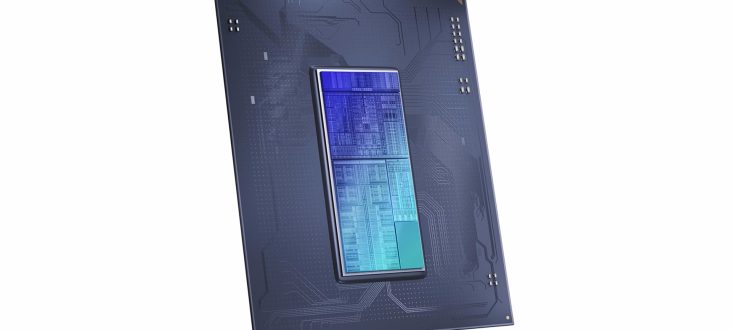
LAS VEGAS--(BUSINESS WIRE)-- Today at CES, Intel unveiled Intel® Core™ Ultra Series 3 processors, the first AI PC platform built on Intel 18A process technology that was designed and manufactured in the United States. Powering over 200 designs from leading, global partners, Series 3 will be the most broadly adopted and globally available AI PC platform Intel has ever delivered.

This press release features multimedia. View the full release here: https://www.businesswire.com/news/home/20260105738564/en/

“With Series 3, we are laser-focused on improving power efficiency, adding more CPU performance, a bigger GPU in a class of its own, more AI compute and app compatibility you can count on with x86.” – Jim Johnson, Senior Vice President and General Manager, Client Computing Group, Intel

Series 3 Adds a New Class of Intel Core Ultra X9 and X7 Processors

Within the Intel Core Ultra Series 3 mobile lineup, a new class of Intel Core Ultra X9 and X7 processors come packed with the highest performing, integrated Intel® Arc™ graphics. They are purpose-built for multitaskers that handle advanced workloads like gaming, creation and productivity on the go. The top SKUs feature up to 16 CPU cores, 12 Xe -cores and 50 NPU TOPS, delivering up to 60% better multithread performance1, over 77% faster gaming performance2 and up to 27 hours of battery life3.

The Series 3 family also includes Intel Core processors, intentionally designed to power mainstream mobile systems. Leveraging the same foundational architecture of Intel Core Ultra Series 3, the Intel Core lineup enables more performant and efficient laptop designs at lower price points.

Series 3 Accelerates AI Adoption in Robotics, Smart Cities, Automation and Healthcare

For the first time, alongside their PC counterparts, Series 3 edge processors are certified for embedded and industrial use cases, including extended temperature ranges, deterministic performance, and 24x7 reliability.

Intel Core Ultra Series 3 delivers competitive advantages in critical edge AI workloads with up to 1.9x higher large language model (LLM) performance4, up to 2.3x better performance per watt per dollar on end-to-end video analytics5, and up to 4.5x higher throughput on vision language action (VLA) models6. The integrated AI acceleration enables superior total cost of ownership (TCO) through a single system on chip (SoC) solution versus traditional multi-chip CPU and GPU architectures.

Availability

Pre-orders for the first consumer laptops powered by Intel Core Ultra Series 3 processors will begin Jan. 6, 2026. Systems will be available globally starting Jan. 27, 2026, with additional designs coming throughout the first half of the year.

Edge systems powered by Intel Core Ultra Series 3 will be available starting Q2 2026.


Actual laptops
To view this content we will need your consent to set third party cookies.
For more detailed information, see our cookies page.

Acer x Intel at CES 2026: New Laptops w/ Intel Core Ultra Series 3 | Talking Tech | Intel Technology​

 
Last edited:
Intel 14A Node Trials Signal Confidence From Early Customers

Intel's 14A node is a critical product for Intel Foundry, currently under development and slated for release in 2027. As Intel collaborates on the 14A node design with customers, these potential Foundry clients can evaluate whether the upcoming node meets their needs. Patrick Moorhead, from Moor Insights & Strategy, who frequently engages with industry executives, reports that two Intel customers are very satisfied with the node's development so far. "Intel customers I've spoken to who have seen this node say that 14A is the real deal. It should be highly competitive not only in the datacenter and PC markets but also in mobile chips, which marks an important shift for the company."

He further commented, "I am eager for Intel to release its 14A 0.5 PDK and start gathering feedback. However, even without the PDK available, I'm already hearing very positive things, especially considering the progress with 18A, as each new node builds upon the previous ones." Intel is manufacturing the 14A node using High-NA EUV lithography, becoming the first in the industry to transition from Low-NA. Previously, Intel revealed that it processed over 30,000 wafers in a single quarter, achieving simplified manufacturing by reducing the required steps for a particular layer from 40 to fewer than 10, which naturally resulted in much faster cycle times.

Customers often express concerns about security and sufficient wafer capacity when working with new fabrication partners. Patrick Moorhead noted, "The prospective customers I talk with—and I have spoken recently to nearly every CEO of potential Intel Foundry anchor tenants—consistently express their need to have real confidence that wafer allocations will be scrupulously fair." Each ASML Twinscan EXE:5200B dual-stage lithography system processes 200 wafers per hour at Intel fabs, suggesting that capacity should be adequate to meet all client needs.
 

Elon Musk says his TeraFab facilities will use Intel's 14A process technology to make AI chips — SpaceX will be responsible for high-volume chip manufacturing in likely Intel tech licensing deal​


Elon Musk on Wednesday said that TeraFab plans to use Intel's 14A fabrication technology when it has its own production capacity later this decade and when the manufacturing process matures. He also revealed that Tesla will be responsible for building and operating a pilot production line, whereas SpaceX will be responsible for high-volume manufacturing of chips.


TeraFab to use Intel 14A​

"We plan to use Intel's 14A process, which is state-of-the-art and in fact not yet totally complete," Elon Musk, chief executive of Tesla, said during Tesla's earning's call with analysts and investors. "By the time TeraFab scales up, 14A will be probably fairly mature or ready for prime time. 14A seems like the right move and we have a great relationship with Intel, a lot of respect for the CEO, the CTO, and the new team there."

Based on the comments made by Musk, he wants to use Intel's 14A manufacturing technology at TeraFab, which likely means licensing the fabrication node from Intel and integrating it at a fab operated by TeraFab. Meanwhile, Musk has never mentioned licensing per se, which means that while Intel is expected to participate in TeraFab as a partner, actual details of its role have yet to be defined.

As for Tesla and SpaceX, the division of responsibilities is straightforward: Tesla handles the research fab, while SpaceX builds and operates a high-volume manufacturing facility.


Tesla handles R&D, SpaceX handles manufacturing​

In the short term, Tesla intends to construct a semiconductor R&D facility at its Texas campus, with an estimated cost of around $3 billion. This site will be a small pilot line capable of processing a few thousand wafers per month, and its purpose will be to experiment with new ideas in semiconductor manufacturing as well as validate whether these ideas can be realized in a production-like environment. From what we can tell, 14A will barely have anything to do with the pilot line in Texas.

"In the near term, Tesla plans to build a research fab at its Gigafactory Texas campus," Musk said. "This is something we expect to be a $3 billion initiative and support a few thousand wafers per month. "It is really intended to try out ideas […] for improving the fundamental technology of how chips are made, some of new physics we would like to test out. We also want to test out the ability to see if something is working in production [environment]. You need kind of like a few thousand wafer starts a month to make sure that a production process is sound."

For scaling beyond the pilot phase, SpaceX is expected to build an actual high-volume manufacturing facility. However, coordination between Tesla and SpaceX introduces many challenges, as any joint effort must be approved by both companies' boards and pass conflict-of-interest reviews, which will inevitably slow down the project.

"That is basically what we have figured out thus far is Tesla's doing the research fab, SpaceX doing the initial part of the large-scale TeraFab and then we got to figure out the rest," Musk said.

Licensing a process technology is one of the ways for TeraFab to get a fabrication node quickly (as it may take a decade to design a manufacturing tech from scratch), whereas for Intel, this could mean an influx of cash. Historically, chipmakers have licensed process technologies from others if they could not design their own node on time, or the parties wanted to create a virtual foundry with compelling capacity to compete with larger contract chipmakers.

For example, GlobalFoundries licensed Samsung's 14nm-class process technologies in 2014 – 2015 after it failed to complete development of its own 14nm XM production node. While there were rumors that GlobalFoundries produced some of Samsung's Exynos processors at its fab in New York, the first clearly attributable, high-volume GF-built 14nm products — AMD's Radeon RX 400-series 'Polaris' GPUs only showed up in 2016. This incited rumors about GF's inability to integrate the node and maximize yields. Rapidus is a more recent example, as it has licensed IBM's 2nm technology for its fabs.

It remains to be seen whether it is possible to license Intel's 1.4nm-class process technology and then port process recipes, tune tools, and maximize yields at a TeraFab facility. After all, modern process technologies are dramatically more complex than those from a decade ago.
 

Elon Musk says his TeraFab facilities will use Intel's 14A process technology to make AI chips — SpaceX will be responsible for high-volume chip manufacturing in likely Intel tech licensing deal​


Elon Musk on Wednesday said that TeraFab plans to use Intel's 14A fabrication technology when it has its own production capacity later this decade and when the manufacturing process matures. He also revealed that Tesla will be responsible for building and operating a pilot production line, whereas SpaceX will be responsible for high-volume manufacturing of chips.


TeraFab to use Intel 14A​

"We plan to use Intel's 14A process, which is state-of-the-art and in fact not yet totally complete," Elon Musk, chief executive of Tesla, said during Tesla's earning's call with analysts and investors. "By the time TeraFab scales up, 14A will be probably fairly mature or ready for prime time. 14A seems like the right move and we have a great relationship with Intel, a lot of respect for the CEO, the CTO, and the new team there."

Based on the comments made by Musk, he wants to use Intel's 14A manufacturing technology at TeraFab, which likely means licensing the fabrication node from Intel and integrating it at a fab operated by TeraFab. Meanwhile, Musk has never mentioned licensing per se, which means that while Intel is expected to participate in TeraFab as a partner, actual details of its role have yet to be defined.

As for Tesla and SpaceX, the division of responsibilities is straightforward: Tesla handles the research fab, while SpaceX builds and operates a high-volume manufacturing facility.


Tesla handles R&D, SpaceX handles manufacturing​

In the short term, Tesla intends to construct a semiconductor R&D facility at its Texas campus, with an estimated cost of around $3 billion. This site will be a small pilot line capable of processing a few thousand wafers per month, and its purpose will be to experiment with new ideas in semiconductor manufacturing as well as validate whether these ideas can be realized in a production-like environment. From what we can tell, 14A will barely have anything to do with the pilot line in Texas.

"In the near term, Tesla plans to build a research fab at its Gigafactory Texas campus," Musk said. "This is something we expect to be a $3 billion initiative and support a few thousand wafers per month. "It is really intended to try out ideas […] for improving the fundamental technology of how chips are made, some of new physics we would like to test out. We also want to test out the ability to see if something is working in production [environment]. You need kind of like a few thousand wafer starts a month to make sure that a production process is sound."

For scaling beyond the pilot phase, SpaceX is expected to build an actual high-volume manufacturing facility. However, coordination between Tesla and SpaceX introduces many challenges, as any joint effort must be approved by both companies' boards and pass conflict-of-interest reviews, which will inevitably slow down the project.

"That is basically what we have figured out thus far is Tesla's doing the research fab, SpaceX doing the initial part of the large-scale TeraFab and then we got to figure out the rest," Musk said.

Licensing a process technology is one of the ways for TeraFab to get a fabrication node quickly (as it may take a decade to design a manufacturing tech from scratch), whereas for Intel, this could mean an influx of cash. Historically, chipmakers have licensed process technologies from others if they could not design their own node on time, or the parties wanted to create a virtual foundry with compelling capacity to compete with larger contract chipmakers.

For example, GlobalFoundries licensed Samsung's 14nm-class process technologies in 2014 – 2015 after it failed to complete development of its own 14nm XM production node. While there were rumors that GlobalFoundries produced some of Samsung's Exynos processors at its fab in New York, the first clearly attributable, high-volume GF-built 14nm products — AMD's Radeon RX 400-series 'Polaris' GPUs only showed up in 2016. This incited rumors about GF's inability to integrate the node and maximize yields. Rapidus is a more recent example, as it has licensed IBM's 2nm technology for its fabs.

It remains to be seen whether it is possible to license Intel's 1.4nm-class process technology and then port process recipes, tune tools, and maximize yields at a TeraFab facility. After all, modern process technologies are dramatically more complex than those from a decade ago.
Musk could be throwing Intel a much-needed life line.
 
Apple reportedly testing Intel's 18A-P process to make iPhone and Mac chips

Apple using Intel to manufacture some of its processors appears to have gone from rumor to reality at light speed. Following news earlier this month that the two companies were in discussions, supply chain export Ming-Chi Kuo now says that Apple has kicked off test runs for systems-on-chip built on Intel's 18A-P process. The idea is to build "low-end/legacy iPhone, iPad, and Mac processors," according to Kuo's post on X.

Intel, of course, used to be Apple's only supplier of Mac processors until 2020 when the company switched to its own M Silicon chips built primarily by Taiwan's TSMC. Earlier this month it was reported that Apple wasn't comfortable relying so heavily on TSMC for its processors and wished to diversify. The Trump administration has reportedly been trying to convince Apple leadership to get back into business with Intel as well, after the government took a 10 percent stake in the chip giant.

Intel will reportedly spend 2026 testing production of Apple processors, with 2027 the target for production and deliveries — then ramp up output through 2028 and 2029. Intel's Oregon, Arizona and Ohio fabs could be used to manufacture the A18 Pro for older and low-end iPhones and Macs using its all new 18A-P process, an update from 18A used to produce Panther Lake and other Intel chips. Intel 18A is roughly equivalent to TSMC's N2 process in terms of performance and transistor density.

TSMC would still manufacture 90 percent of Apple's processors, "even if Intel's initial shipments go smoothly," Kuo wrote. Around 80 percent of Intel's output would be used for iPhone chips, in line with the company's product mix. Apple has also reportedly been evaluating Intel's other advanced-node technologies including 14A (1.4nm) for future iPhone chips.

To view this content we will need your consent to set third party cookies.
For more detailed information, see our cookies page.

Apple May Be Replacing TSMC With Intel!​

 
Last edited:
Now that the TSMC Phoenix campus is ramping up and a 2nd fab about to come on line, Apple is in a better position to balance out its primary supply chain without concern.

FWIW, saw very obvious signs that campus expansion is already underway.
 

Intel begins production of anticipated 18A-P chips, as AI continues to drive CPU demand​


Intel (INTC) on Tuesday said that its anticipated Intel 18A-P process node has entered initial production. A process node serves as a blueprint for both Intel chips and processors the company plans to build for foundry customers.

Intel currently offers its 18A process technology, which it uses to manufacture its latest Core Series 3 processors for consumer laptops, as well as its Xeon 6+ for data centers.

The 18A-P node is an upgraded, performance-focused version of 18A, designed for improved efficiency and output. After the initial manufacturing phase, 18A-P will go into high-volume manufacturing.

For Intel, the progress on 18A-P is yet another milestone in its ongoing turnaround effort, which began under prior CEO Pat Gelsinger, who was ousted in 2024 and replaced by current CEO Lip-Bu Tan in 2025.

The chip giant is also working to build a customer base to turn its foundry business into a competitor to TSMC.

Earlier this month, The Information reported that Google (GOOG, GOOGL) and Nvidia (NVDA) are turning to Intel to produce future chips for them. Google has already put in orders for Intel to build chips for it, while Nvidia continues to test to see if Intel's processes are a fit for it.
 

Users who are viewing this thread

Country Watch Latest

Latest Posts

Back
Top