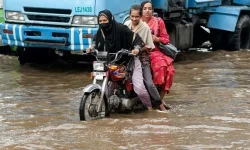
Intermittent heavy rain hits Punjab cities, Lahore receives 123mm

K2RULEZ

Elite Member
Joined
Mar 16, 2012
Messages
39,677
Reaction score
67,808
Reputation
13,281.5
Country of Origin
Country of Residence
22162054d022205.webp

Intermittent heavy rainfall lashed several cities in Punjab over the previous 24 hours, the Provincial Disaster Management Authority (PDMA) said on Wednesday.

According to the Water and Sanitation Agency (Wasa), 123 millimetres of rain was recorded in Lahore, a record 245mm in Gujranwala and 95mm in Gujrat.

The PDMA said 139mm of rainfall was recorded in Sialkot, 138mm in Mandi Bahauddin, 117mm in Narowal, 85mm in Hafizabad, 70mm in Chakwal, 64mm in Okara, 35mm in Jhang, 33mm in Layyah and 32mm in Jhelum.

The disaster management authority further said that since the start of the monsoon season in the province, at least 17 people have died in rain-related incidents. Of the reported deaths, 12 were caused by the collapse of buildings or other structures, two by lightning strikes and three by electrocution, the PDMA said.


Meanwhile, CM Maryam also appealed to the public not to risk their lives by going near or bathing in canals, rivers and rainwater drains during the monsoon season and flood conditions.

Residents faced hardships due to accumulated rainwater on roads in major cities of central and northern Punjab. Photos shared on social media and corroborated by a Dawn correspondent showed the Shamsi Underpass in Gujranwala’s Civil Lines area completely submerged on Wednesday, making it impossible for traffic to pass through.

Rainwater accumulated in different areas of Lahore, including Kareem Block Market, Johar Town, Township, Ferozepur Road, Multan Road, Samanabad, Gulshan-i-Ravi, Lakshmi Chowk, Model Town and other major roads and streets across the city.

Several photos and videos shared on social media showed roads inundated in Lahore, leaving commuters stranded. Videos posted on social media platform X showed cars wading through knee-deep water on major roads across the city. Social media users also reported prolonged power outages in areas that received rainfall over the past 24 hours.

However, Wasa Lahore claimed that no water accumulation was reported on most major roads and intersections, according to a statement.

The statement added that real-time monitoring of citywide drainage operations was being conducted from the monsoon control room.

“Teams are mobilised for immediate cleaning of main drains and channels to provide relief to citizens,” stated DG Wasa Punjab, while conducting field monitoring in Gujranwala.

According to Wasa, rainwater drainage efforts were underway in 41 districts, while authorities are continuously monitoring rivers, dams and barrages.

All Punjab Wasa field teams are on high alert, with directives issued to ensure the swiftest possible drainage of rainwater, Wasa Punjab director general said, adding that public convenience was the top priority.

He further advised citizens to avoid unnecessary travel and contact the relevant authorities in case of an emergency.

In Gujrat, Wasa said 20 of its emergency teams remained continuously engaged in drainage operations across the city’s three zones.

Traffic flowed normally on major roads, Wasa Gujrat claimed.

Punjab’s Housing Minister Bilal Yasin directed all departments to remain mobilised to promptly address difficulties faced by citizens during the monsoon season.

He advised prioritising drainage of water from low-lying areas.

“With above-normal rainfall expected during this monsoon season, the drainage system across Punjab — including Lahore — is being made more effective and modernised,” the provincial minister said.
 
The first question crossing my mind, why isn't Pakistan able to harvest this precious monsoon rain water?

--

The recurrent urban flooding across cities like Lahore and Karachi during the monsoon season stems from a combination of outdated infrastructure, rapid concrete growth, and a lack of dedicated water-management systems.

Why Streets Flood

Combined Sewer and Stormwater Lines: In many Pakistani cities, rainwater drains directly into the same pipes used for municipal sewage. When intense downpours deliver over 100 mm of rain in a few hours, the volume drastically exceeds pipe capacity, forcing mixed sewage and water back up onto the roads.

Loss of Natural Infiltration: Unplanned urbanization has replaced soft soil, parks, and natural wetlands with asphalt and concrete. Because water cannot seep into the ground naturally, nearly 100% of the rainfall turns into immediate surface runoff.

Solid Waste Blockages: Drains and culverts are frequently clogged with plastic waste and debris, creating bottlenecks at critical junction points throughout the drainage network.

Changing Rainfall Patterns: Climate-driven cloudbursts deliver higher volumes of water in shorter windows, overwhelming infrastructure designed for lower intensity storms.

Why Rainwater Harvests Fall Short
Immediate Contamination: Because stormwater mixes immediately with street debris and open sewage, it becomes polluted within minutes of hitting the ground, making downstream treatment expensive and technically challenging.

Lack of Urban Recharge Wells: Most municipal developments lack underground storage tanks, permeable pavements, or dedicated aquifer recharge wells that intercept clean runoff before it reaches street level.

National Storage Deficits: On a macro level, Pakistan's total water storage capacity sits at roughly 30 days of supply—far below the global average of 120 to 900 days. Siltation in major reservoirs (like Tarbela and Mangla) and a lack of small regional check dams limit the ability to capture seasonal surge water.

Regulatory & Enforcement Gaps: While urban planning authorities (such as CDA in Islamabad or LDA in Lahore) have introduced guidelines for rooftop rainwater harvesting in new constructions, enforcement remains weak across private and commercial sectors.
 
Last edited:
Most of the rain water is lost and that is the real tragedy of the monsoon season.

When millions of gallons of clean rainwater hit city streets, the vast majority follows one of two wasteful paths:

1. It Becomes Polluted Wastewater

As soon as rainwater touches urban streets, it mixes with engine oil, solid waste, and overflowing municipal sewage. Once contaminated, it flows into urban channels (like the Roohi Nullah in Lahore or the Lyari and Malir rivers in Karachi). From there, it is flushed directly into larger river systems or the Arabian Sea, totally untreated and unusable for drinking or agriculture.

2. It Causes Evaporation and Surface Damage

Water that gets trapped in low-lying residential areas, underpasses, and roads simply sits until it either evaporates under the sun or is slowly pumped out into nearby canals using temporary diesel pumps. Very little of it recharges the local underground water table because concrete and asphalt block natural soil absorption.

Is Any of It Saved?

A tiny fraction is captured, but mostly by accident or through very small-scale initiatives:

Unpaved Areas: Open parks, agricultural belts on urban margins, and unpaved alleyways allow a small percentage to naturally seep down to replenish the aquifer.

Pilot Projects: Cities like Lahore (via WASA) and Islamabad have installed a few dozen underground rainwater storage tanks and aquifer recharge wells in select parks (like Bagh-e-Jinnah in Lahore). These collect a few million liters per heavy rain for park irrigation, but it represents less than 1% to 2% of the total rainfall during a 100mm+ storm.

The Big Picture: Pakistan loses an estimated $10 billion to $15 billion worth of freshwater every year during the monsoon season due to a lack of storage infrastructure at both the urban (recharge wells/tanks) and national (dams/reservoirs) levels.
 
Last edited:
To capture and use monsoon rainwater, Pakistan needs a combination of urban engineering fixes to solve city street flooding and large-scale infrastructure projects to secure agricultural water reserves.

1. Urban Interventions: Stopping Street Flooding

A. Managed Aquifer Recharge (MAR) Wells

Instead of letting rainwater wash over dirty roads, cities can collect clean runoff directly from rooftops, public parks, and green belts.

How it works: Rainwater passes through sand-and-gravel filtration pits to remove silt, then flows down boreholes directly into deep underground sand aquifers.

Impact: In cities like Lahore, where groundwater levels are dropping by over 1 meter per year, these wells restore underground water tables while preventing surface ponding.

B. Underground Retention Tanks
Cities can build large, concealed concrete storage reservoirs beneath public parks and major intersections.
During heavy downpours, high-volume pumps divert stormwater off streets into these tanks.

The stored water can then be filtered and used to irrigate city green spaces, wash roads, or feed recharge wells.

Lahore's Water and Sanitation Agency (WASA) built several pilot tanks (such as at Lawrence Garden and Gaddafi Stadium) capable of holding tens of millions of gallons of runoff. Scaling this model to every major city is key.

C. Separate Stormwater and Sewage Systems

For long-term relief, urban drainage infrastructure must be split. When clean rainwater travels through its own network of pipes rather than mixed sewage lines, it remains clean enough to be treated, stored, or diverted into local waterways.

D. "Sponge City" Urban Planning
Urban development codes can mandate permeable surfaces:
Porous Asphalt & Pavers: Allow rain to soak through sidewalks and parking lots rather than pooling on top.

Bio-swales & Rain Gardens: Sunken, vegetated channels along roadsides that slow down, filter, and absorb runoff naturally.

2. National & Regional Interventions: Saving Water for Agriculture

Outside urban centers, millions of acre-feet of monsoon water escape directly into the Arabian Sea every year. Saving it requires regional storage:

Small and Medium Check Dams: Building networks of small dams across hilly and semi-arid terrain (such as Balochistan, Potohar, and Southern Punjab) slows down flash floods and traps water near rural communities.

Desilting Existing Reservoirs: Major dams like Tarbela and Mangla have lost significant capacity over decades due to sediment buildup. Regular dredging and watershed management restore their original storage volumes.

Off-Stream Storage Ponds: Excavating large, lined storage basins along major river corridors allows excess floodwaters to be diverted during peak monsoon surges and drawn down during dry winter months.

3. Policy & Enforcement

Engineering fixes only work with strong policy backing:

Mandatory Rooftop Harvesting: Updating municipal building bylaws to require commercial plazas and new residential societies to install rooftop collection systems.

Solid Waste Management: Enforcing strict trash disposal policies to stop plastic debris from clogging street culverts and storm drains before the monsoon arrives.
 
What a tragedy for a water starved Pakistan.
 
The stagnant water and mixed sewage resulting from urban monsoon flooding create severe health risks across three major categories:

1. Waterborne & Sewage-Related Infections

Because stormwater mixes directly with overflowing municipal sewage lines, floodwaters carry high concentrations of bacteria, viruses, and parasites.

Gastroenteritis & Cholera: Swallowing contaminated water or consuming food prepared with contaminated groundwater leads to rapid outbreaks of severe diarrhea, vomiting, and dehydration.

Typhoid Fever & Hepatitis A/E: Caused by Salmonella Typhi and water-transmitted viruses, these target the liver and digestive system. In urban flood zones, drinking water pipelines frequently develop negative pressure, pulling surrounding sewage water through tiny pipe cracks directly into household taps.

2. Vector-Borne Diseases (Mosquitoes)

Stagnant pools of water left sitting on streets, vacant plots, and rooftops for days or weeks act as ideal breeding grounds.

Dengue Fever & Chikungunya: Spread primarily by Aedes mosquitoes, which prefer clean, standing rainwater found in tires, open containers, and street puddles.

Malaria: Transmitted by Anopheles mosquitoes, which breed rapidly in larger, stagnant bodies of water left after major downpours.

3. Direct Contact & Environmental Illnesses

Leptospirosis: A bacterial infection transmitted when floodwaters contaminated with the urine of infected animals (especially rats) come into contact with open cuts, eyes, or mucous membranes while people wade through flooded streets.
Fungal & Bacterial Skin Infections: Prolonged exposure to dirty water causes dermatitis, ringworm, and severe foot infections (often called "trench foot").

The Public Health Impact: During peak monsoon floods, emergency rooms in major cities see a 30% to 50% surge in waterborne and vector-borne admissions, placing immense pressure on healthcare infrastructure.
 
To view this content we will need your consent to set third party cookies.
For more detailed information, see our cookies page.
 
To capture and use monsoon rainwater, Pakistan needs a combination of urban engineering fixes to solve city street flooding and large-scale infrastructure projects to secure agricultural water reserves.

1. Urban Interventions: Stopping Street Flooding

A. Managed Aquifer Recharge (MAR) Wells

Instead of letting rainwater wash over dirty roads, cities can collect clean runoff directly from rooftops, public parks, and green belts.

How it works: Rainwater passes through sand-and-gravel filtration pits to remove silt, then flows down boreholes directly into deep underground sand aquifers.

Impact: In cities like Lahore, where groundwater levels are dropping by over 1 meter per year, these wells restore underground water tables while preventing surface ponding.

B. Underground Retention Tanks
Cities can build large, concealed concrete storage reservoirs beneath public parks and major intersections.
During heavy downpours, high-volume pumps divert stormwater off streets into these tanks.

The stored water can then be filtered and used to irrigate city green spaces, wash roads, or feed recharge wells.

Lahore's Water and Sanitation Agency (WASA) built several pilot tanks (such as at Lawrence Garden and Gaddafi Stadium) capable of holding tens of millions of gallons of runoff. Scaling this model to every major city is key.

C. Separate Stormwater and Sewage Systems

For long-term relief, urban drainage infrastructure must be split. When clean rainwater travels through its own network of pipes rather than mixed sewage lines, it remains clean enough to be treated, stored, or diverted into local waterways.

D. "Sponge City" Urban Planning
Urban development codes can mandate permeable surfaces:
Porous Asphalt & Pavers: Allow rain to soak through sidewalks and parking lots rather than pooling on top.

Bio-swales & Rain Gardens: Sunken, vegetated channels along roadsides that slow down, filter, and absorb runoff naturally.

2. National & Regional Interventions: Saving Water for Agriculture

Outside urban centers, millions of acre-feet of monsoon water escape directly into the Arabian Sea every year. Saving it requires regional storage:

Small and Medium Check Dams: Building networks of small dams across hilly and semi-arid terrain (such as Balochistan, Potohar, and Southern Punjab) slows down flash floods and traps water near rural communities.

Desilting Existing Reservoirs: Major dams like Tarbela and Mangla have lost significant capacity over decades due to sediment buildup. Regular dredging and watershed management restore their original storage volumes.

Off-Stream Storage Ponds: Excavating large, lined storage basins along major river corridors allows excess floodwaters to be diverted during peak monsoon surges and drawn down during dry winter months.

3. Policy & Enforcement

Engineering fixes only work with strong policy backing:

Mandatory Rooftop Harvesting: Updating municipal building bylaws to require commercial plazas and new residential societies to install rooftop collection systems.

Solid Waste Management: Enforcing strict trash disposal policies to stop plastic debris from clogging street culverts and storm drains before the monsoon arrives.
It took us 20 years to develop a flood Early warning system for Nulllah Lai... You are asking too much Bahi.
 

Users who are viewing this thread

Pakistan Defence Latest

Back
Top