Iran - Israel/US War: Israel-US declare war on Iran, Iran responds

Because when you move inland more then 50 miles most of american are like those who are in charge, brain washed low educated blue collar people easily manipulated.
Always happy to compare CVs with you.
 
They disappear because they slow down as they enter the atmosphere and the plasma around their heat shields cools. No heat = no visibility

Assuming they are 80 munitions they weight likely between 5kg-20kg which naturally won’t be visible on a cell phone camera from tens of KMs away once the heat dissipates
They don’t do much damage.


CNN: Radar bases housing key US missile interceptor hit in Jordan and UAE, satellite images show​


New satellite images from several key military bases in the Arabian Peninsula suggest that Iran is seeking to degrade air defenses by destroying US-made radars that detect incoming missiles and drones.

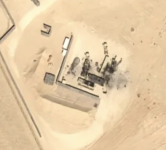
The radar system for an American THAAD missile battery in Jordan was struck and apparently destroyed in the first days of the US-Israeli strikes on Iran, a satellite image taken on Monday shows.

Buildings housing similar radar systems were also hit at two locations in the United Arab Emirates, CNN analysis shows, although it is unclear if the equipment was damaged.

The radar is a critical element for the high-end missile interceptor system, which is used to engage and destroy ballistic missiles as they fly toward their target. The US operates eight THAAD batteries, while the UAE operates two and Saudi Arabia one. This one was at the Muwaffaq Salti Air Base in Jordan, over 500 miles from Iran.

THAAD system in Muwaffaq Salti Air Base, Jordan:

Screenshot 2026-03-05 at 22.34.49.png
A satellite image taken on March 2, 2026, shows debris surrounding a blackened THAAD radar at the Muwaffaq Salti Air Base in Jordan. Airbus

The radar system for THAADs is the AN/TPY-2 transportable radar, manufactured by Raytheon. According to a 2025 Missile Defense Agency budget, it costs just shy of half-a-billion dollars.

The image shows a pair of 13-foot craters in the sand near the radar, suggesting that it may have taken multiple attempts to hit the system, which is split across five 40-foot trailers. All appeared to be destroyed or seriously damaged.

It may not be the only THAAD radar struck in the opening days of the war with Iran.

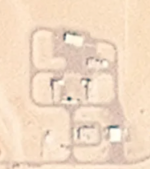
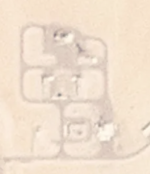
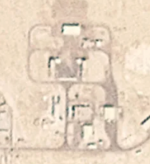
At least three buildings at a military installation near Ruwais, and four at an installation in Sader, both in the UAE, were damaged between February 28 and March 1. Pull-through vehicle sheds used to store radar systems for THAAD batteries at both sites were among the buildings struck.

THAAD system near Al Ruwais, UAE:

Screenshot 2026-03-05 at 22.38.22.pngScreenshot 2026-03-05 at 22.38.27.png

before and after: Satellite images show dark markings from apparent strikes on three buildings at a THAAD battery near Al Ruwais, UAE, including a pull-through vehicle shed used to store radar systems. Slight markings on the ground are visible near another vehicle shed at the site, though it’s unclear if it was struck too. Date: February 27, 2026 (before) and March 1, 2026 (after) Airbus

THAAD system near Al Sader, UAE:

Screenshot 2026-03-05 at 22.39.24.pngScreenshot 2026-03-05 at 22.39.30.png

before and after: Satellite images show dark markings from apparent strikes on four buildings at a THAAD battery near Al Sader, UAE, including a pair of pull-through vehicle shed used to store radar systems. The pattern of strikes is nearly identical to those on the Al Ruwais site. Date: February 27, 2026 (before) and March 1, 2026 (after) Planet Labs PBC

N.R. Jenzen-Jones, a munitions specialist and director of the research company Armament Research Services (ARES), told CNN the radar cannot be easily replaced and called it a significant loss.

“The AN-TPY/2 radar is essentially the heart of the THAAD battery, enabling the launch of interceptor missiles and contributing to a networked air defense picture,” he said. “It also happens to be an incredibly expensive piece of kit. The loss of even a single radar of this type would be an operationally significant event. It is probable that a replacement unit would have to be redeployed from elsewhere, which will take time and effort.”

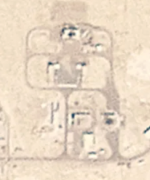
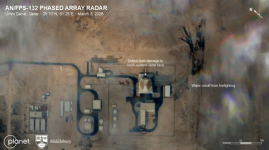
Early warning radar in Qatar:

Screenshot 2026-03-05 at 22.42.03.png

@Emirzad @ShapurII @Immortals @mangekyo
@Flotilla @Falcon29 @Musings @RescueRanger
@mulj @hyperman
 
Last edited:

CNN: Radar bases housing key US missile interceptor hit in Jordan and UAE, satellite images show​


New satellite images from several key military bases in the Arabian Peninsula suggest that Iran is seeking to degrade air defenses by destroying US-made radars that detect incoming missiles and drones.

The radar system for an American THAAD missile battery in Jordan was struck and apparently destroyed in the first days of the US-Israeli strikes on Iran, a satellite image taken on Monday shows.

Buildings housing similar radar systems were also hit at two locations in the United Arab Emirates, CNN analysis shows, although it is unclear if the equipment was damaged.

The radar is a critical element for the high-end missile interceptor system, which is used to engage and destroy ballistic missiles as they fly toward their target. The US operates eight THAAD batteries, while the UAE operates two and Saudi Arabia one. This one was at the Muwaffaq Salti Air Base in Jordan, over 500 miles from Iran.

View attachment 183288
A satellite image taken on March 2, 2026, shows debris surrounding a blackened THAAD radar at the Muwaffaq Salti Air Base in Jordan.
Airbus

The radar system for THAADs is the AN/TPY-2 transportable radar, manufactured by Raytheon. According to a 2025 Missile Defense Agency budget, it costs just shy of half-a-billion dollars.

The image shows a pair of 13-foot craters in the sand near the radar, suggesting that it may have taken multiple attempts to hit the system, which is split across five 40-foot trailers. All appeared to be destroyed or seriously damaged.

It may not be the only THAAD radar struck in the opening days of the war with Iran.

At least three buildings at a military installation near Ruwais, and four at an installation in Sader, both in the UAE, were damaged between February 28 and March 1. Pull-through vehicle sheds used to store radar systems for THAAD batteries at both sites were among the buildings struck.

THAAD system near Al Ruwais, UAE:

View attachment 183291View attachment 183292

before and after: Satellite images show dark markings from apparent strikes on three buildings at a THAAD battery near Al Ruwais, UAE, including a pull-through vehicle shed used to store radar systems. Slight markings on the ground are visible near another vehicle shed at the site, though it’s unclear if it was struck too. Date: February 27, 2026 (before) and March 1, 2026 (after) Airbus

THAAD system near Al Sader, UAE:

View attachment 183293View attachment 183294

before and after: Satellite images show dark markings from apparent strikes on four buildings at a THAAD battery near Al Sader, UAE, including a pair of pull-through vehicle shed used to store radar systems. The pattern of strikes is nearly identical to those on the Al Ruwais site. Date: February 27, 2026 (before) and March 1, 2026 (after) Planet Labs PBC

N.R. Jenzen-Jones, a munitions specialist and director of the research company Armament Research Services (ARES), told CNN the radar cannot be easily replaced and called it a significant loss.

“The AN-TPY/2 radar is essentially the heart of the THAAD battery, enabling the launch of interceptor missiles and contributing to a networked air defense picture,” he said. “It also happens to be an incredibly expensive piece of kit. The loss of even a single radar of this type would be an operationally significant event. It is probable that a replacement unit would have to be redeployed from elsewhere, which will take time and effort.”

Early warning radar in Qatar:

View attachment 183296

@Emirzad @ShapurII @Immortals @mangekyo
@Flotilla @Falcon29 @Musings @RescueRanger

So IRGC made no false claims... yet ppl tends to believe US/Israil claims only.
 

Users who are viewing this thread

Pakistan Defence Latest

Back
Top