ToqeLowkey
Registered Member


Iran should start attacking israhel and tell the world that as long the naval blockade continues they would keep firing missiles at israhel.
Follow along with the video below to see how to install our site as a web app on your home screen.
Note: This feature may not be available in some browsers.

Honestly very eerie how we can compare this to star wars movie
@Kyussis also for a guy who named himself after a bad science fiction conspiracy theory you would think he would appreciate my Star Wars comparisons
Project Solar Warden is a widely discussed conspiracy theory alleging the existence of a top-secret United States space fleet that patrols the solar system, protecting Earth from intergalactic threats. Supporters claim it operates with 8 massive motherships and 43 scout ships developed from reversed-engineered alien technology.
S 400 and 24 SU 35 are the last batch of weapons China bought from Russia some years ago, partly to balance out huge trade surplus China has with Russia, they are not more of absolute necessity as before, and these are going to be the last weapons China bought from Russia. China developed hypersonic weapons on its own and has many varieties and are ahead of Russia's, that is wild misconpetion that China got or bought hypersonic tech from Russia.Really? Who did china get S400s and hypersonics from? Russia invented hypersonic missiles, which are new, so no, China is importing weapons from Russia recently, but probably doing ak discreetly, or purchasing more military weapons tech vs military weapons.
They did, amd thafs why 95% of the world is scared to fight them. Why is 28- nation NATO just watching Ukraine die slowly if russia is so tired?
Conjecture and hubris and hypotheticals....
Not militarily, China just has larger volume of military equipment and funds and activity /larger army, but Russia still has the top military technologies and has gained a competitive advantage over China from its modern and current experience in Ukraine, which China lacks.
Iran fell right into Trump’s trap. Back to Maximum Pressure campaign on Iran now with a naval blockade on top of it and needing over $250B in war time damages. The toll booth idea didn’t even last more than a couple weeks.
This is the type of situation you find yourself in when Mojtaba, Qalibaf, and Argachi are allowed to decide the fate of a country.
It's actually the same principle as buying a car. I had to mentally prepare myself to switch from Audi to Huawei's car. After all, with a new brand, only after using it can you truly believe that new energy vehicles have surpassed traditional fuel vehicles in technology.S 400 and 24 SU 35 are the last batch of weapons China bought from Russia some years ago, partly to balance out huge trade surplus China has with Russia, they are not more of absolute necessity as before, and these are going to be the last weapons China bought from Russia. China developed hypersonic weapons on its own and has many varieties and are ahead of Russia's, that is wild misconpetion that China got or bought hypersonic tech from Russia.
Chinese UN ambassador statement is reality, not hubris. As matter of fact, Russian buys lots of Chinese civilian drones and other components to be used in the Ukraine war because China bans export of weapons to Russia during the war. I don't want to get in argument with you on the subject.
Really? Who did china get S400s and hypersonics from? Russia invented hypersonic missiles, which are new, so no, China is importing weapons from Russia recently, but probably doing ak discreetly, or purchasing more military weapons tech vs military weapons.
They did, amd thafs why 95% of the world is scared to fight them. Why is 28- nation NATO just watching Ukraine die slowly if russia is so tired?
Conjecture and hubris and hypotheticals....
Not militarily, China just has larger volume of military equipment and funds and activity /larger army, but Russia still has the top military technologies and has gained a competitive advantage over China from its modern and current experience in Ukraine, which China lacks.
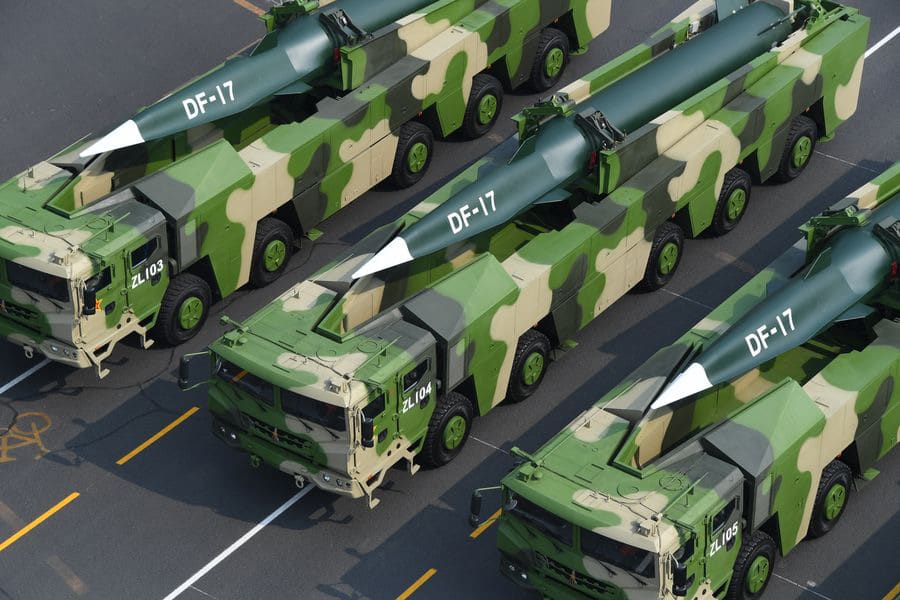
 missilethreat.csis.org




"Israel" will most likely overrule JD Vance and Trump if is enrichment is not dismantled. It looks like Satanyahu is in charge of the second Trump administration, and unless Iran capitulates, which is unlikely, one shouldn't hope much from these negotiations.
Iran fell right into Trump’s trap. Back to Maximum Pressure campaign on Iran now with a naval blockade on top of it and needing over $250B in war time damages. The toll booth idea didn’t even last more than a couple weeks.
This is the type of situation you find yourself in when Mojtaba, Qalibaf, and Argachi are allowed to decide the fate of a country.


